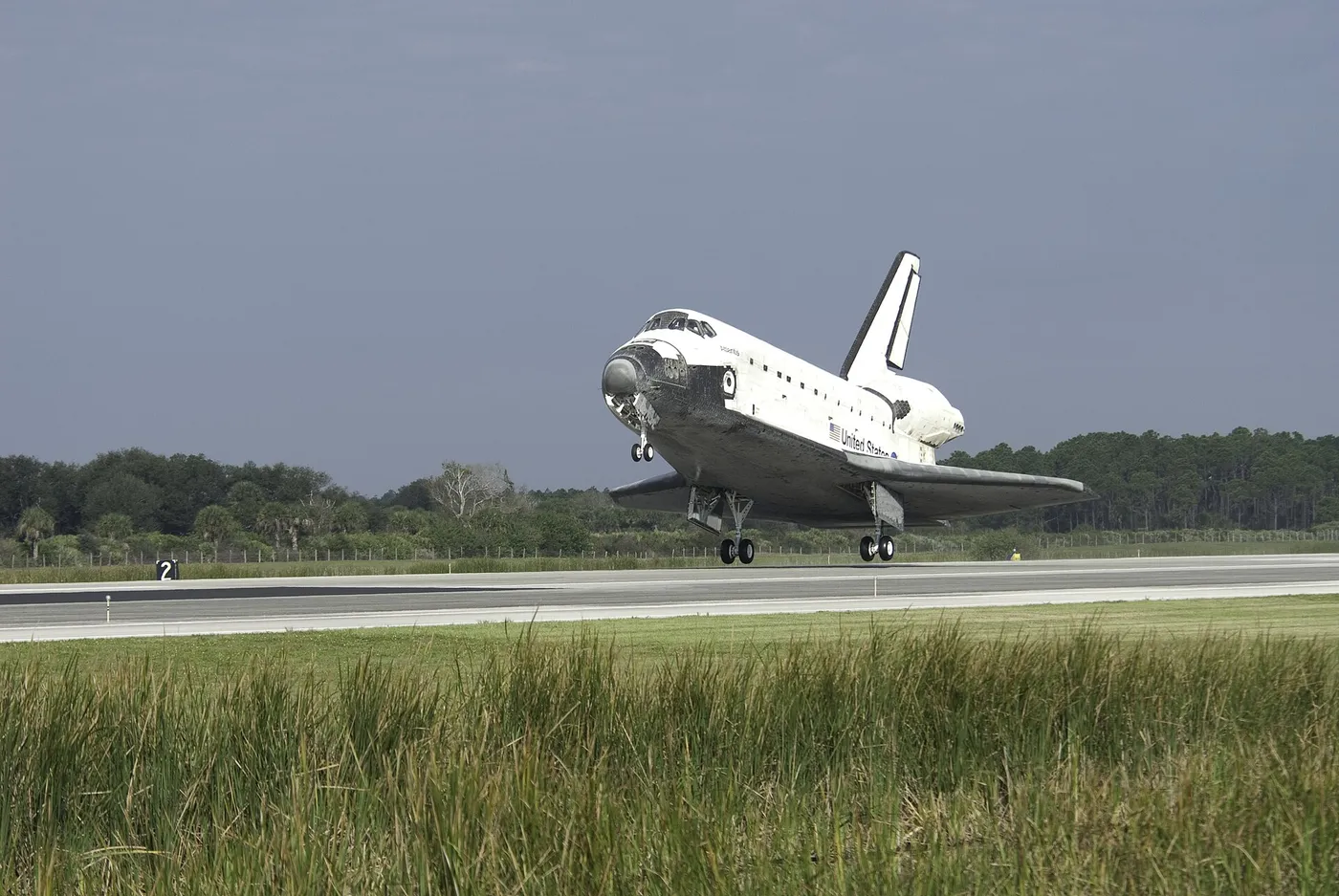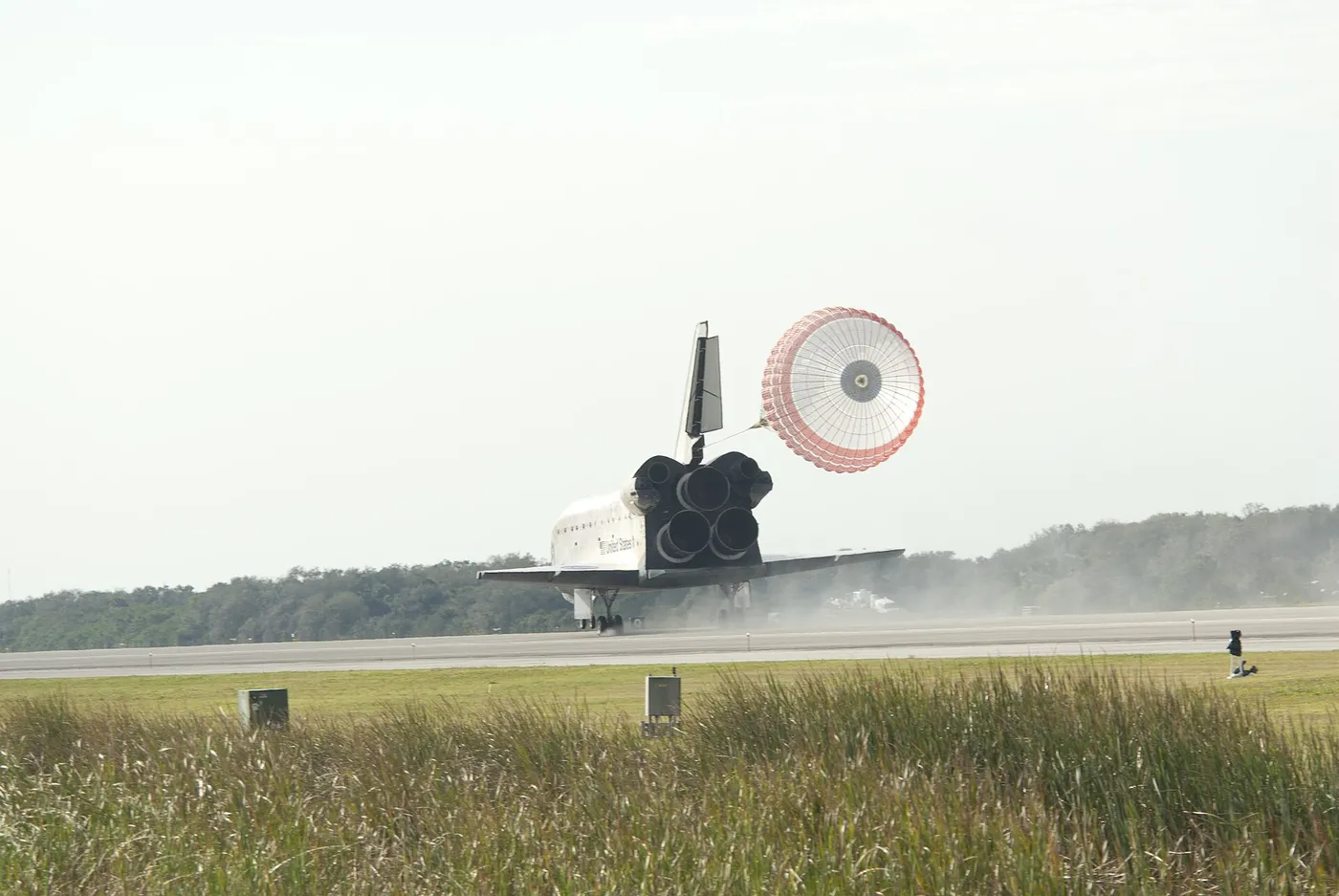
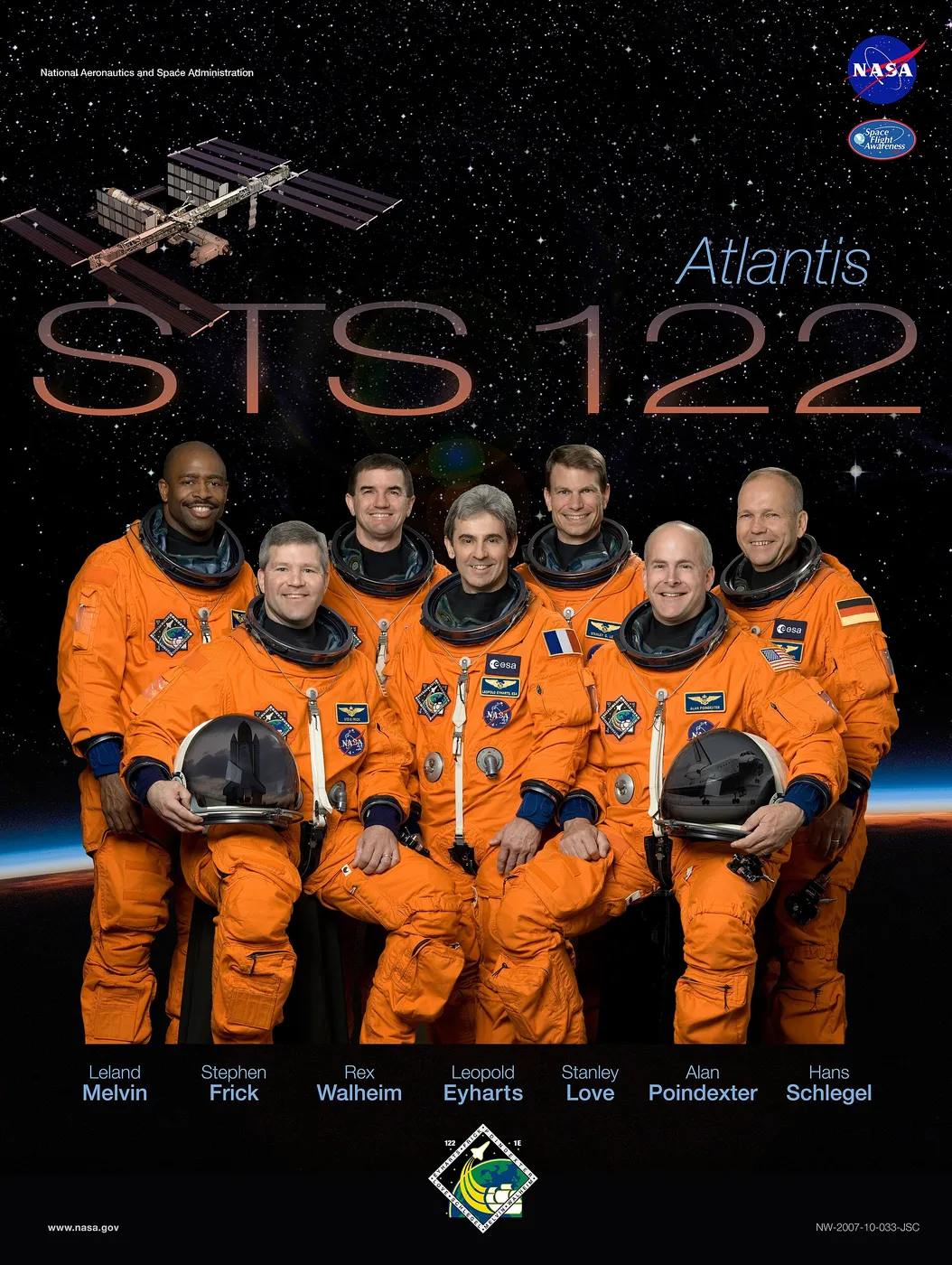

Atlantis delivered the European laboratory Columbus to the International Space Station in February 2008, giving Europe its own permanent research facility in orbit and marking a major expansion of the station's science capacity. The crew of seven, including German astronaut Hans Schlegel, used the robotic arm to berth the module to the Harmony node.
Three spacewalks connected Columbus to the station's power and cooling and installed external experiment platforms on its hull. The mission also exchanged a member of the resident crew, delivering French astronaut Léopold Eyharts to commission the new laboratory. Columbus fulfilled a long-standing European ambition and deepened the international character of the outpost, adding a second major laboratory alongside the American Destiny and setting the stage for the Japanese modules soon to arrive.

Europe got its laboratory. Columbus was a seven-metre cylinder built in Bremen and funded by eleven countries, delivered by Atlantis in February 2008 and berthed to the station's connecting node — the European Space Agency's largest single contribution to the programme and its first permanent crewed facility in orbit.
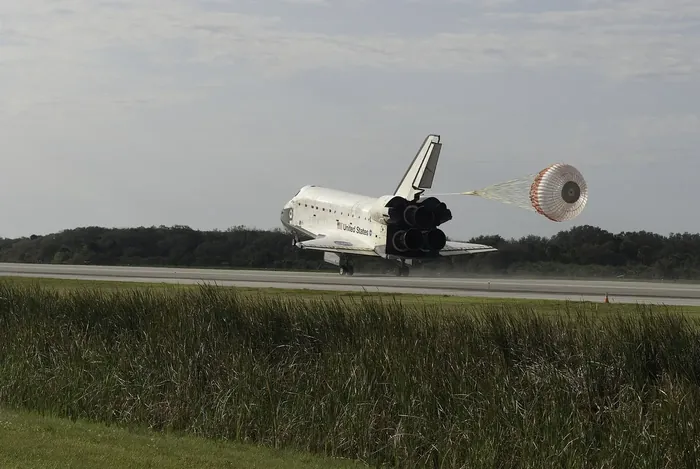
The flight had been delayed for months by an intermittent fault in the fuel-level sensors inside the external tank, a problem that resisted diagnosis through several scrubbed countdowns before being traced to a connector that behaved differently when cold. Hans Schlegel, who was to install the module, fell ill after launch and his first spacewalk was reassigned; he recovered and made the second.
Léopold Eyharts stayed behind to commission the laboratory, and Columbus has run continuously since — fluid physics, materials science, human physiology and a growing programme of biology, operated from a control centre in Oberpfaffenhofen. Schlegel had flown on the last German Spacelab mission fifteen years earlier, in a rented module in a payload bay.