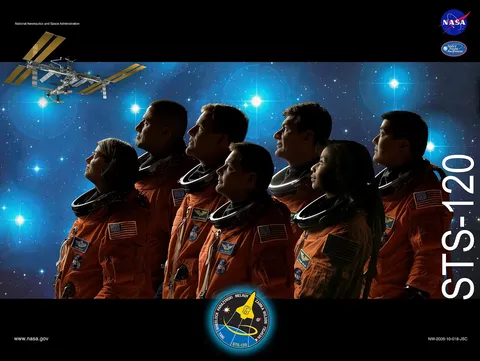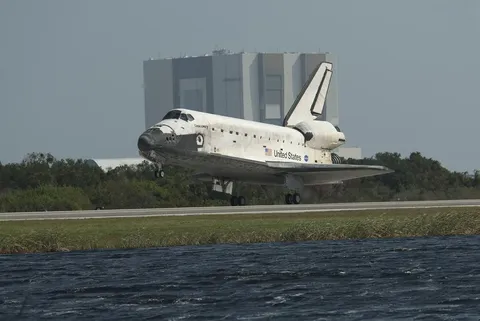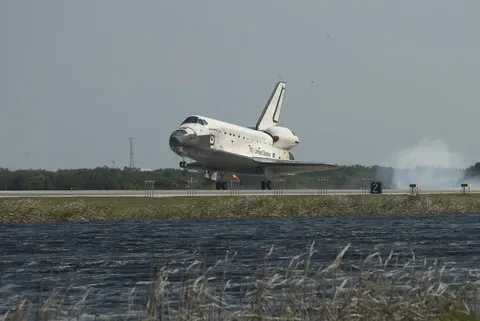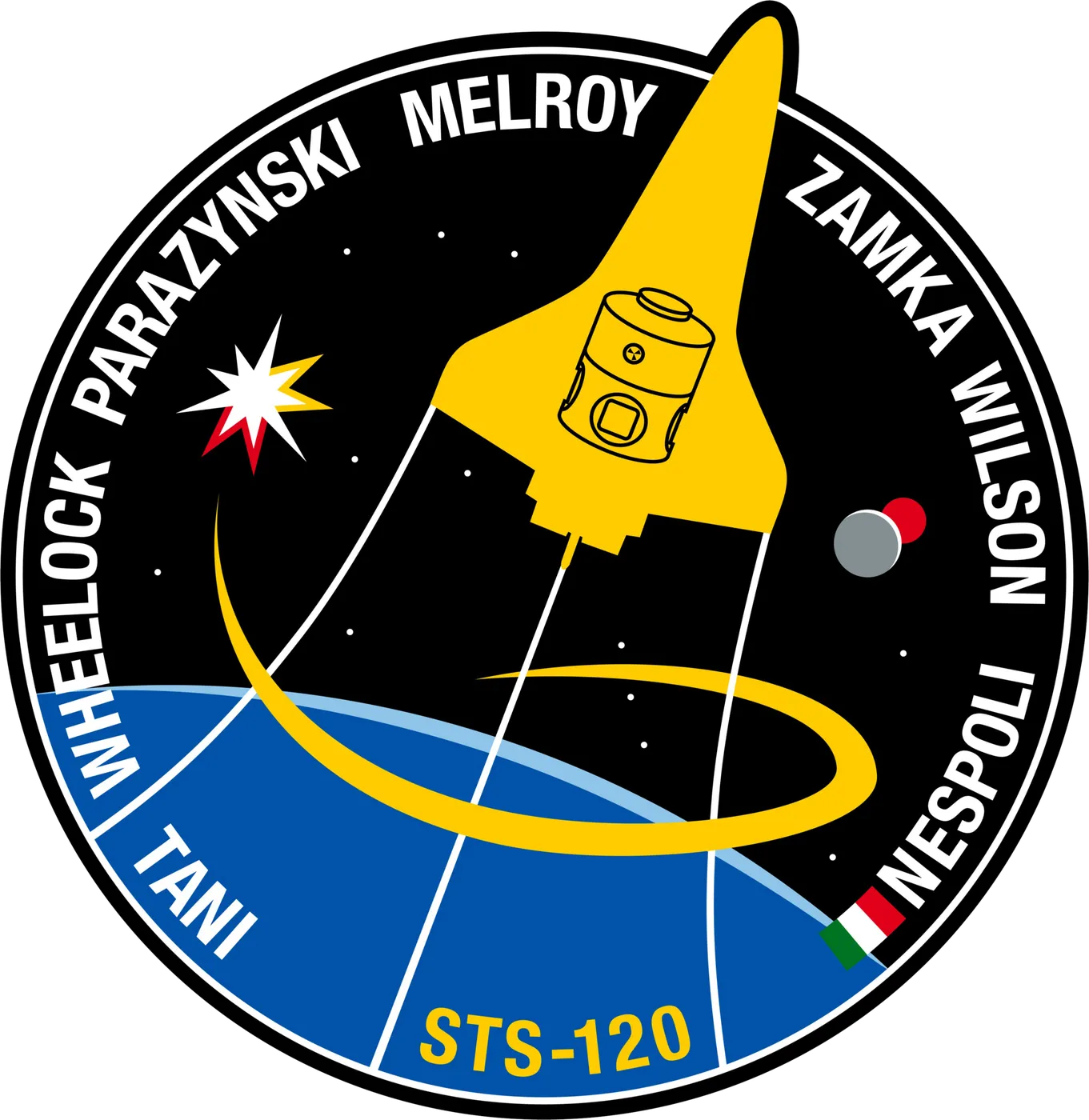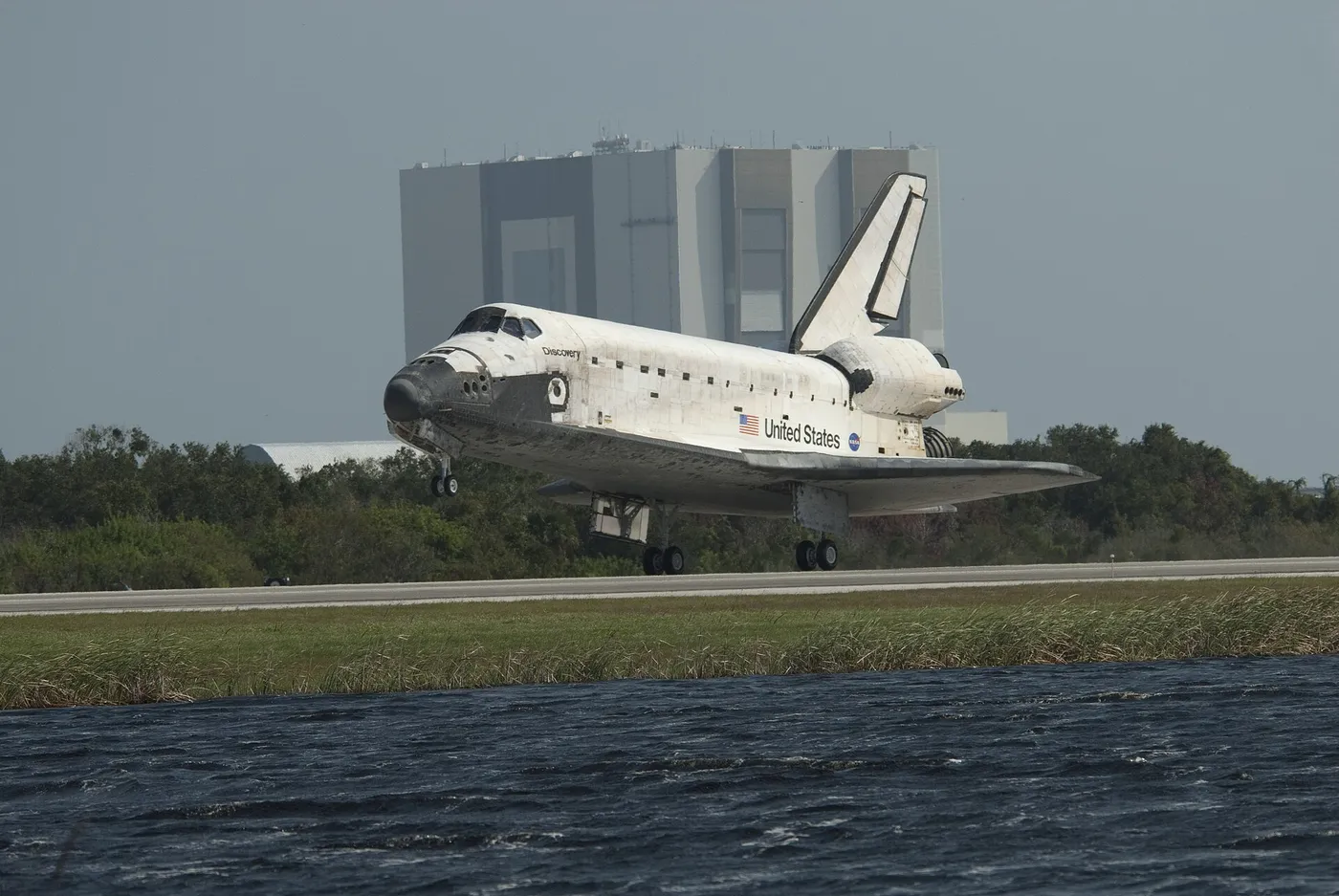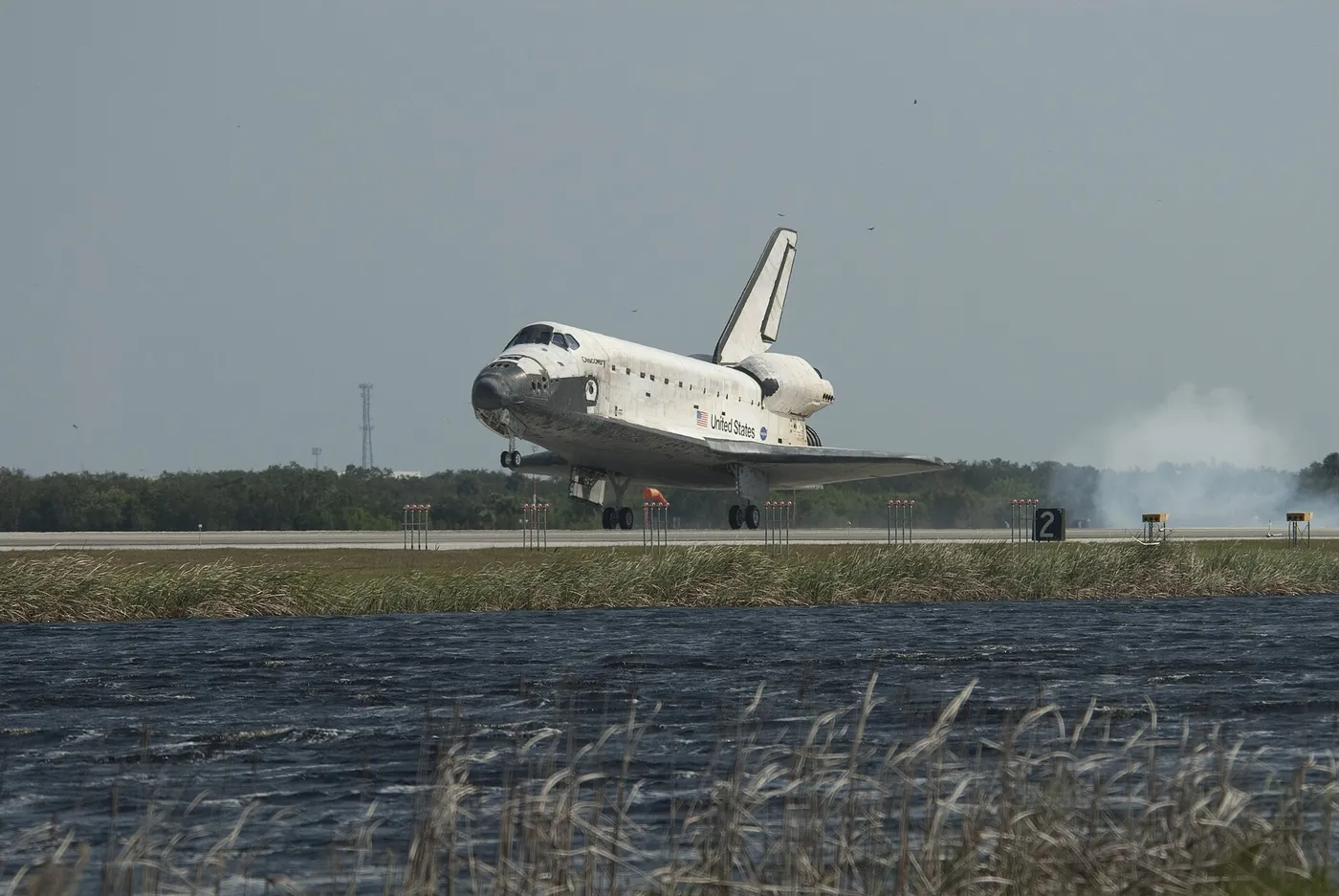
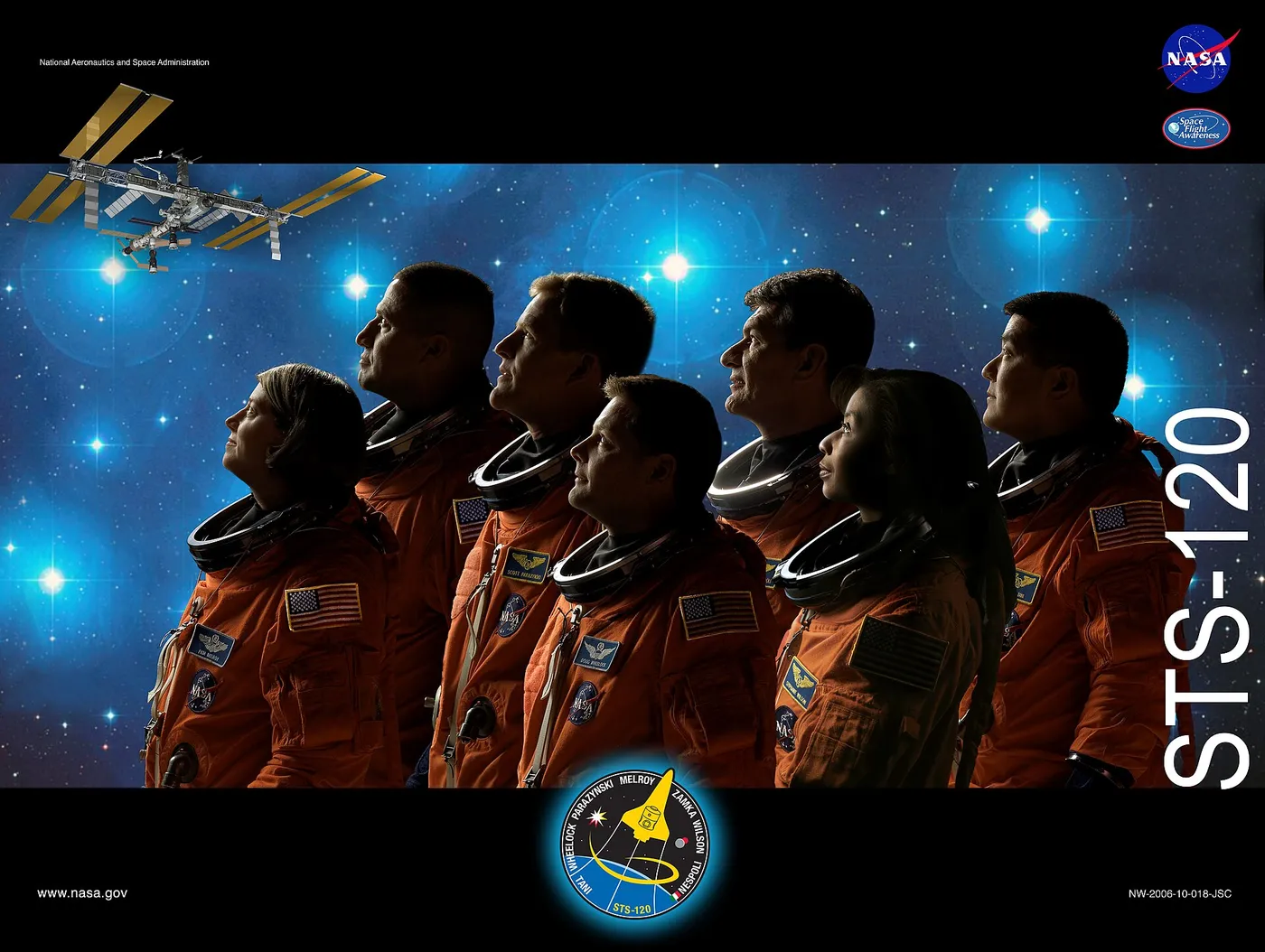

Discovery delivered the Harmony connecting node to the International Space Station in October 2007, a module that would serve as the attachment point for the coming European and Japanese laboratories. The crew of seven, commanded by Pamela Melroy in only the second Shuttle flight commanded by a woman, installed the node and relocated a truss segment and its solar array.
The mission's defining moment came when the relocated array tore as it was being unfurled. In one of the boldest spacewalks of the station era, Scott Parazynski rode the robotic arm far out to the damaged, electrically live wing and stitched it together with improvised cufflinks, saving the array. The dramatic repair, improvised in orbit under real time pressure, ranked among the programme's finest hours of on-the-spot problem solving.
For a few days in October 2007 both an orbiter and a space station were commanded by women, the only time that has happened: Pam Melroy flew Discovery up to a station run by Peggy Whitson. The two had known each other for years and were careful to treat the fact as unremarkable, which was rather the point.

The mission delivered Harmony, the connecting node that would let the European and Japanese laboratories be attached, and then moved the P6 truss — the solar wing installed back in 2000 — to its permanent position at the end of the growing girder. When the array was redeployed in its new home, it tore. Two rips opened in the fragile blanket as a guide wire snagged, and the deployment was stopped with the wing half extended and unusable.
The repair became one of the most dangerous spacewalks ever attempted. Scott Parazynski was carried out on the inspection boom clamped to the station's arm — an improvised extension nobody had certified for the purpose — to reach a live solar array some 28 metres from the structure, where a wrong move risked electrocution from a panel that could not be switched off. Working with tools wrapped in insulating tape, he stitched the tear with wire braces the crew had made aboard, and the array unfolded to its full length.