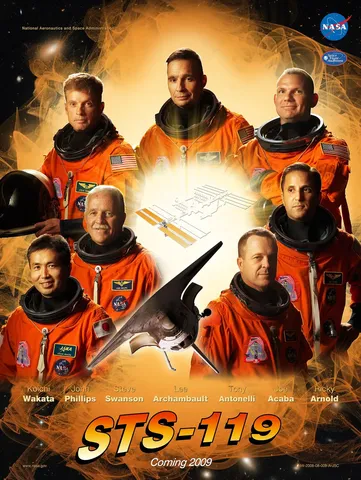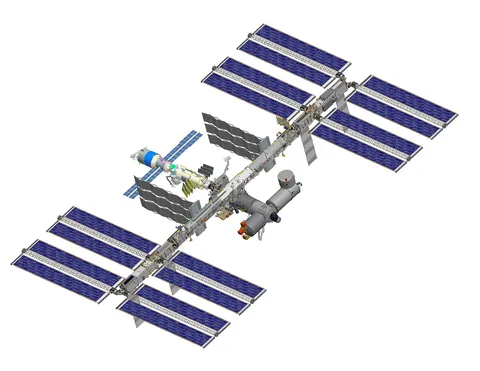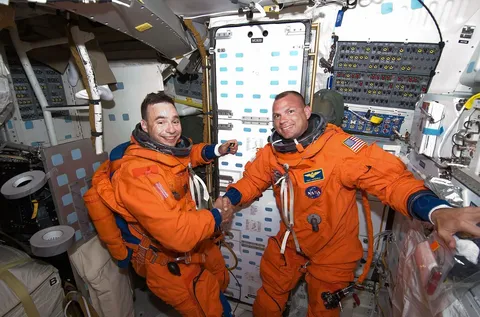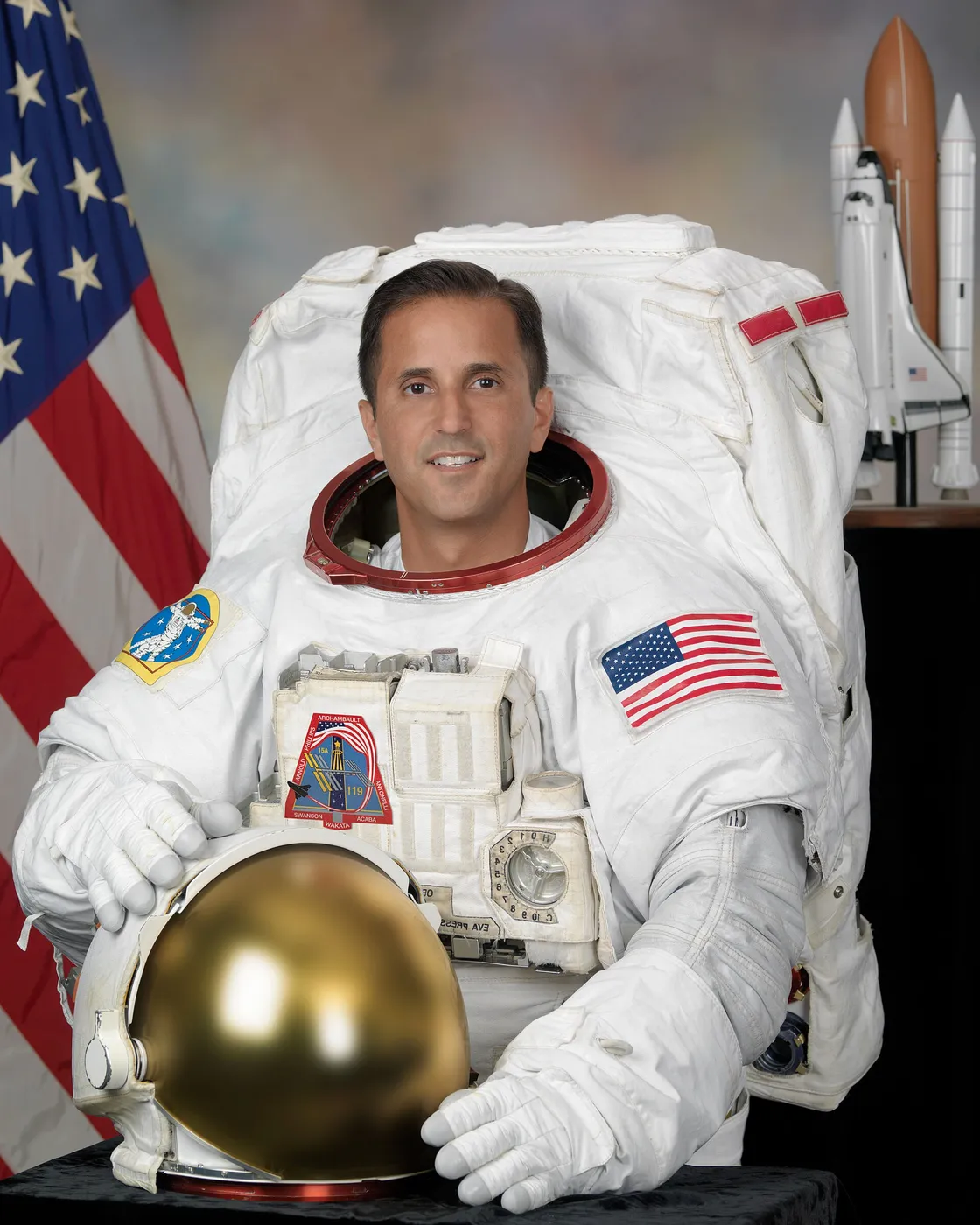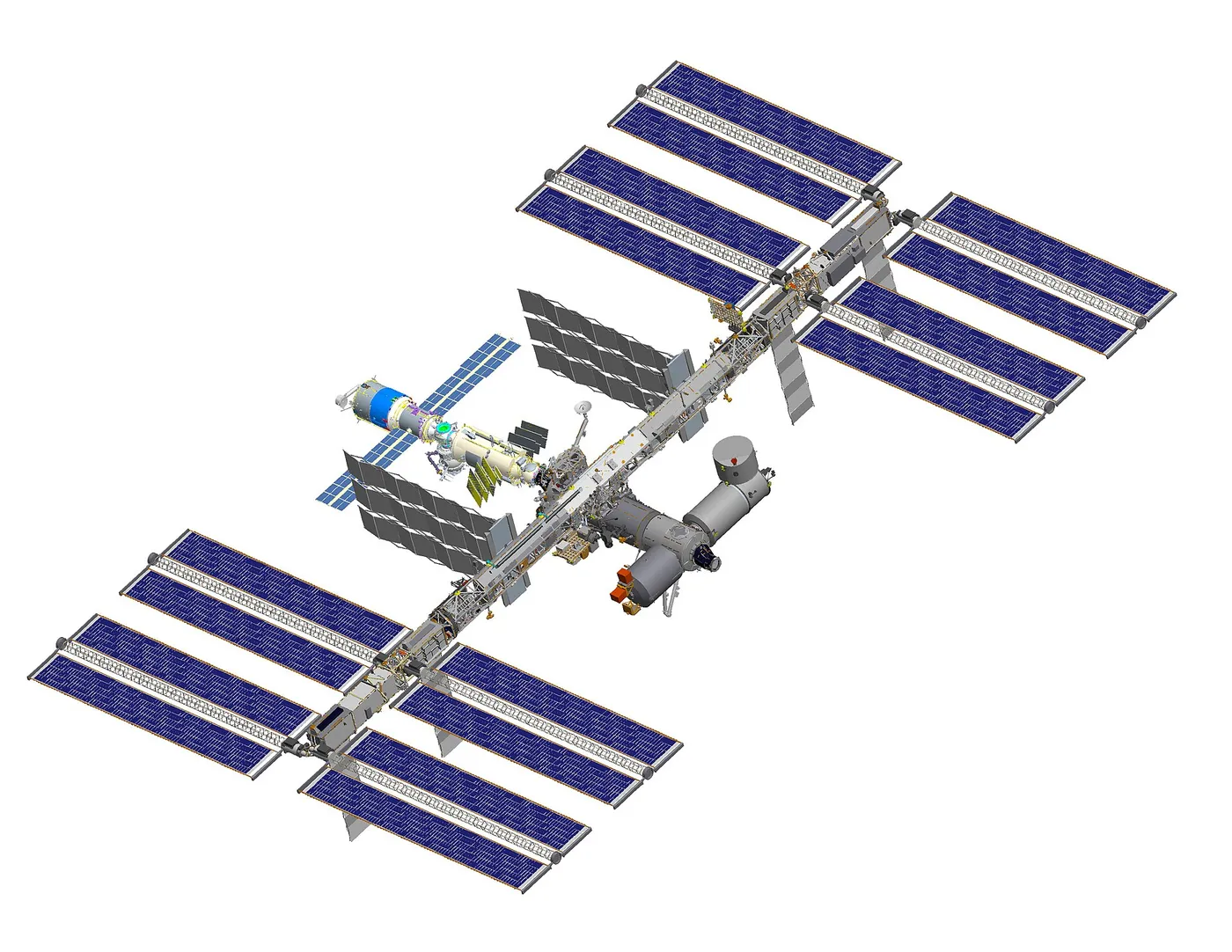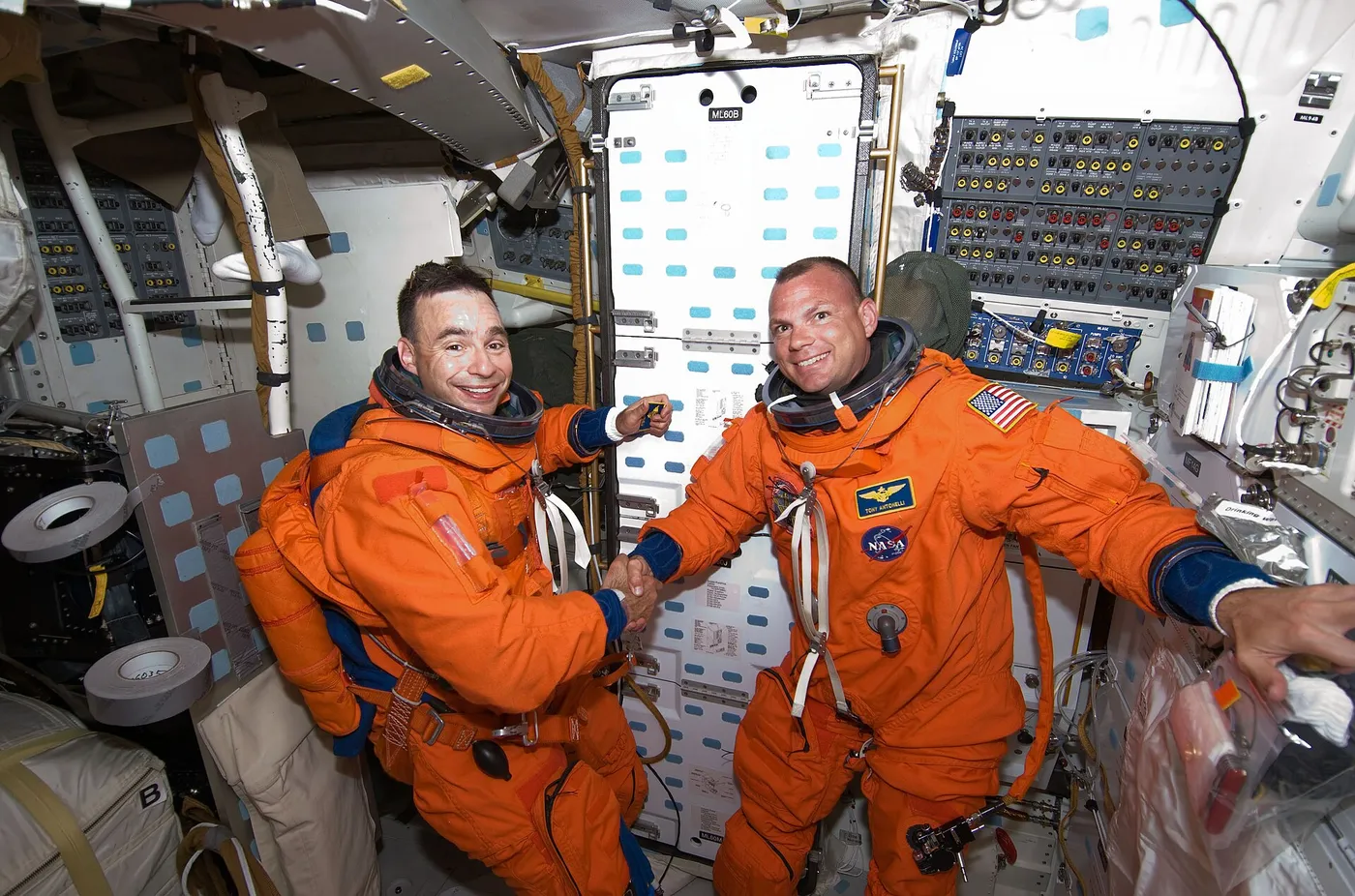
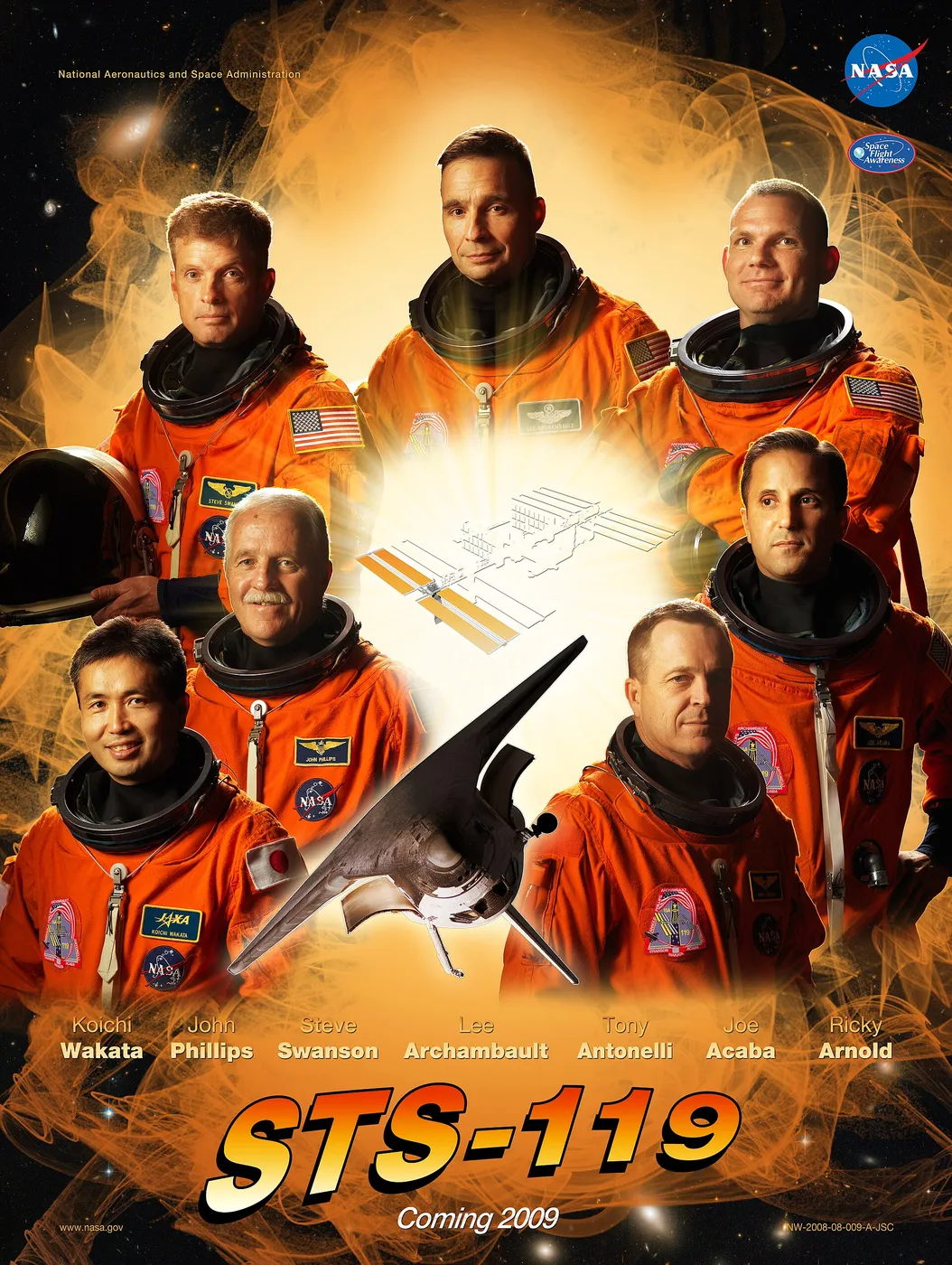
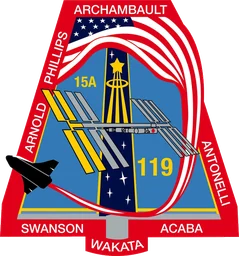
Discovery delivered the station's final set of solar arrays in March 2009, completing the outpost's power-generating truss and bringing it to full electrical strength. The crew of seven installed the last starboard truss segment and unfurled its pair of giant wings, finishing a backbone that now spanned the length of a football field, tipped with eight massive arrays.
Three spacewalks connected the new segment and prepared the station for future work. The flight also exchanged a resident crew member, delivering Japanese astronaut Koichi Wakata to begin the first long-duration stay by a Japanese citizen. With the power truss complete, the station could at last generate the electricity needed to run all its laboratories and support a full crew — a milestone years in the making, and a prerequisite for the outpost's most productive years.
Discovery delivered the final pair of solar array wings in March 2009, completing the station's power system after a decade of construction. With the S6 truss installed and its arrays extended, the outpost reached its full span — some 109 metres of truss, eight wings, and enough electricity to run a laboratory rather than merely keep it alive.
The completed power system was what permitted the crew to grow to six and the research programme to expand from a handful of experiments to a continuously running facility. It also made the station, at certain passes, the third brightest object in the night sky after the Moon and Venus, visible from cities to anyone who knows when to look up.
The flight also delivered Koichi Wakata, who became the first Japanese astronaut to serve a long-duration increment aboard the station, staying four and a half months. He had operated the arm to capture a Japanese satellite in 1996; he would command the station in 2014.