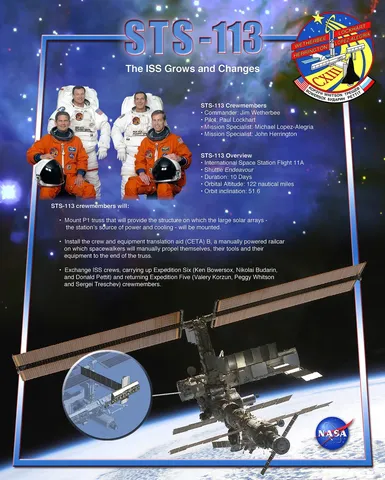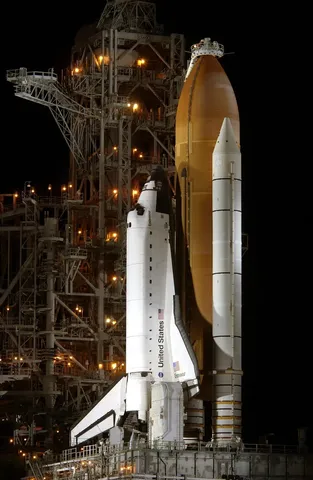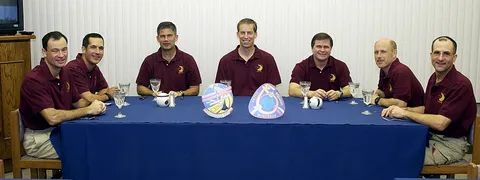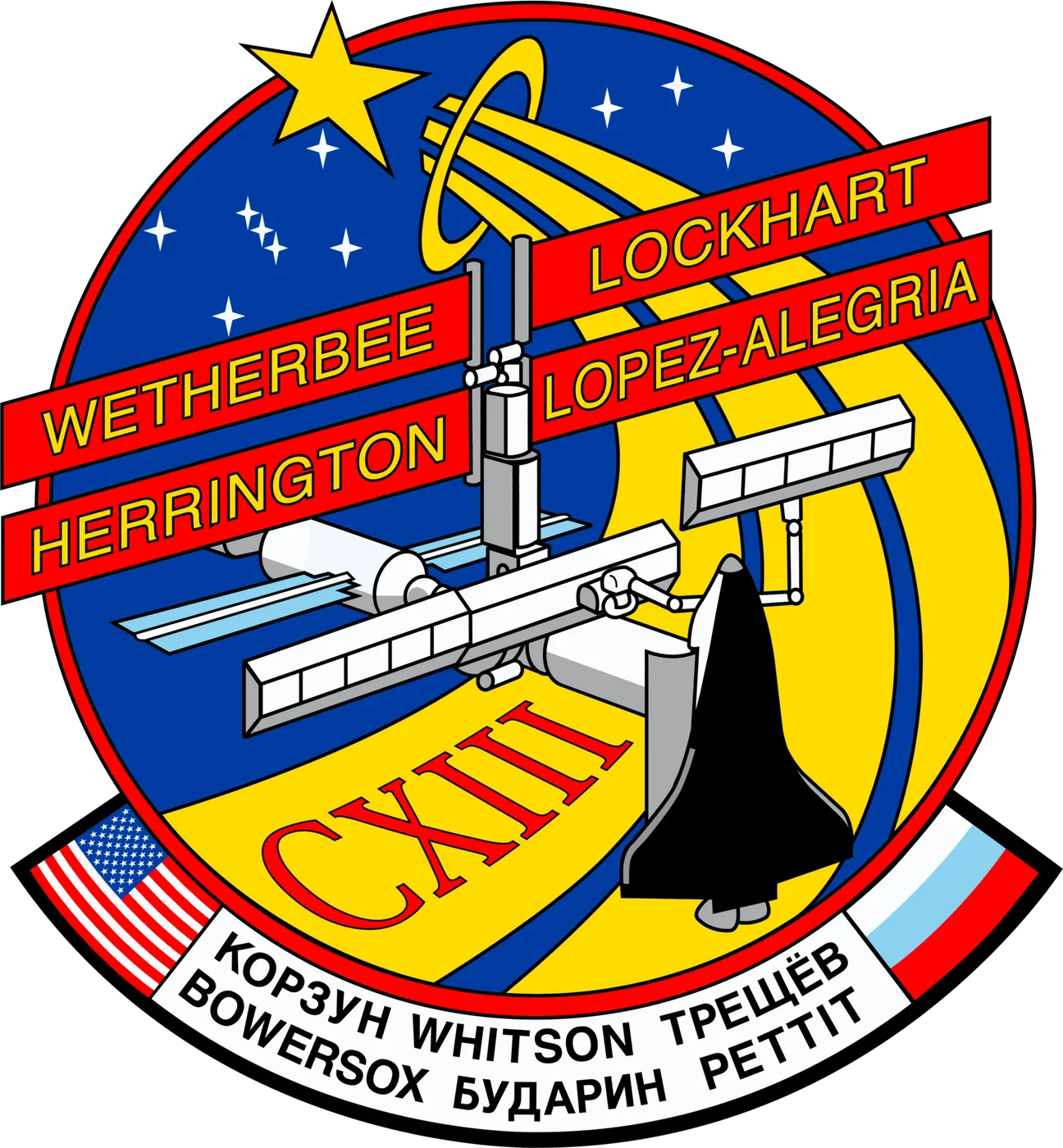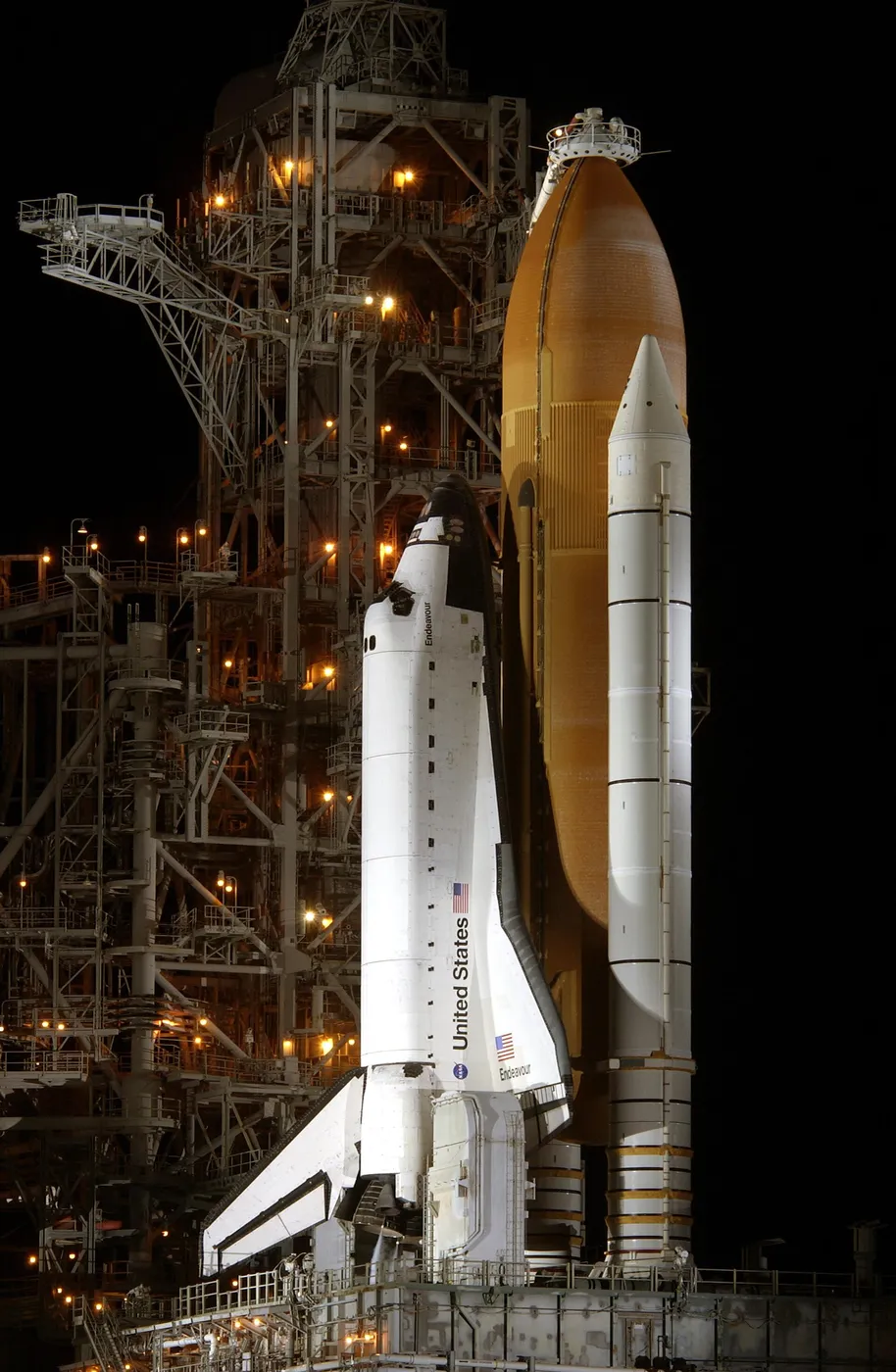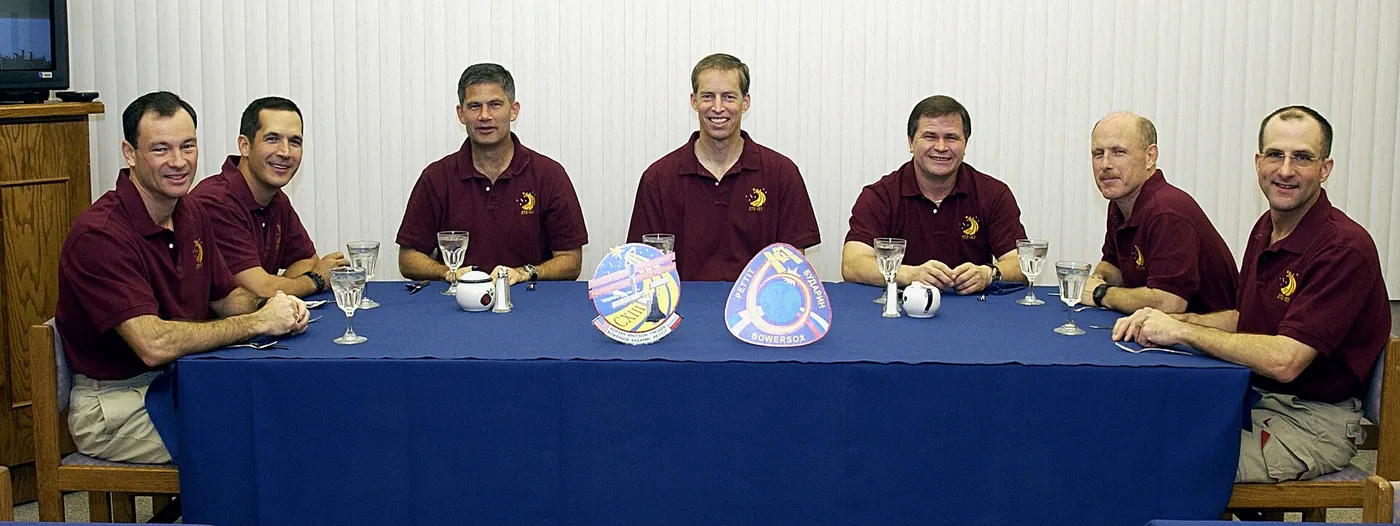
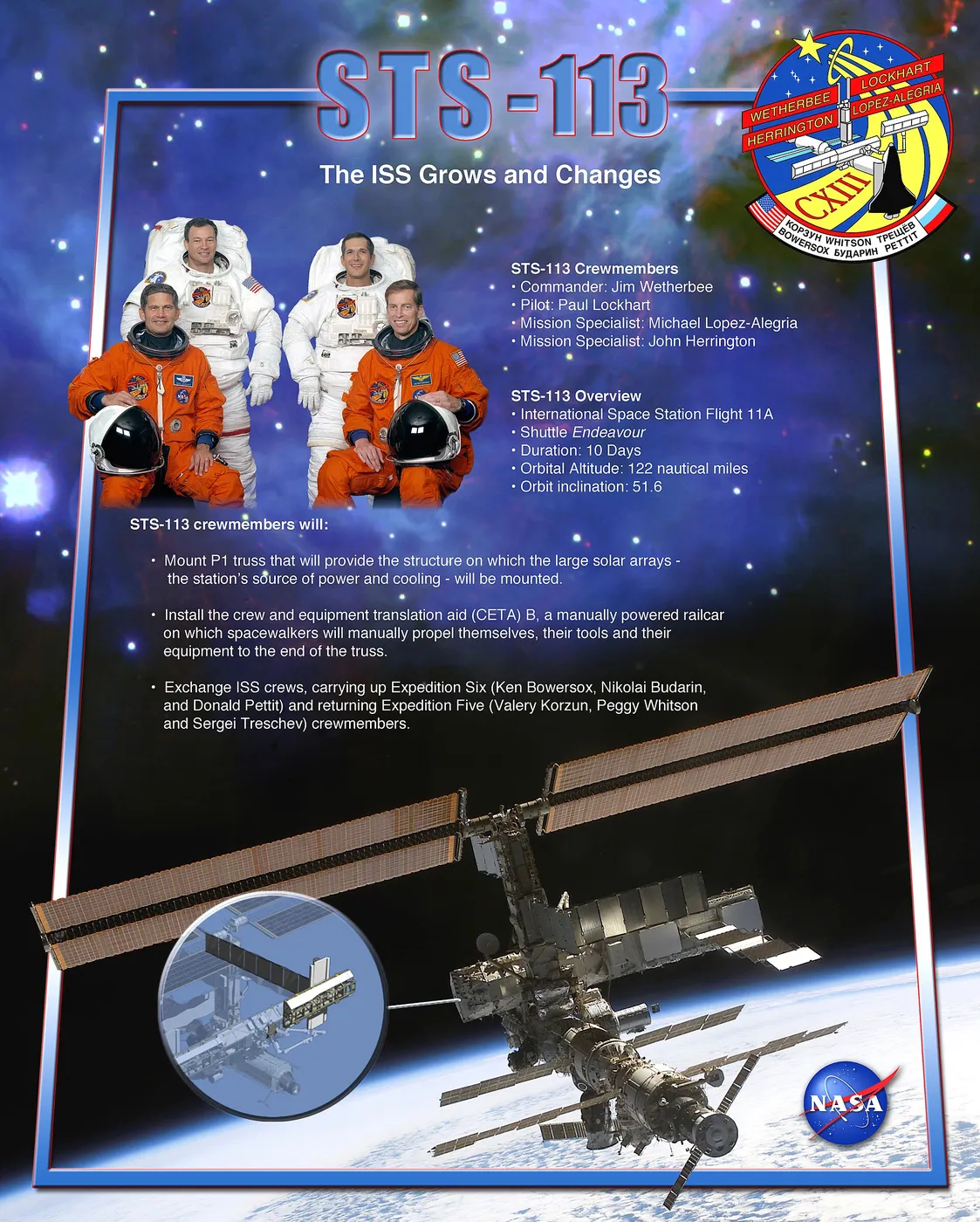
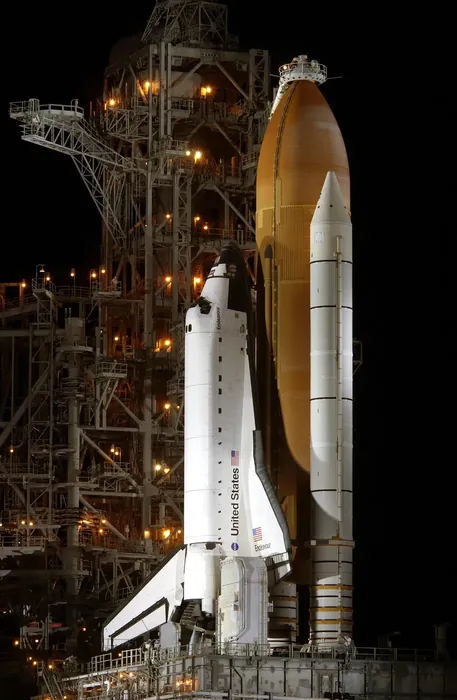
Endeavour delivered the first port segment of the station's main truss in November 2002 and rotated the resident crew, exchanging the fifth expedition for the sixth. The crew of seven installed the girder on the growing backbone, balancing the segment added to the opposite side weeks earlier.
Three spacewalks connected the new truss and prepared it for the solar arrays it would later carry. It was a productive, routine assembly flight — and, though no one knew it, the last Shuttle mission to end normally for more than two years. The very next flight, Columbia's, would be lost during its return, halting assembly and forcing the program into a long, searching reckoning. STS-113's crew came home safely, closing an era that ended abruptly weeks later.
The last successful flight before Columbia delivered the first port-side truss segment, balancing the structure that had been growing to starboard and bringing with it another set of radiators. Three spacewalks by John Herrington and Michael Lopez-Alegria connected it and freed jammed hardware on the mobile transporter.
Herrington, a member of the Chickasaw Nation, was the first enrolled member of a Native American tribe to fly in space, and he carried with him eagle feathers, a braid of sweetgrass and his nation's flag. He had come to NASA by an unusual route, having dropped out of university before returning to study mathematics and joining the Navy.
Endeavour also rotated the crews, bringing Expedition 5 home after six months and delivering Expedition 6, who expected to stay four months and ended up staying nearly six — because two months later Columbia was lost, the Shuttle stopped flying, and the only way home became a Russian capsule.