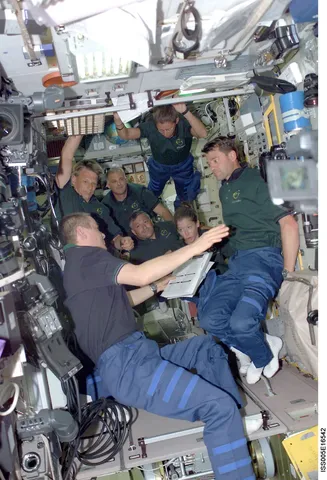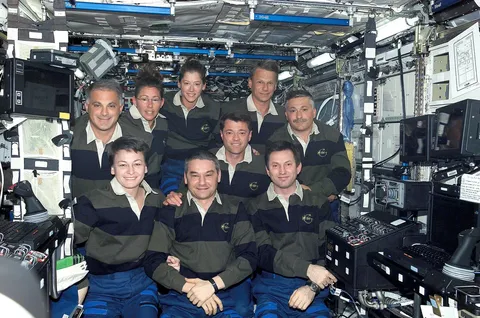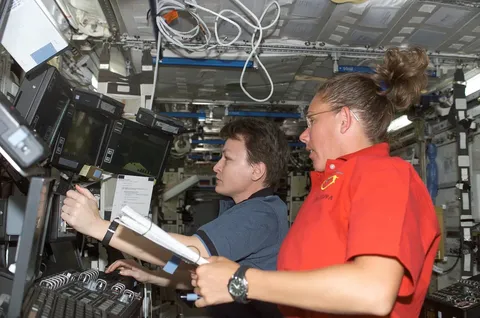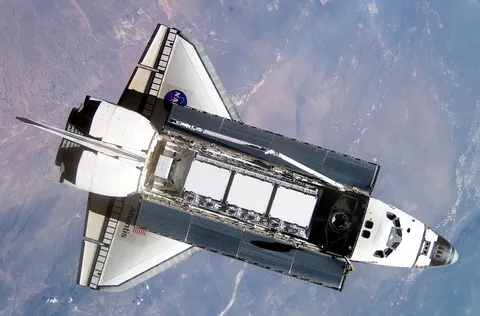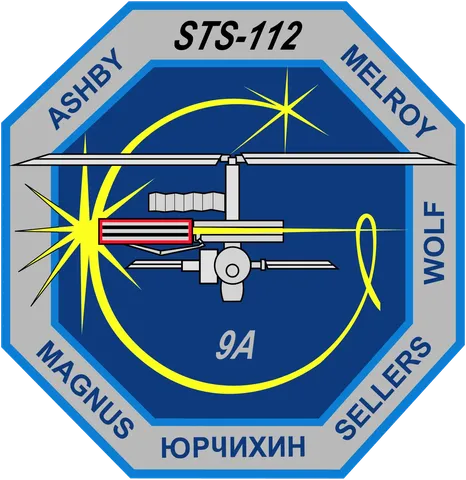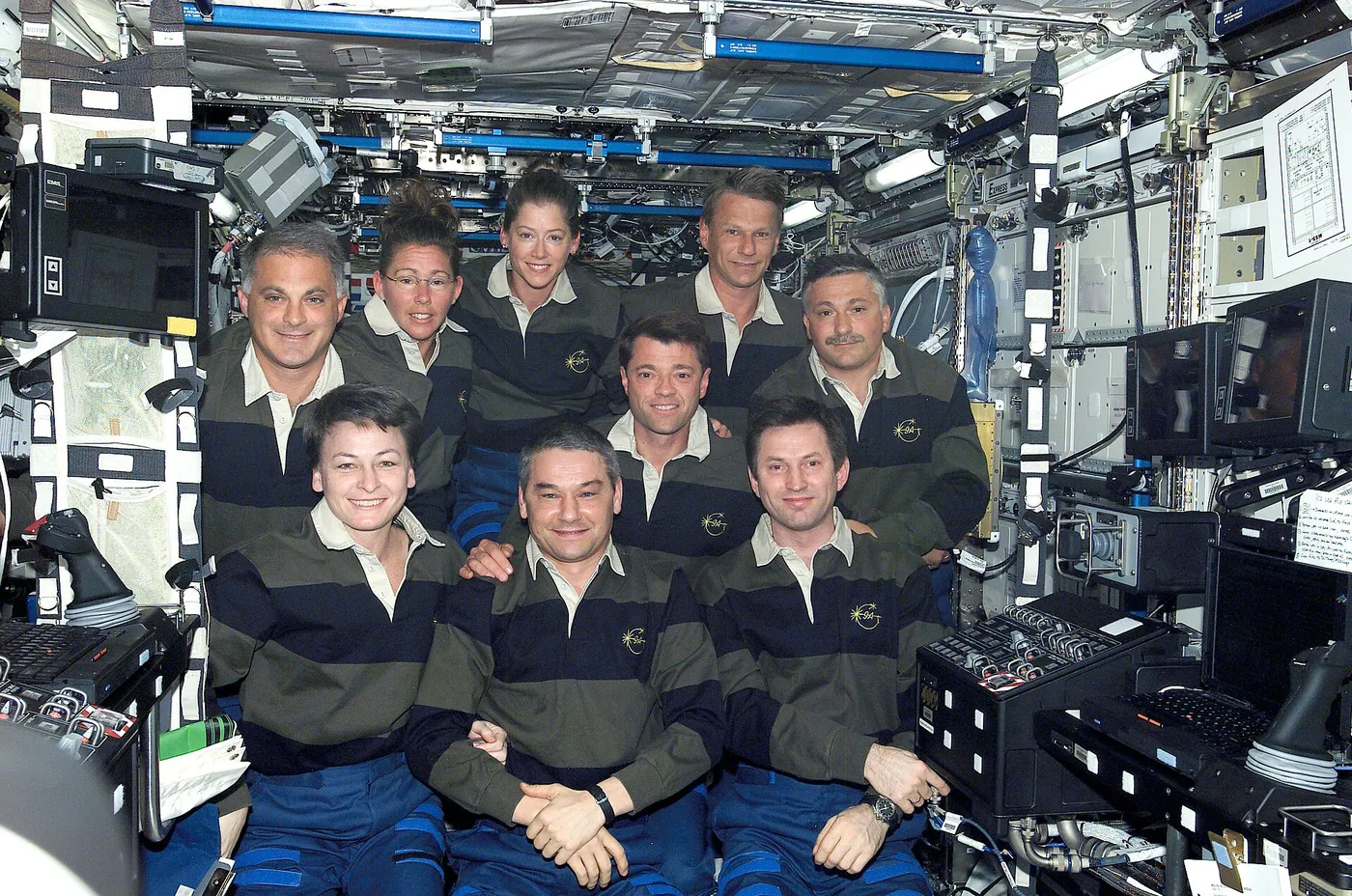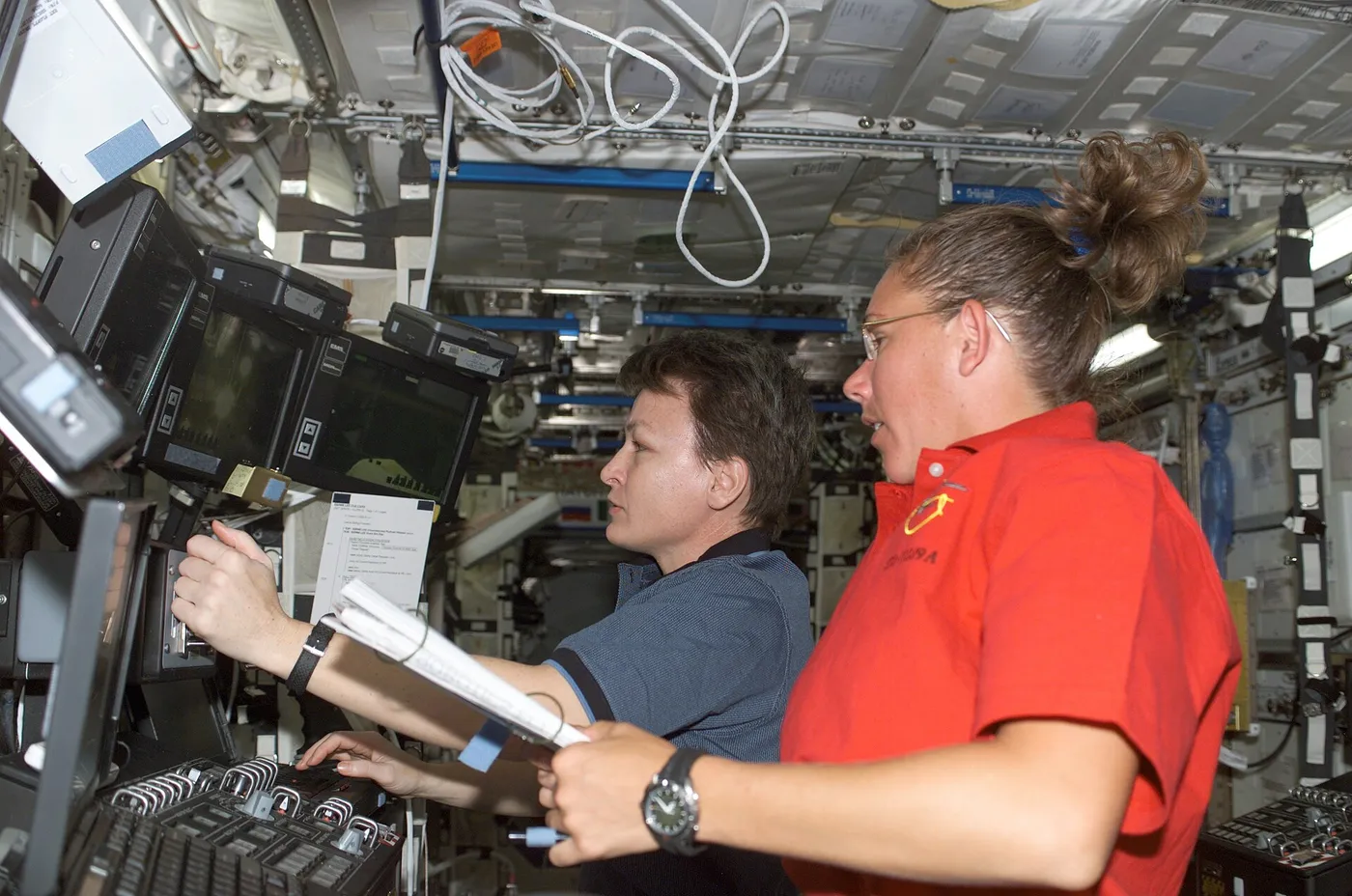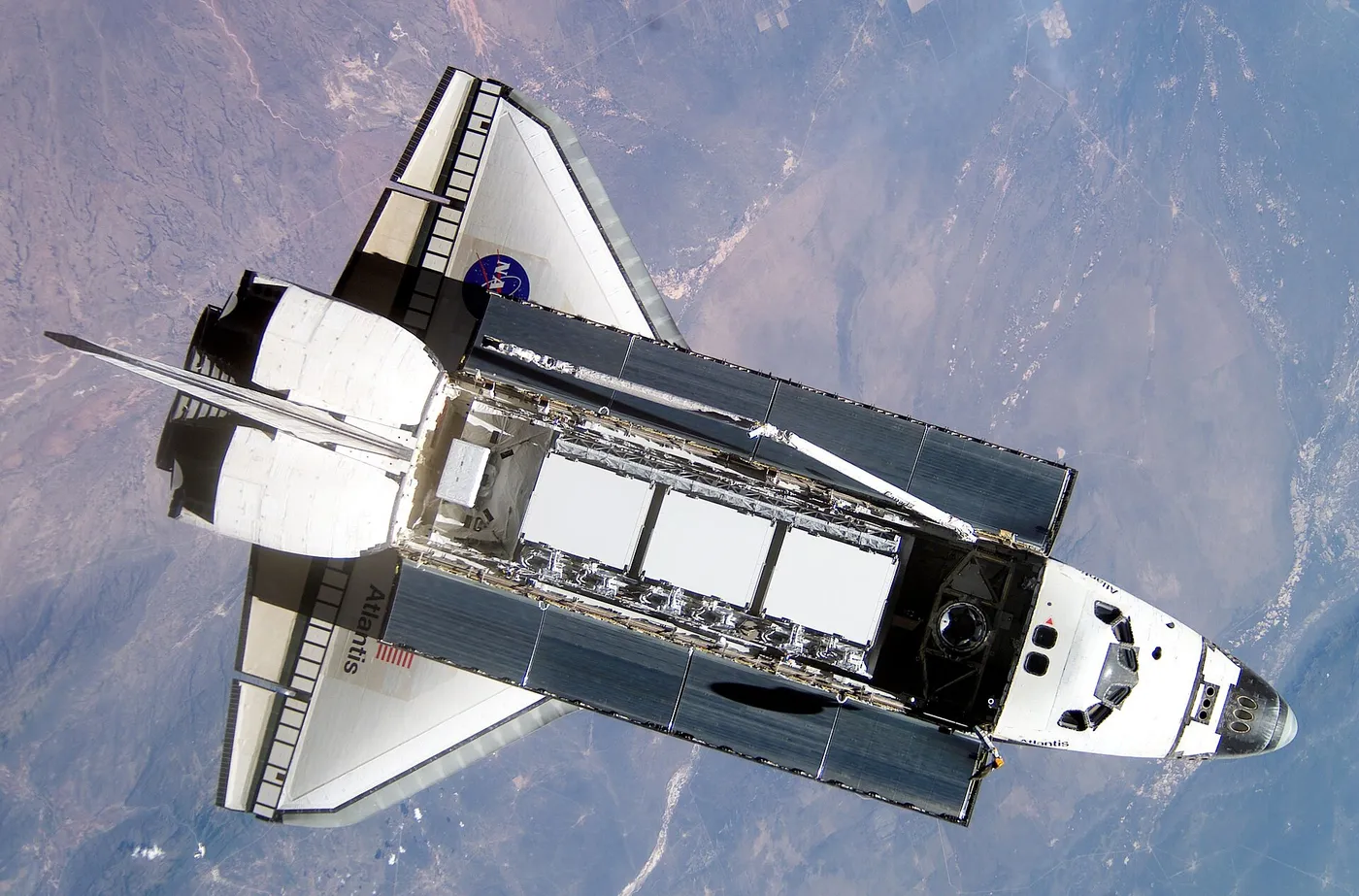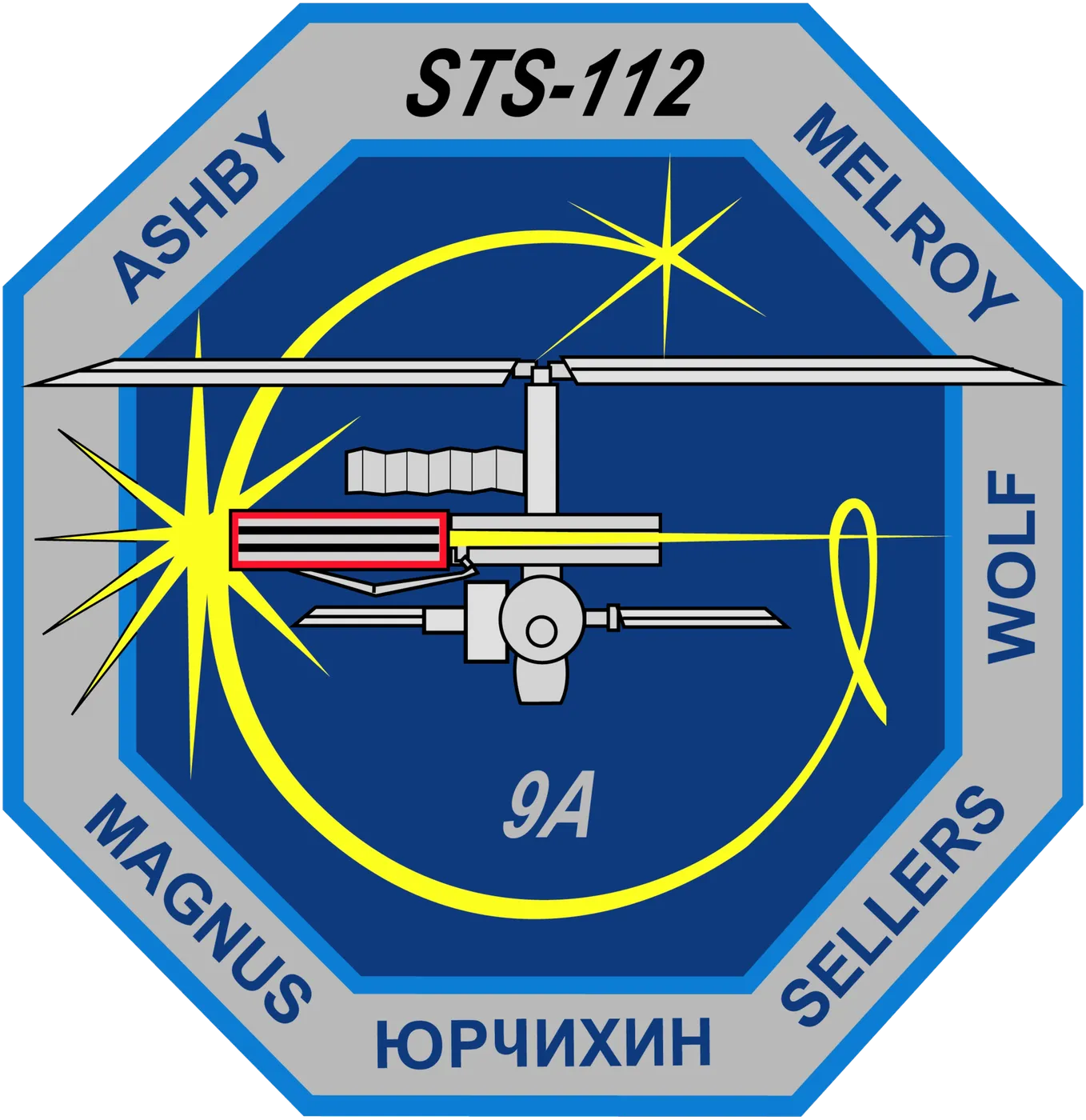
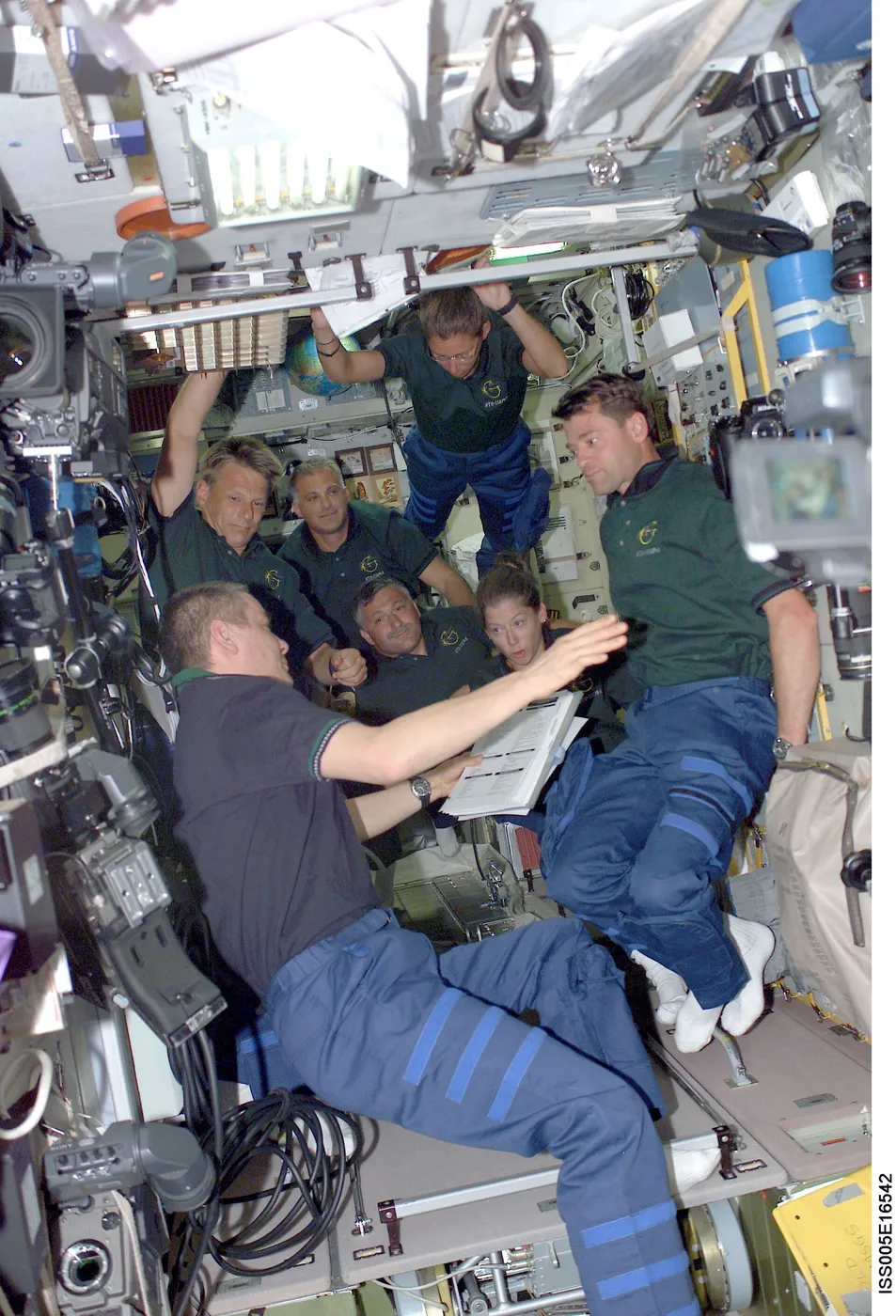
Atlantis delivered the first starboard segment of the station's main truss in October 2002, extending the growing backbone that would carry solar arrays and cooling radiators out to one side. The crew of six installed the girder with the station's robotic arm and connected it into the outpost's systems.
Three spacewalks bolted the new truss in place and routed its power and cooling lines. The mission also carried a camera mounted on the external tank that gave a spectacular view of the climb to orbit and, in hindsight, foreshadowed the intense scrutiny of ascent debris that would follow the next Columbia flight. STS-112 continued the steady, methodical extension of the truss, each segment bringing the station closer to its full span and power.
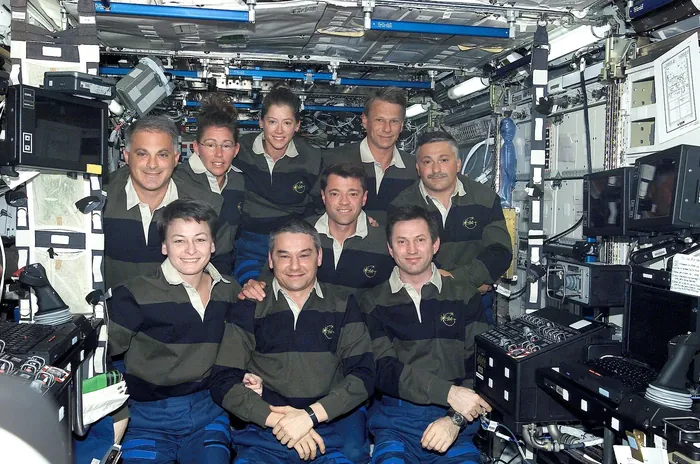
Atlantis carried the first truss segment to the starboard side in October 2002, extending the backbone outward from the centre section installed six months earlier. The S1 truss carried radiators — the station sheds waste heat through enormous panels, and as its power grew so did the need to get rid of the heat that power produced.
The mission introduced a small innovation with a long afterlife: a video camera mounted on the external tank, broadcasting live pictures of the ascent from the vehicle's own perspective. It was flown to give engineers a better view of the tank's behaviour during launch, and the footage was compelling enough that it became standard.
That decision mattered enormously four months later. The camera imagery, along with ground tracking film, was central to understanding what had happened to Columbia — and the routine inspection of every launch for foam shedding, which became the organising discipline of the programme's final decade, grew directly out of the practice this flight began.