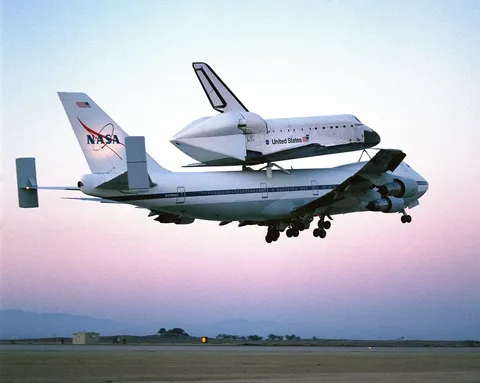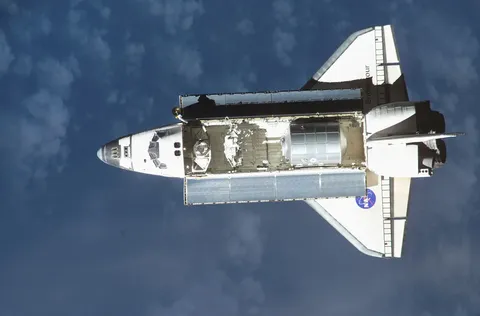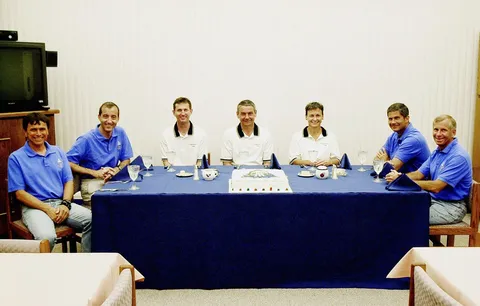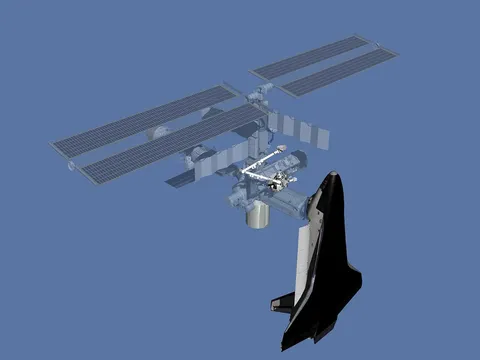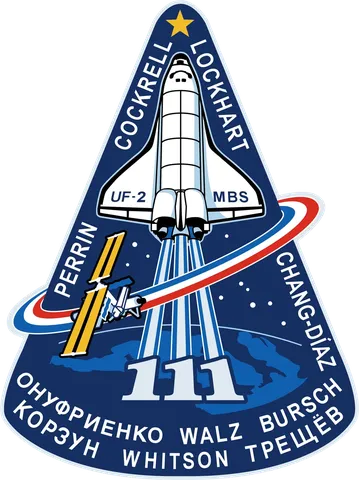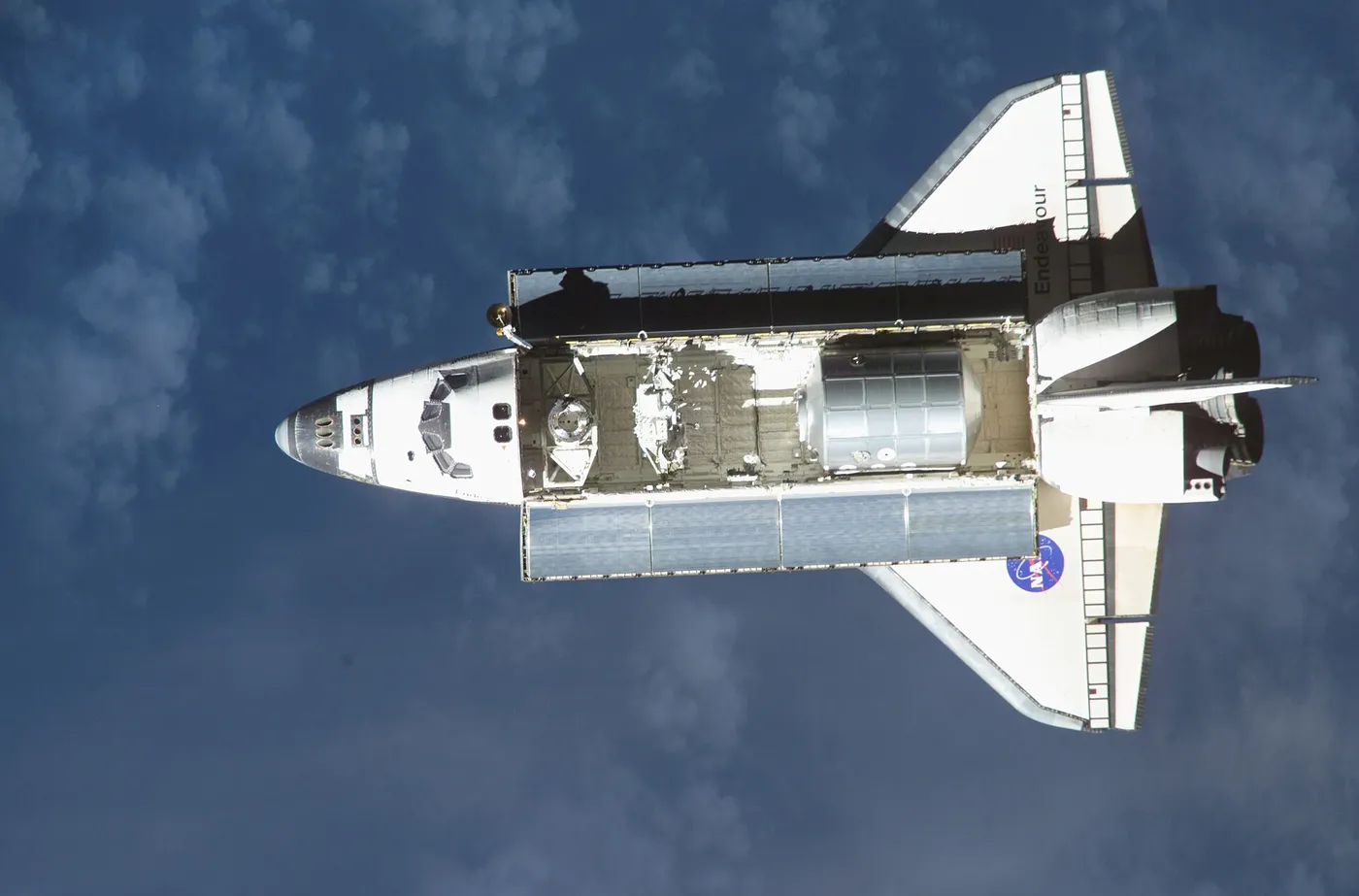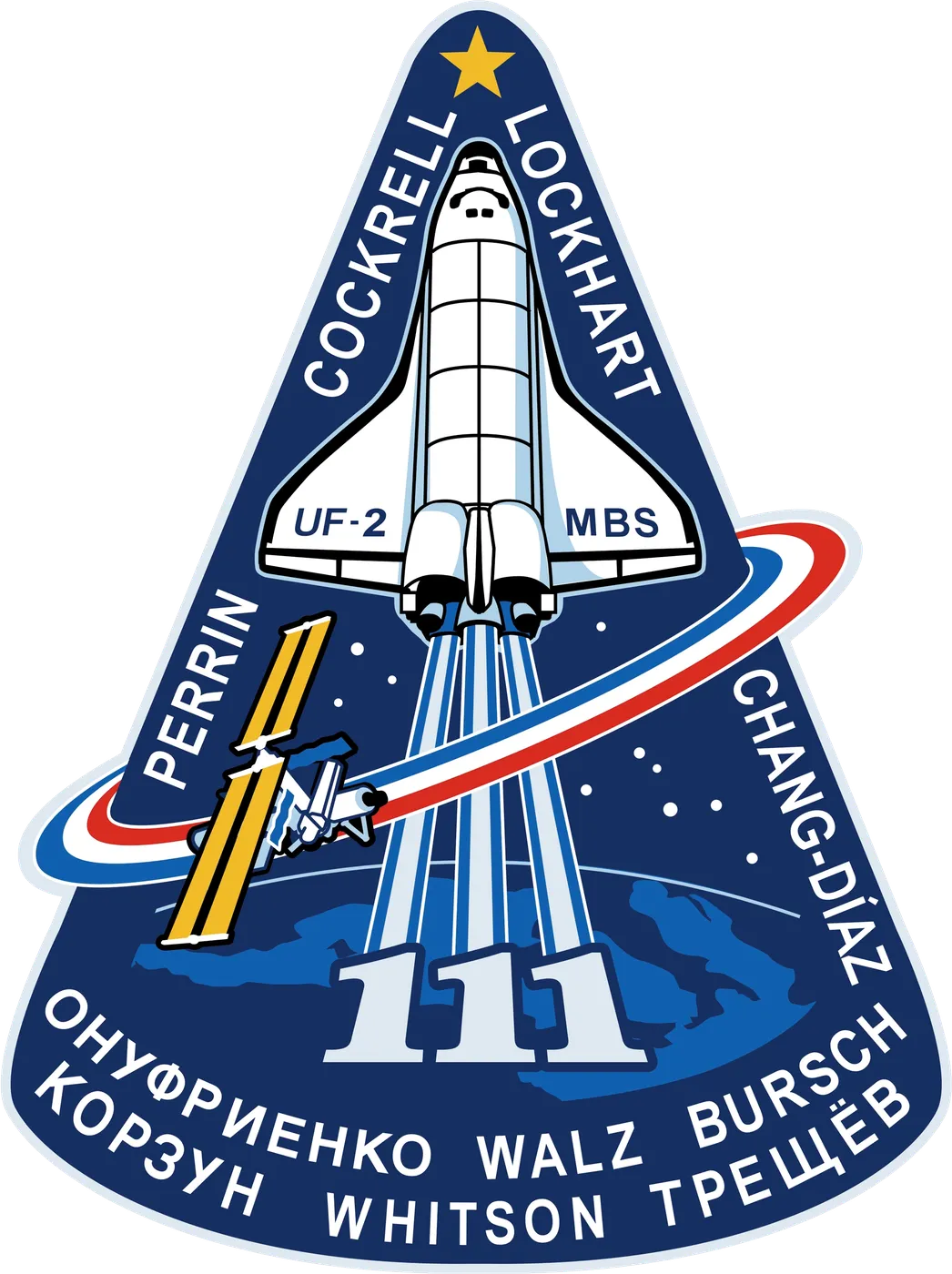
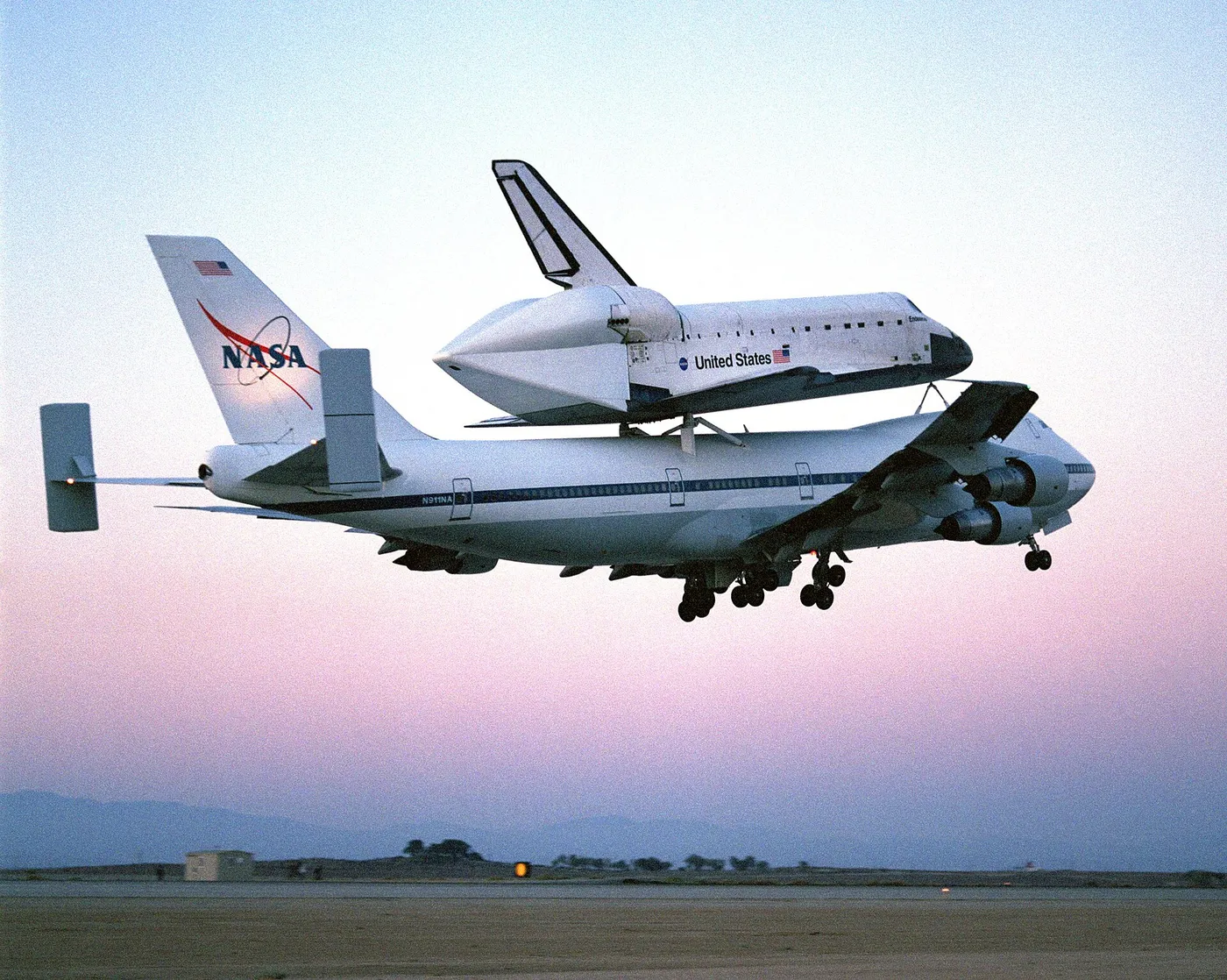
Endeavour combined a crew rotation with a truss-outfitting mission in June 2002, exchanging the station's fourth resident expedition for the fifth and delivering key hardware for the growing outpost. The mission carried up a mobile base that would let the station's robotic arm travel along the main truss, a crucial capability for future assembly.
Three spacewalks installed the mobile base and replaced a wrist joint on the robotic arm, hands-on maintenance that kept the station's essential manipulator in service. An Italian cargo module ferried supplies and experiments. By pairing the arrival of a fresh crew with the delivery and installation of assembly infrastructure, the flight kept both the habitation and construction of the station moving forward together, a balance the program struck again and again.
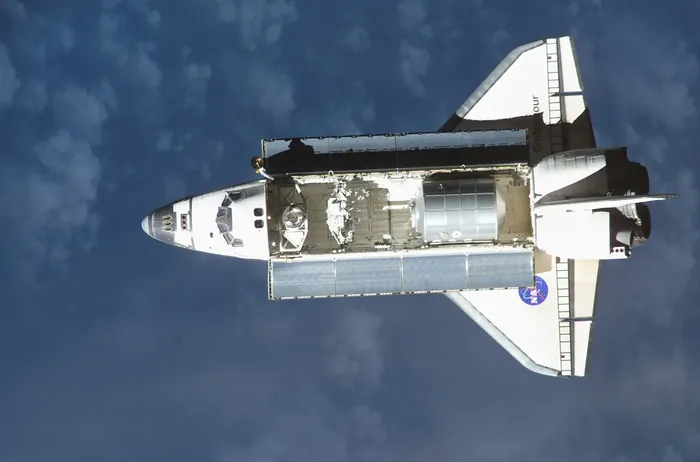
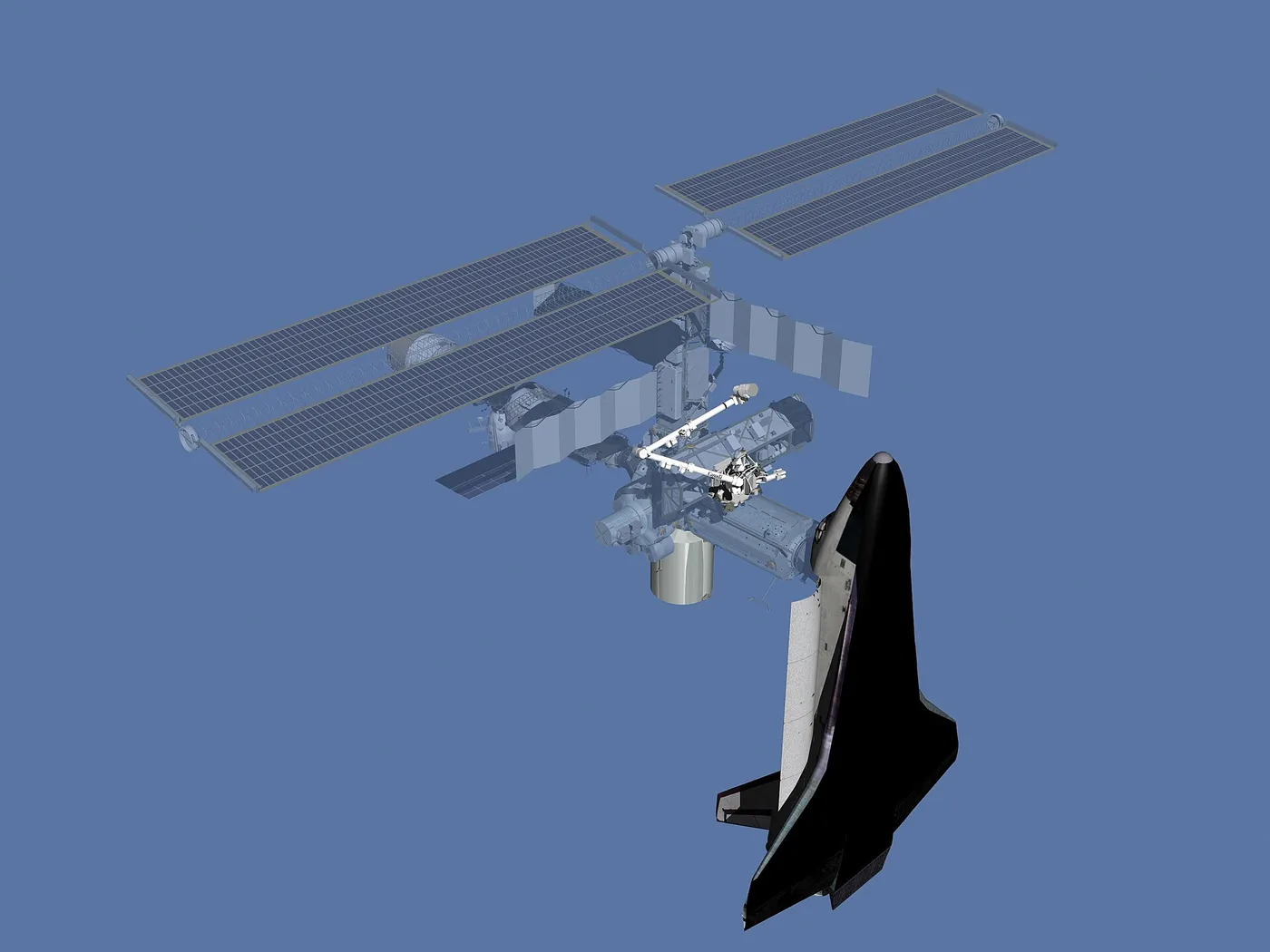
Endeavour delivered the piece that let the station's robotic arm move. The Mobile Base System was a platform that rode the rails installed on the previous flight, allowing Canadarm2 to be carried along the growing truss and work anywhere on it rather than being limited to the reach of fixed grapple points.
Without it, assembly would have stalled: each new truss segment needed the arm positioned near the worksite, and walking the arm end-over-end between fixtures was slow and limited. With it, the station acquired what amounts to a travelling crane covering the length of the structure.
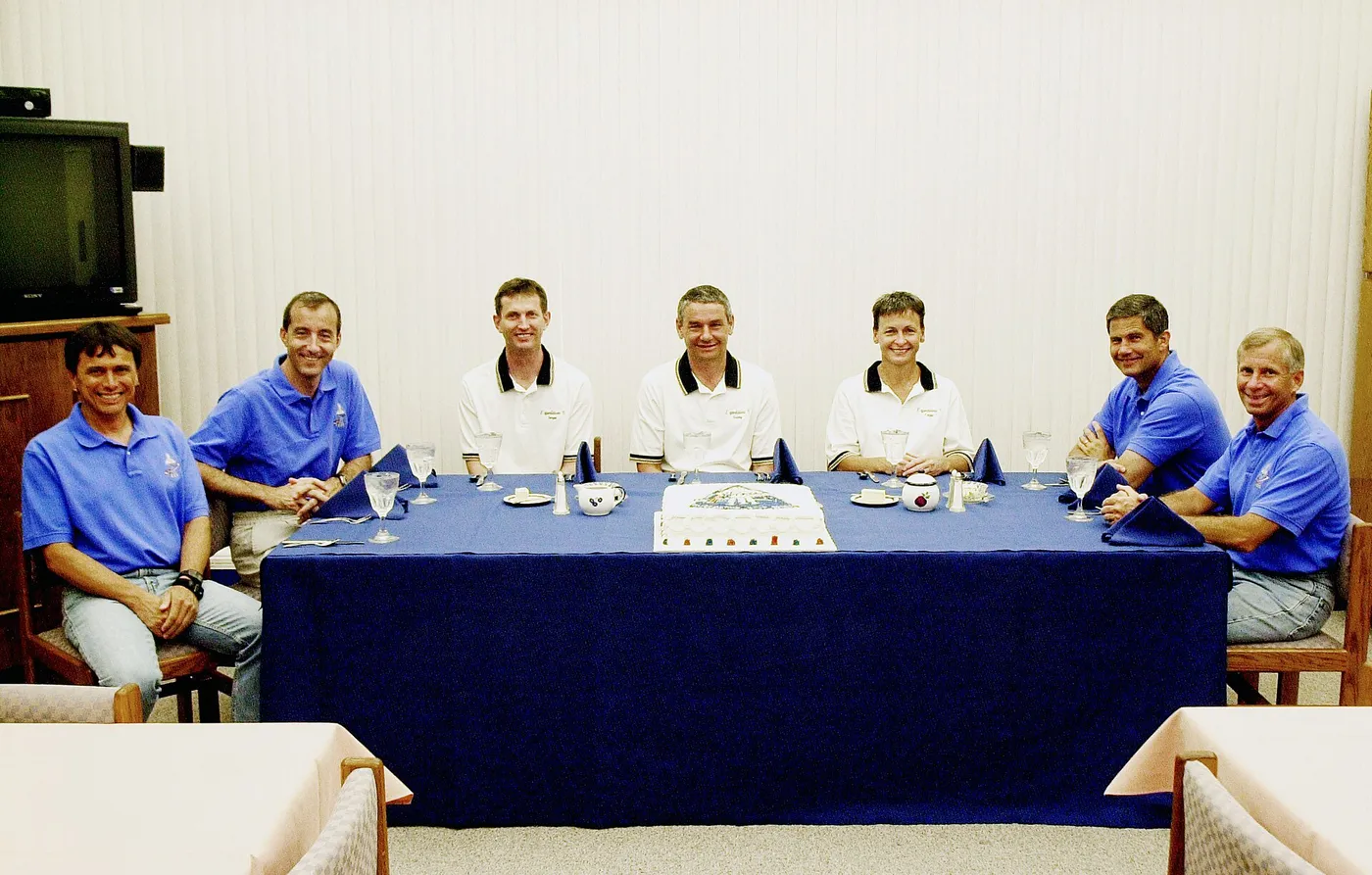
The flight also rotated crews — Expedition 5 up, Expedition 4 home after six and a half months — and carried Philippe Perrin of France, who made three spacewalks including a repair to the arm itself, replacing a failed wrist joint. Fixing a robot in vacuum with gloved hands is the sort of thing the station's designers had counted on being possible, and here it was demonstrated.