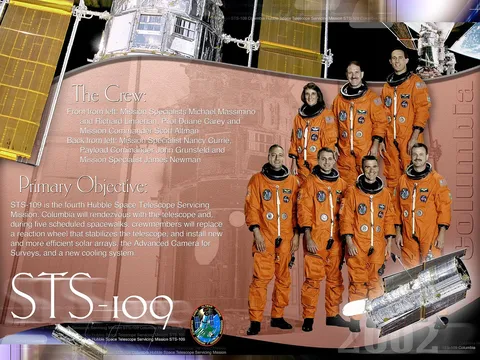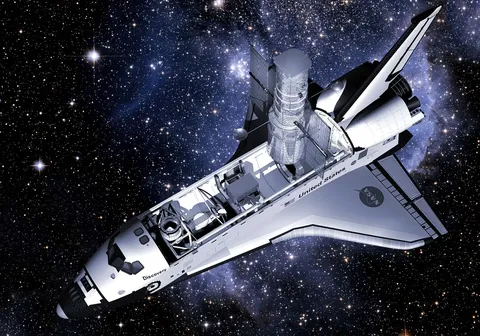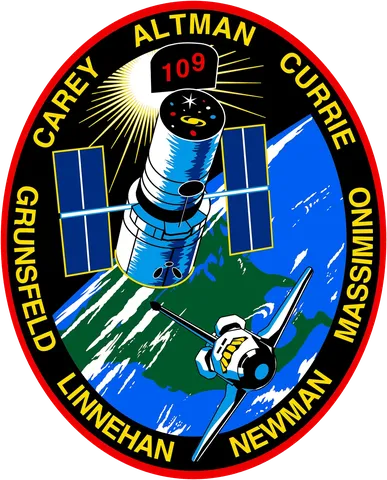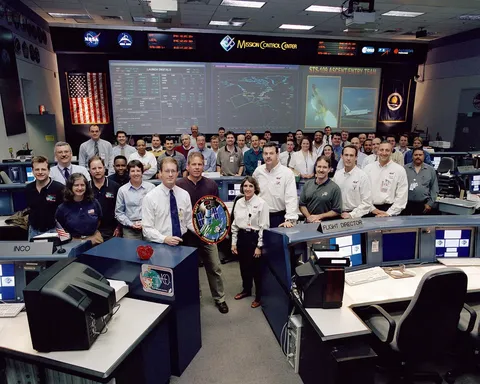
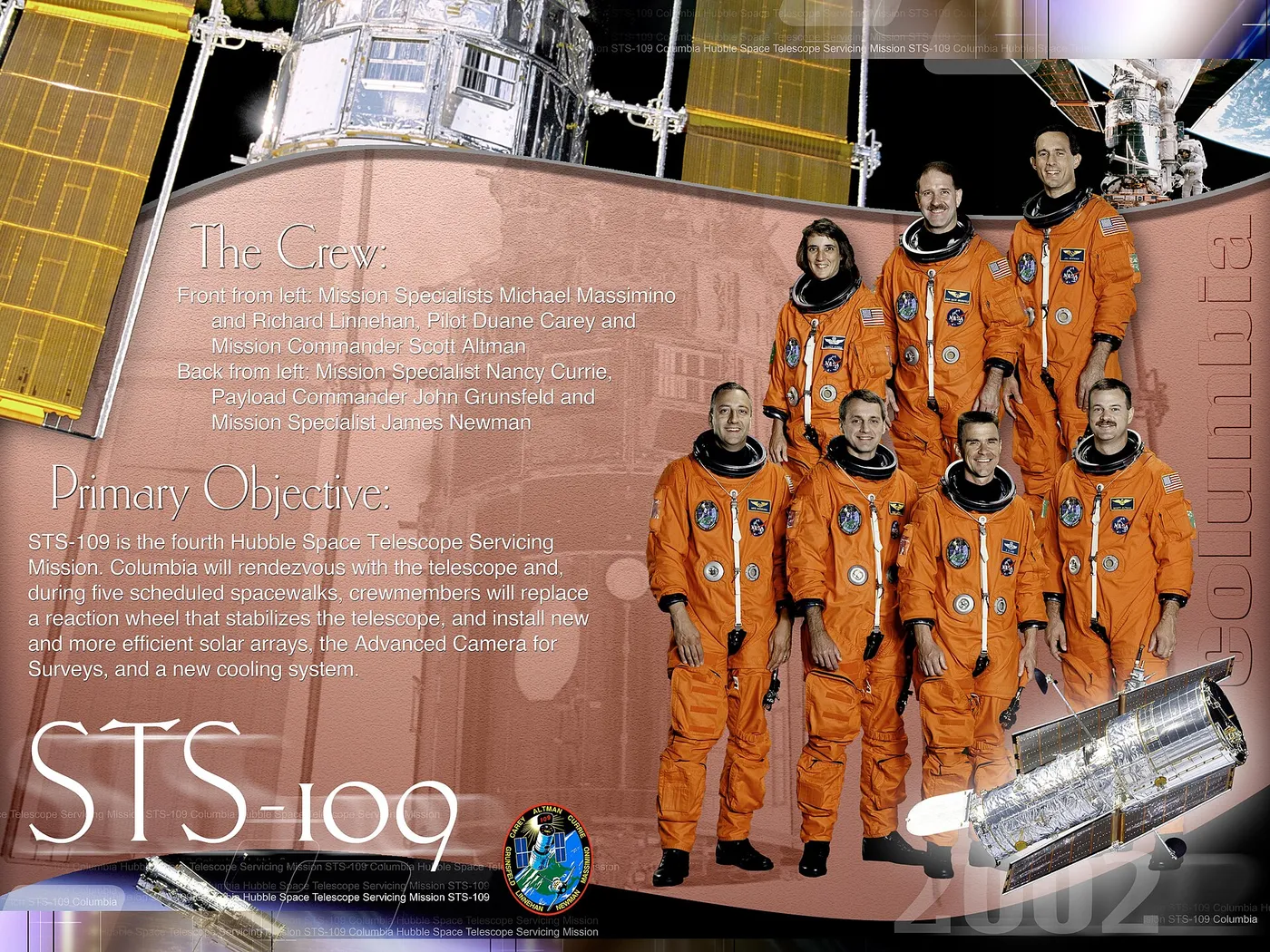
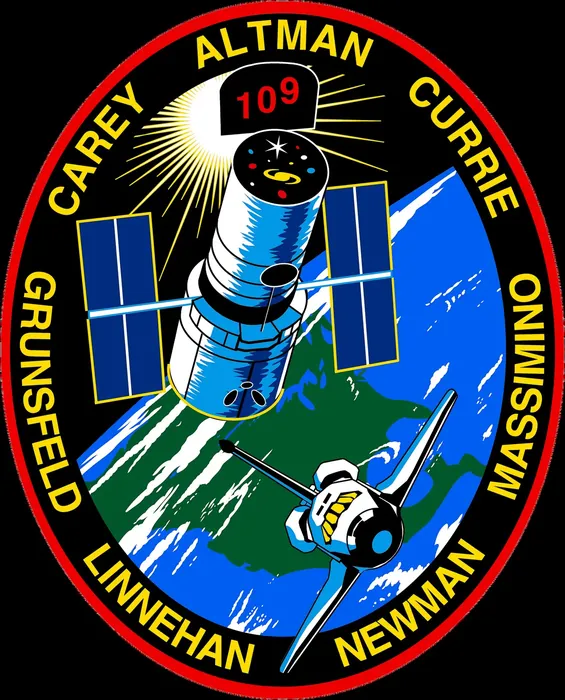
Columbia flew the fourth servicing mission to the Hubble Space Telescope in March 2002, an ambitious upgrade that would prove to be the orbiter's last successful flight. Over five spacewalks the crew of seven installed a powerful new camera that vastly expanded Hubble's reach, replaced the solar arrays with smaller but more efficient panels, and revived a dormant infrared instrument by fitting a novel mechanical cooler.
The improvements sharply increased the telescope's scientific power, extending its productive life and enabling some of its most famous deep views of the distant universe. The mission showed the servicing concept at its most refined, with a practised crew renewing a beloved observatory. That Columbia performed so flawlessly here made its loss ten months later, on a very different kind of mission, all the more wrenching.
Columbia's penultimate flight was the best day Hubble ever had. Over five spacewalks in March 2002 the crew replaced both solar arrays with smaller, rigid ones that produced more power, fitted a new power control unit, installed the Advanced Camera for Surveys, and revived a dormant infrared camera by fitting it with a mechanical cryocooler after its original coolant had boiled away years early.
Changing the power unit meant doing something never attempted: switching the telescope off completely for the first time since 1990. If it failed to come back — if the cold seized a mechanism or a connector refused — there was no second chance, and Hubble would have ended its life as a dead mirror in a tube. It came back.
The new camera repaid all of it immediately, with roughly ten times the discovery power of the instrument it replaced; within two years it had produced the Ultra Deep Field, an image of ten thousand galaxies in a patch of sky the size of a grain of sand held at arm's length. John Grunsfeld, the astrophysicist who led the spacewalks, called himself the telescope's mechanic. Ten months later Columbia was lost, and the remaining Hubble mission was cancelled — for a while.