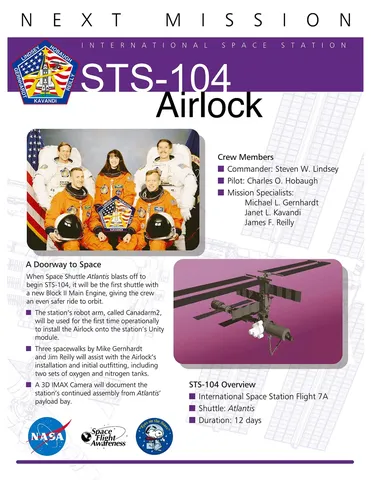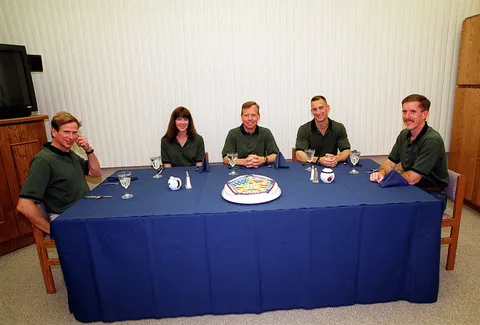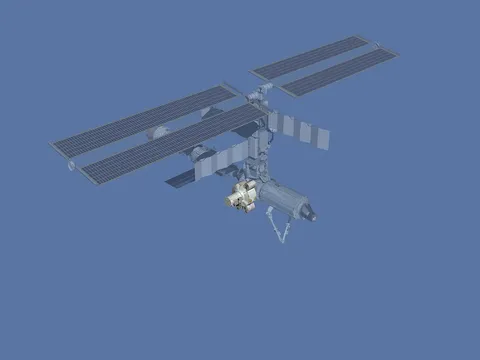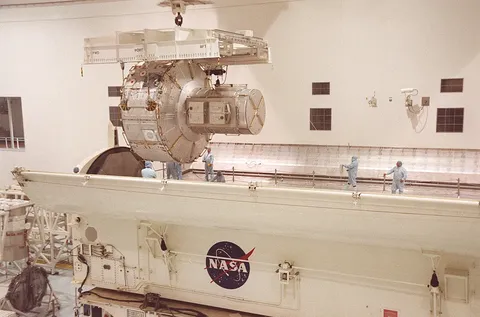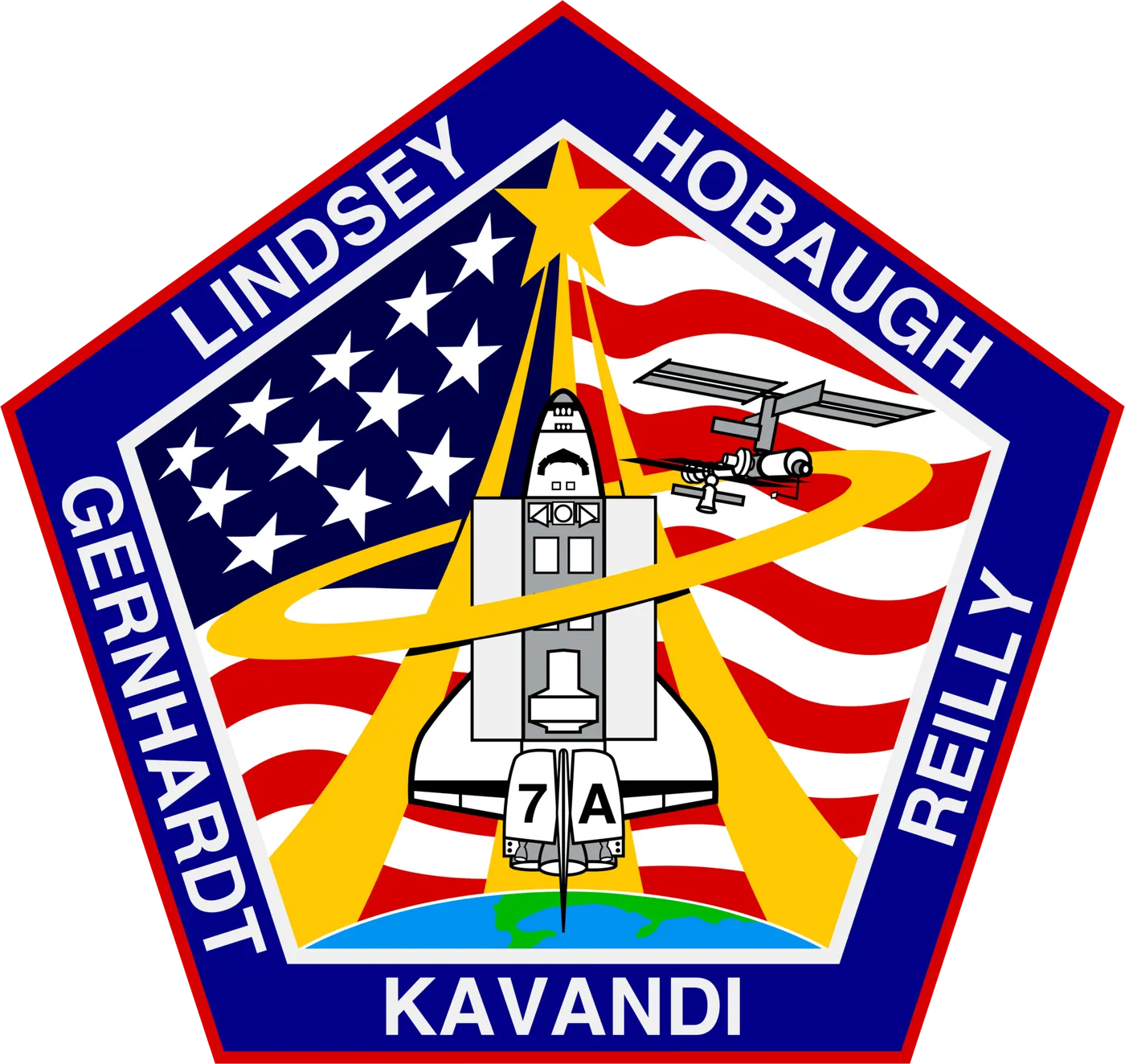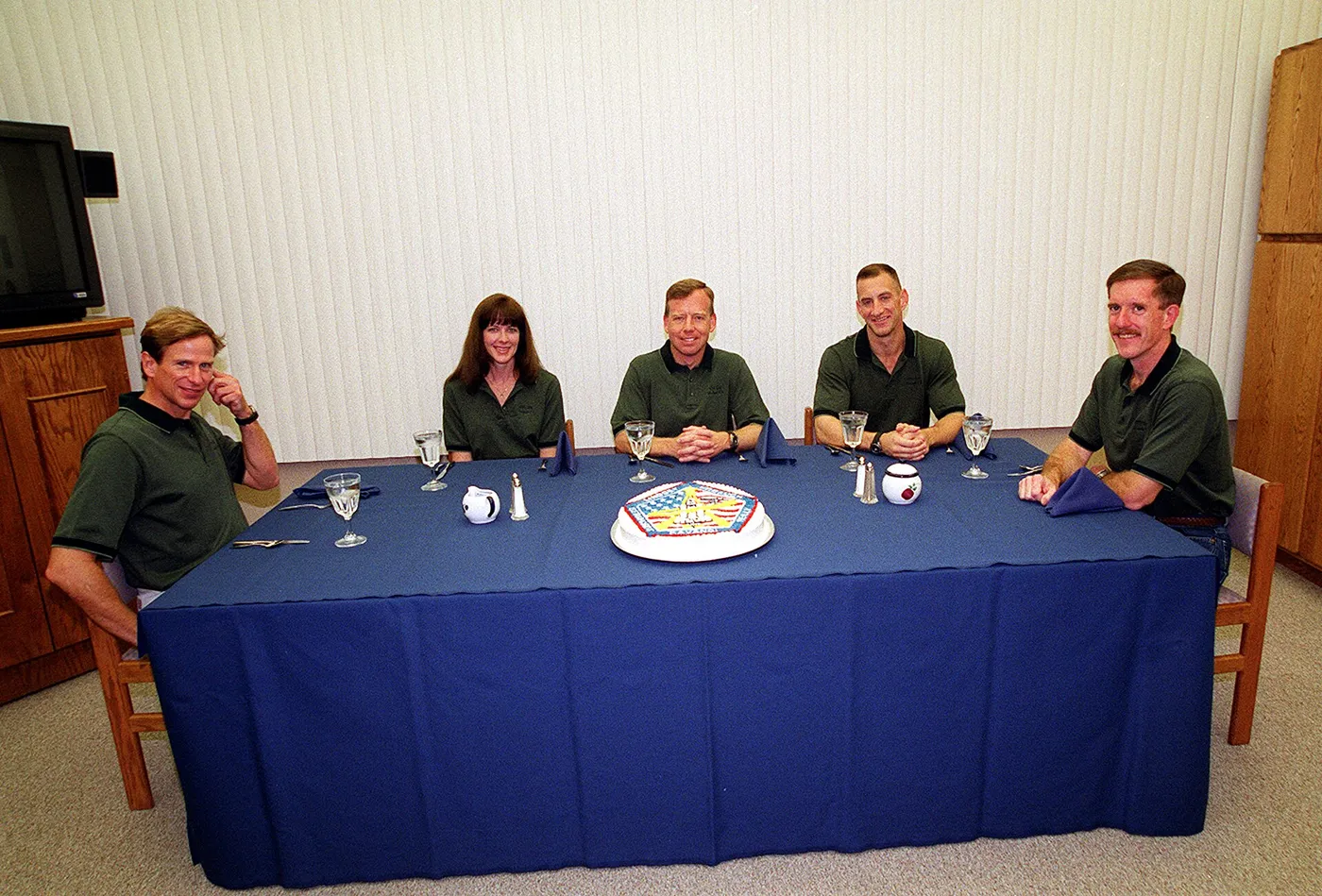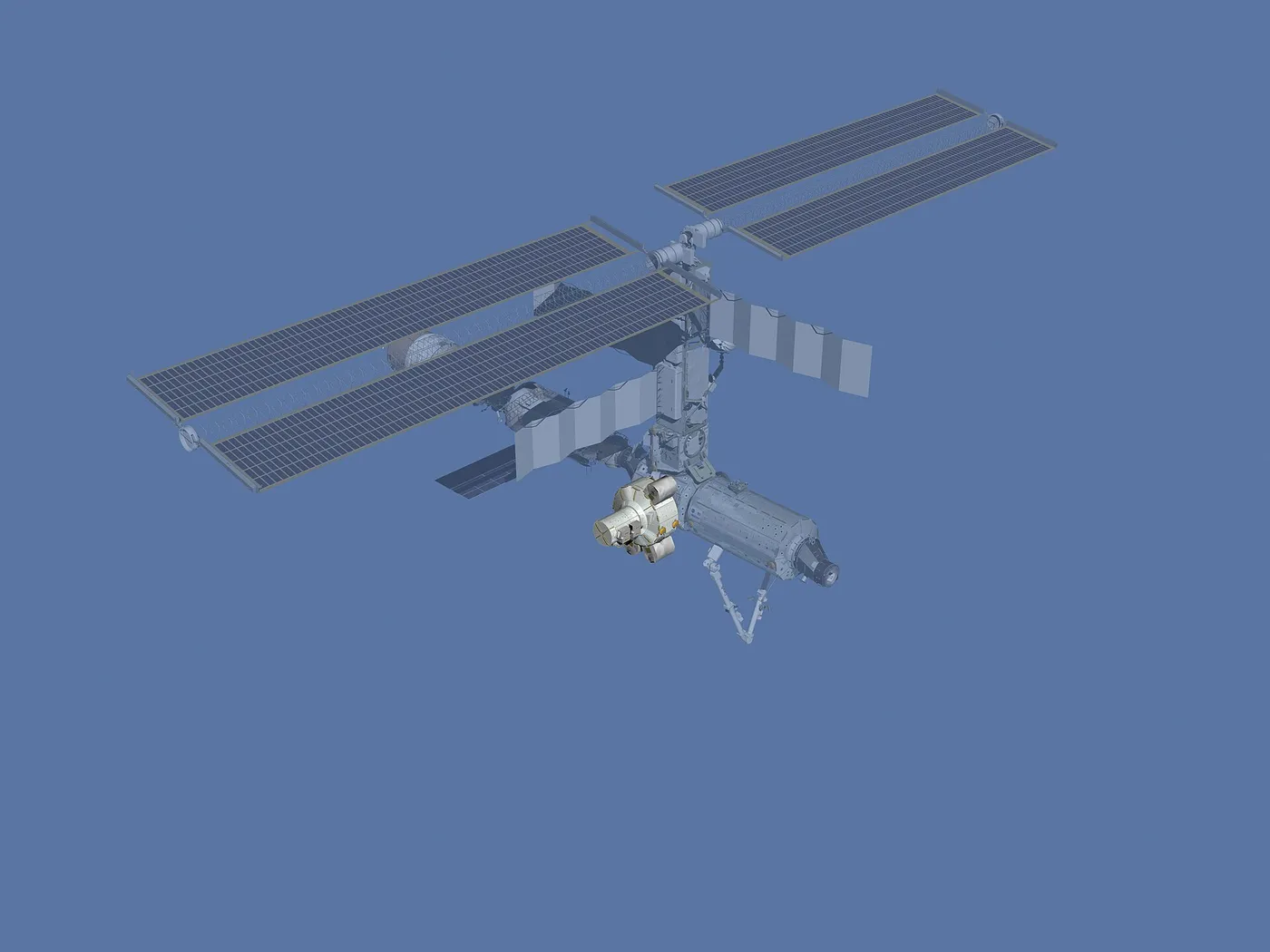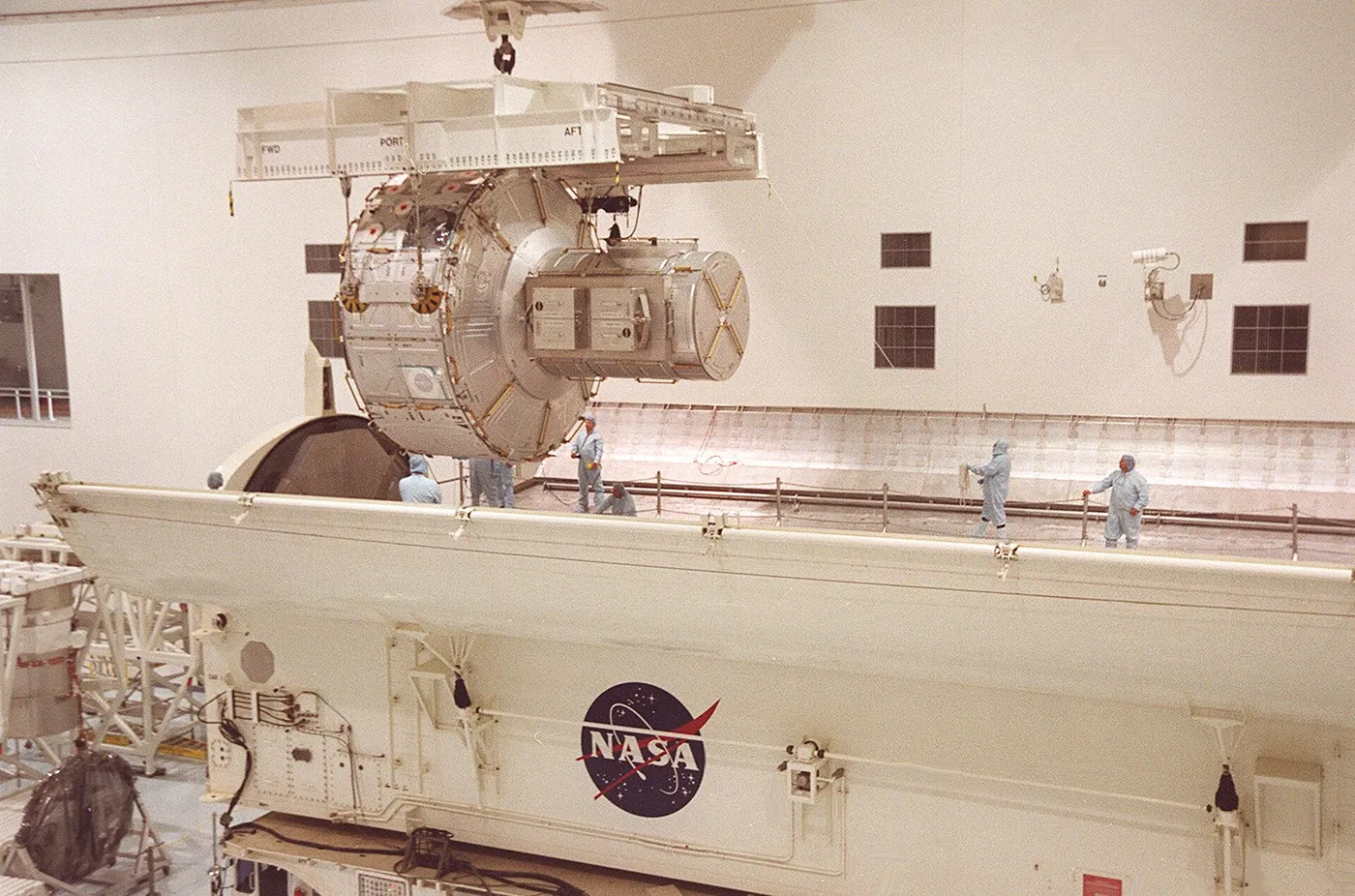
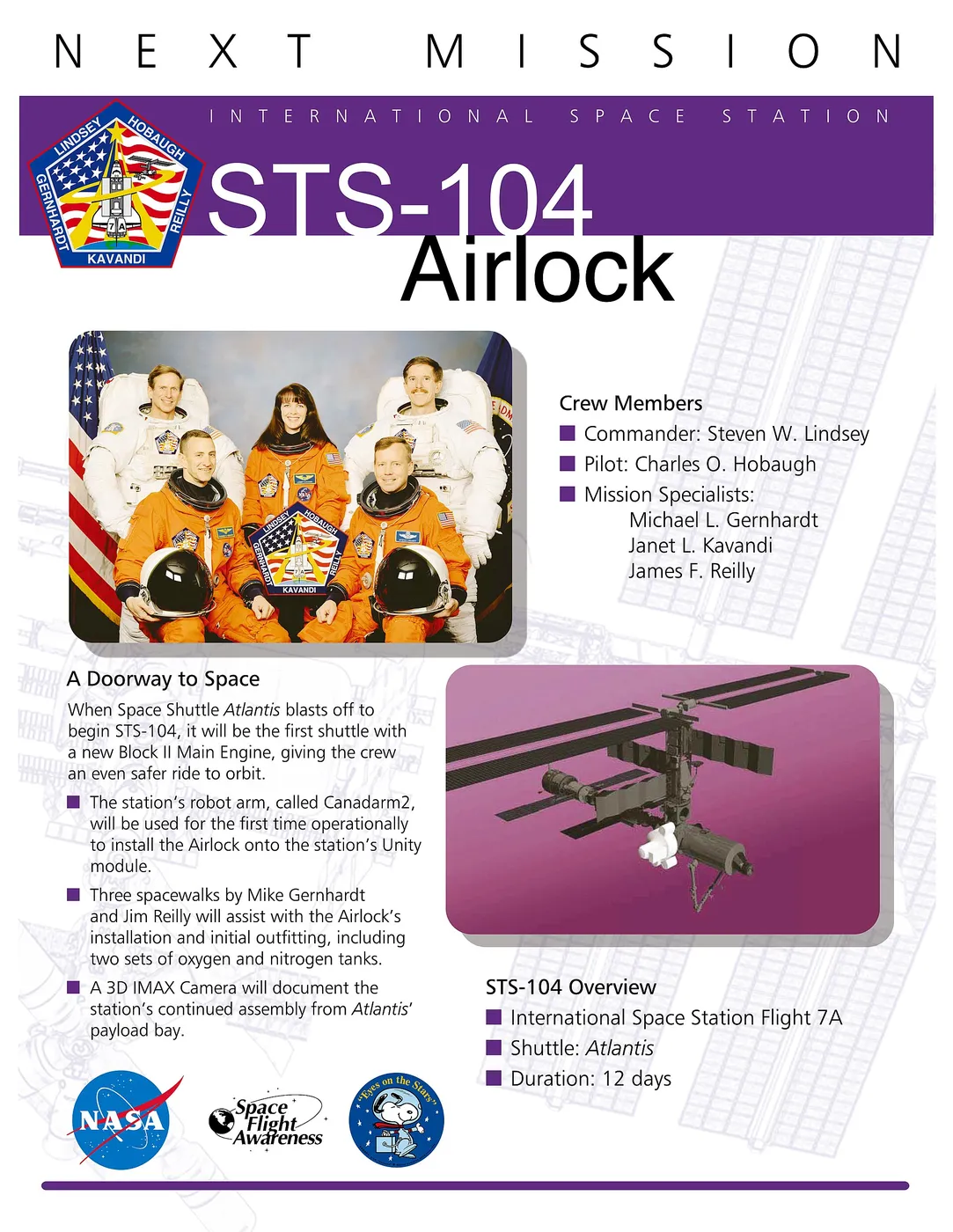
Atlantis delivered the Quest airlock to the International Space Station in July 2001, giving the outpost its own gateway for spacewalks and freeing crews from depending on the Shuttle or the Russian segment to venture outside. The crew of five attached the airlock to the Unity node using the station's new robotic arm.
Three spacewalks installed the airlock and the high-pressure gas tanks that would supply future excursions, and the crew then tested the new facility by using it for the first time. With Quest in place, station crews could conduct spacewalks in American suits at any time, independent of a visiting Shuttle — a capability essential for the long assembly campaign and for the maintenance a permanently crewed station would require for years to come.
Until this flight, an astronaut could only walk in space at the International Station if a Shuttle was parked there to provide the airlock. Atlantis delivered Quest, a pressurised chamber with the equipment to service American suits and, crucially, tanks to recover the air that would otherwise be vented every time a hatch opened.
The module solved an awkward incompatibility. Russian and American suits ran at different pressures and used different fittings, and the pre-breathe protocol needed to avoid the bends differed between them; Quest was built to accommodate both, with a crew lock and an equipment lock so that astronauts could camp out overnight at reduced pressure before going outside.
Michael Gernhardt and James Reilly conducted three spacewalks to fit it and its high-pressure gas tanks, finishing by staging the first EVA ever begun from the station itself rather than from a visiting orbiter. From that point on, the residents could maintain their own home — which mattered far more than anyone realised in 2001, because eighteen months later the Shuttle stopped flying for two and a half years.