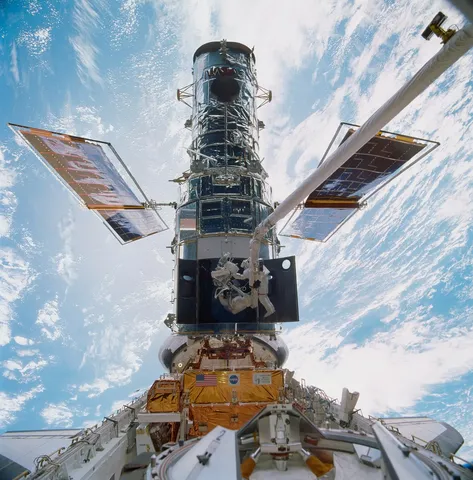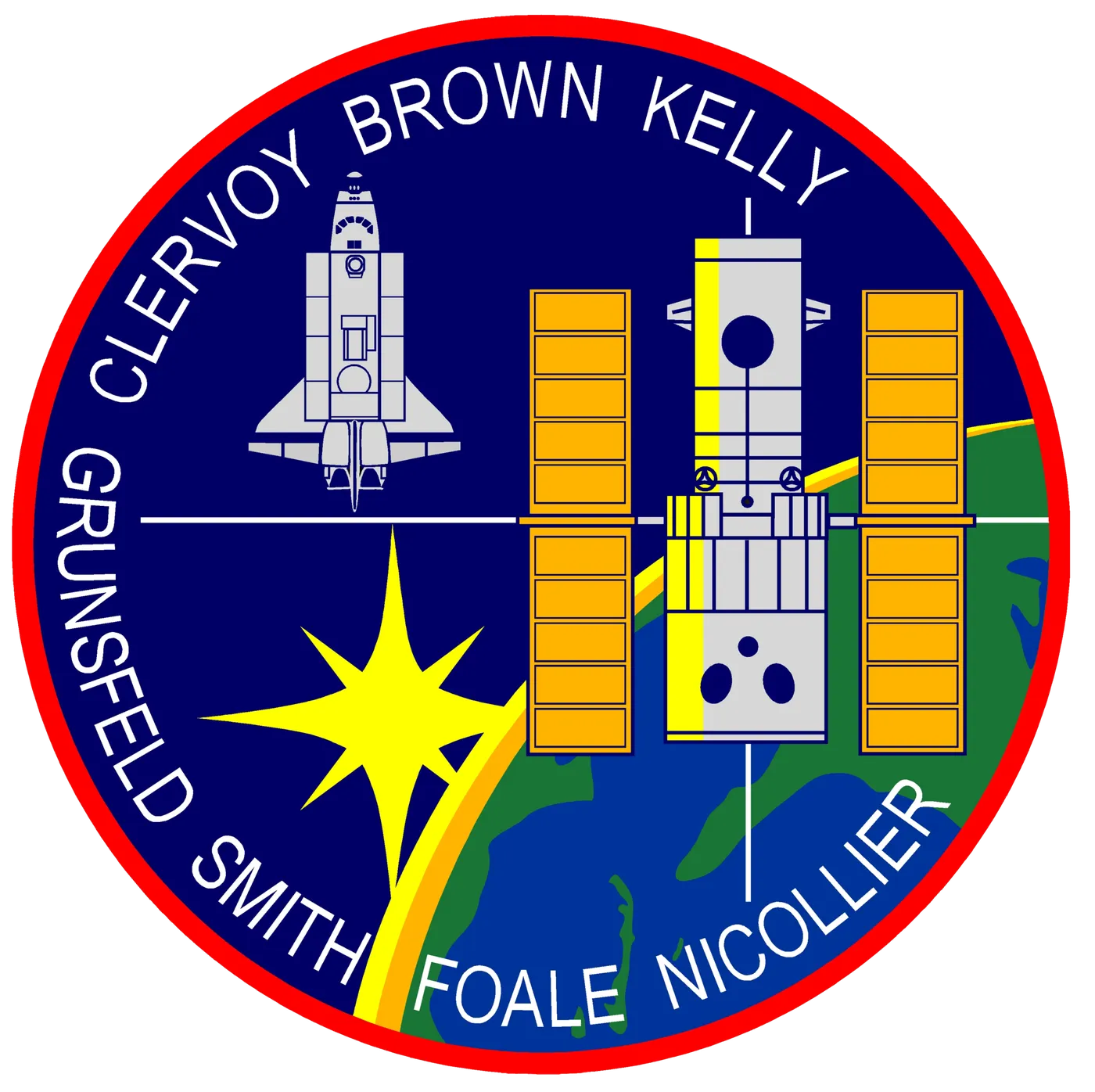
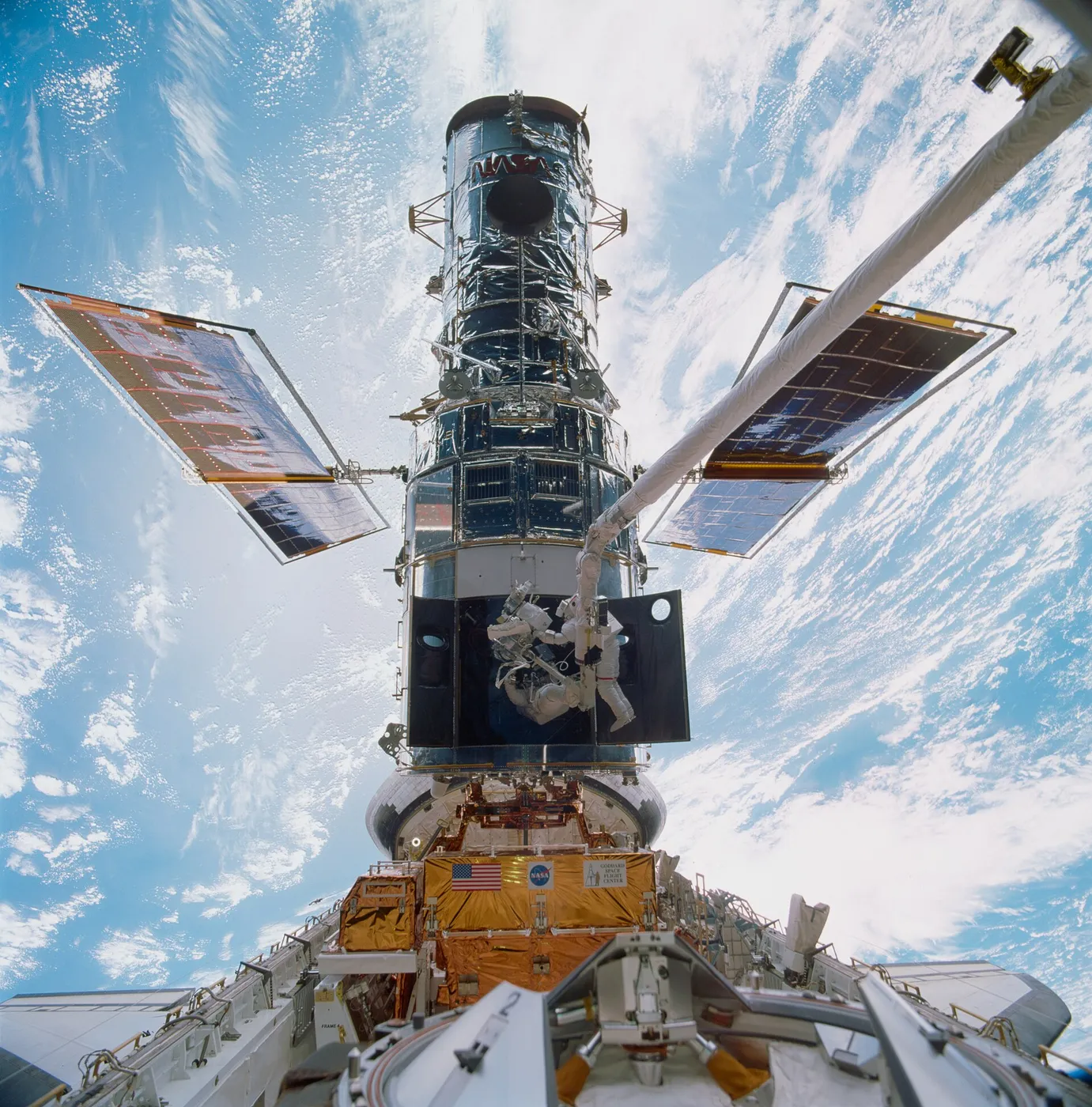
Discovery flew a hastily arranged third servicing mission to the Hubble Space Telescope in December 1999, after four of the observatory's six stabilising gyroscopes failed and left it unable to point precisely at its targets. With Hubble effectively idled, NASA split its planned servicing work and rushed this flight up to save the telescope.
Over three spacewalks the crew of seven replaced all six gyroscopes, installed a new central computer and fitted other upgrades, restoring the observatory to full health. The international crew included European astronauts, reflecting Hubble's role as a shared scientific treasure. Flying over the millennium's turn, the mission was a reminder of the Shuttle's unique ability to reach out and repair a crippled spacecraft, keeping one of science's most productive instruments alive.
This was an emergency call-out. Hubble flew on six gyroscopes and needed three to point precisely; by 1999 four had failed, and when a fifth died in November the telescope put itself into safe mode and stopped doing science altogether. NASA split its planned servicing mission in two and rushed the urgent half into orbit before the year was out.
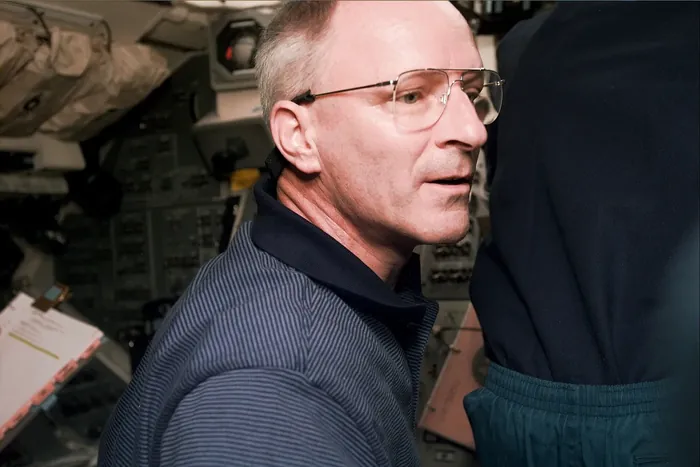
Discovery launched on 19 December and the crew spent Christmas in space, working three spacewalks inside the telescope's guts to replace all six gyroscopes, a fine guidance sensor, a radio transmitter and the twenty-year-old flight computer — swapped for a machine some twenty times faster, built around a processor that was already ordinary on desktops.
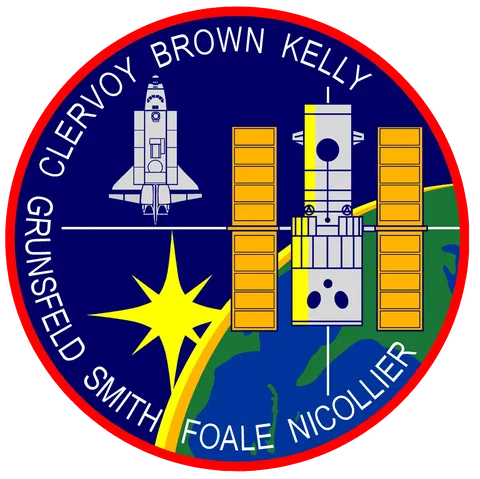
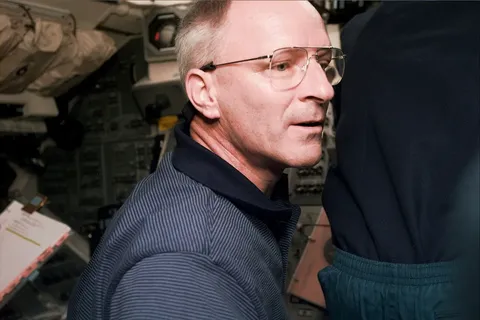
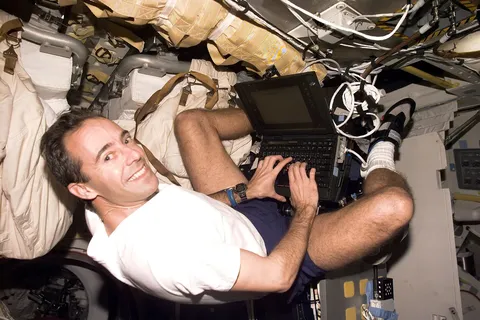
The crew was pointedly international: Claude Nicollier of Switzerland made the first spacewalk by a European Space Agency astronaut, and Jean-François Clervoy of France flew the arm. John Grunsfeld, an astrophysicist who would return twice more, called Hubble the observatory he had grown up wanting to use. Within days of the repair it was observing again, and the second half of the mission flew two years later.