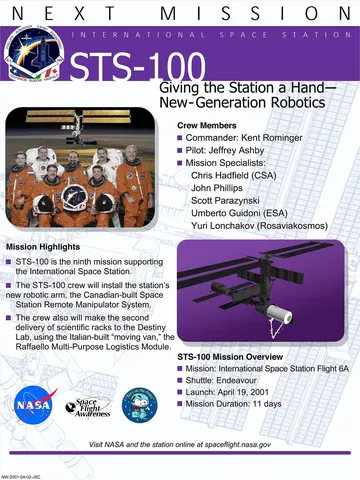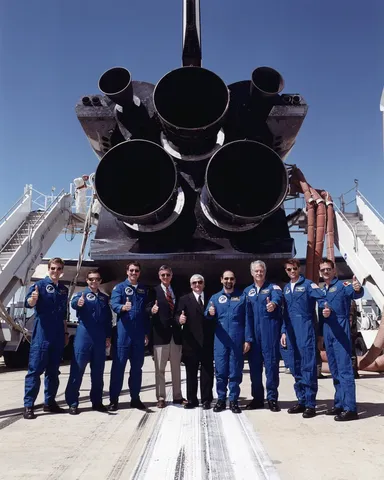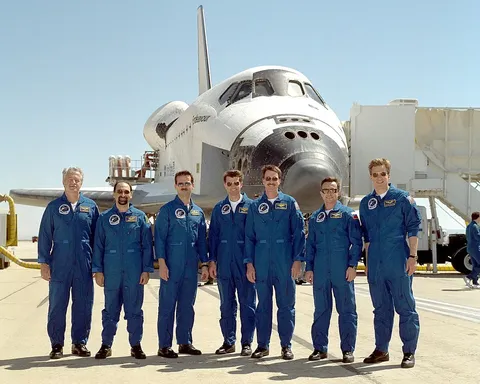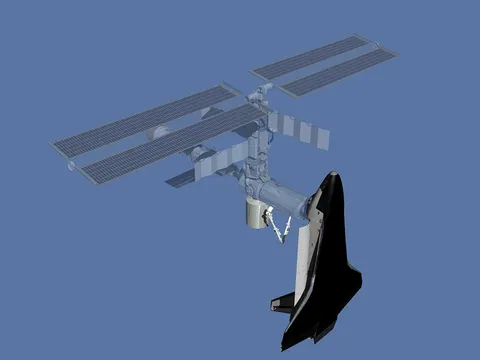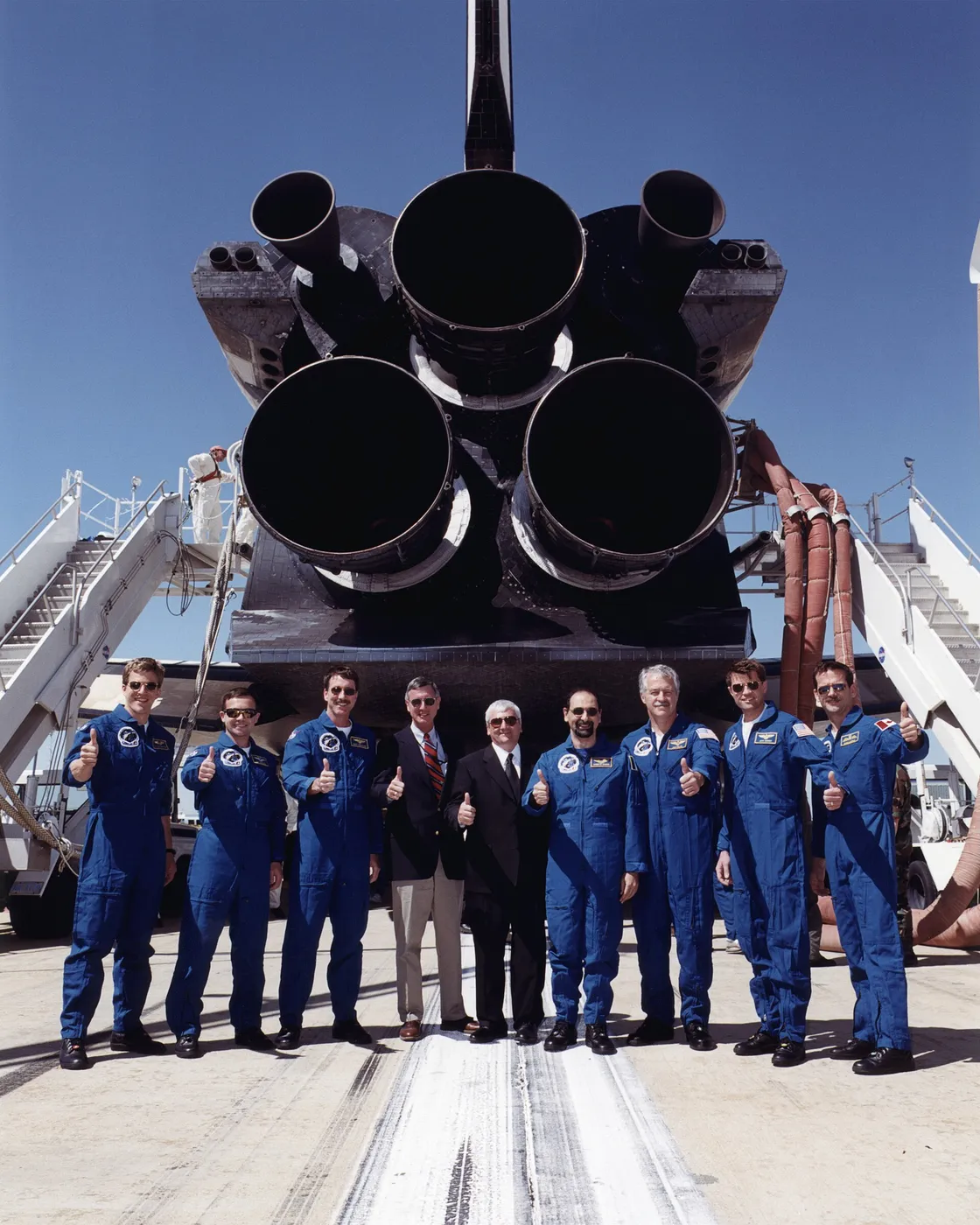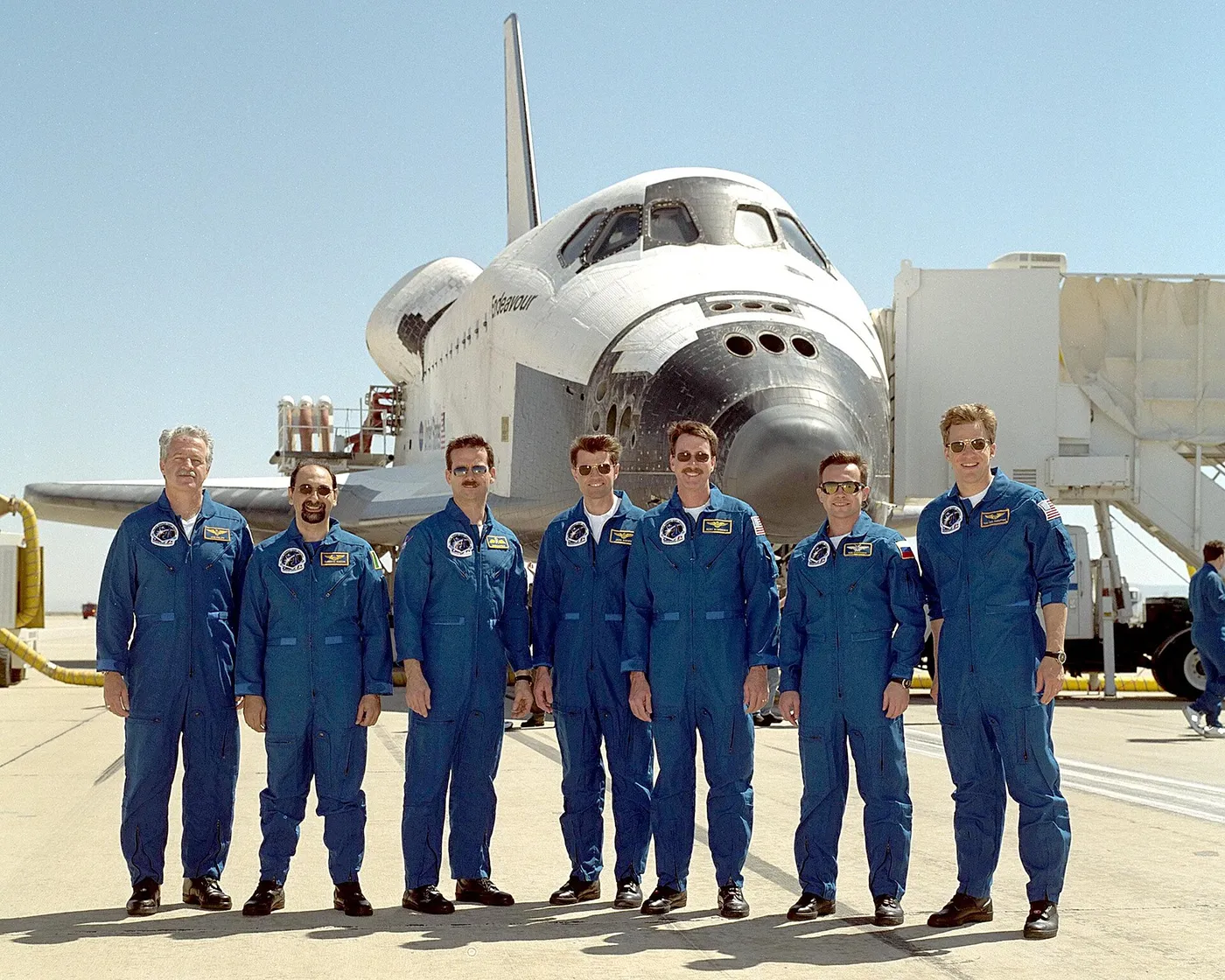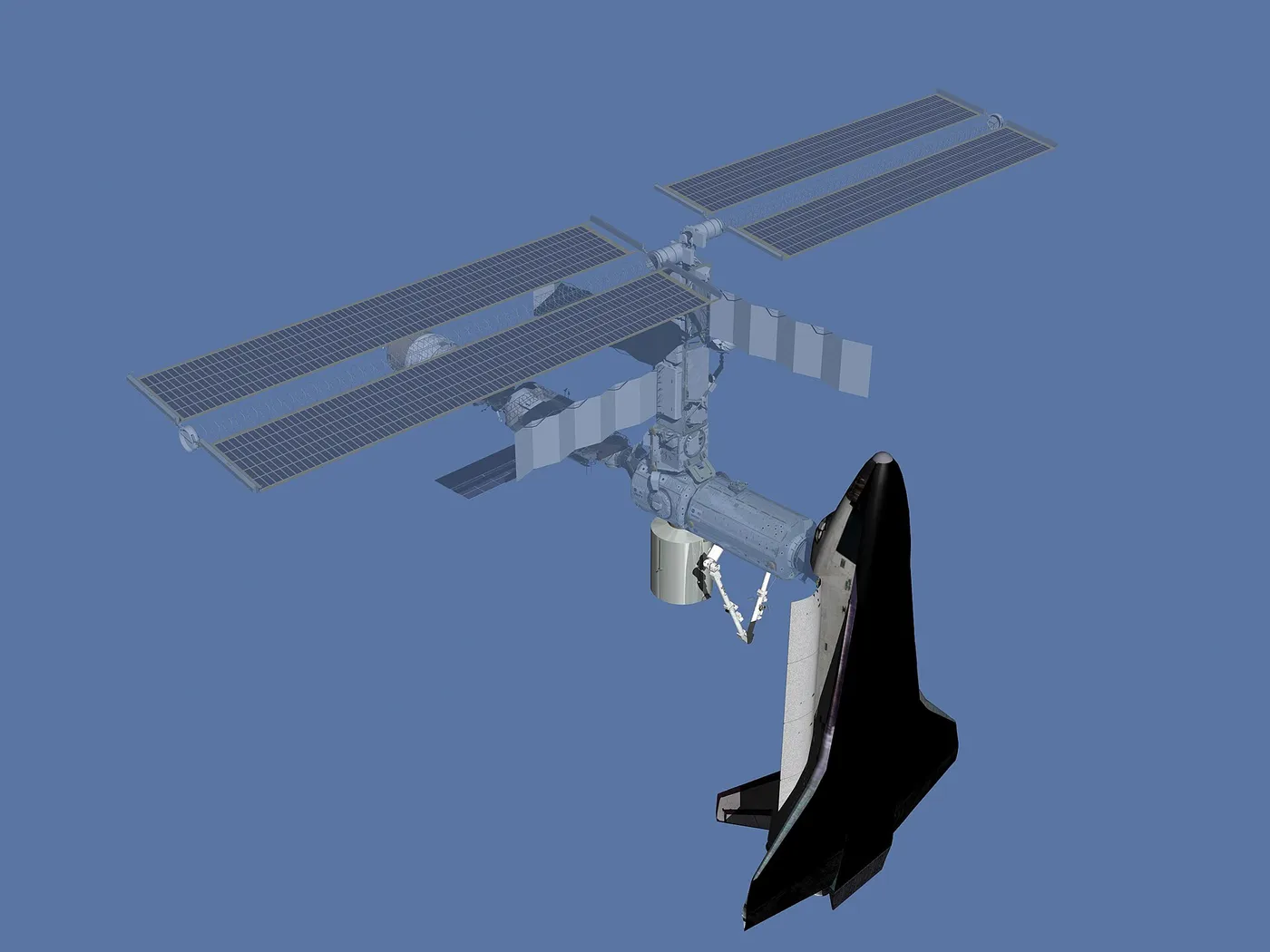
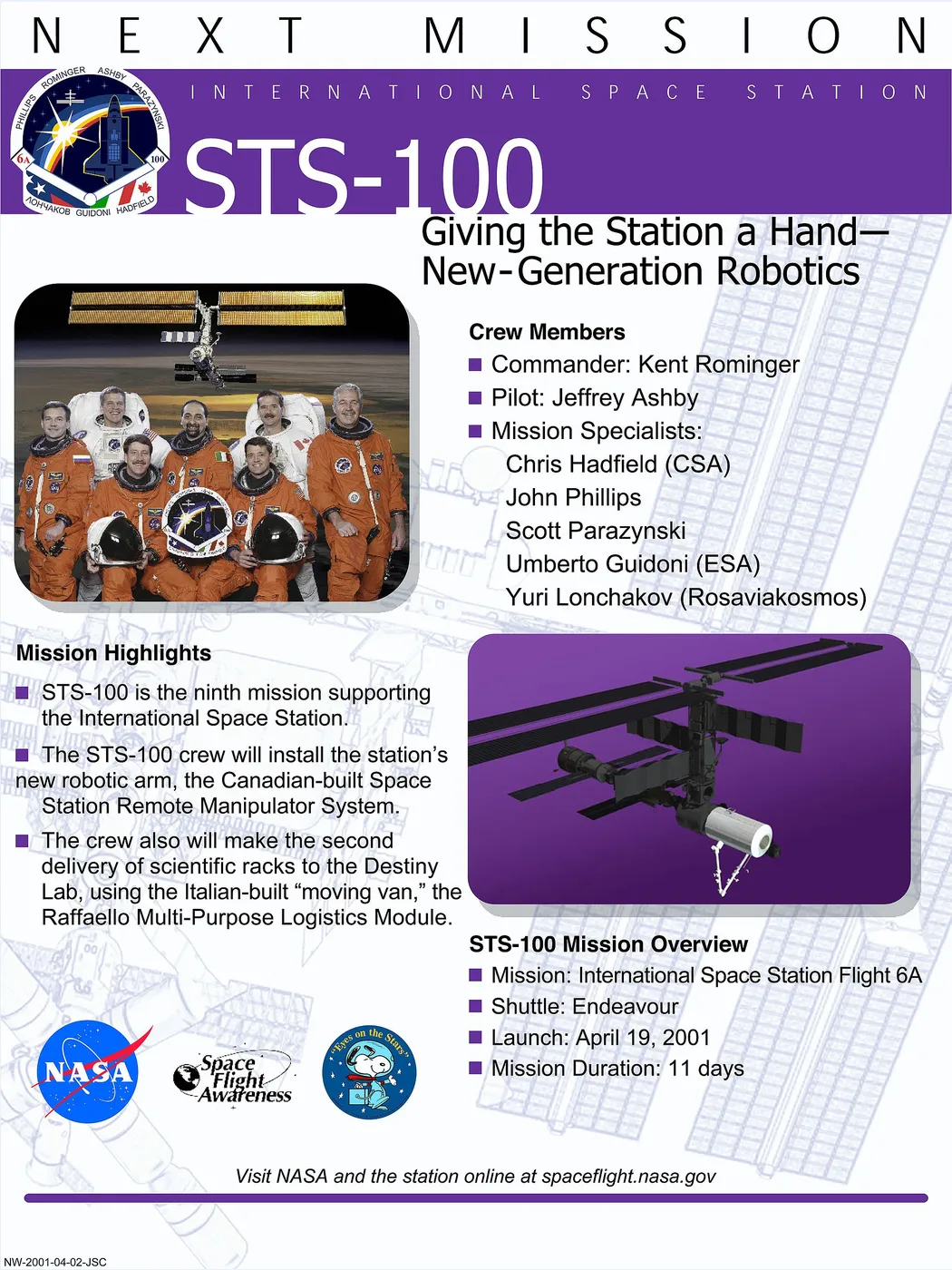
Endeavour delivered the station's Canadian-built robotic arm in April 2001, installing the versatile manipulator that would become indispensable to assembling and maintaining the outpost. The crew of seven attached the arm to the Destiny laboratory across two spacewalks, one of them performed by Chris Hadfield, the first Canadian to walk in space.
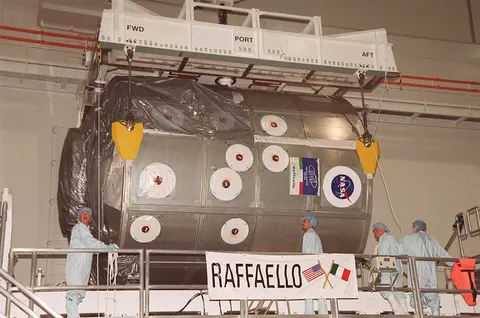
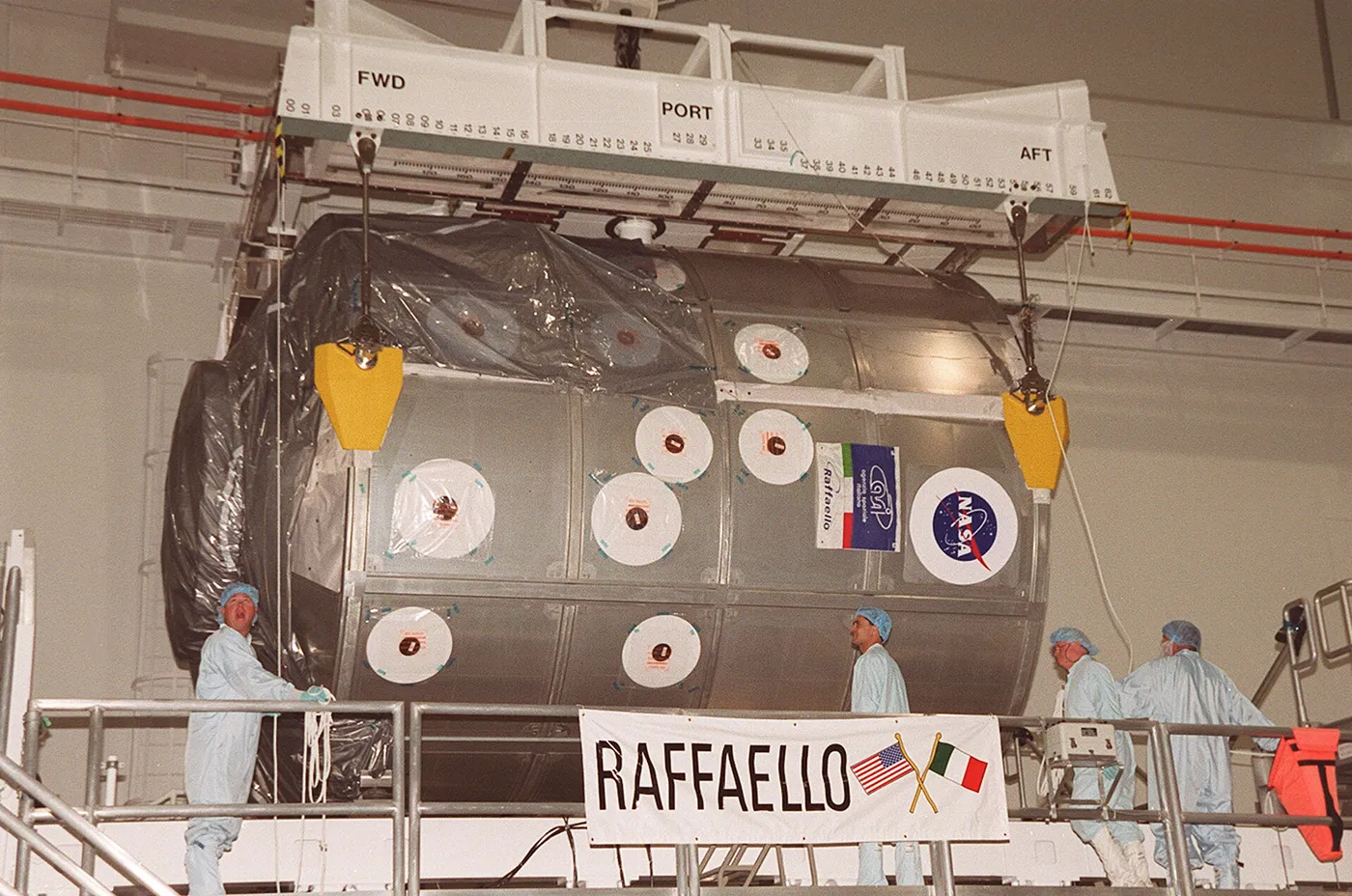
The new arm was far more capable than a fixed manipulator, able to move around the growing station and to handle the massive components that later assembly flights would deliver. The mission also brought up an Italian cargo module with supplies and a science rack, and carried Umberto Guidoni, the first European Space Agency astronaut to visit the station. The robotic arm's arrival was a prerequisite for nearly all the construction still to come.
Endeavour delivered the station's own arm. Canadarm2 was a seventeen-metre robotic limb that could walk end over end around the outside of the station, gripping fixtures like a caterpillar, and without it none of the assembly still to come — trusses, modules, the Japanese and European laboratories — would have been possible.
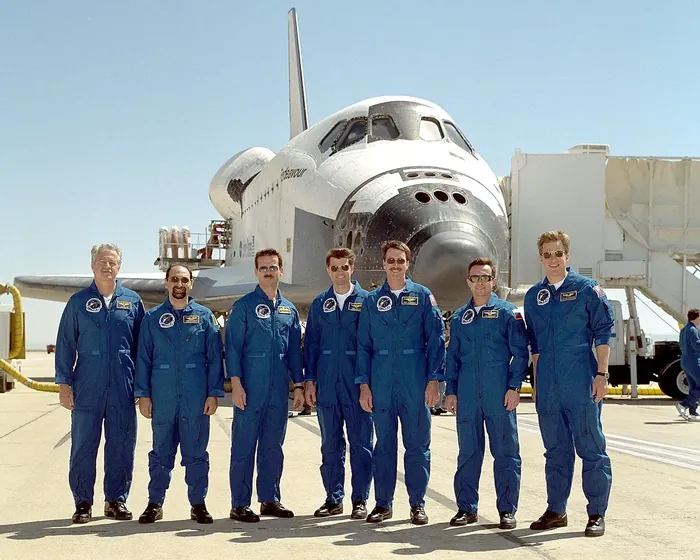
Chris Hadfield went outside to install it, becoming the first Canadian to walk in space and finding out the hard way what happens when anti-fog solution gets into an eye in weightlessness. Tears do not fall; they pooled and blinded him in both eyes, and he ended up venting oxygen from his suit to evaporate them away, working half-blind on a live installation while talking calmly to Houston about it.
Then the station itself nearly died. Days later all three of the command-and-control computers running the American segment failed in succession, taking down the systems that pointed the solar arrays and cooled the electronics, and controllers spent several tense days rebuilding them from orbit while Endeavour stayed docked as insurance. It was the closest the ISS came in its early years to being abandoned, and the arm the crew had just installed was among the things that had to be nursed through it.