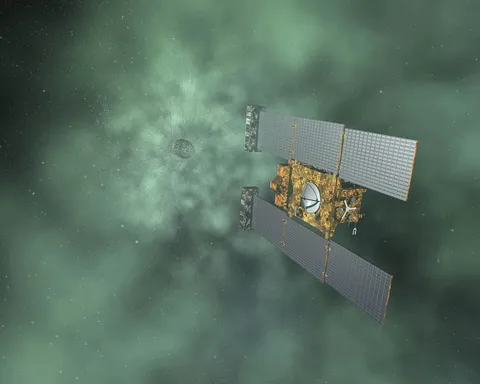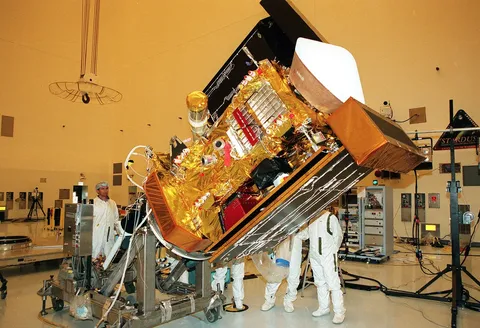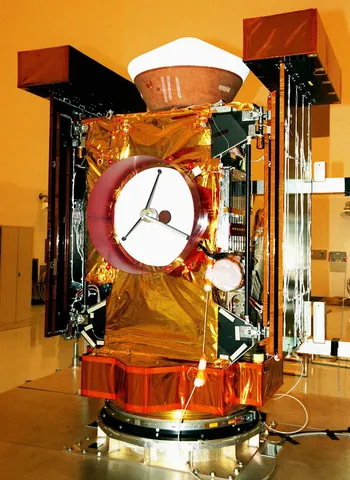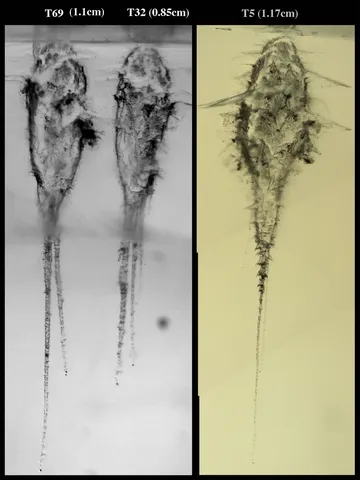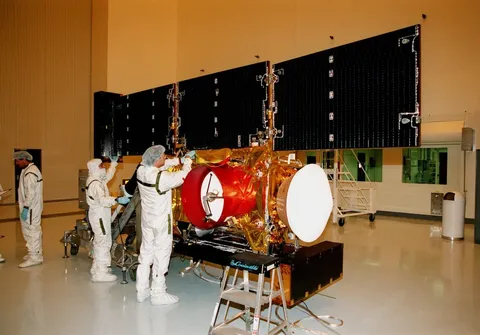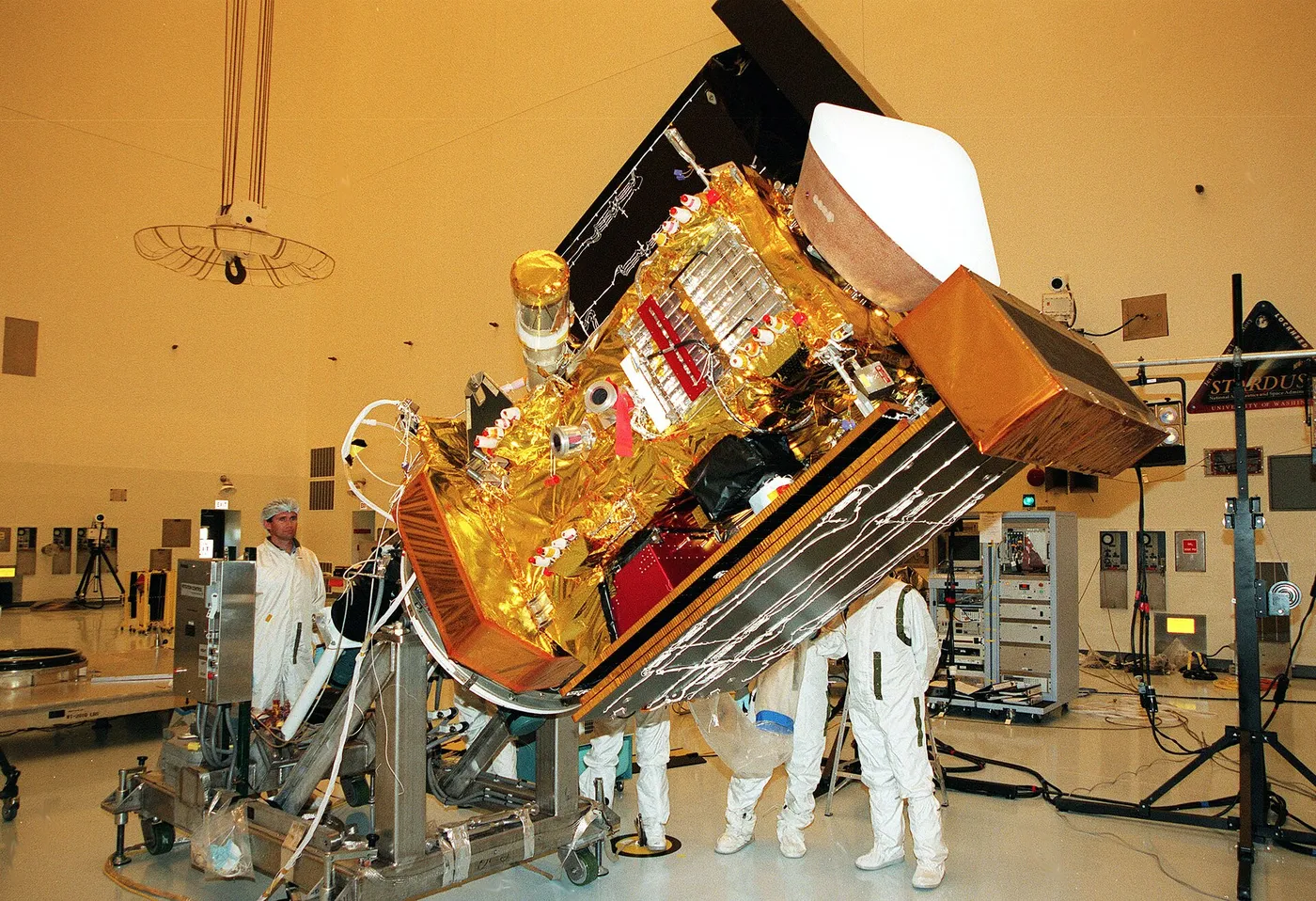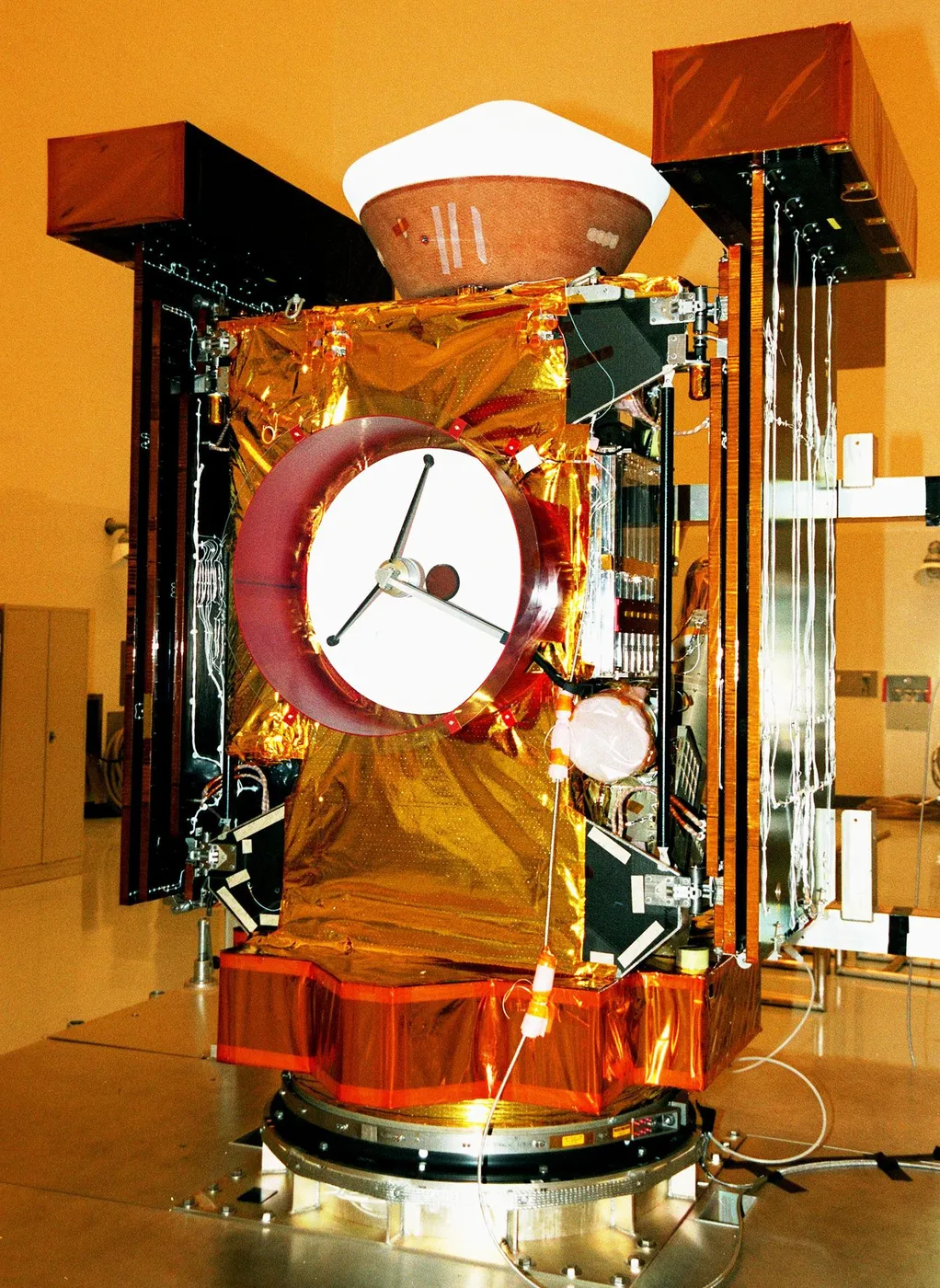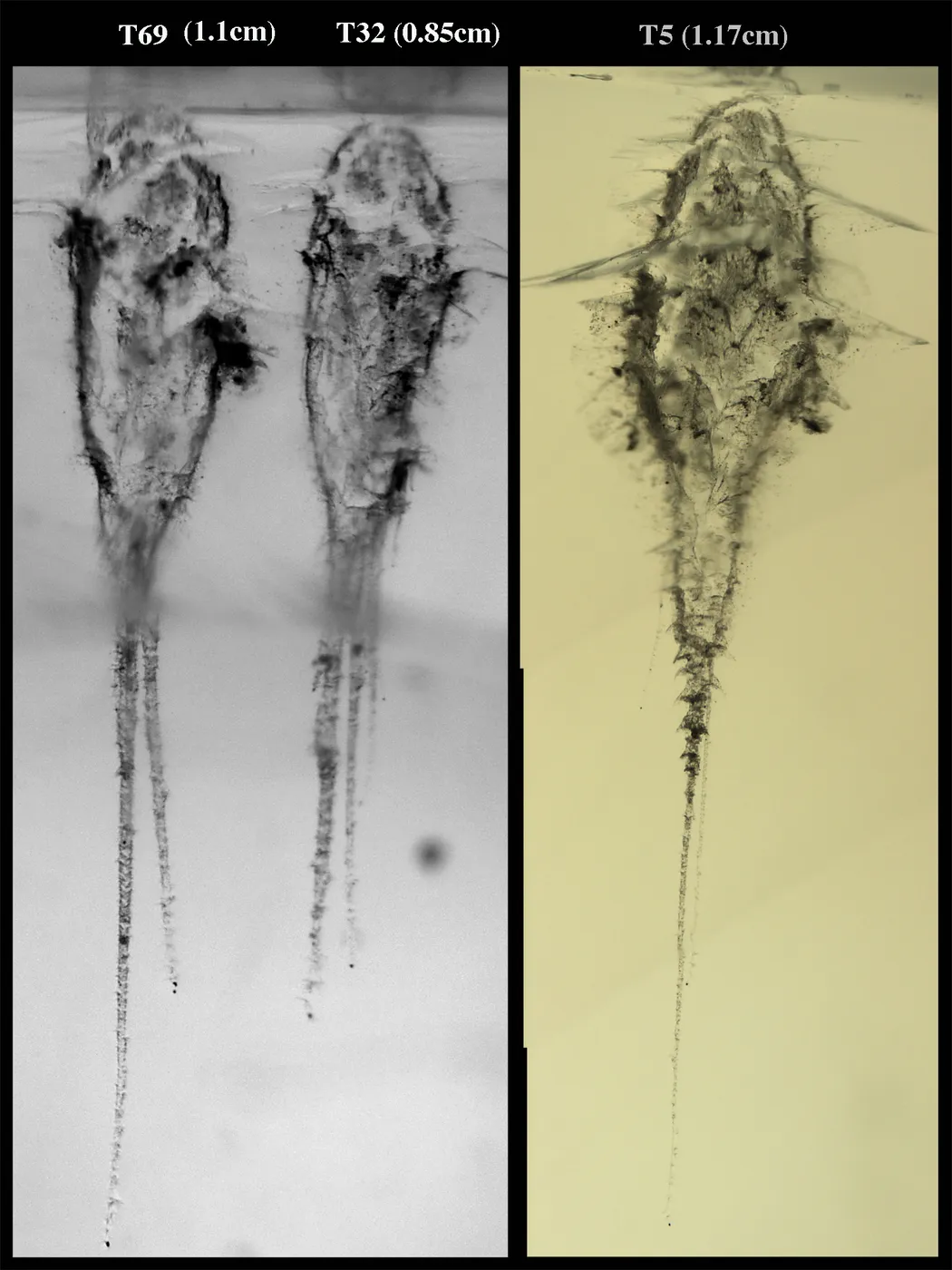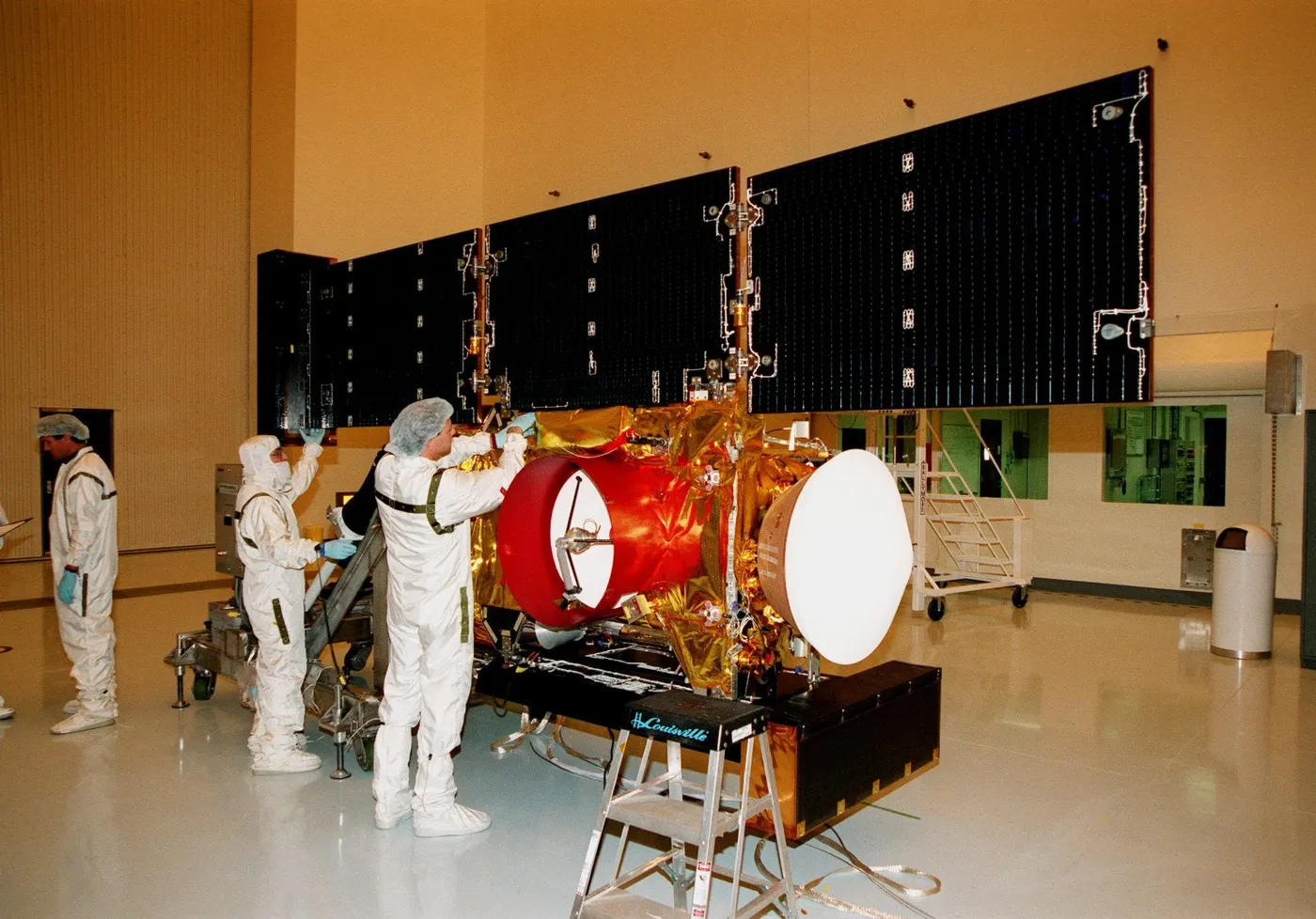
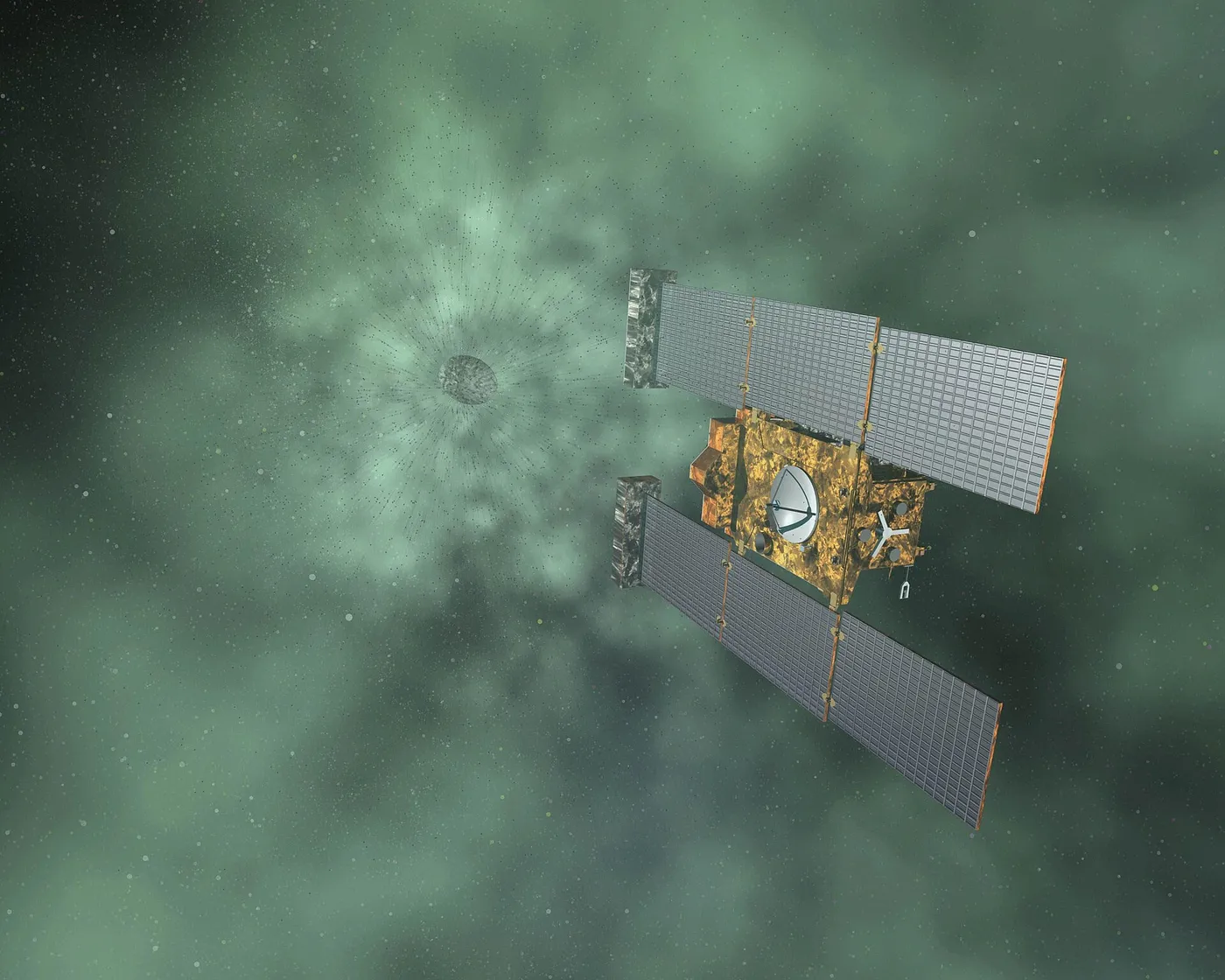

Catching a comet is a problem of speed. Stardust met comet Wild 2 at some six kilometres per second, at which velocity any dust grain striking a solid collector is vaporised. The solution was aerogel — a silica foam that is 99.8 per cent air, so light it was nicknamed frozen smoke — in which particles decelerate gradually over a few centimetres, leaving carrot-shaped tracks and surviving intact at the tip.
The encounter in January 2004 also returned unexpectedly sharp images of the nucleus, showing a surface of steep-walled pits and spires that seemed far too rigid for a loose ball of ice and dust, with jets streaming from distinct vents.
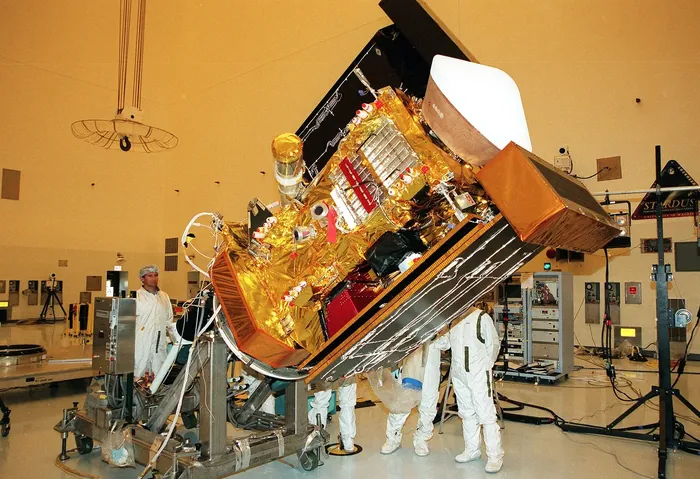
The sample capsule came home in January 2006, releasing from the spacecraft and landing under parachute in the Utah desert — the first cometary material and the first solid samples returned from beyond the Moon. Finding the tracks in the aerogel was such a laborious microscopy task that a project called Stardust@home enlisted tens of thousands of volunteers online to scan the images.
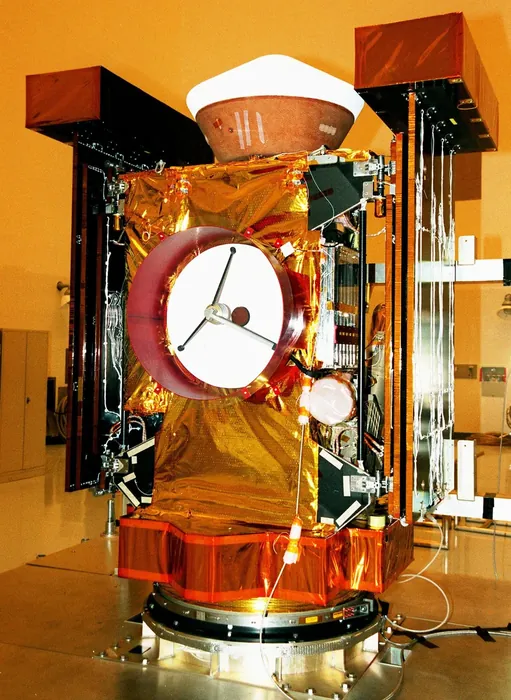
What the grains contained upset the models. They included minerals that can only form at very high temperatures — close to the young Sun — sitting inside a body that formed in the frozen outer solar system, implying that material was transported outward on a massive scale during planetary formation. The samples also yielded glycine, an amino acid, confirming that comets carry the building blocks of life.
The spacecraft itself was still healthy, so it was given a second target. In 2011 it flew past comet Tempel 1 to photograph the crater excavated by the Deep Impact mission six years earlier — the first time anyone had returned to a comet to see what a previous mission had done to it.