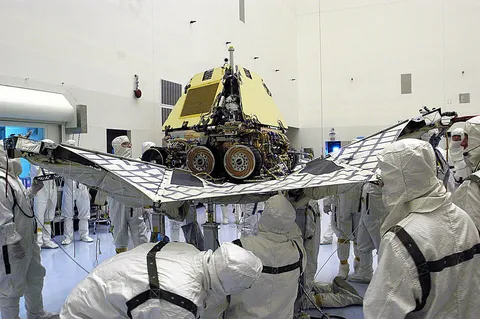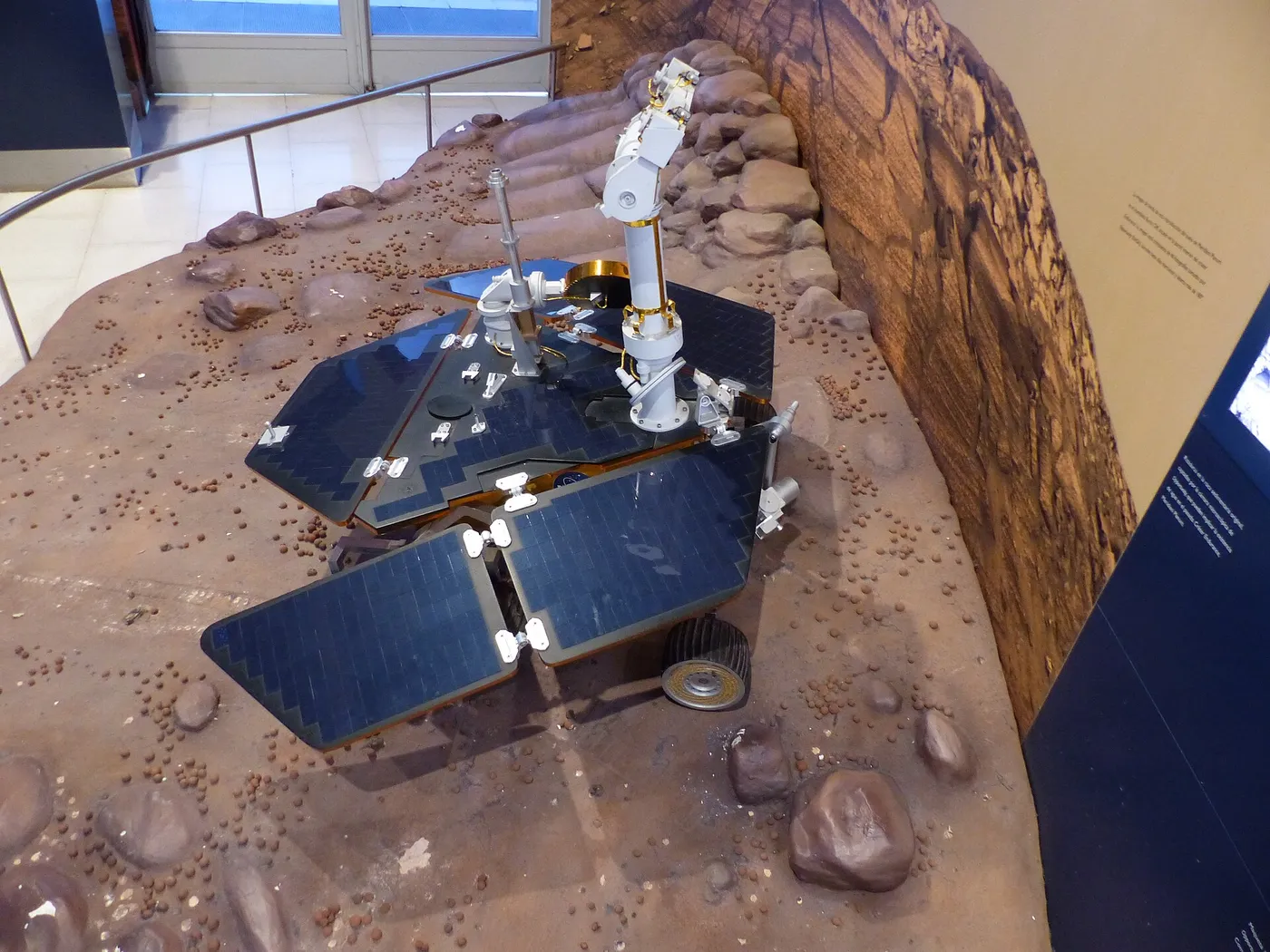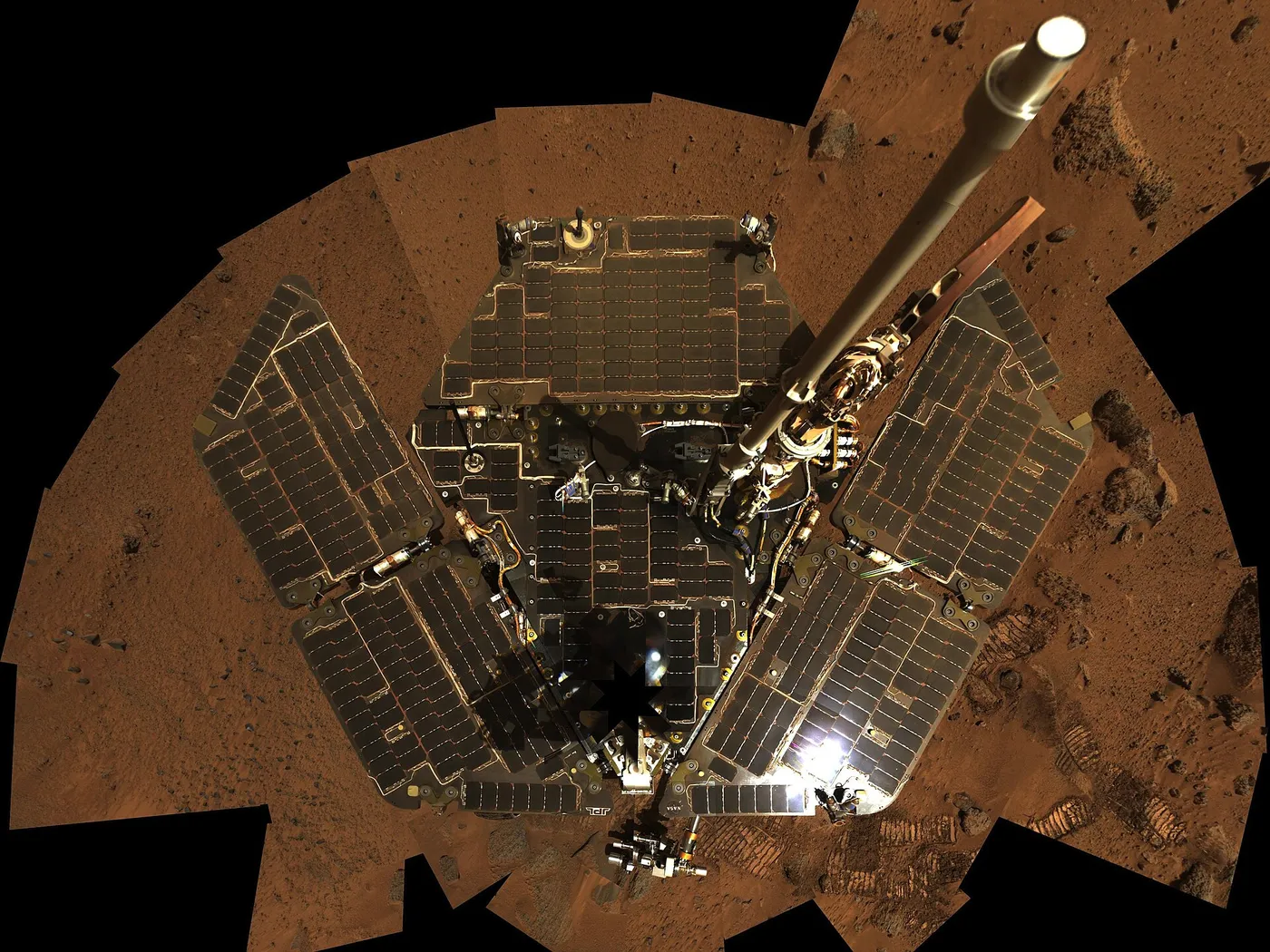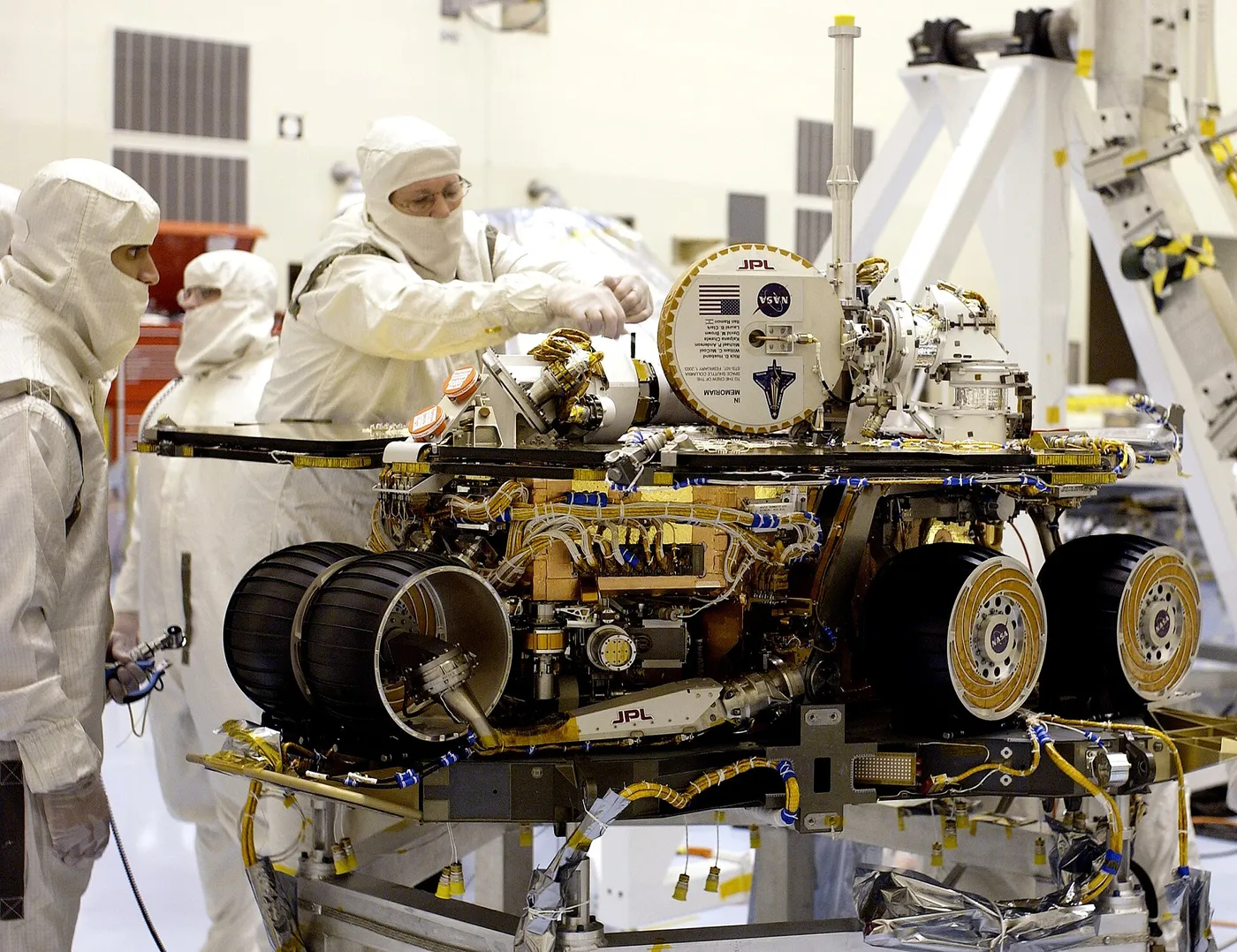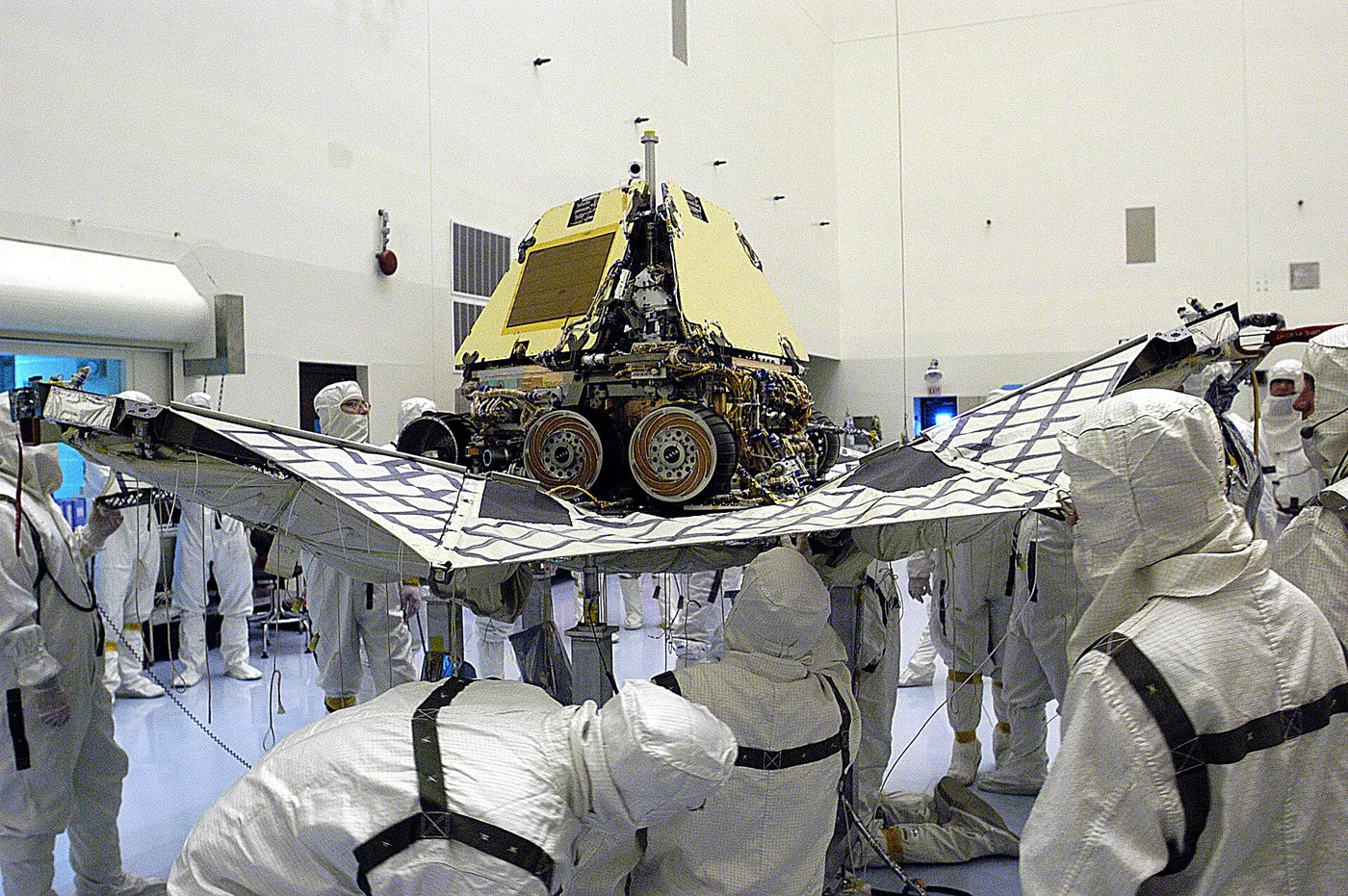
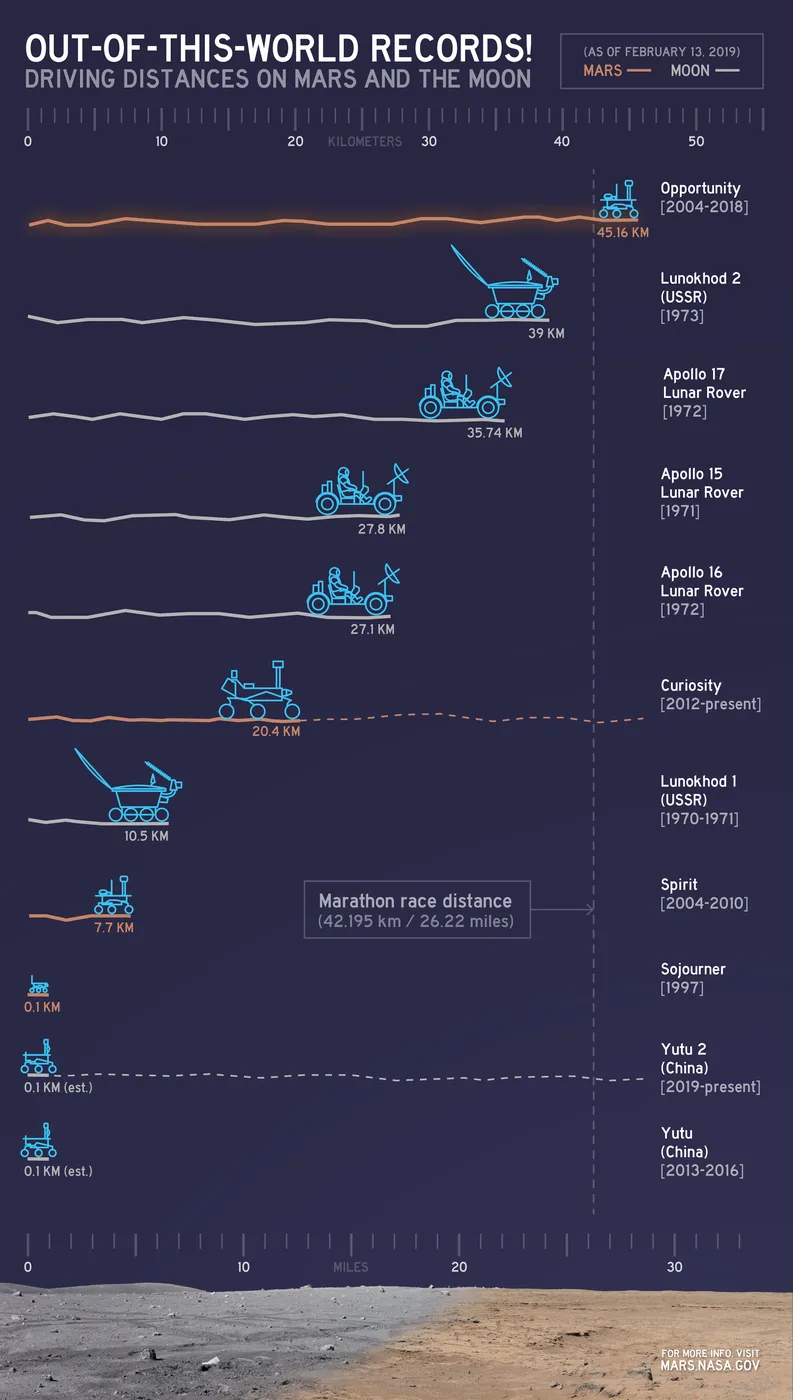

Spirit was built to last ninety days and worked for six years. It landed in Gusev crater in January 2004, in a basin chosen because a channel appeared to have drained into it and the floor might therefore be an old lakebed. The floor turned out to be volcanic basalt, flat, dull, and a considerable disappointment.
Three weeks in, it nearly died. The rover began rebooting endlessly, unable to complete a startup, and for several days it returned nothing usable. Engineers diagnosed a flash memory filesystem so full of accumulated files that the software could not manage it, talked the rover into a diagnostic mode, and reformatted the memory from 170 million kilometres away.
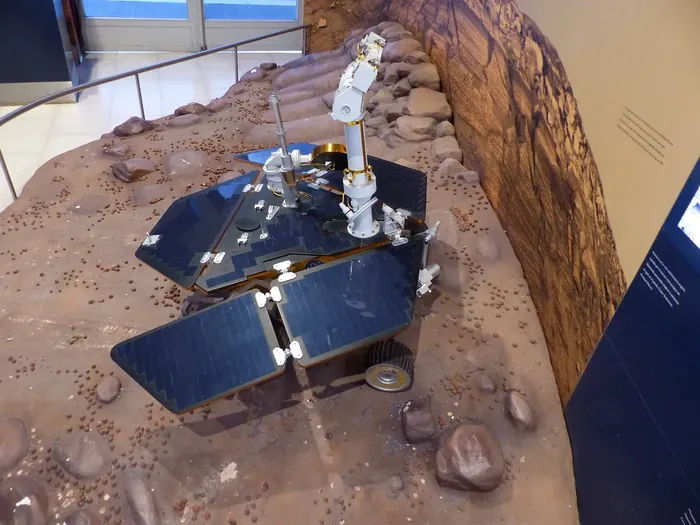
Told there was nothing at the landing site, the team simply drove. Spirit crossed several kilometres of plain to reach the Columbia Hills — named for the shuttle crew lost the previous year — climbed them, and there found what it had come for: rocks altered by water, including goethite, a mineral that forms only in its presence.
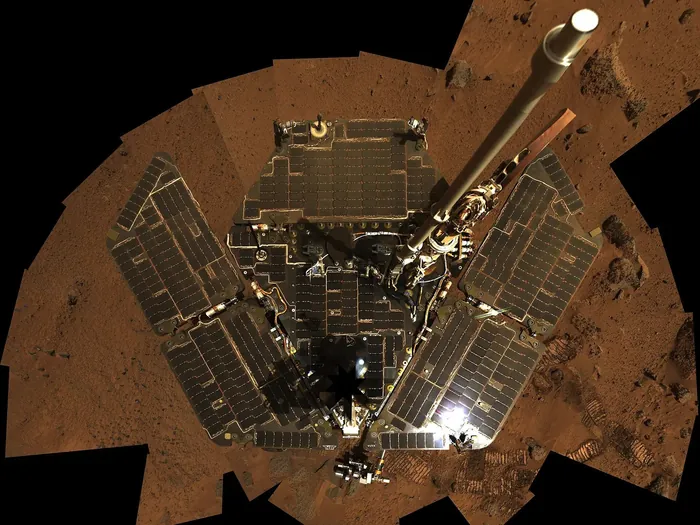
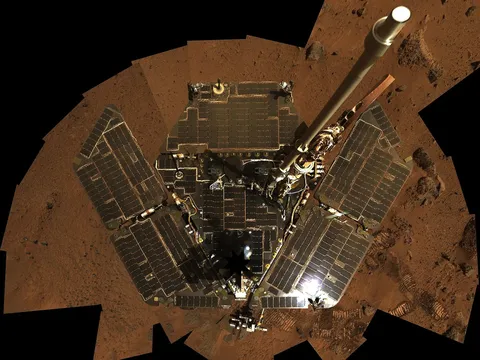
Its best discovery came from a broken part. A jammed front wheel had to be dragged rather than driven, ploughing a trench everywhere the rover went, and in 2007 that trench turned up almost pure silica — the kind of deposit produced by hot springs or volcanic steam vents. On Earth, such environments teem with microbial life, and it is among the most promising habitable settings ever identified on Mars.
In 2009 it became trapped in soft sand at a site called Troy, and months of carefully modelled escape attempts failed to free it. Unable to tilt its solar panels toward the winter Sun, it fell silent in March 2010. Even stuck, it kept working, using its immobility to make radio-tracking measurements of the planet's wobble that hinted at a molten core.