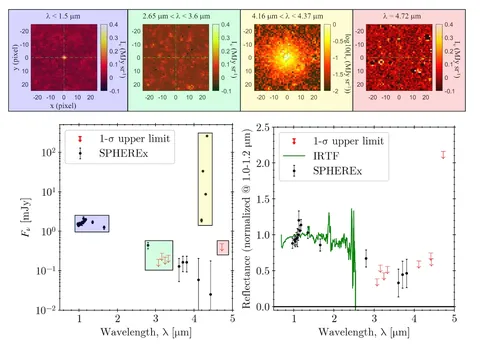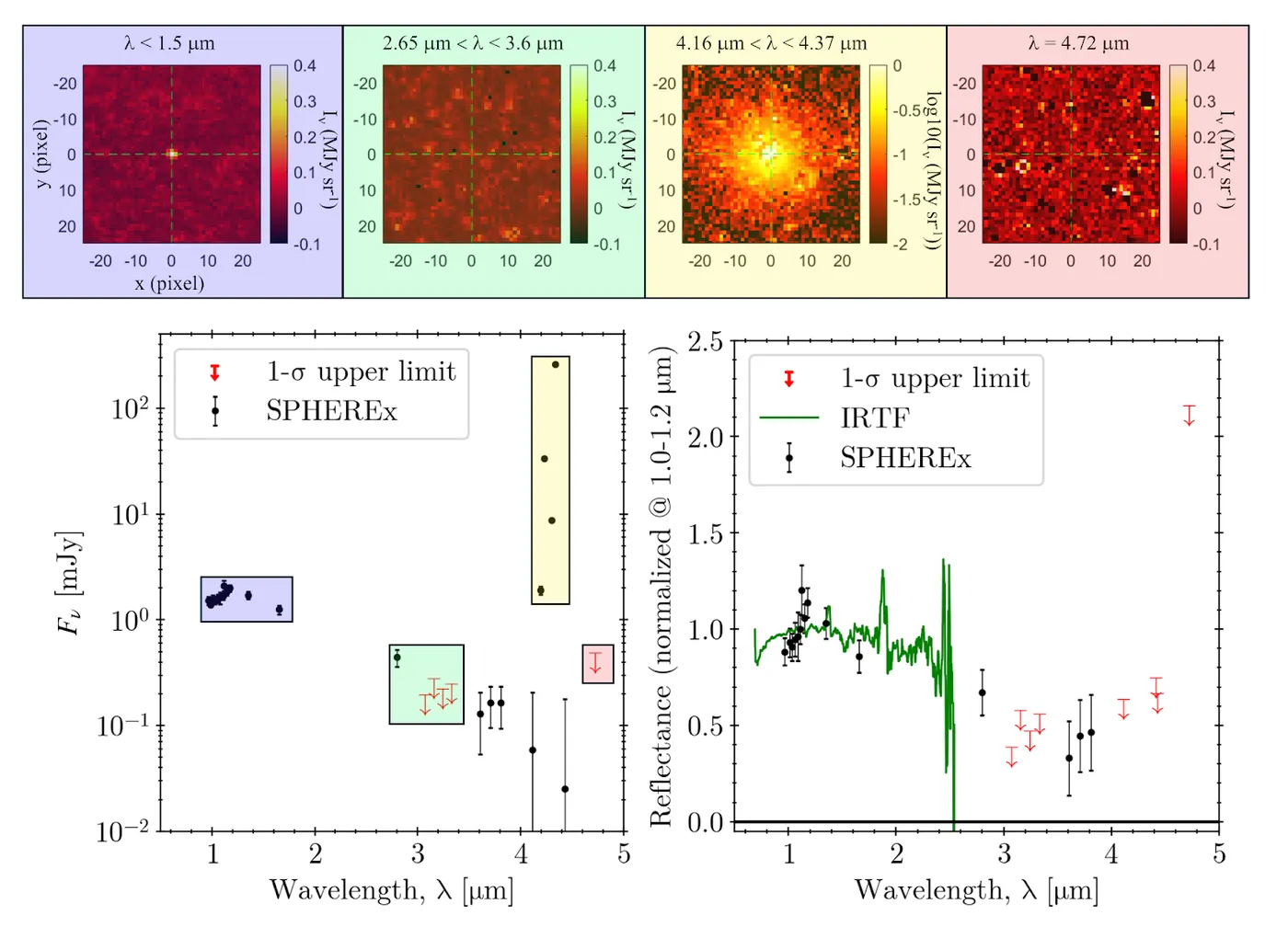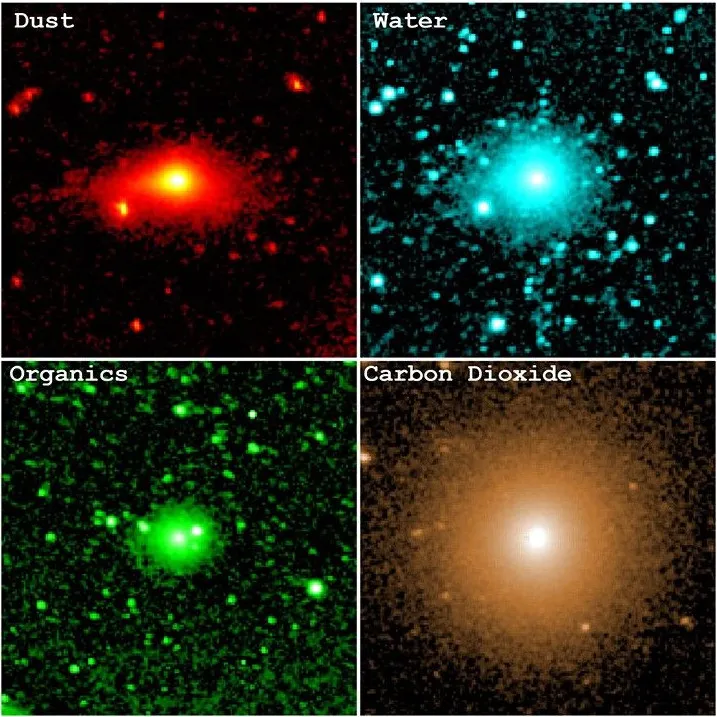
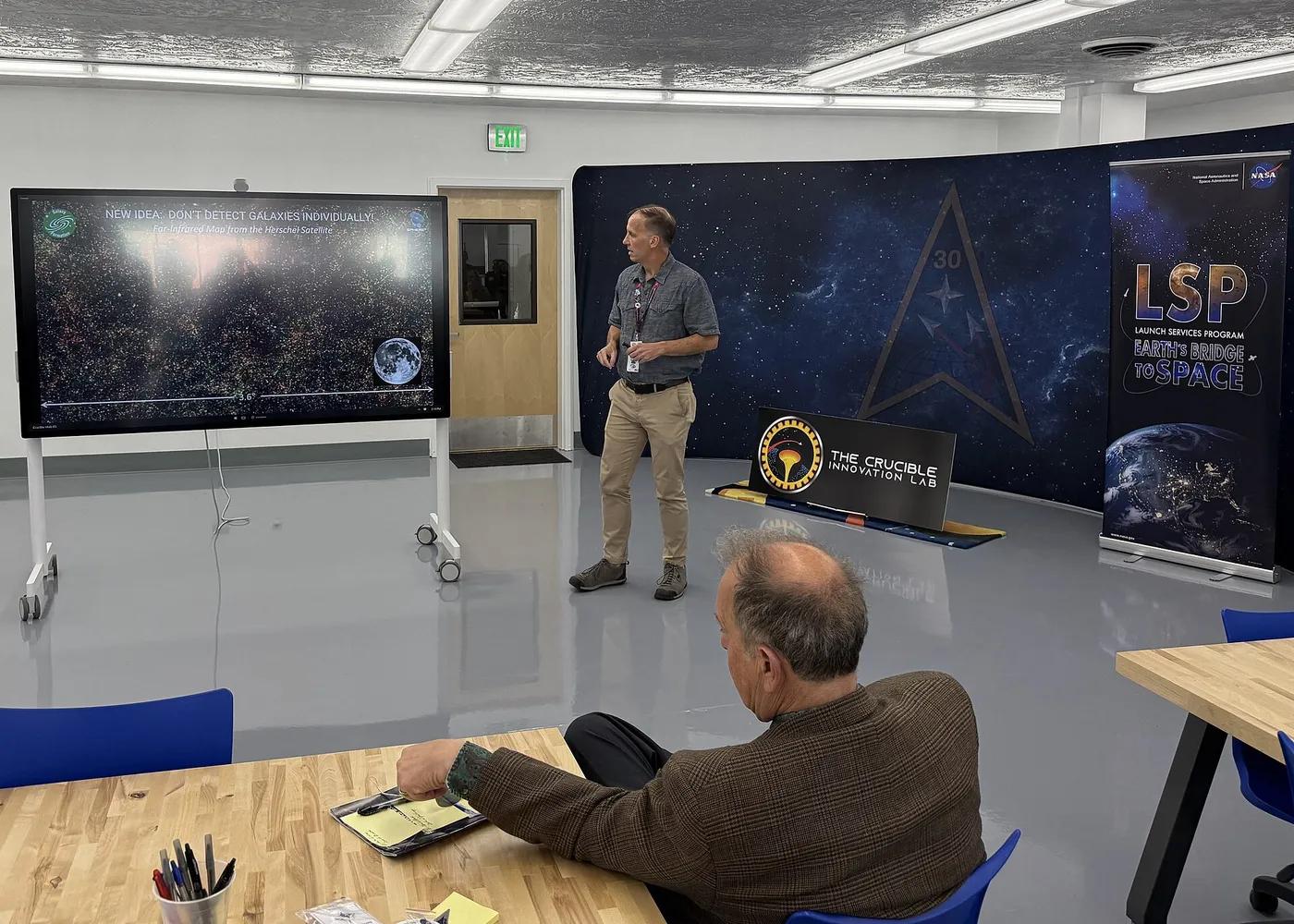

SPHEREx surveys the entire sky in 102 infrared wavelengths, which is a different proposition from ordinary imaging. Rather than photographing the sky through a few filters, it obtains a low-resolution spectrum of every point in it — hundreds of millions of galaxies and stars, each with its own colour fingerprint.
The cosmological aim is to test inflation. The theory predicts a specific statistical signature in how galaxies are distributed, and detecting or excluding it requires an enormous, uniformly surveyed volume — exactly what an all-sky spectral survey provides.
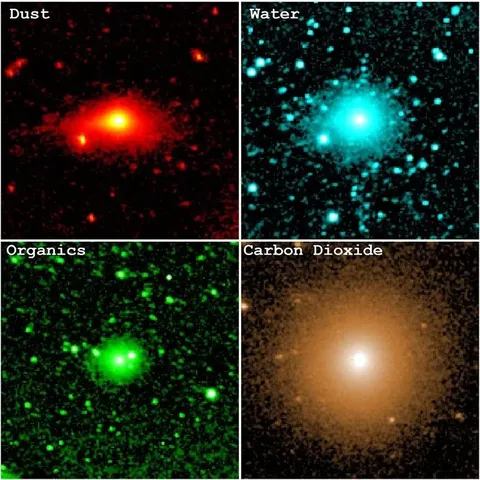
Its second goal is inventory. Water and organic molecules freeze onto dust grains in cold interstellar clouds, and their absorption features fall in the infrared bands SPHEREx covers. The mission is measuring how much water ice exists in star-forming regions across the galaxy, and therefore how much is available to the planetary systems forming within them.
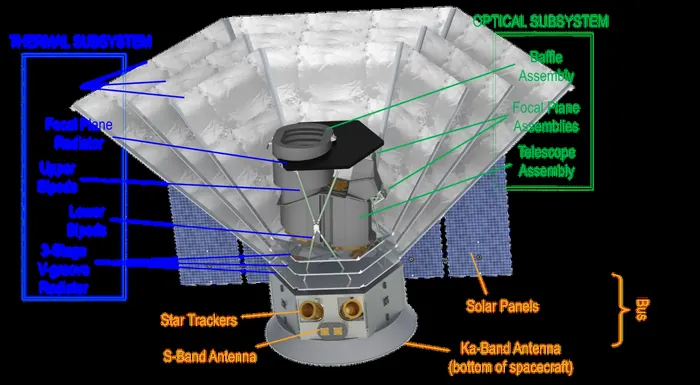
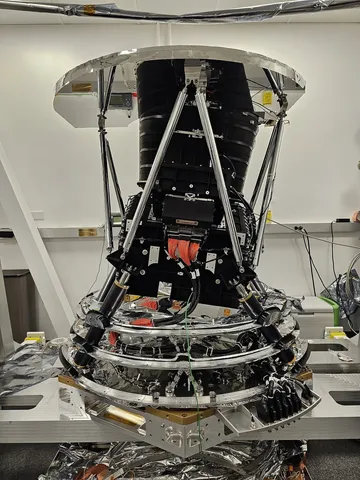
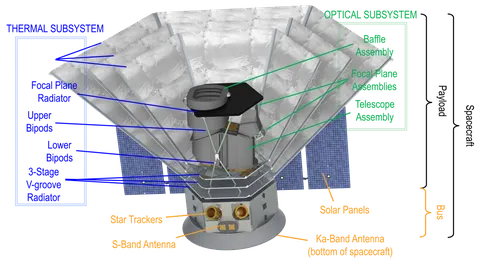
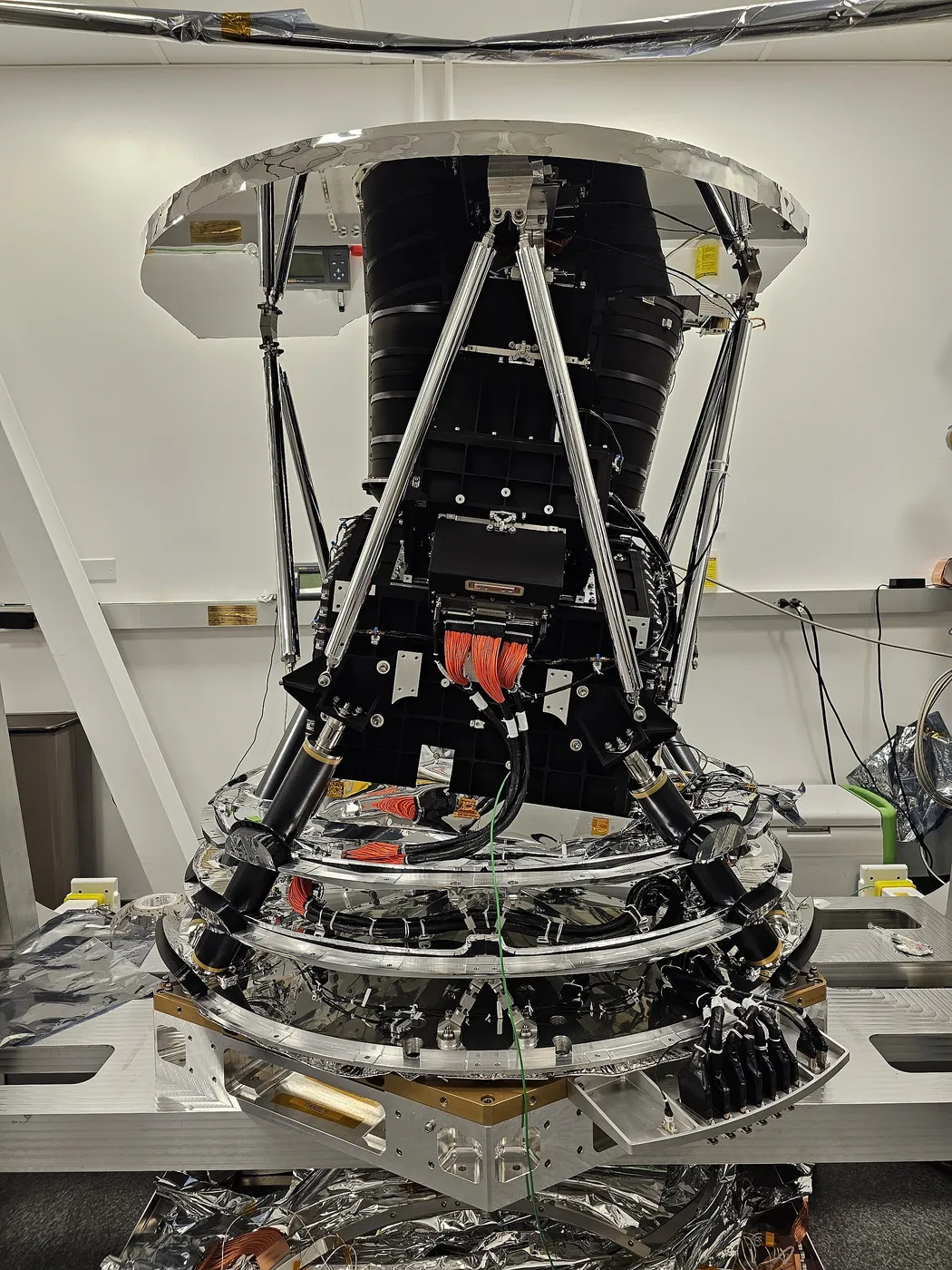
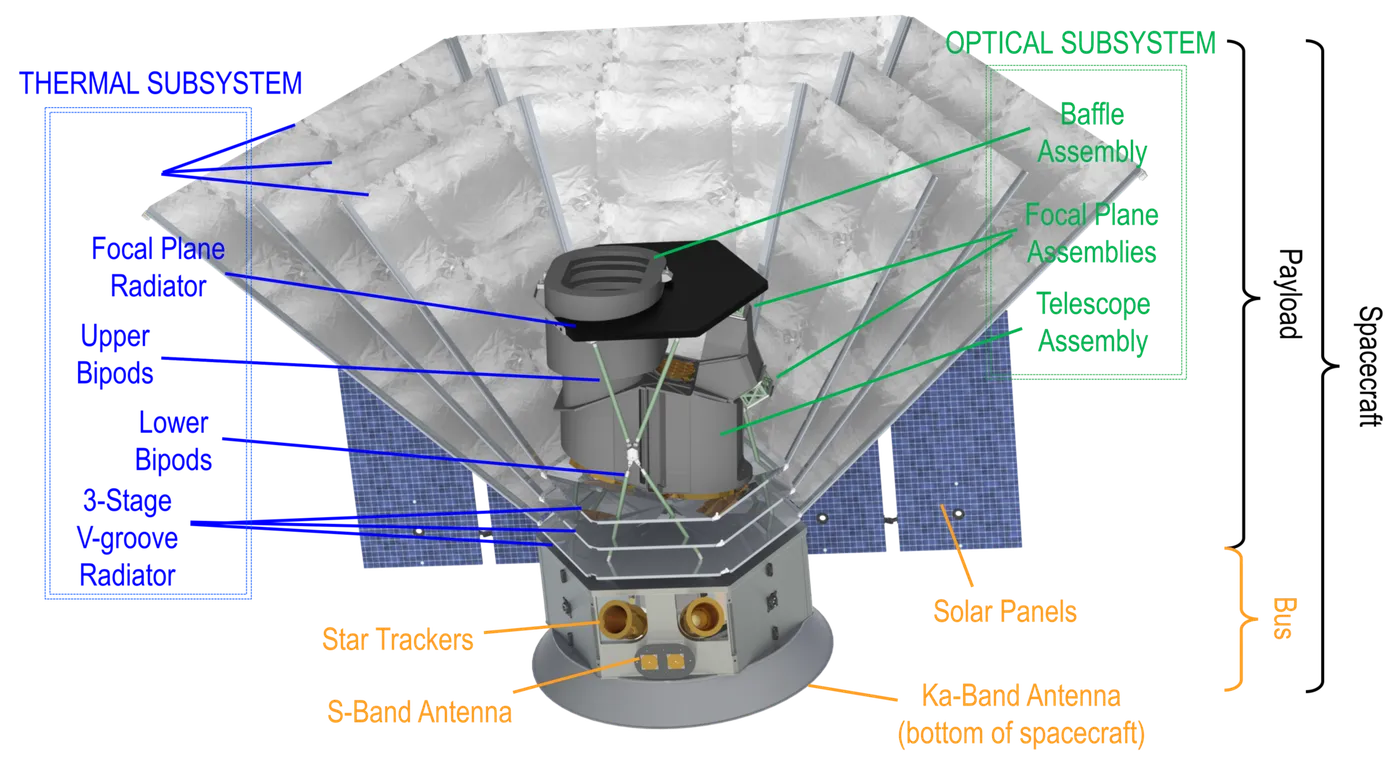
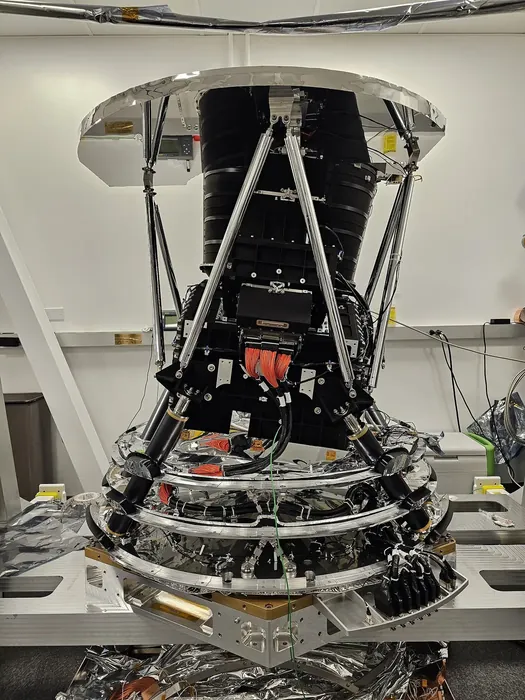
The design is deliberately simple and cheap for what it does — a small telescope with no moving parts, using a linear variable filter rather than a spectrograph, cooled passively by three nested conical shields rather than by cryogen.
It launched in March 2025, sharing a rocket with the PUNCH solar mission, and its full-sky spectral catalogue is intended as a public resource — a reference database for the whole community, in the tradition of the surveys that have repeatedly proved more valuable than the specific questions that funded them.