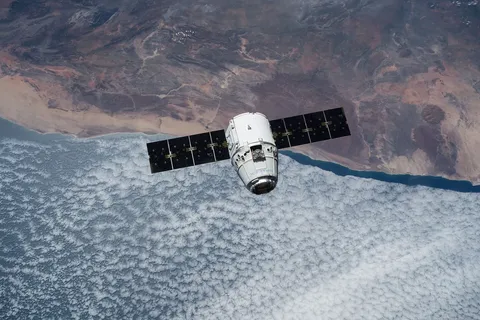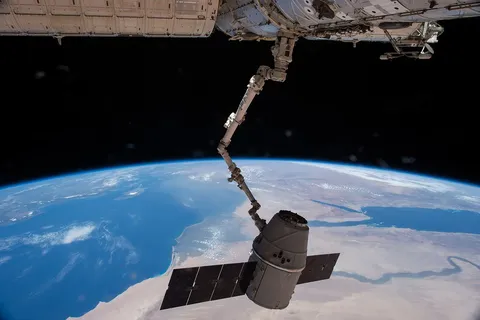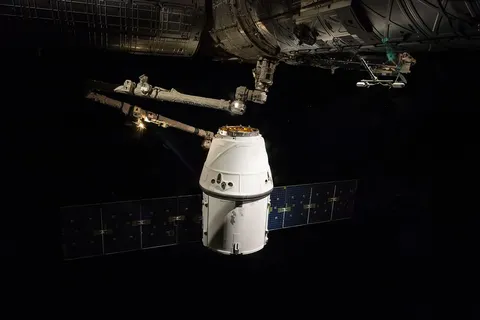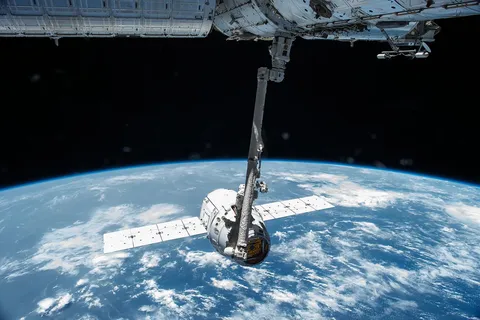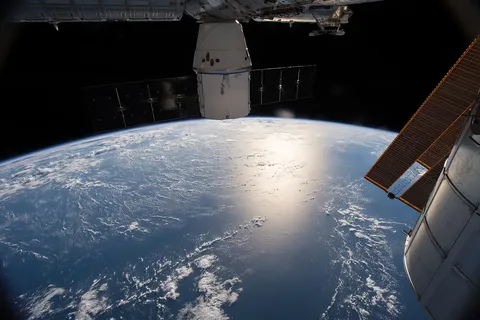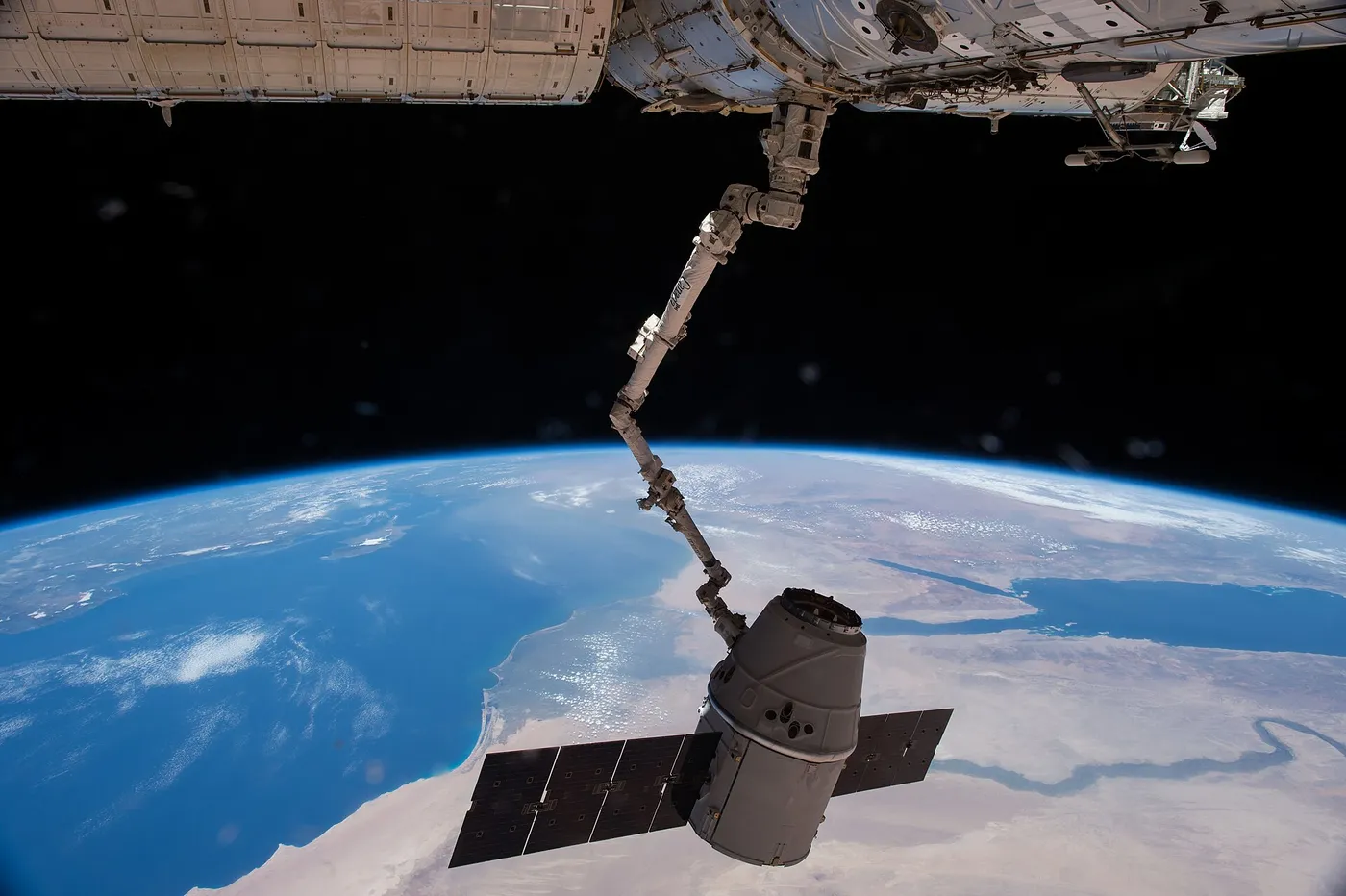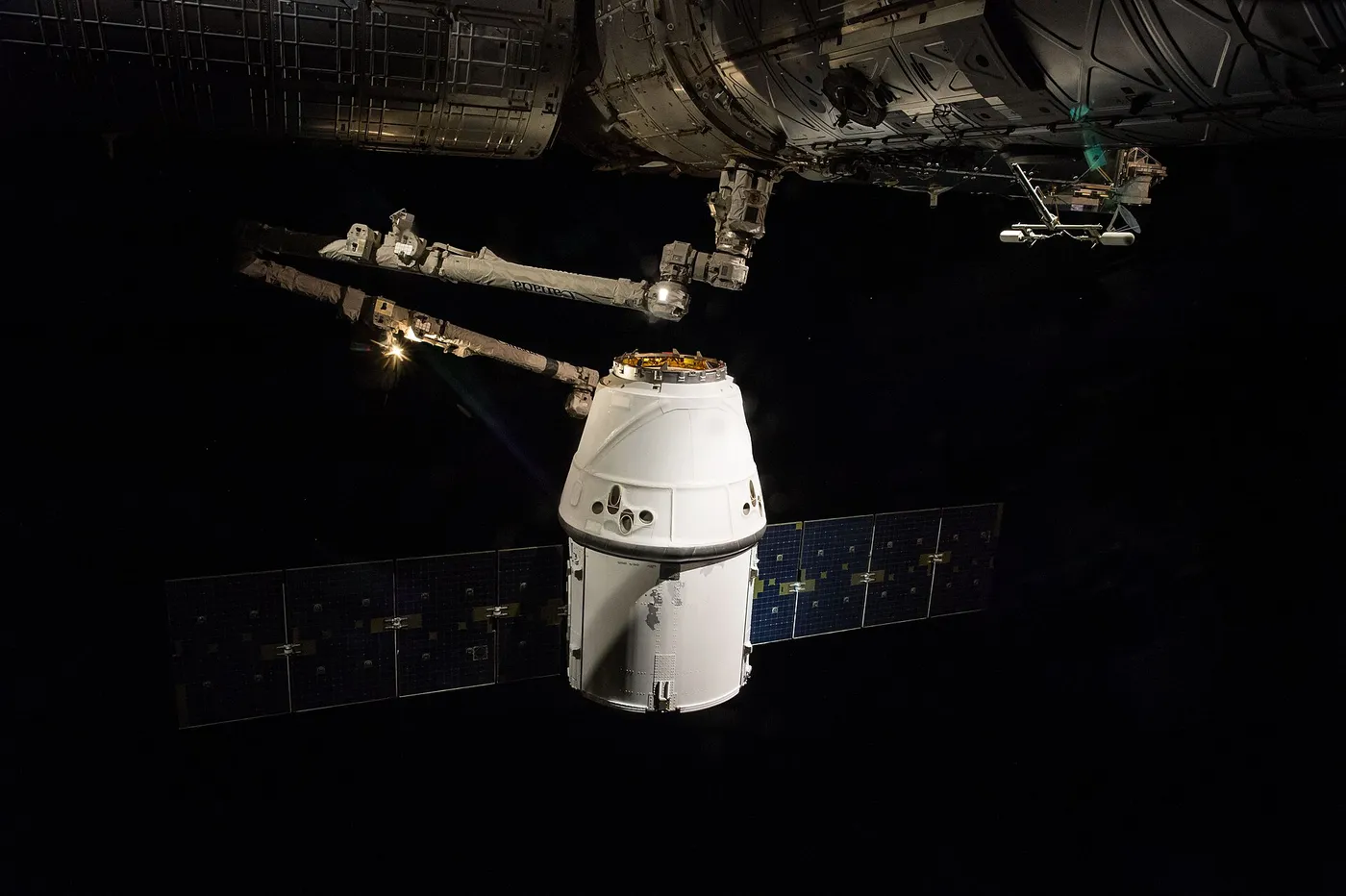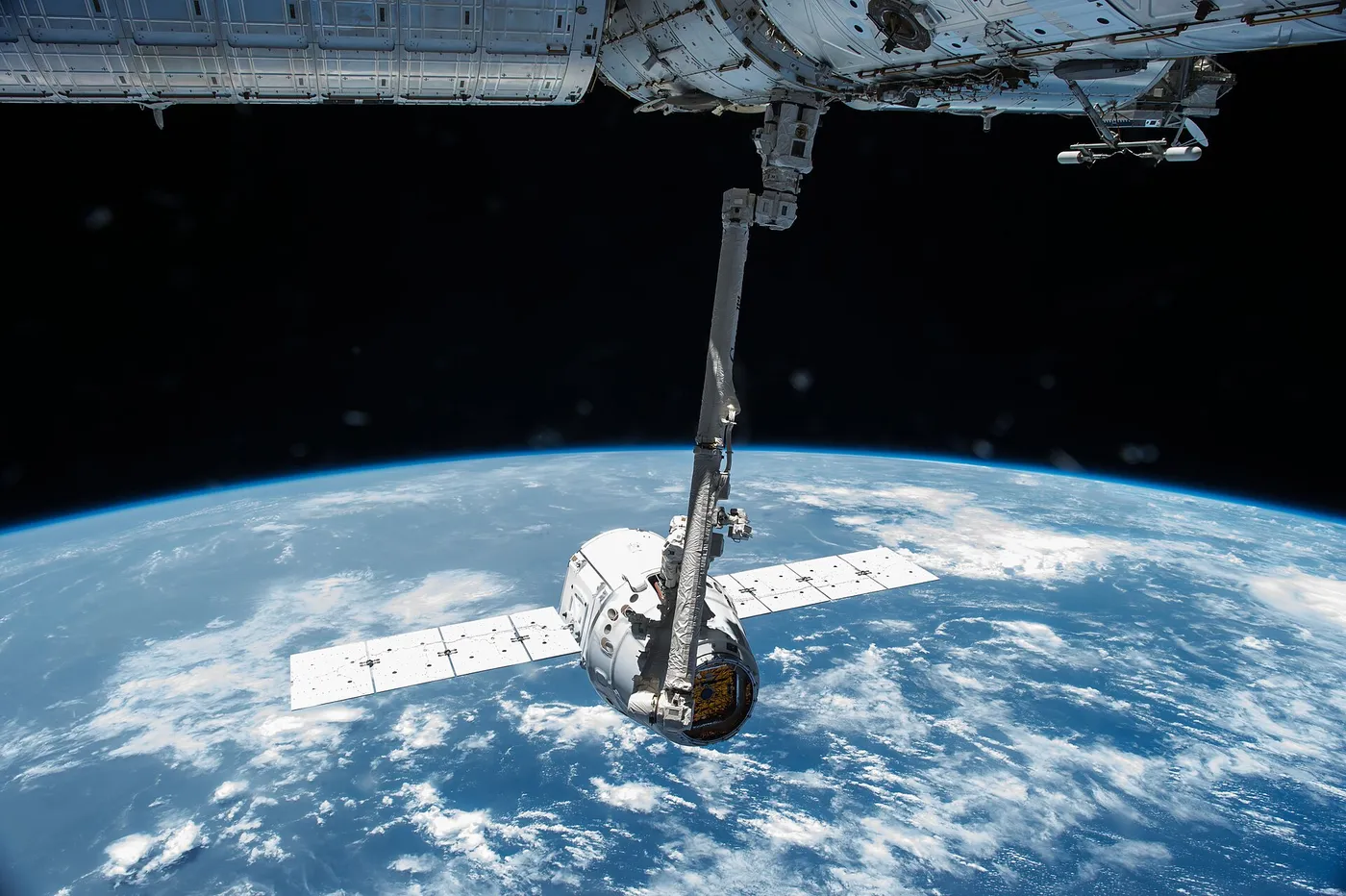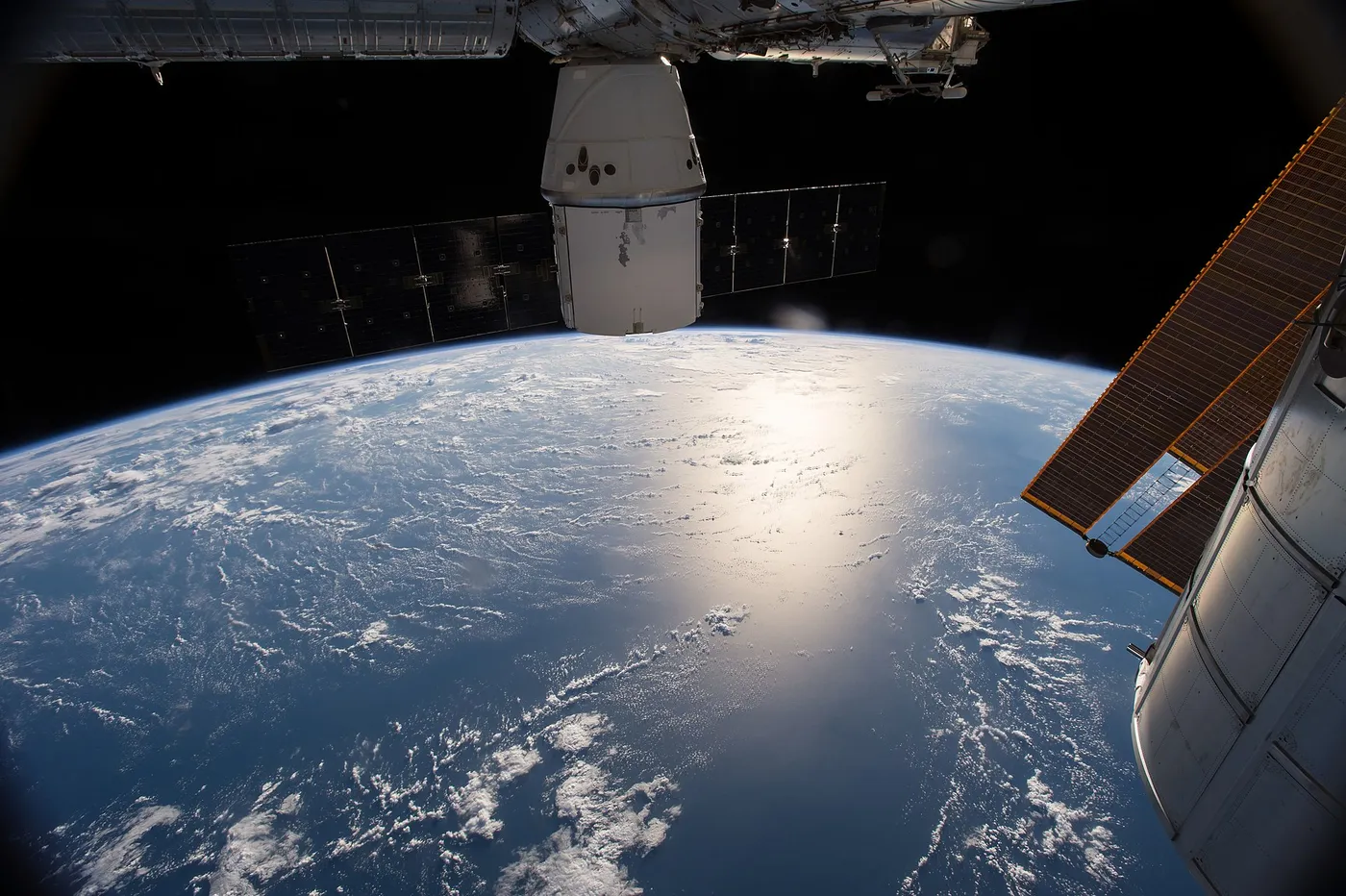
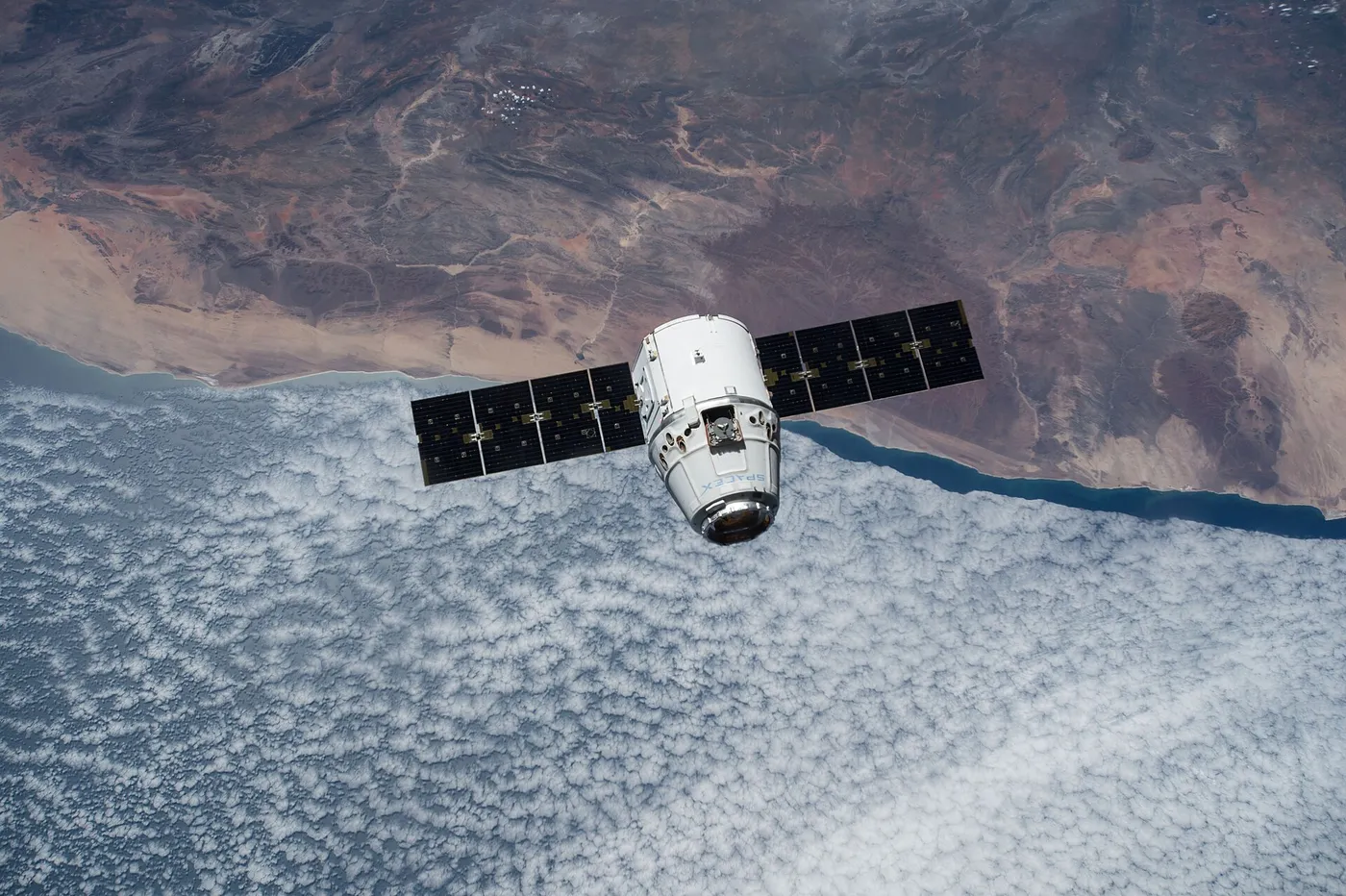

CRS-21 introduced the second-generation cargo Dragon, derived from the crew vehicle rather than from the original cargo design. The most visible change was that it docked itself to the station automatically instead of being caught by the robotic arm and berthed.
That autonomy freed the crew from a task requiring hours of preparation and careful manual operation, and it allowed the vehicle to use the docking ports built for commercial crew — of which the station now had two.
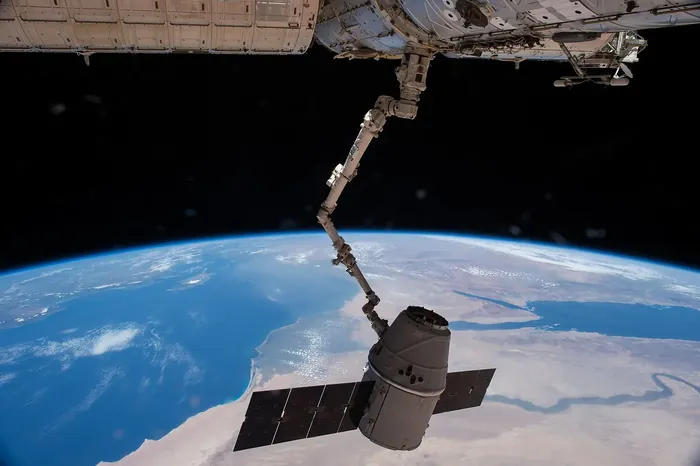
The new design also carried substantially more cargo, could remain attached for longer, and offered greater powered stowage for experiments requiring refrigeration or freezing — a capability that matters enormously for returning biological samples.
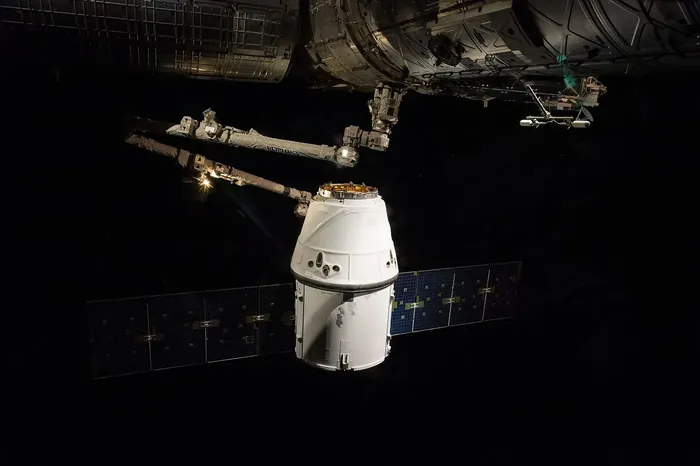
Its principal payload was a commercial airlock for the station's exterior, privately developed and funded, providing a route for deploying satellites and exposing experiments without using the crew's own airlock.
For a brief period two Dragons were docked simultaneously — a crew vehicle and this cargo ship — which had not happened before and which illustrated how completely the station's logistics had shifted onto commercial vehicles.