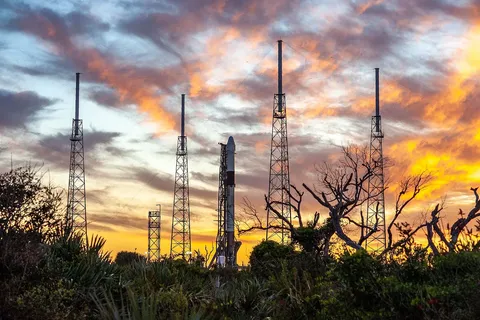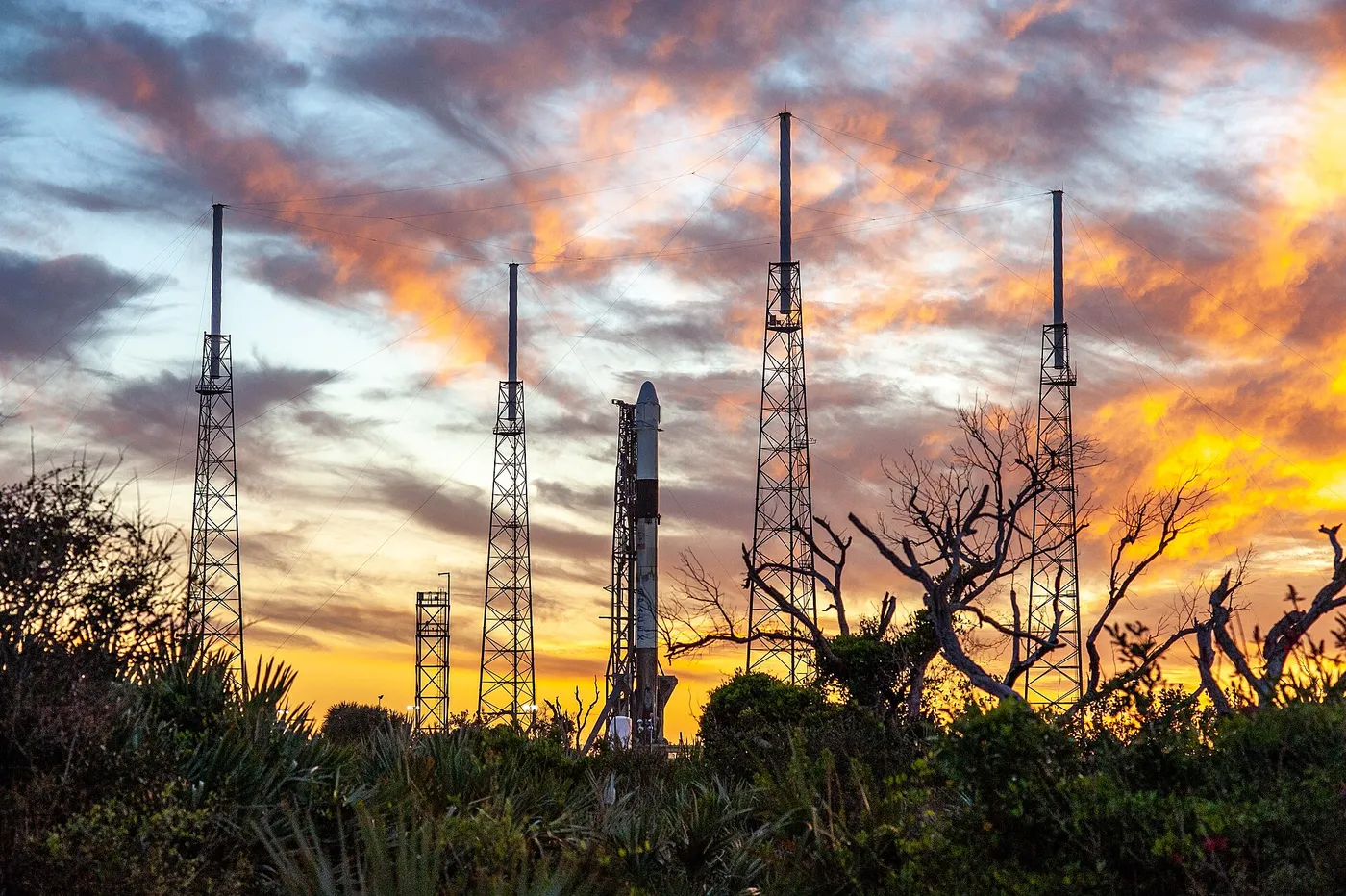
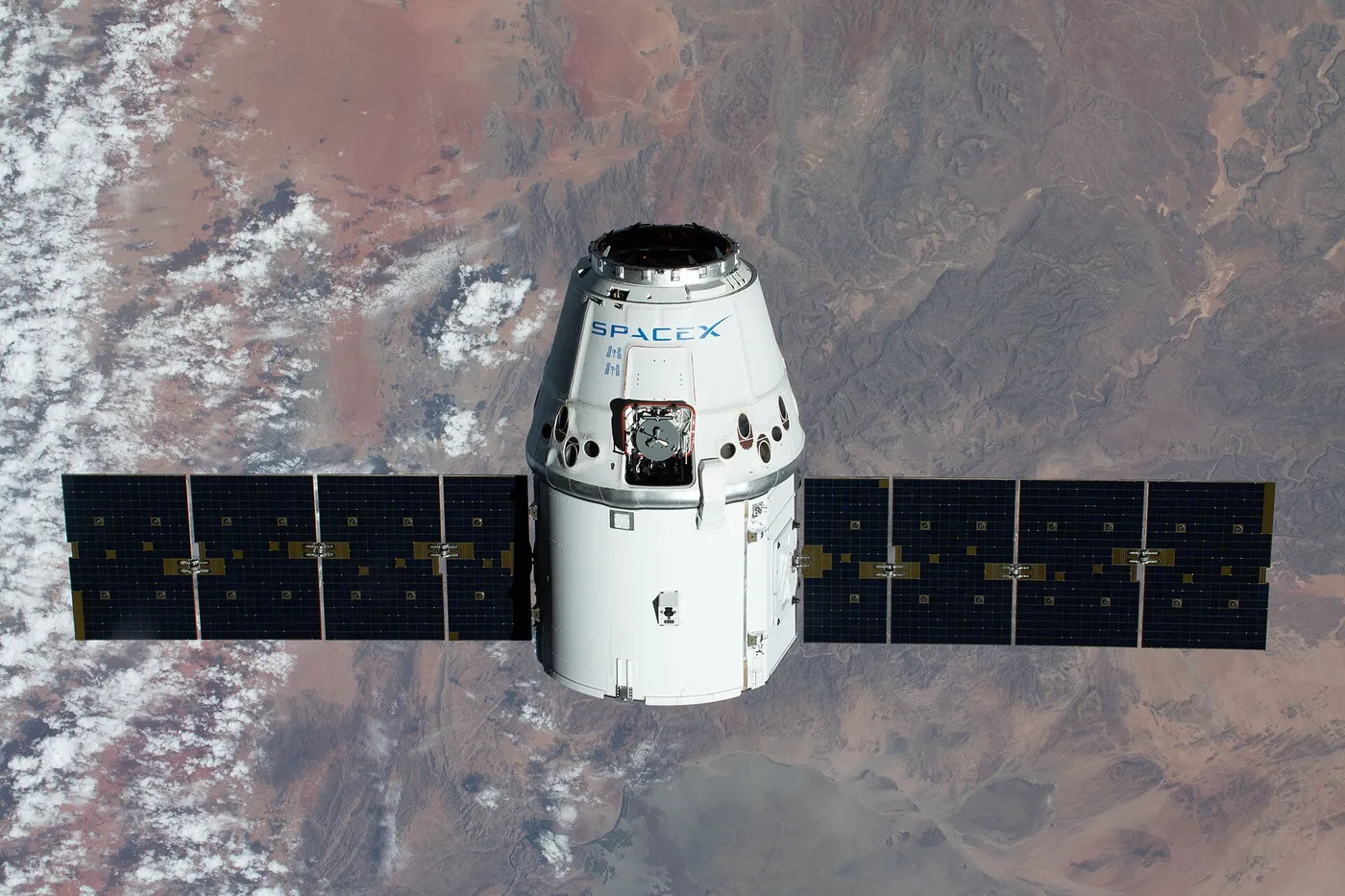

The landing failed on this flight in a way nobody had seen. During descent the first stage began to spin, its grid fins unable to steer because a hydraulic pump had stalled, and it corkscrewed towards the landing zone.
The flight computer, recognising it could not reach the pad safely, deliberately diverted the stage into the sea and continued attempting a controlled descent. It struck the water upright, survived, and was towed to shore — a failure that ended with the vehicle intact and the landing zone unharmed.
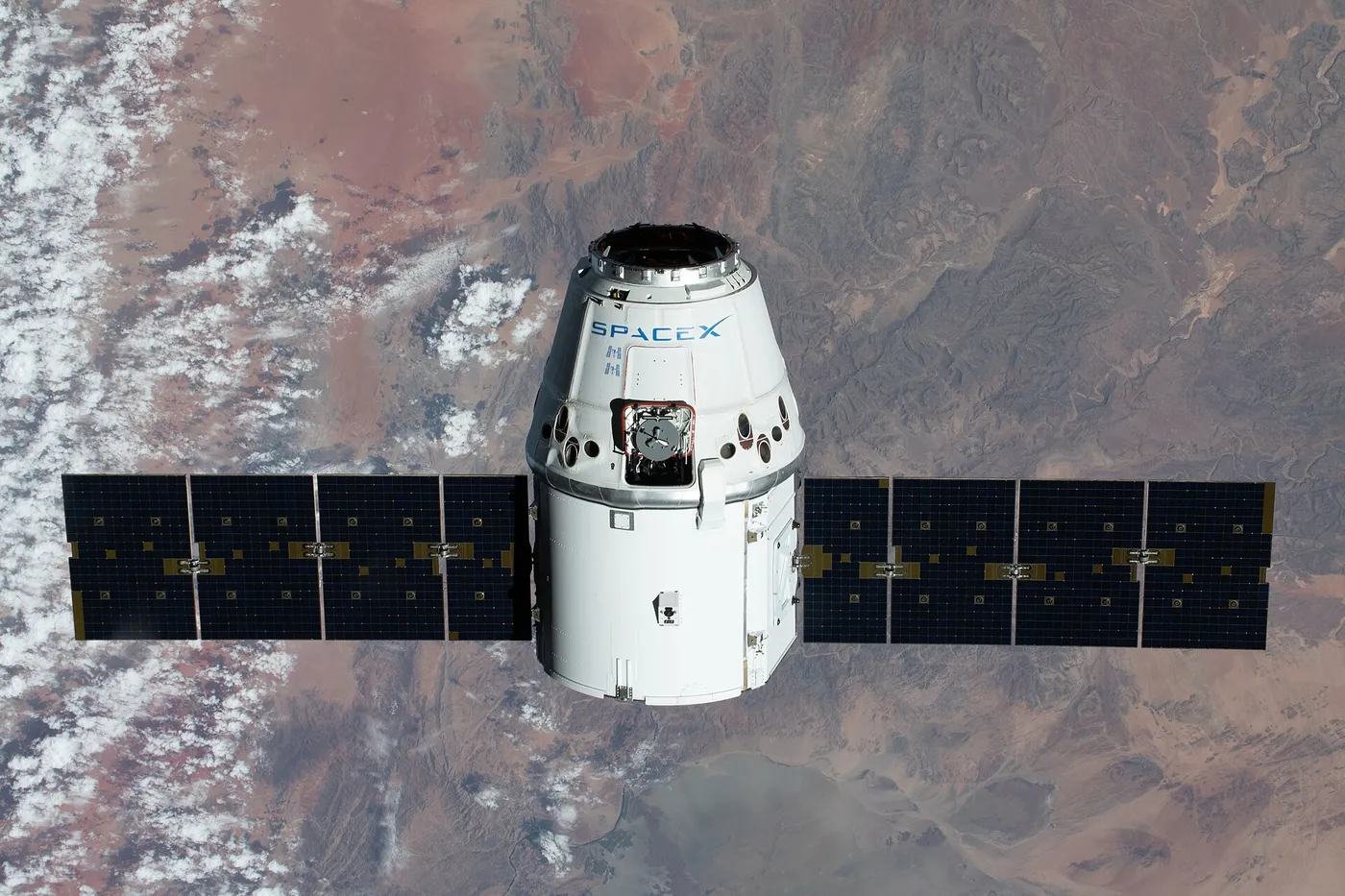
The cargo included a laser instrument to measure forest canopy height and structure globally, providing the vertical dimension that optical imagery cannot and enabling far better estimates of how much carbon the world's forests hold.
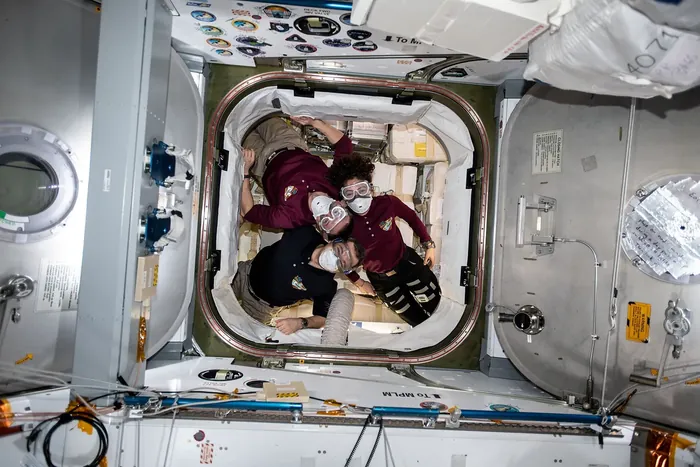
It also carried a robotic refuelling demonstration for the station's exterior, testing tools for transferring cryogenic propellant between spacecraft — a capability with obvious implications for satellite servicing.
Around 2,500 kilograms went up and a similar mass returned. The stage was not reflown, but the incident demonstrated that the vehicle's autonomy extended to recognising its own failure and choosing the safest available outcome.