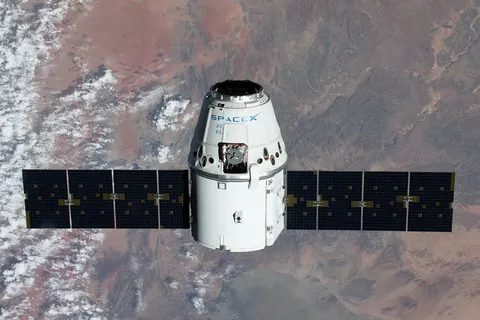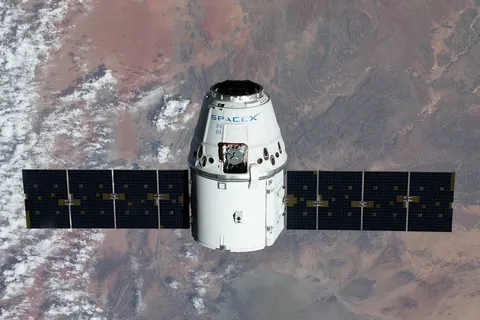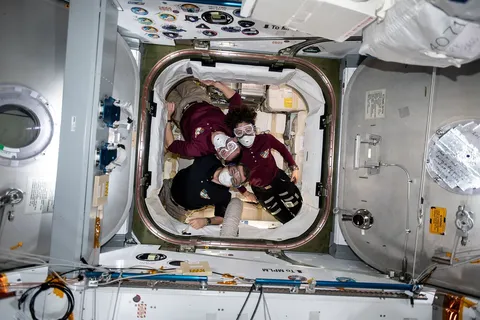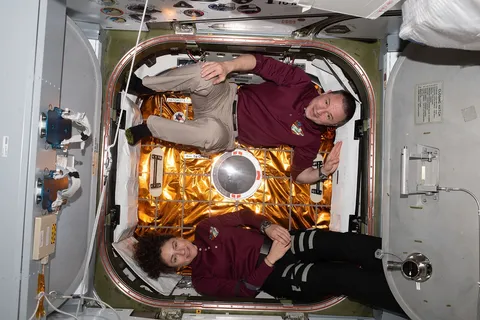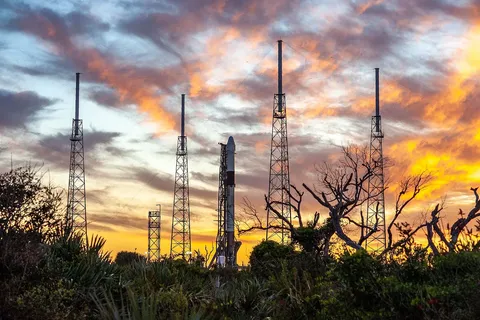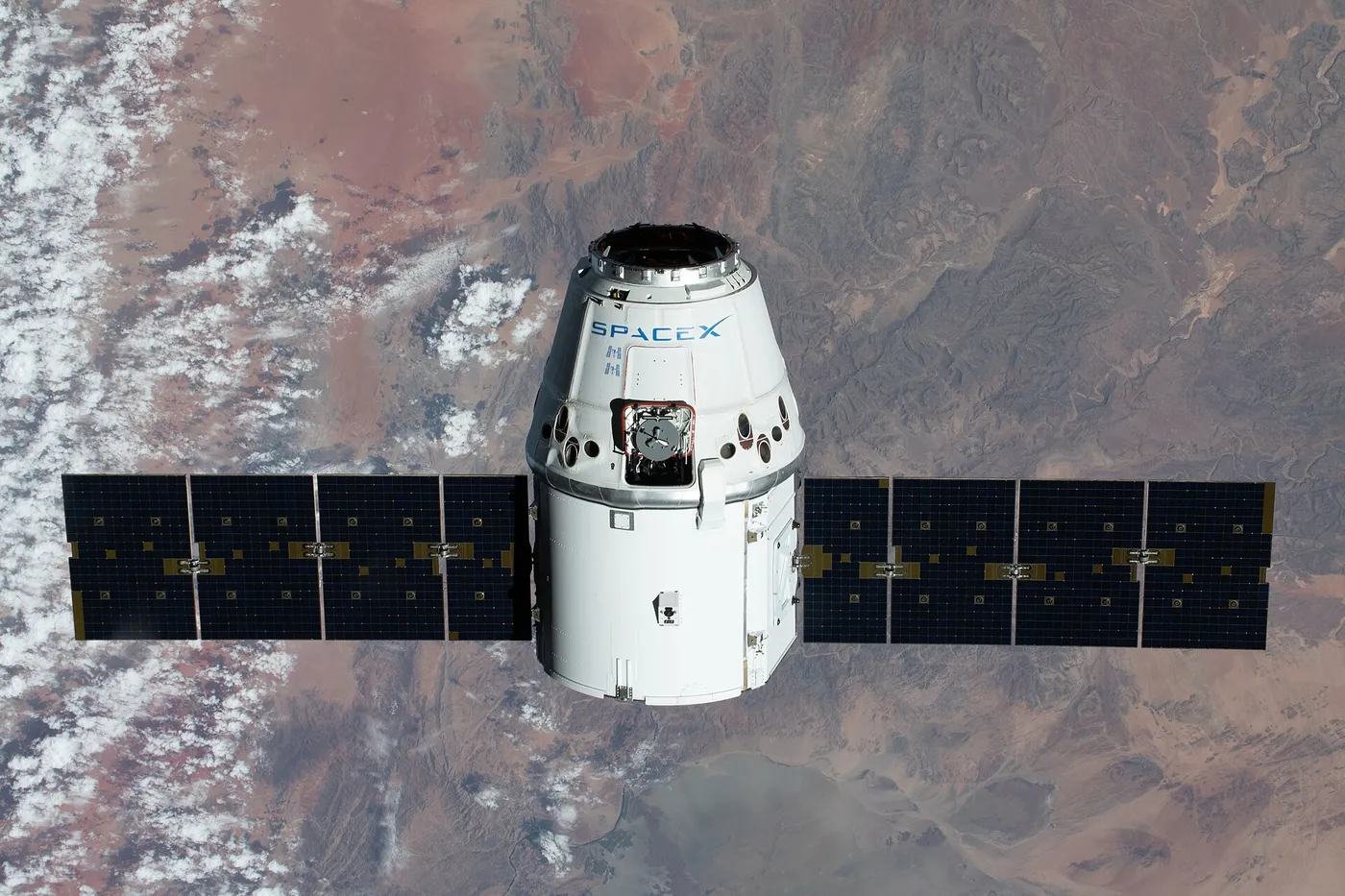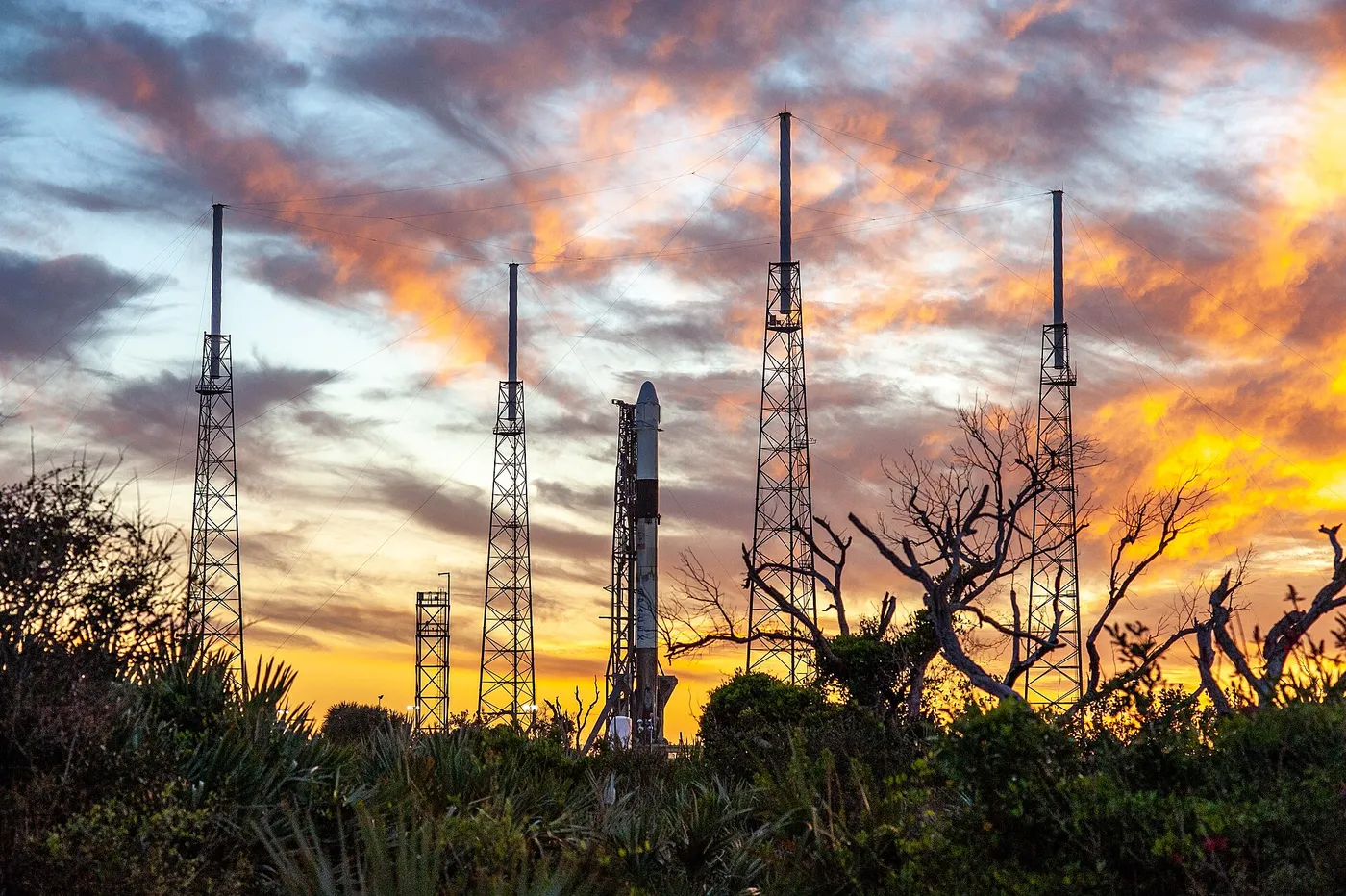
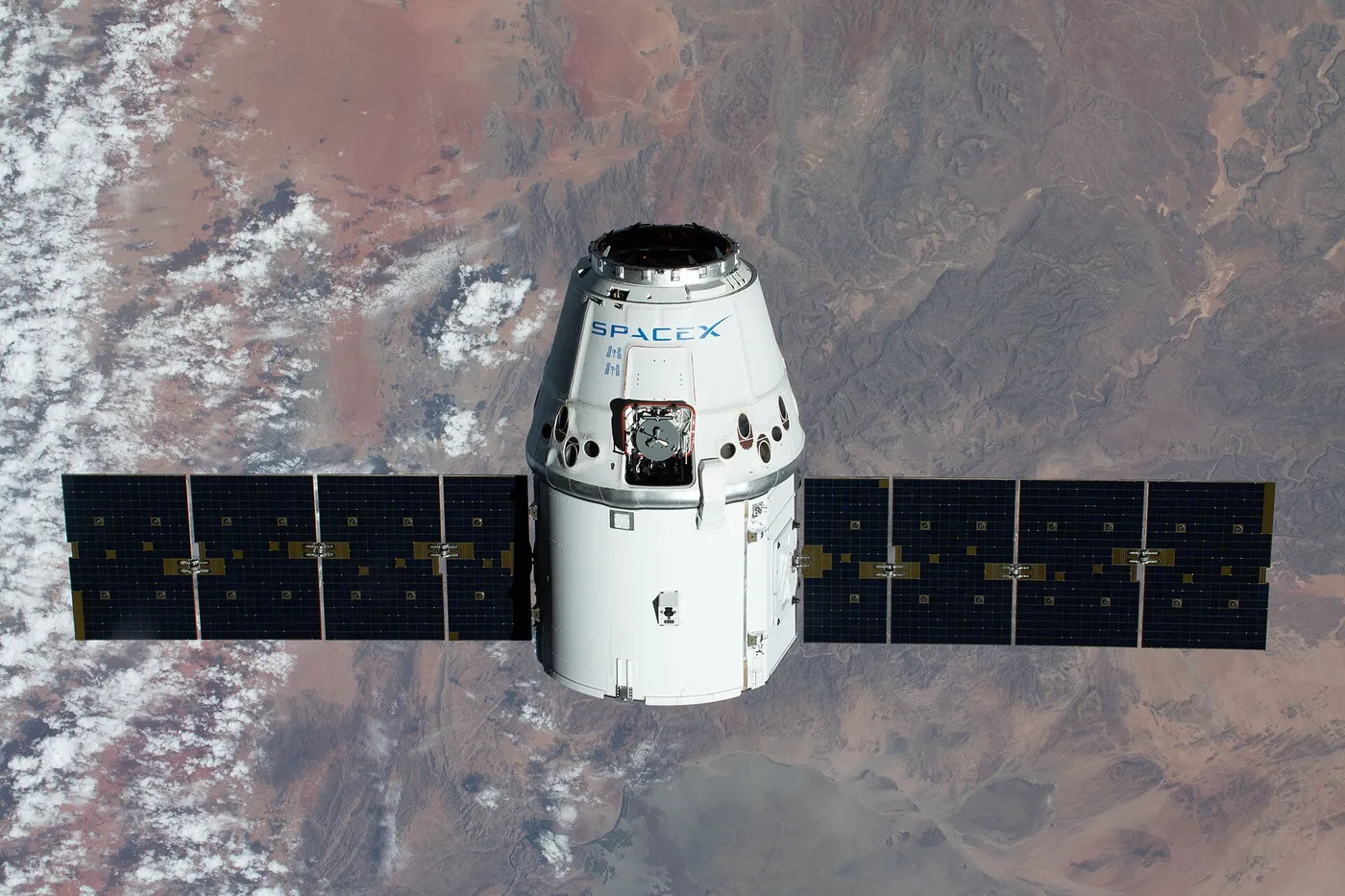

CRS-14 again flew a reused booster and a reused capsule, on what had by 2018 become the standard configuration for cargo missions. The Dragon was making its third flight, having previously delivered cargo in 2015 and 2017.
Its principal payload was a European instrument mounted outside the station to study terrestrial gamma-ray flashes and the transient luminous events — sprites, elves and blue jets — that occur above thunderstorms, phenomena far easier to observe from orbit than from below.
It also delivered a materials exposure facility, a platform on which samples are left in vacuum and returned later to measure how they degrade under atomic oxygen, ultraviolet and micrometeoroid bombardment — information every spacecraft designer needs.
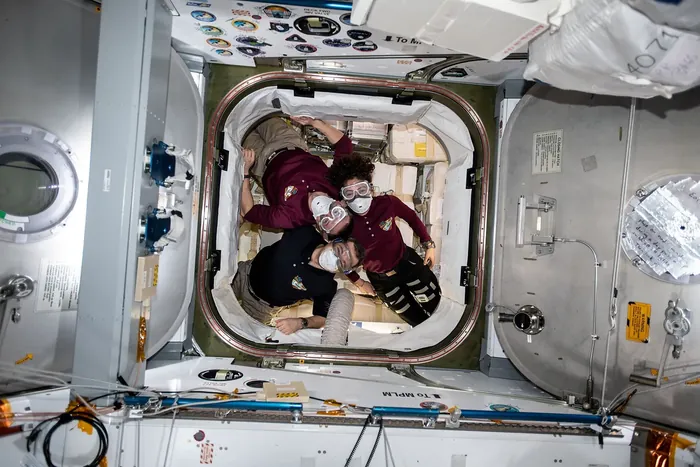
The remaining cargo was the usual mixture of food, spares and biological experiments, totalling around 2,600 kilograms up and a comparable mass returned.
The booster was not recovered on this flight, having already flown twice; expending an older stage rather than refurbishing it again became a routine economic decision as the fleet matured.