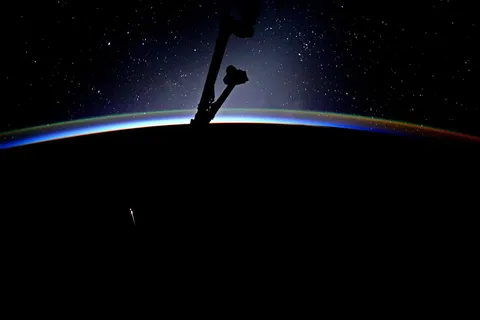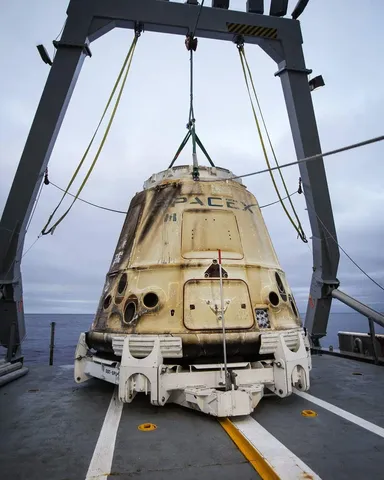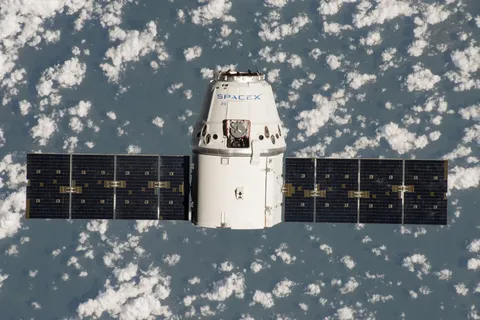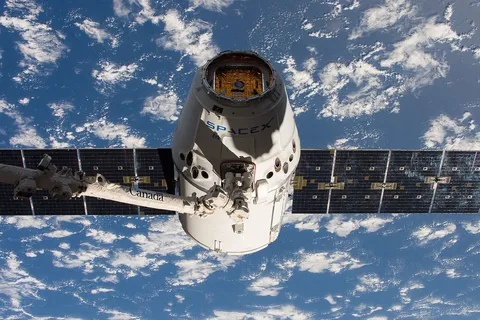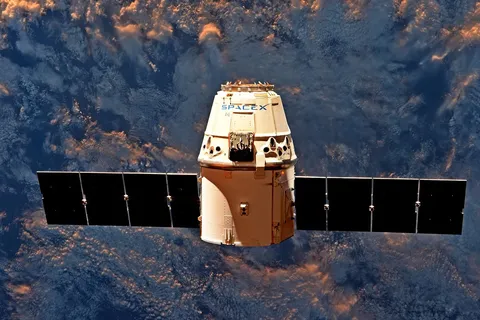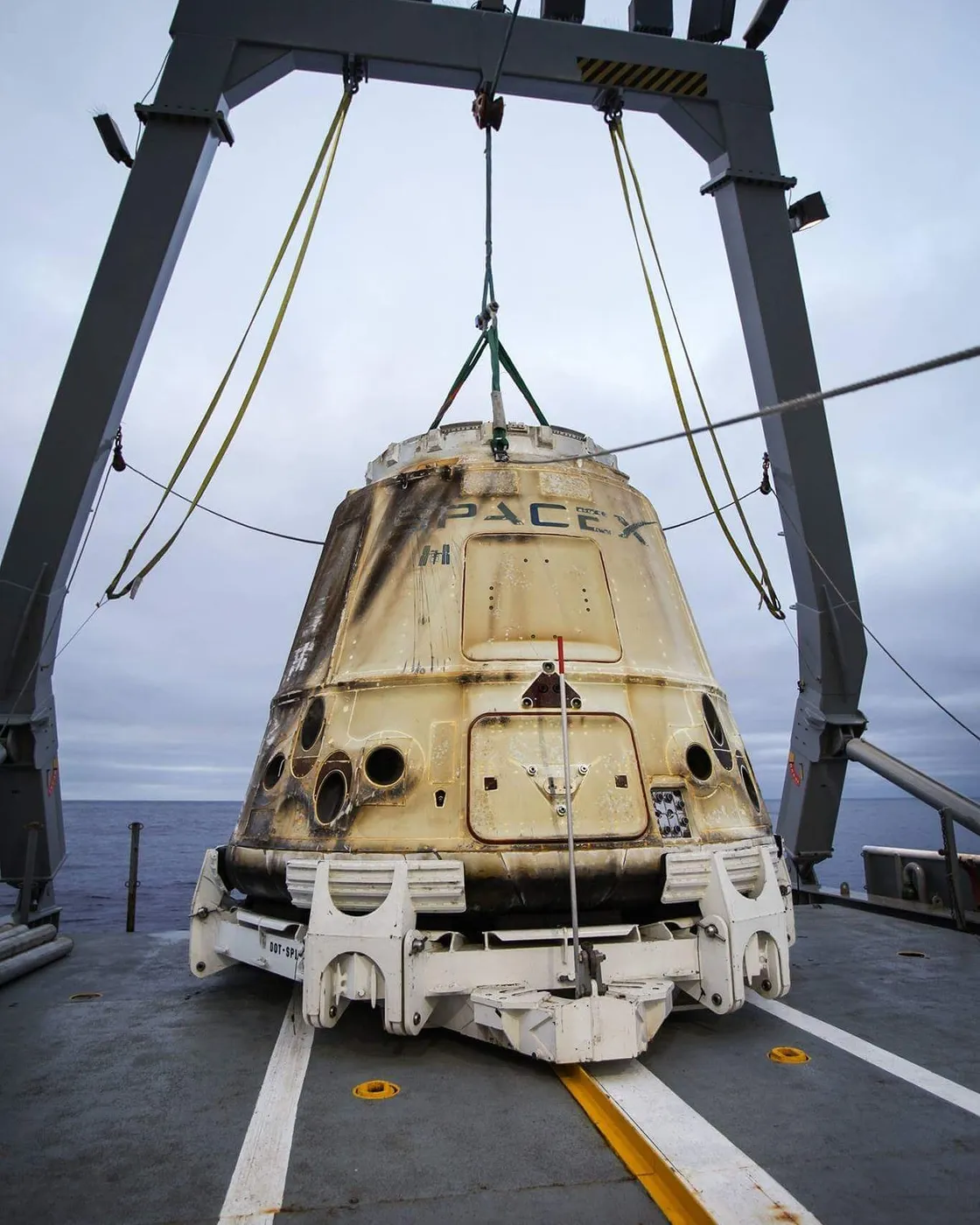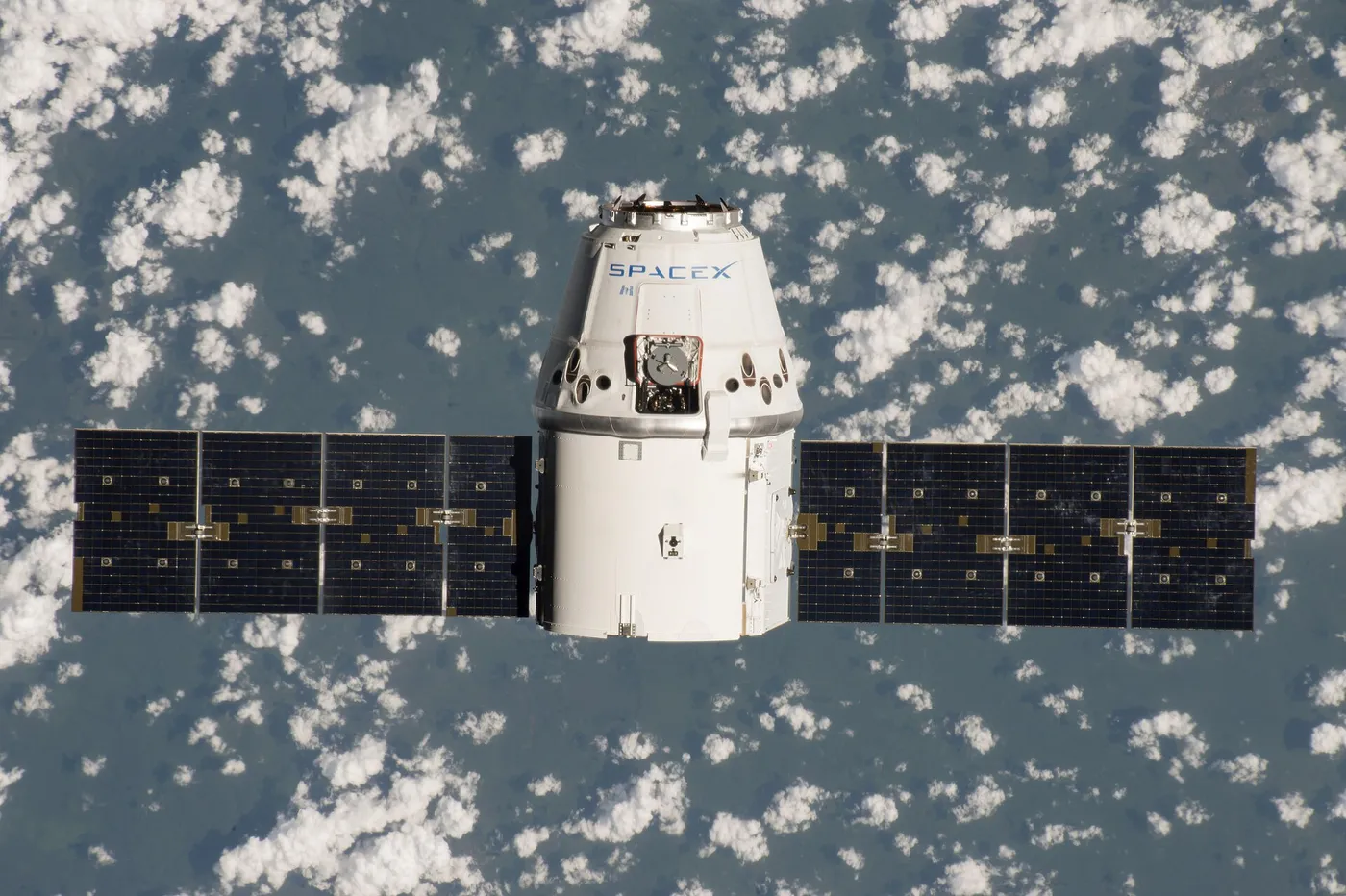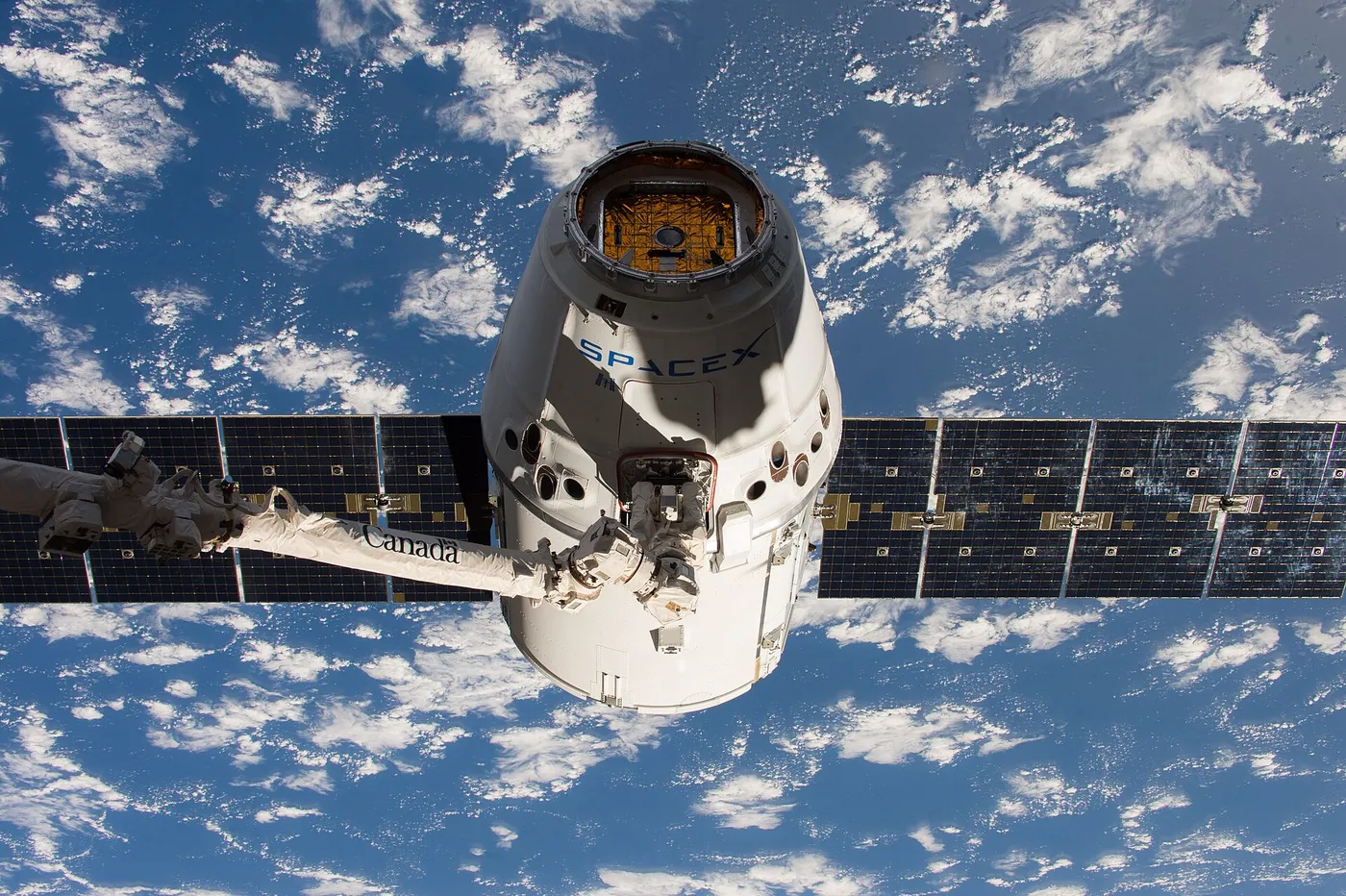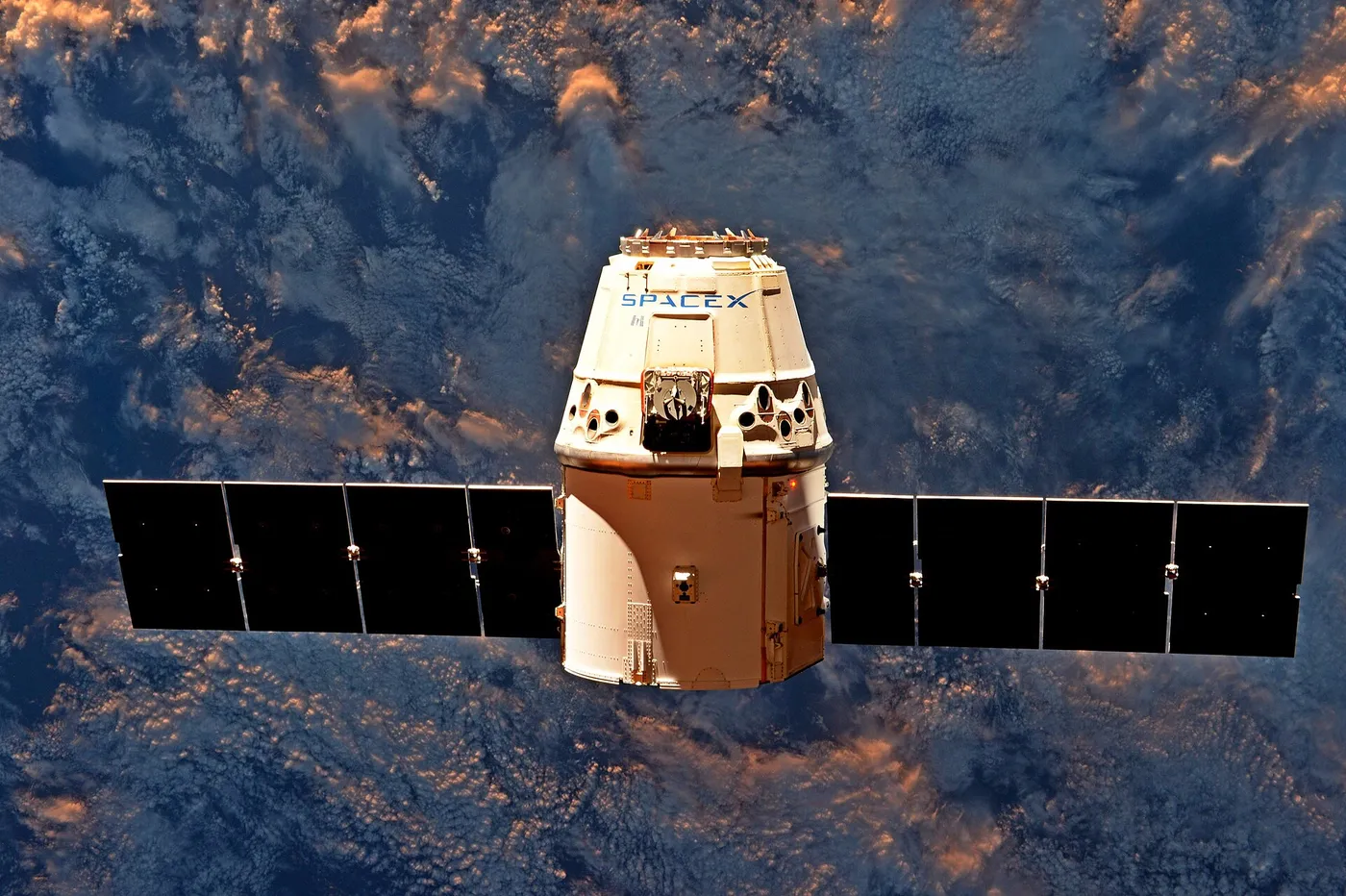
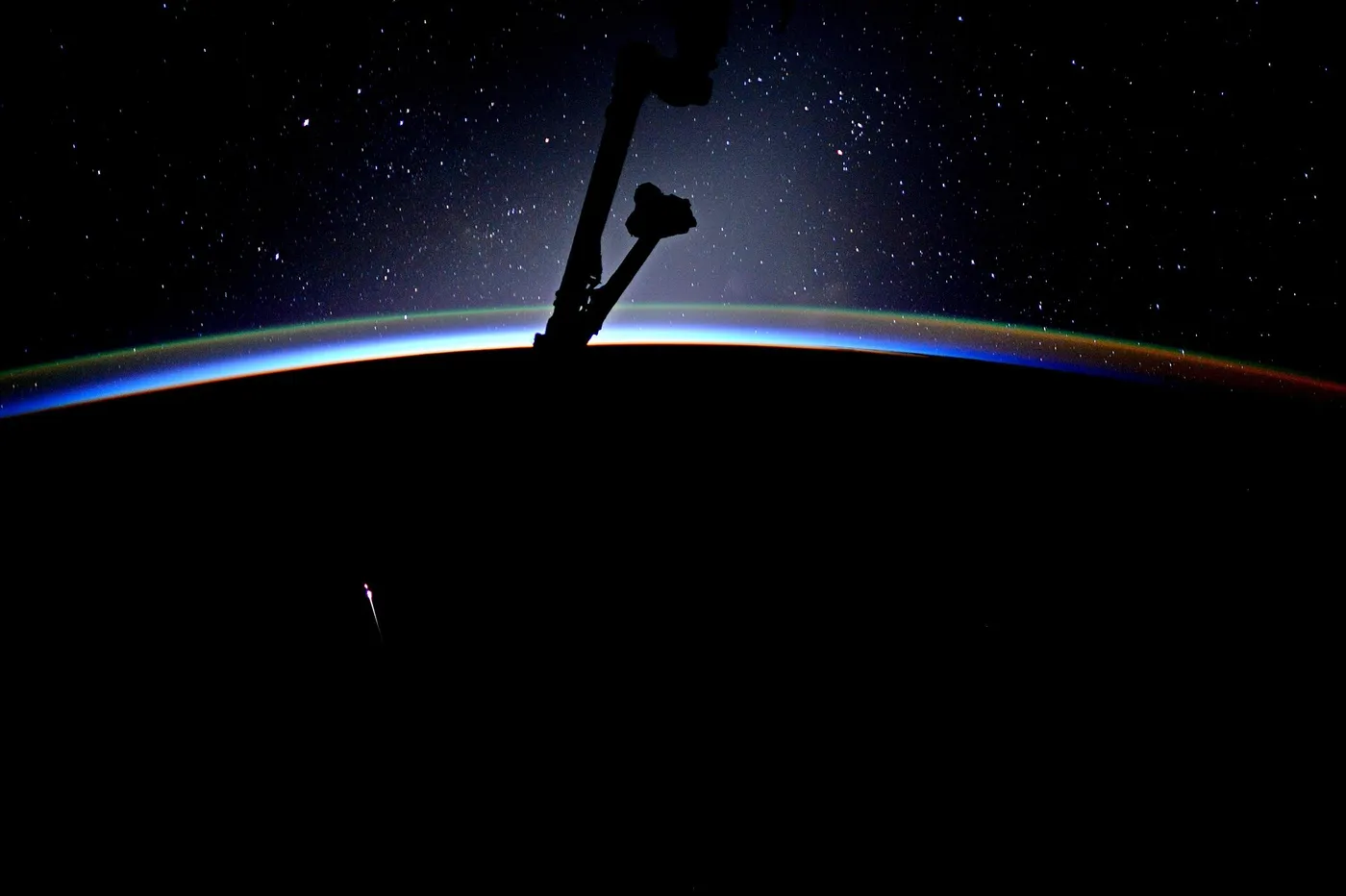

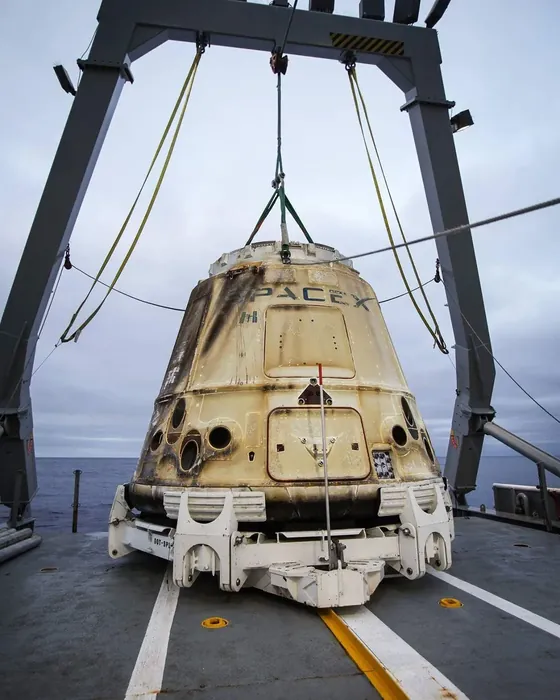
CRS-11 flew a Dragon that had been to space before. The capsule had delivered cargo in 2014, splashed down, been recovered and refurbished, and was now making a second flight — the first reuse of an orbital spacecraft since the Shuttle.
NASA's agreement to accept a flown capsule was significant. Reusing a pressure vessel that has been through launch, months in orbit, re-entry and immersion in seawater required a certification argument, and the agency's acceptance opened the way to a fleet operated on reuse economics.
The cargo included an X-ray telescope for the station's exterior, built to study neutron stars by timing their pulses with extreme precision — and which also demonstrated navigation by pulsar, using them as natural beacons much as ships once used lighthouses.
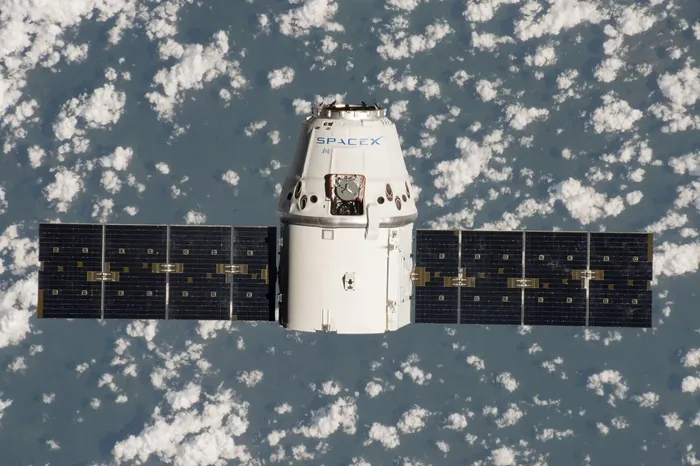
It also delivered a roll-out solar array experiment, testing the flexible blanket technology later used to upgrade the station's own power system, and around 2,700 kilograms of supplies and science.
The first stage landed back at the Cape. Between a reused capsule and a recovered booster, the flight was a fair snapshot of how quickly the economics of access to orbit were changing.