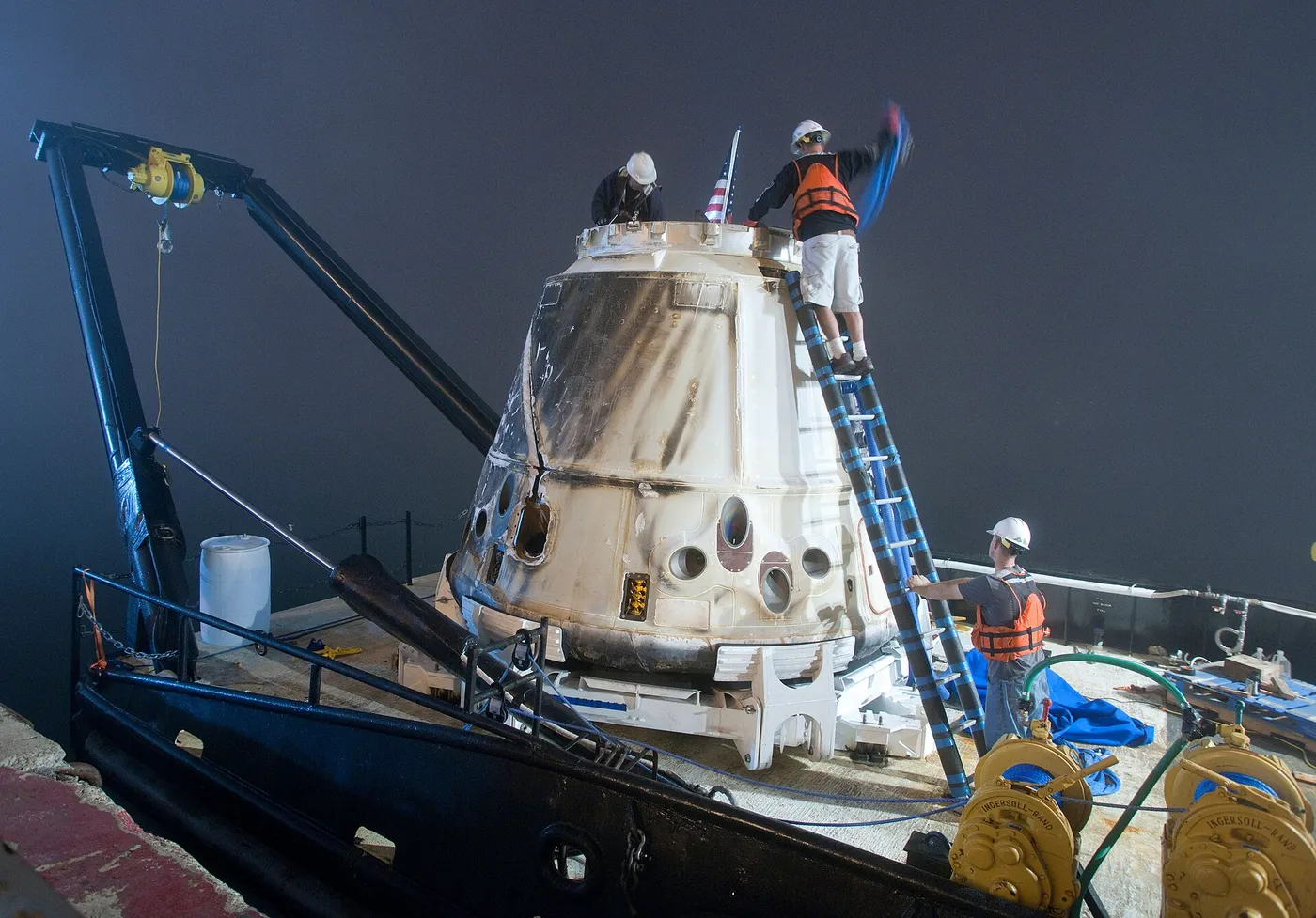

CRS-1 was the first operational cargo flight under the Commercial Resupply Services contract — the arrangement by which NASA stopped building its own cargo vehicles and instead bought delivery as a service, paying on results rather than for development.
Seventy-nine seconds into the climb one of the nine first-stage engines lost pressure and shut down. The rocket was designed to tolerate that: the flight computer recalculated the trajectory, burned the remaining eight engines longer, and delivered Dragon to the correct orbit.
The secondary payload was not so fortunate. An Orbcomm communications satellite was to be placed in a higher orbit by a second-stage restart, but the engine failure had consumed the propellant margin, and NASA's flight rules — protecting the station from a stray restart — forbade the attempt. The satellite was released too low and re-entered days later.
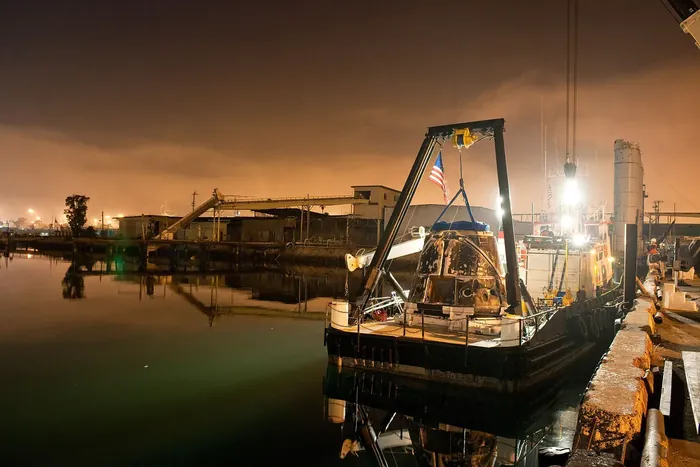
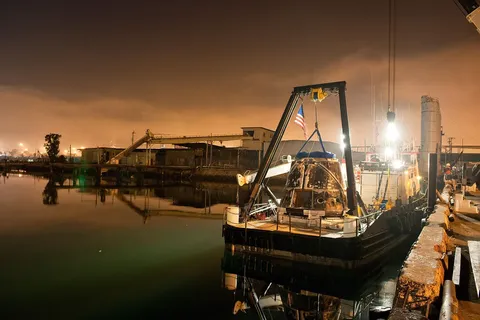
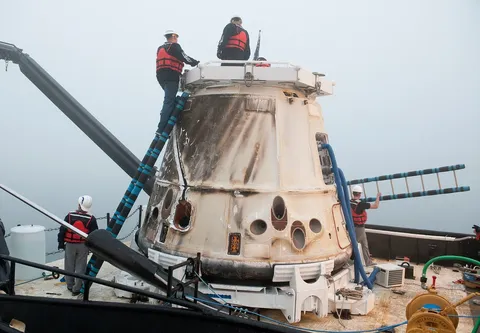
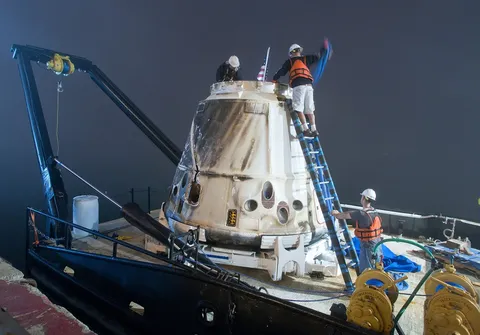
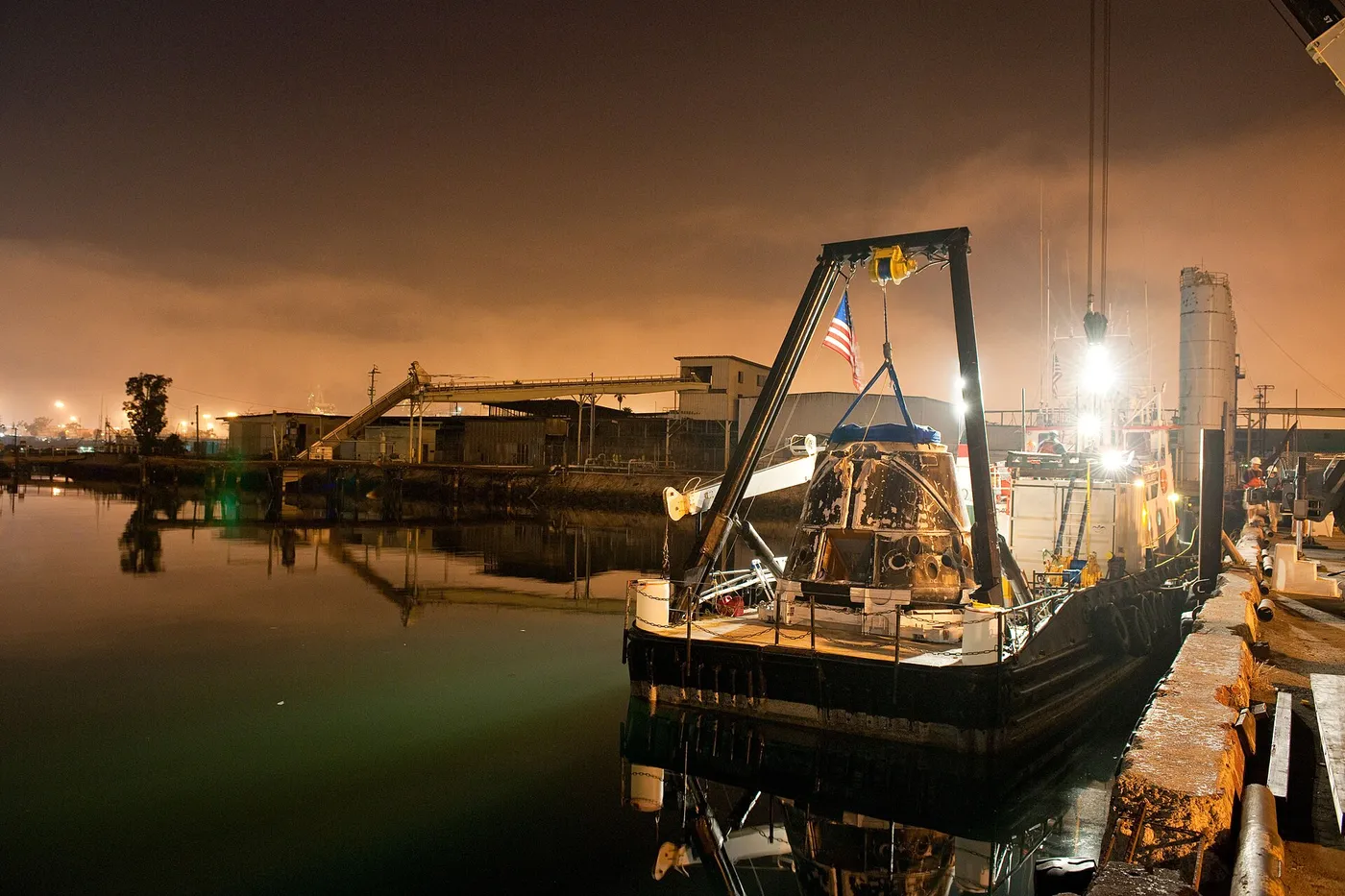
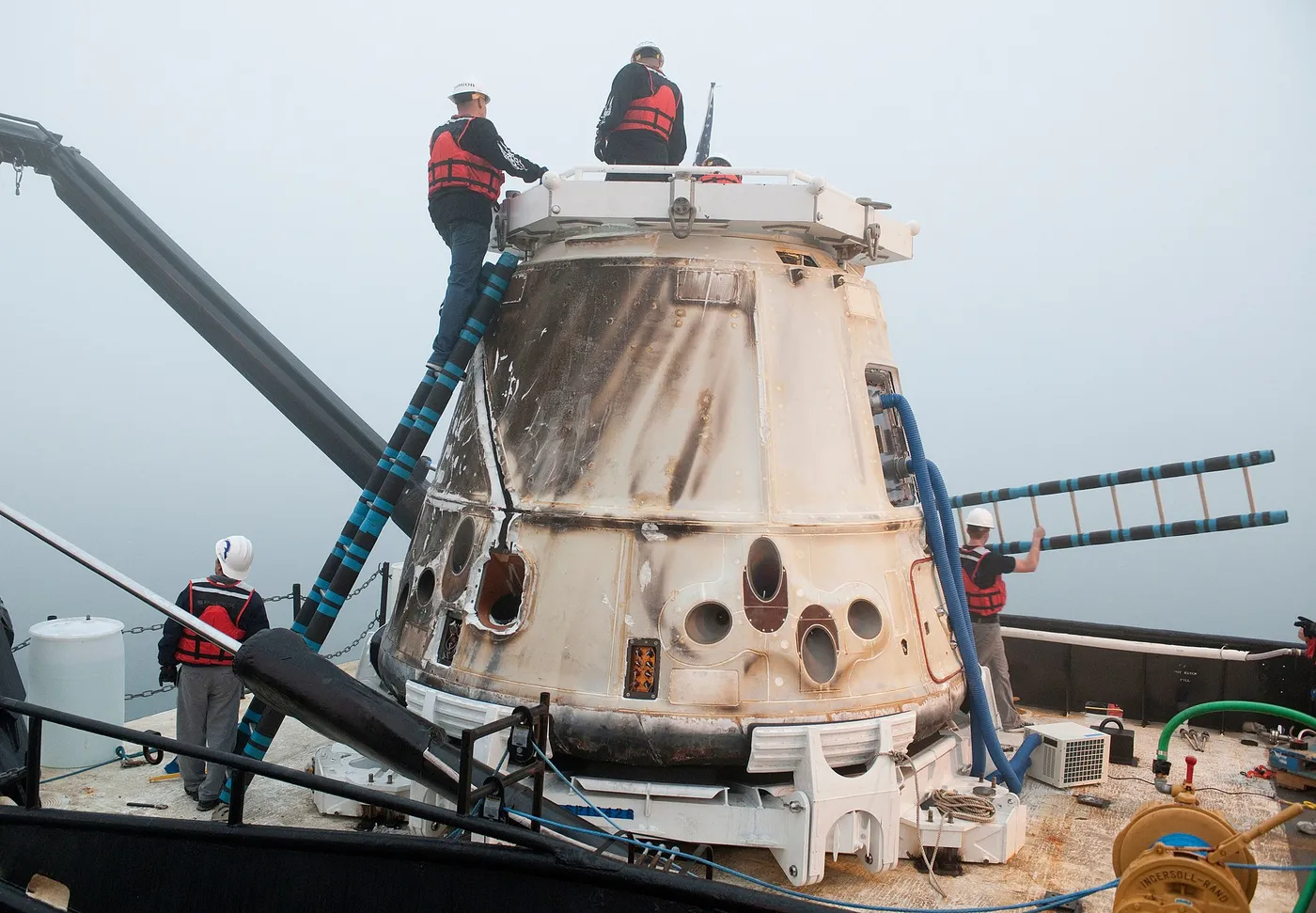
Dragon itself berthed successfully, delivered around 400 kilograms of supplies, and returned nearly a tonne of cargo and experiment samples to a Pacific splashdown. That return capability was unique: after the Shuttle retired, no other vehicle serving the station could bring anything back intact.
The flight established the model that has carried the station ever since. It also demonstrated engine-out capability in practice rather than on paper, which is a rare thing for a launch vehicle to prove without losing the mission.