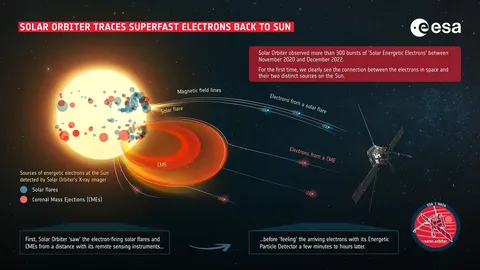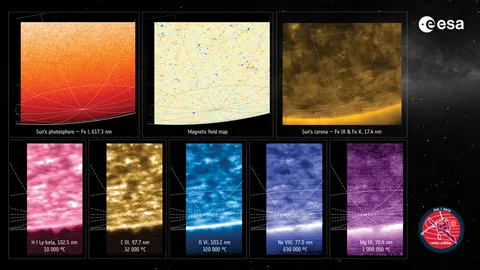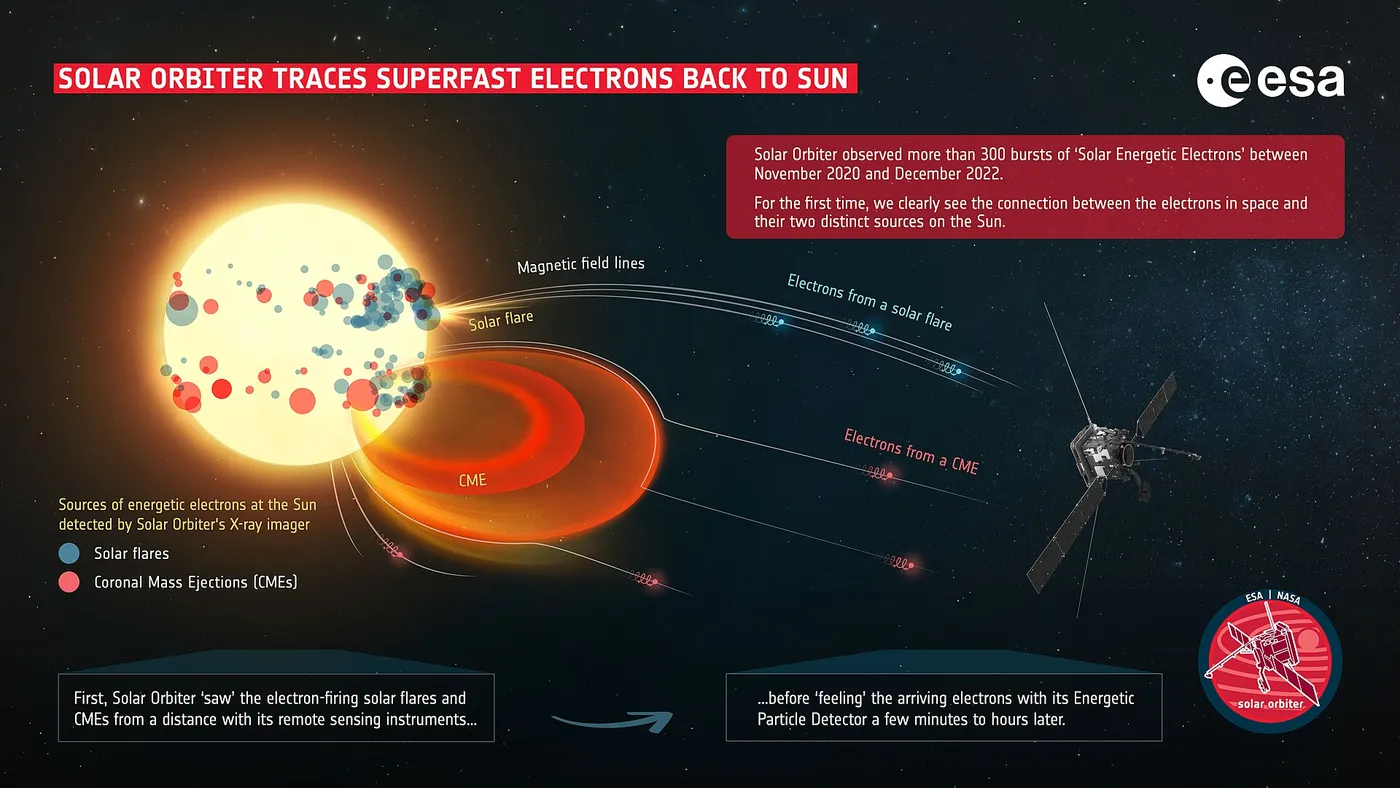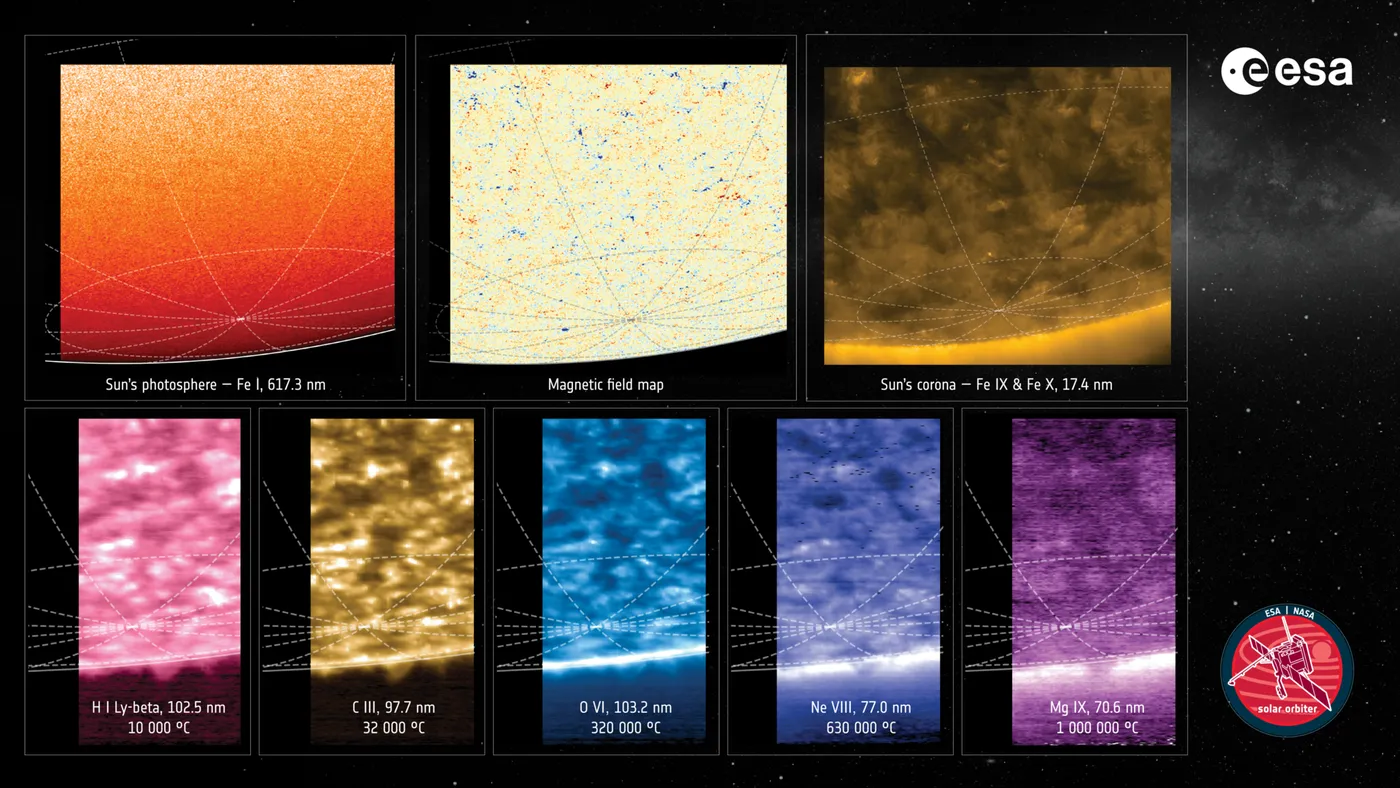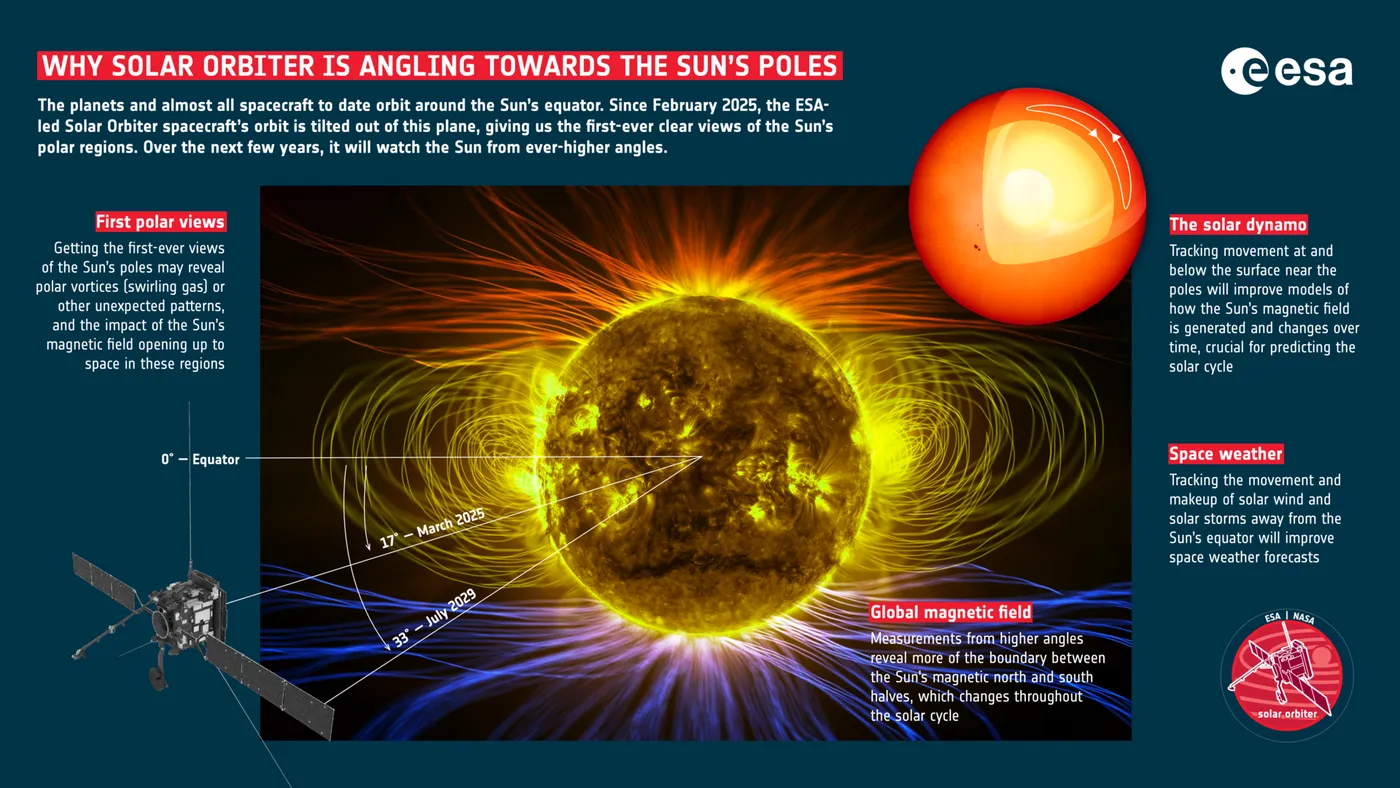
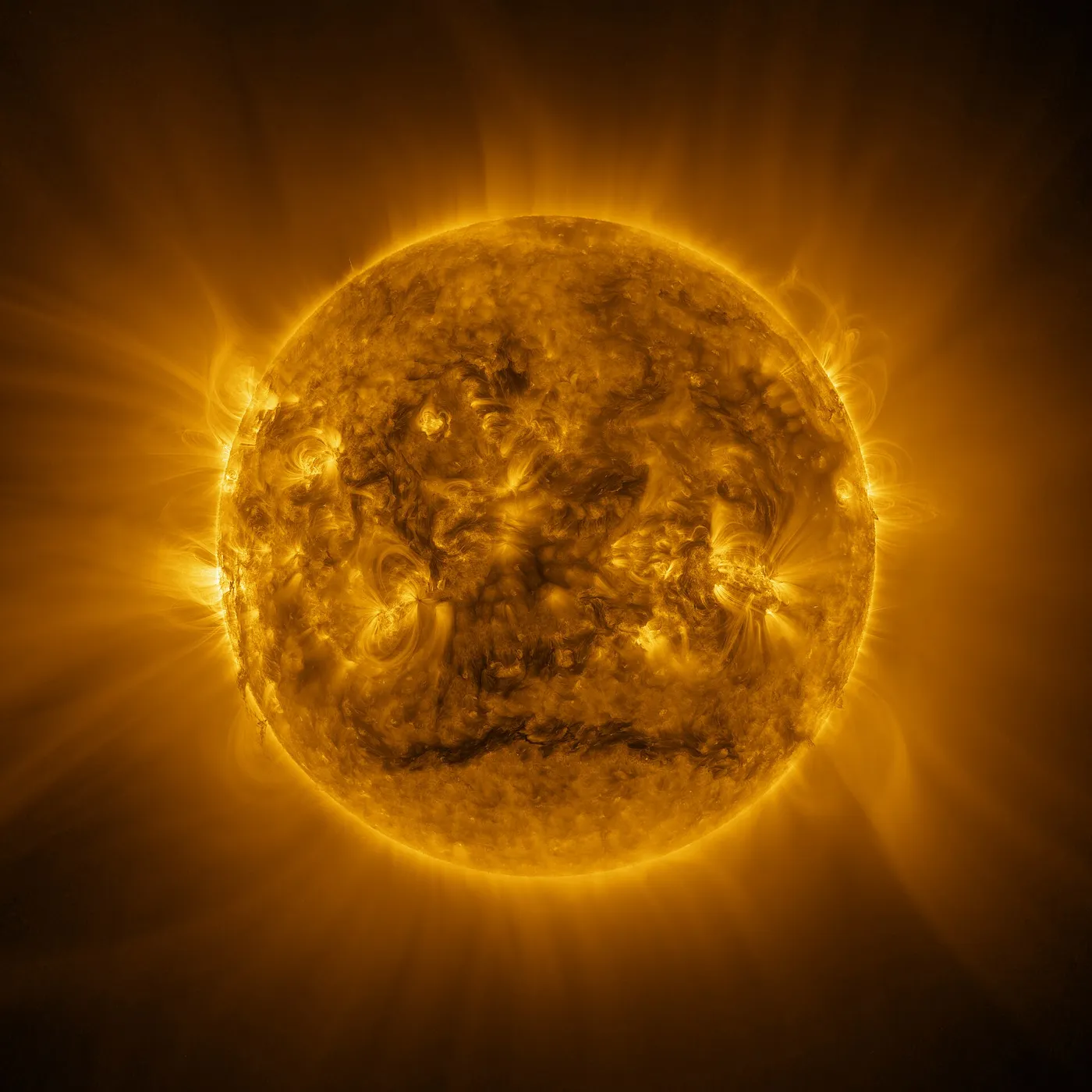

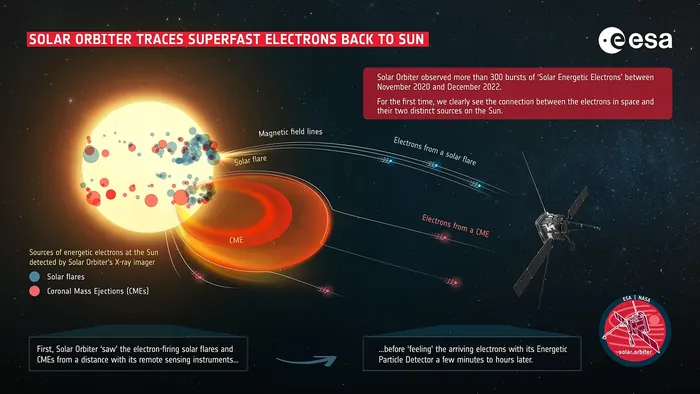
Solar Orbiter carries both kinds of instrument. Some spacecraft image the Sun from a distance and others fly through the solar wind measuring it directly; this one does both simultaneously, so that a structure seen in an image can be linked to the particles and fields that arrive from it — the connection that has always been the missing step in solar physics.
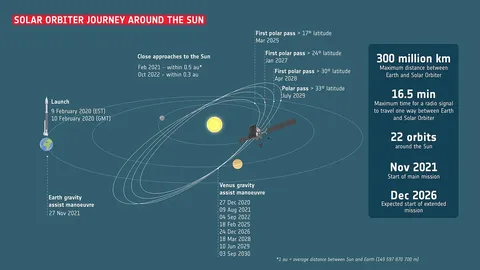
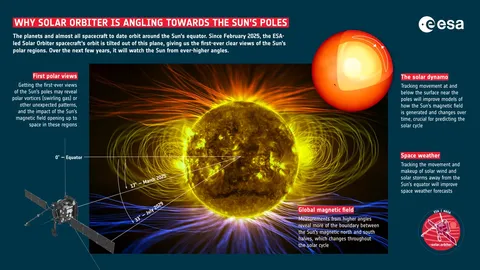
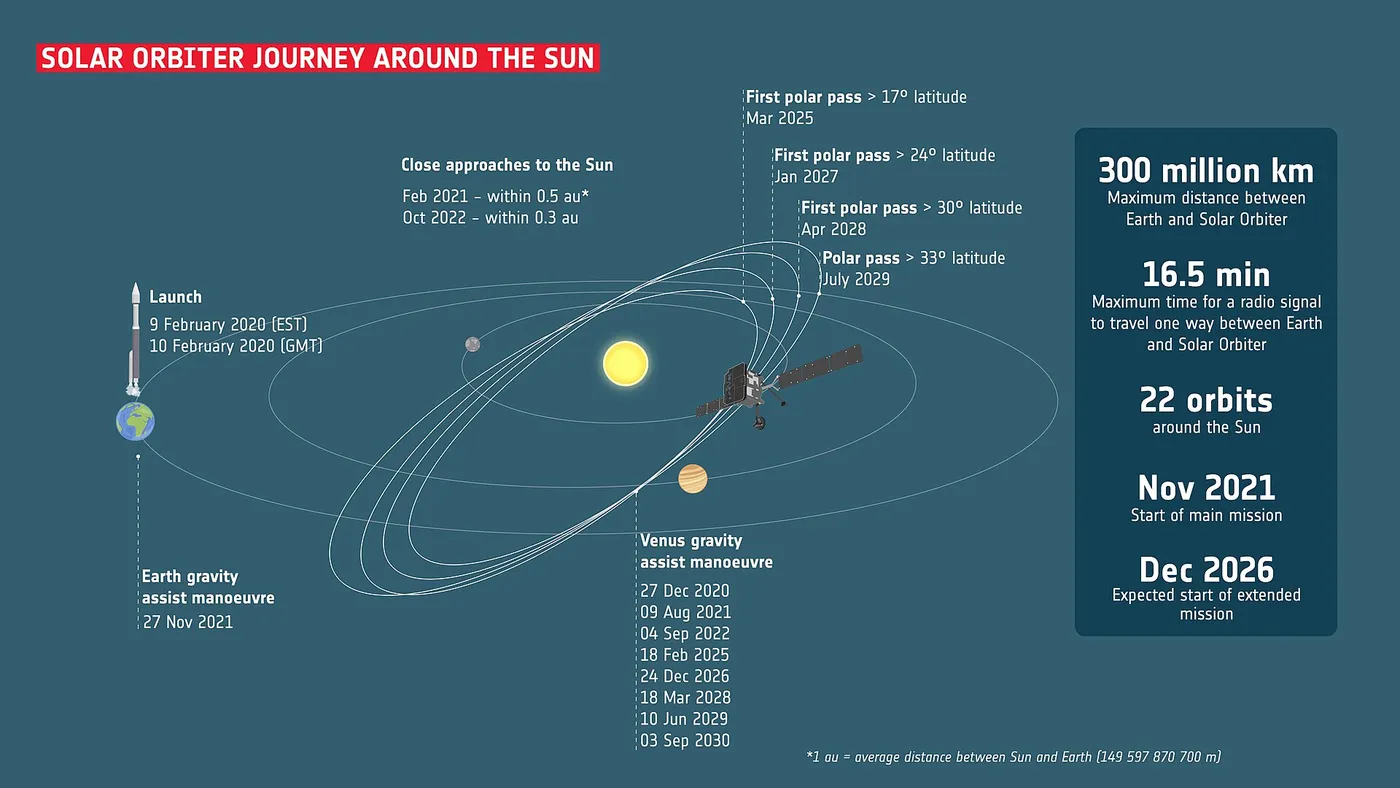
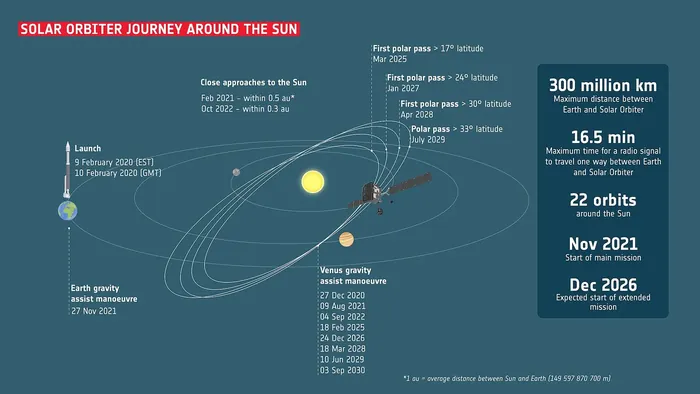
Its orbit is being tilted progressively by repeated Venus flybys, carrying it out of the plane of the planets to look down on the Sun's poles. In 2025 it returned the first images ever taken of the solar polar regions, which matter because the Sun's magnetic field reverses there every eleven years and nobody has been able to watch it happen.
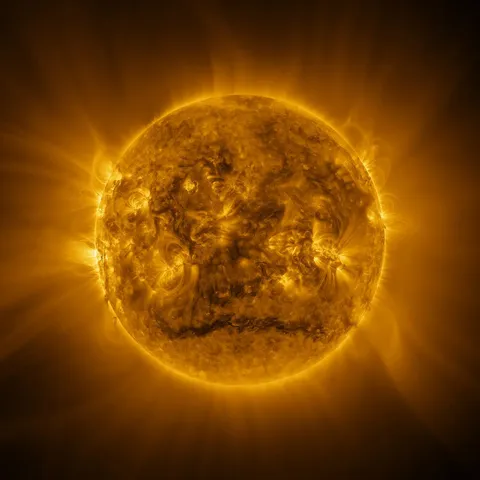
Its first images, released in 2020 while the spacecraft was still commissioning, revealed something unexpected: countless miniature flares scattered across the surface, promptly named campfires. They are millions of times smaller than ordinary solar flares, and they may be part of the answer to why the corona is hundreds of times hotter than the surface beneath it.
It works in partnership with Parker Solar Probe. Parker flies far closer but carries no telescope pointed at the Sun — it cannot, at that distance — while Solar Orbiter watches from further out and images the regions Parker is flying through. Coordinated observations by the two have become a standard technique.
The mission is a European one with substantial American participation, and it is designed to run into the 2030s, covering a full solar cycle with its orbit tilting further each year. Its practical value is space weather forecasting; its scientific value is finally seeing the star from somewhere other than its equator.