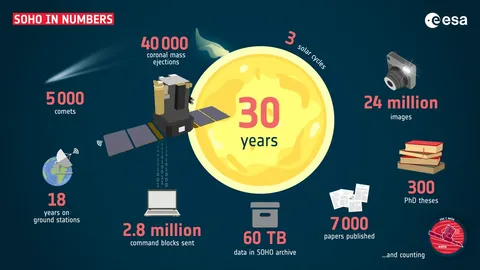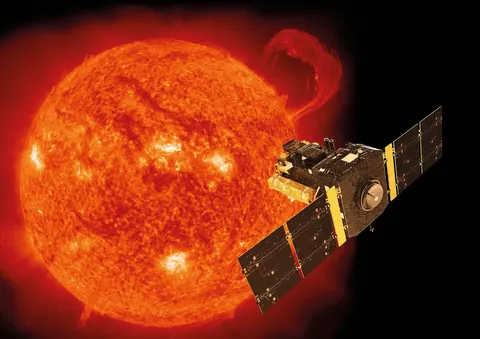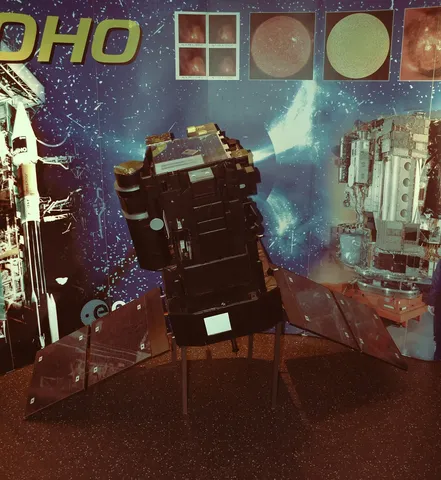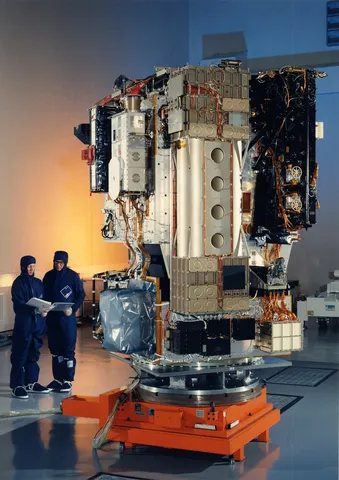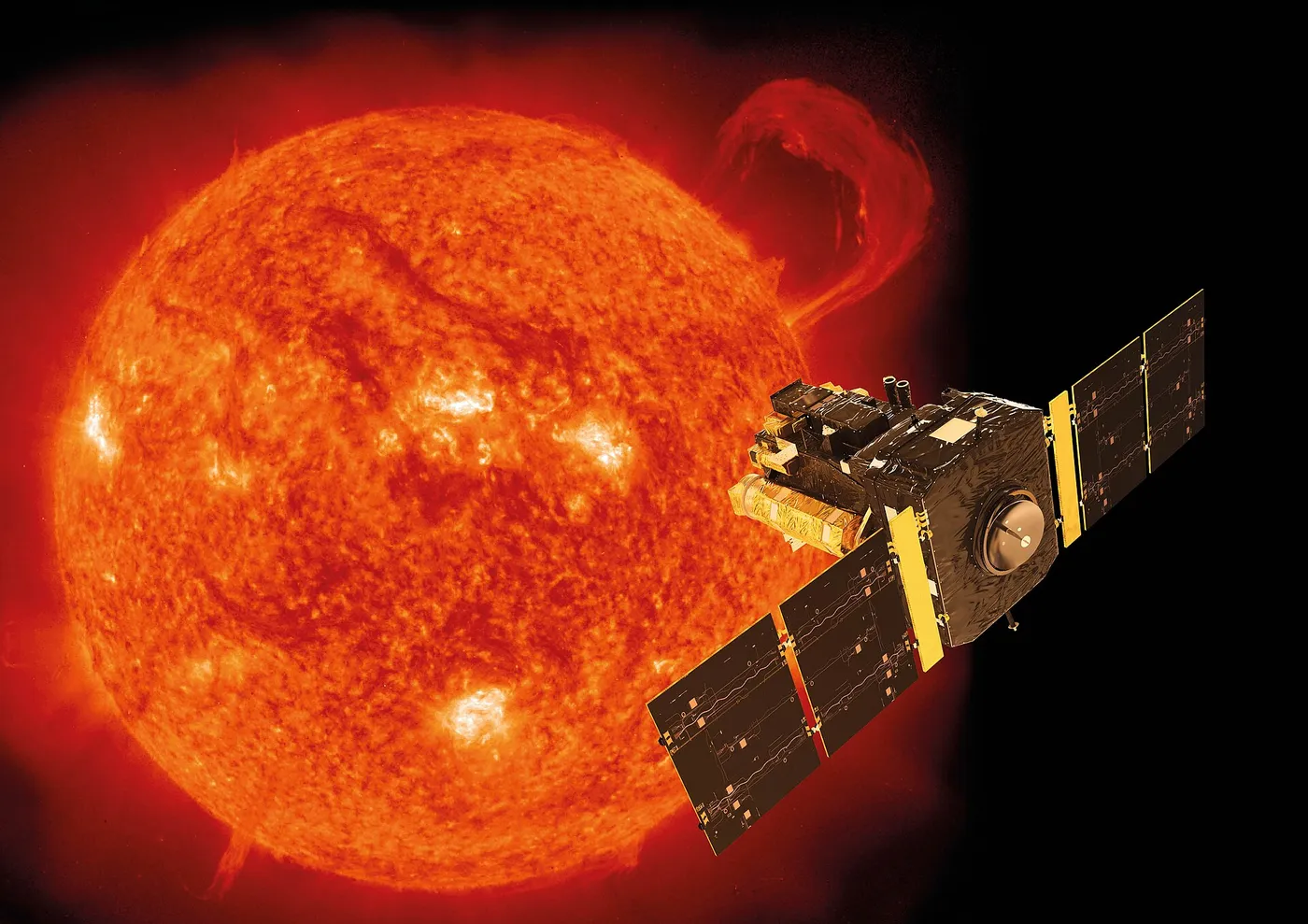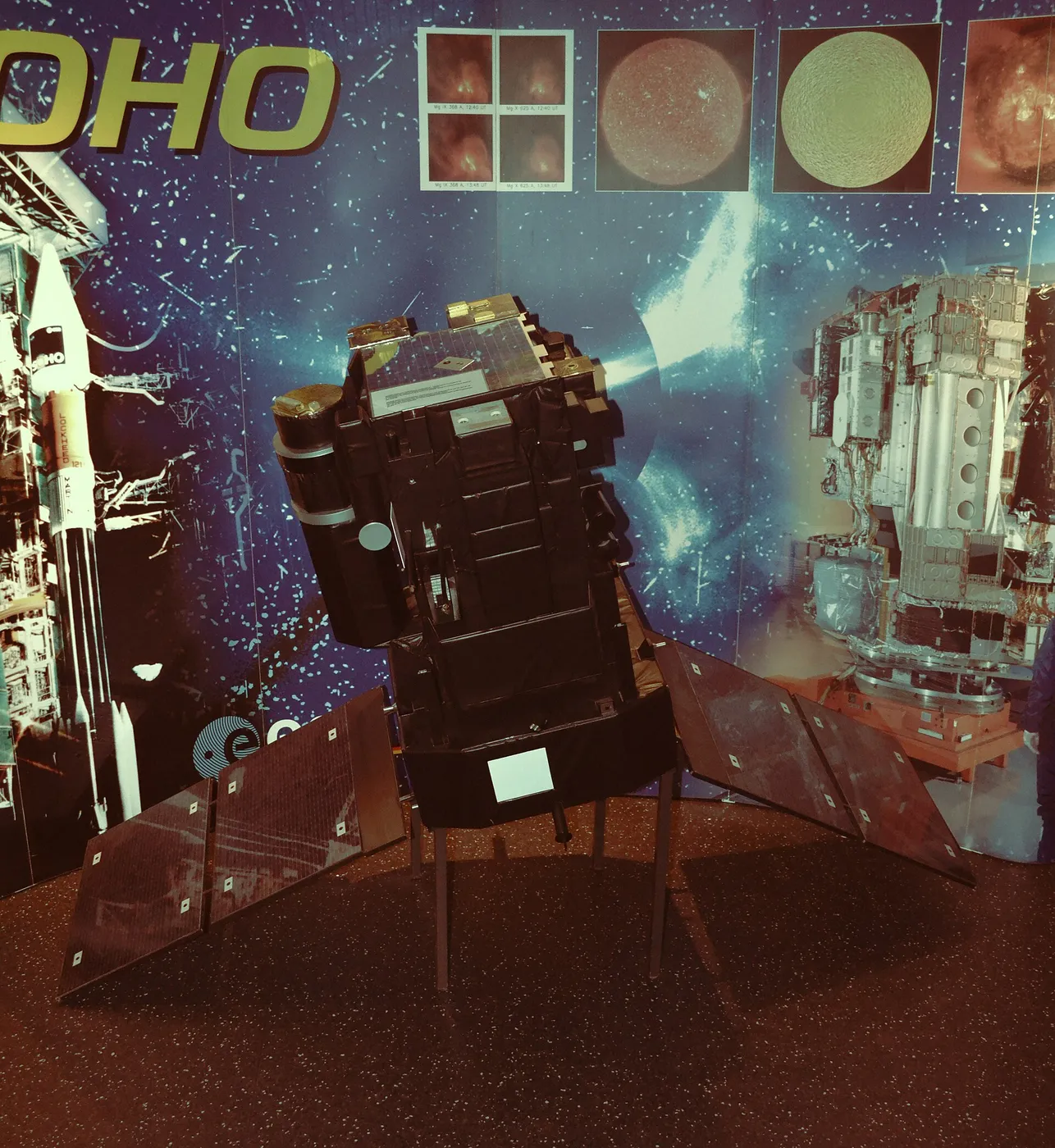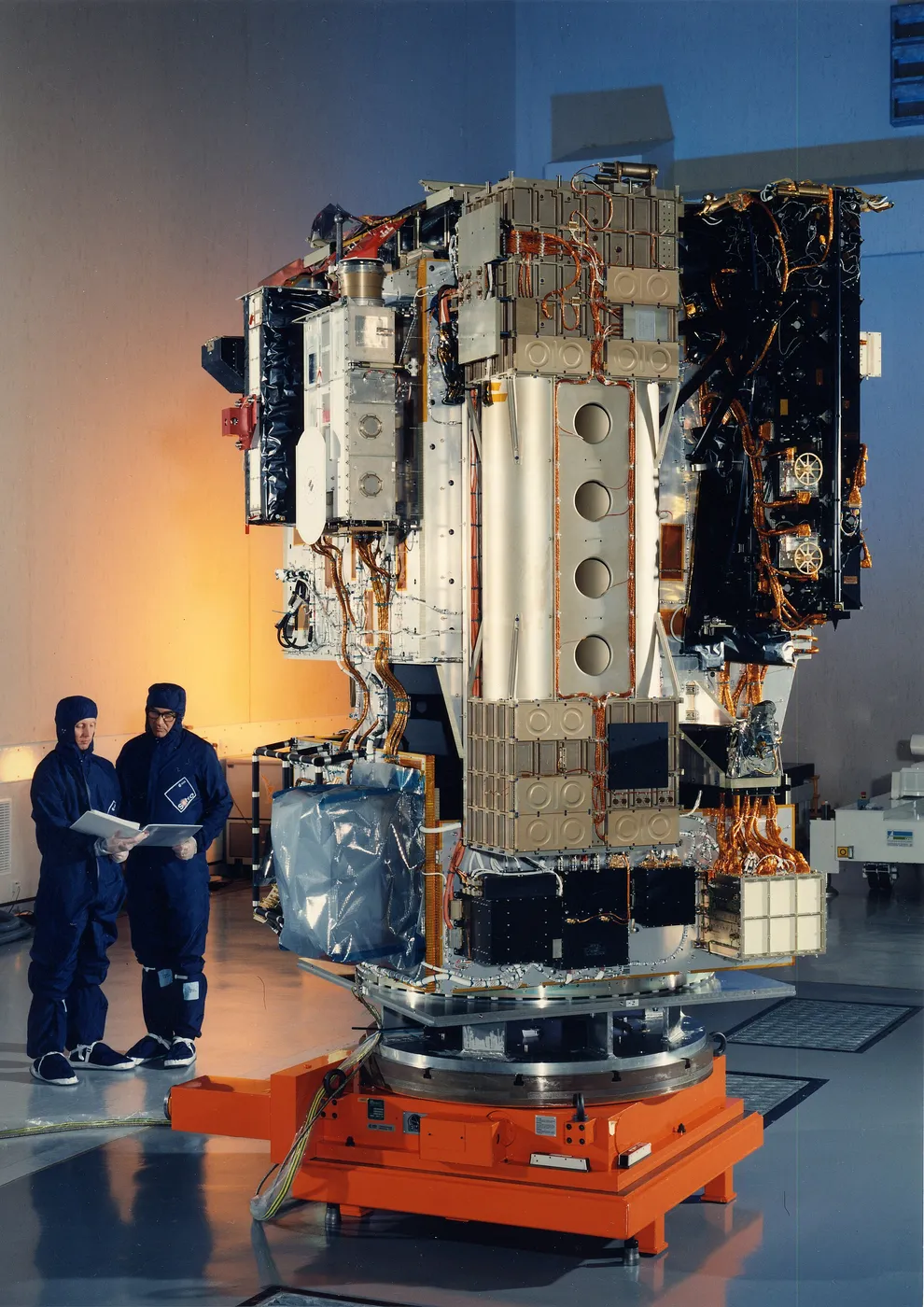
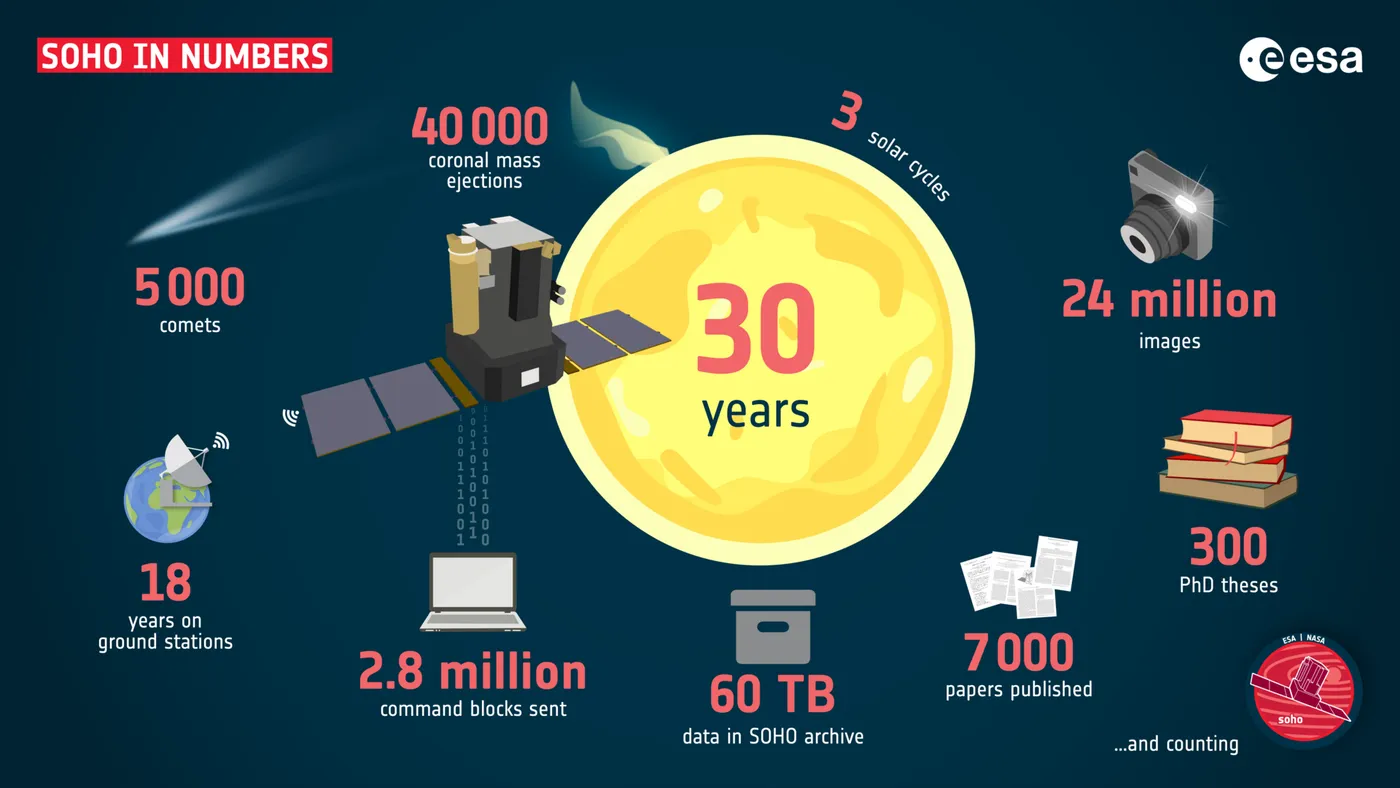

SOHO has been watching the Sun continuously for thirty years from the Lagrange point, where it hangs between the Earth and the Sun with an uninterrupted view — no night, no clouds, no atmosphere. It is a joint European and American mission and it has outlived every schedule anyone set for it.
It nearly ended in 1998. During a routine gyroscope calibration a sequence of ground errors and faulty assumptions caused the spacecraft to lose attitude control, spin up and lose power, and contact was lost entirely for six weeks. It was found by radar from Arecibo, slowly tumbling and frozen, and recovered over months of painstaking work — thawing its frozen hydrazine with sunlight, and eventually operating without gyroscopes at all using software that inferred orientation from other sensors.
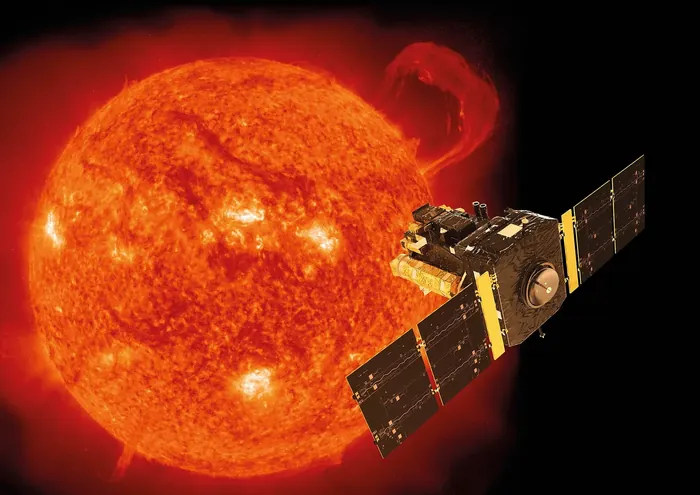
Its scientific instruments look inward as well as outward. By measuring the Sun's surface oscillating — helioseismology, the solar equivalent of studying the Earth's interior through earthquakes — it mapped flows and structures beneath the visible surface, including the rotation of the deep interior.
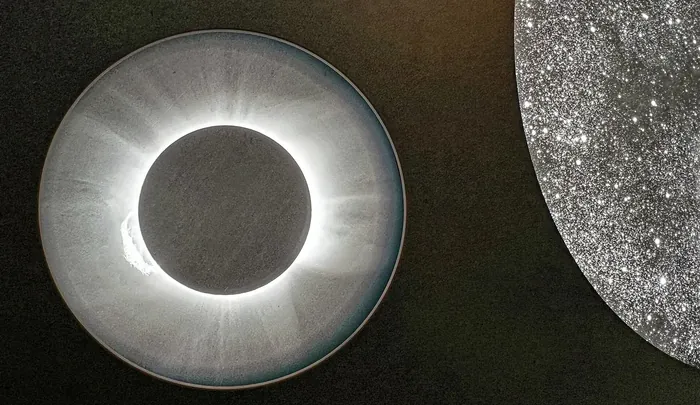
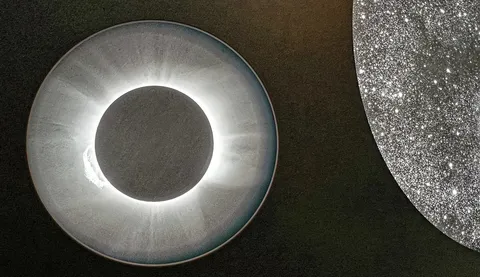
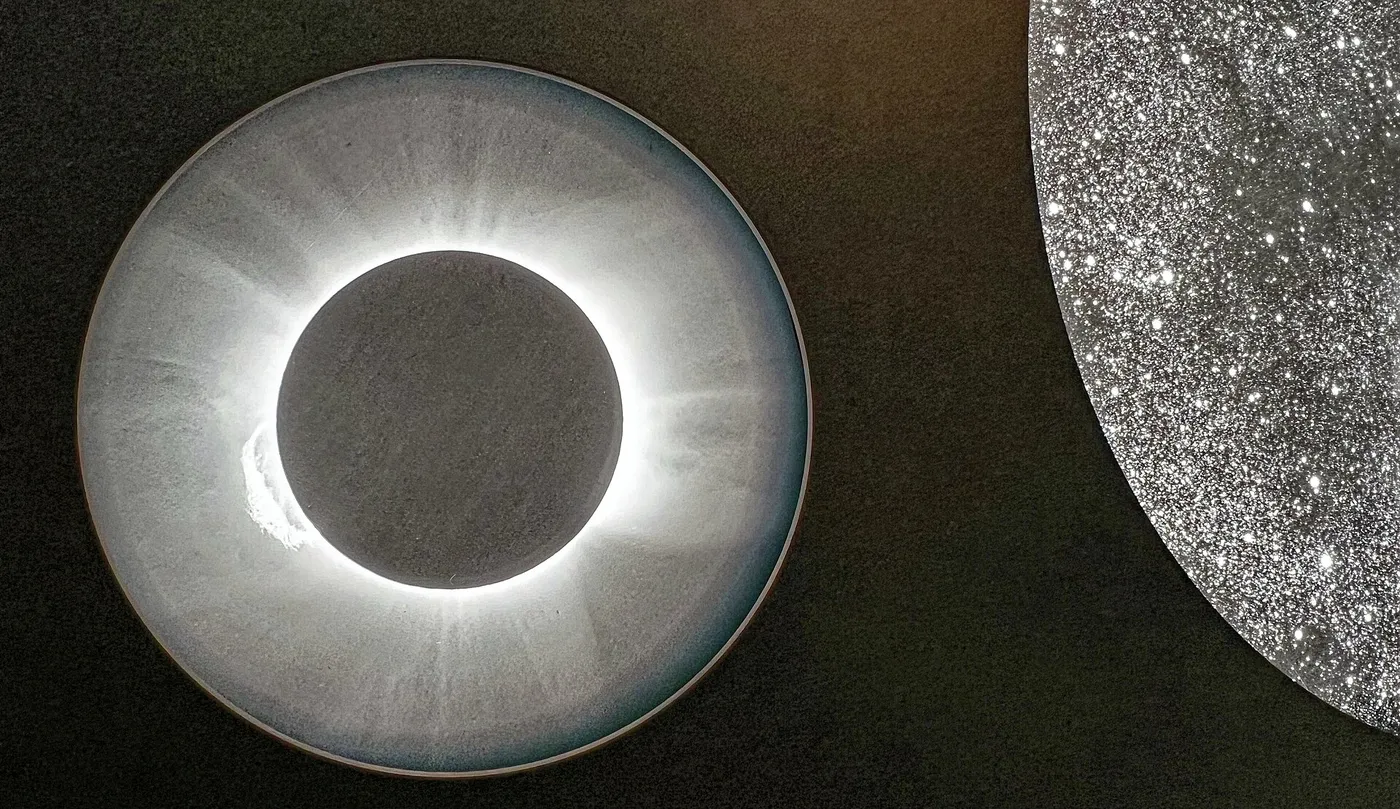
Its coronagraph, which blocks the solar disc to reveal the faint corona, has recorded thousands of coronal mass ejections and is the workhorse of space weather forecasting. It also detects comets diving into the Sun, and because the images are public, most of the discoveries have been made by amateurs scanning them online.
That has made SOHO by far the most prolific comet discoverer in history, with well over five thousand to its name — a total no observatory or individual has approached, accumulated almost entirely by volunteers looking at pictures of the Sun.