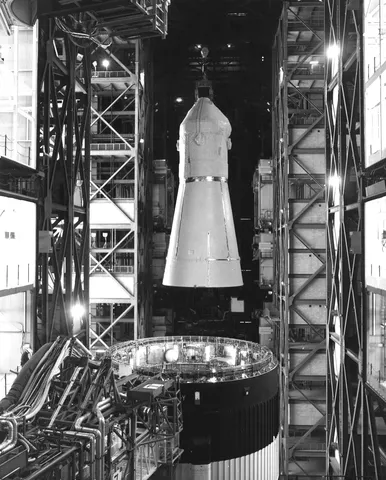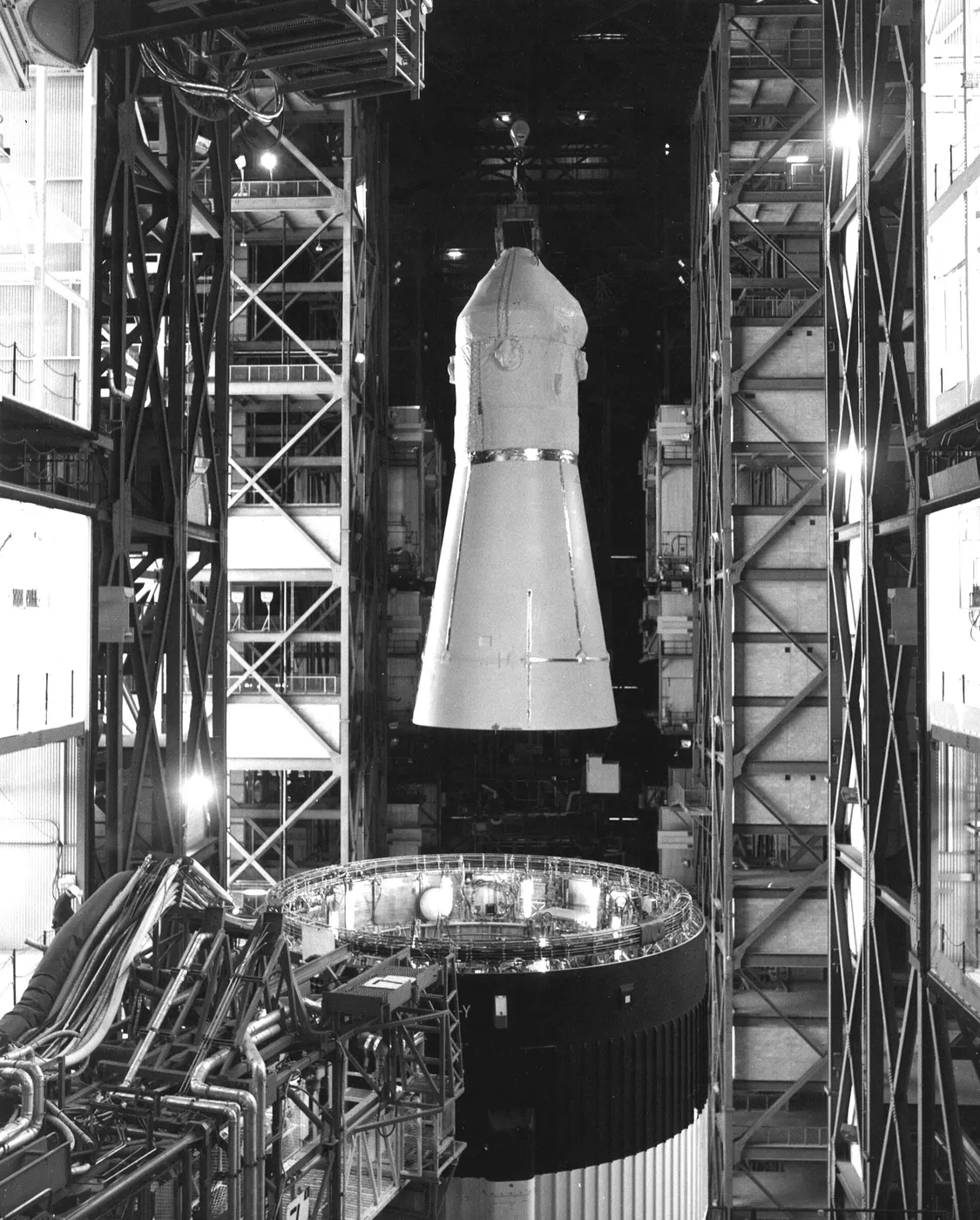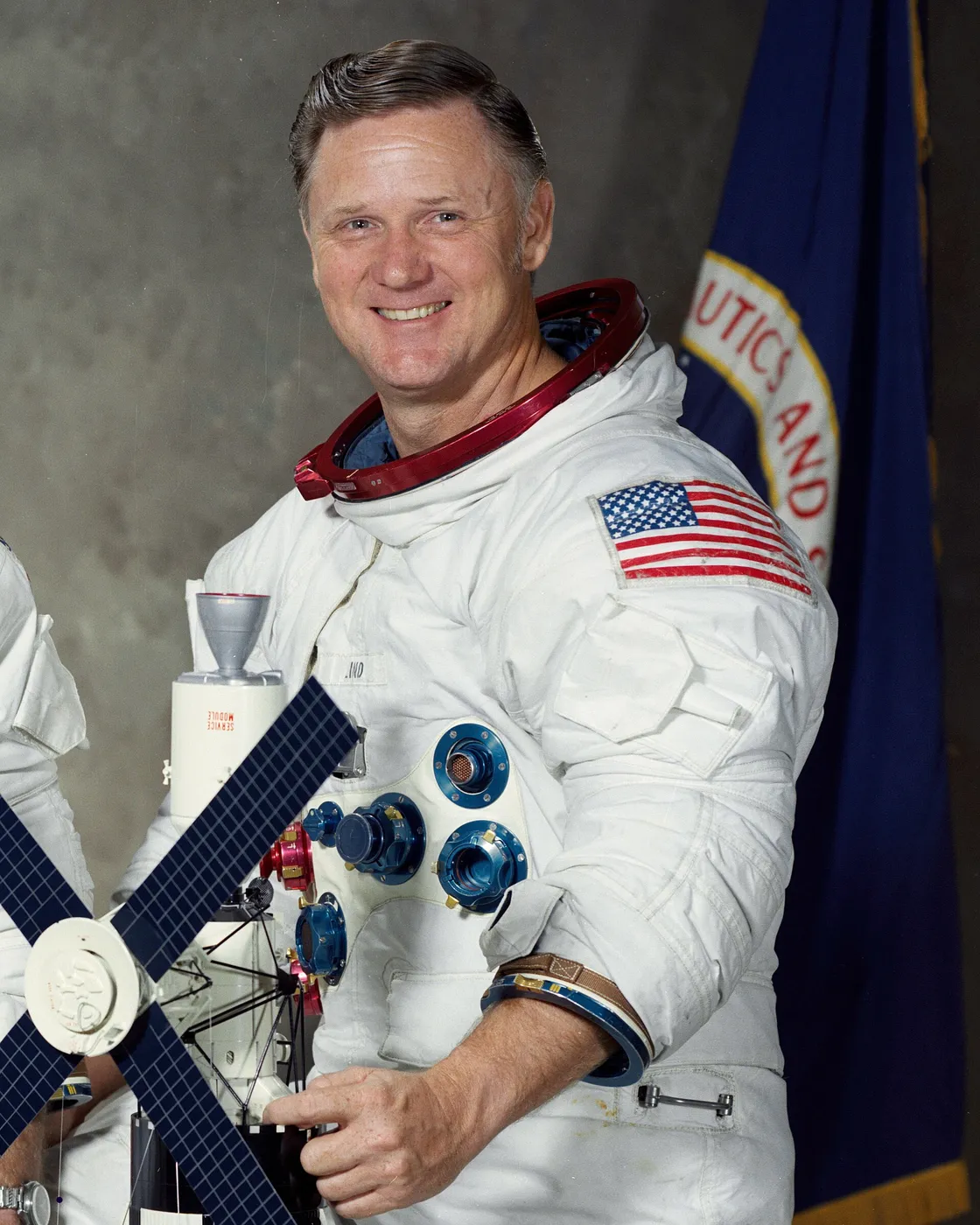
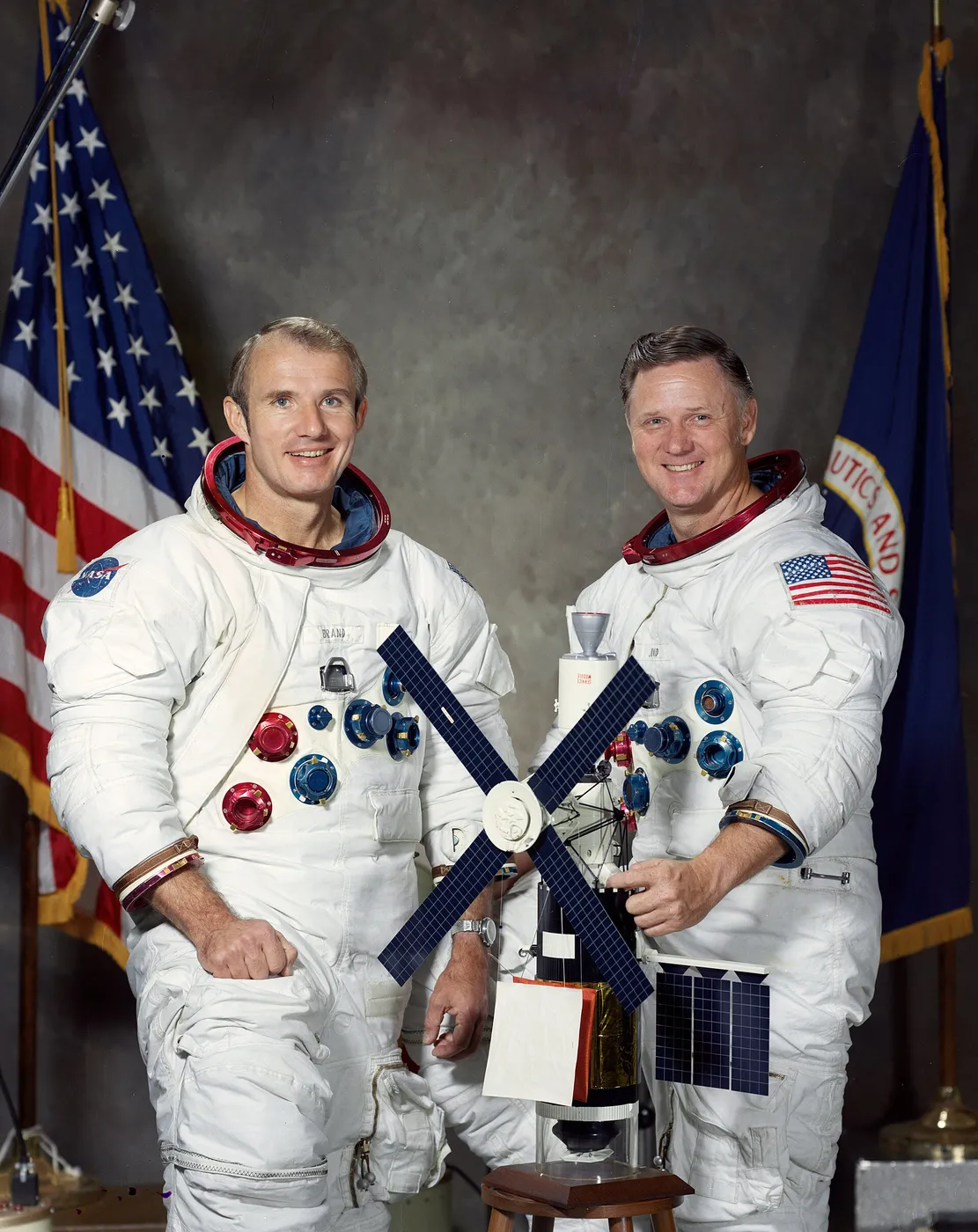

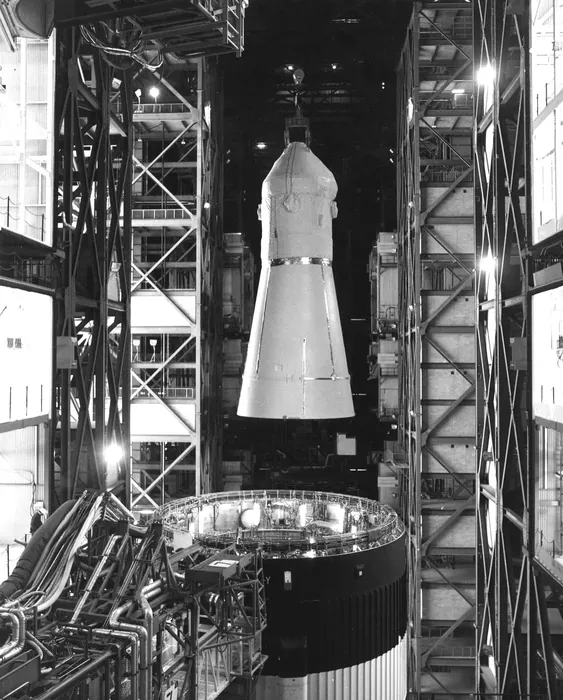
Skylab was a rocket stage with the fuel taken out. Rather than build a station from scratch, engineers took the third stage of a Saturn V — a cylinder large enough to stand up and walk about in — and fitted it out on the ground with two floors, a wardroom, a shower and a window. It gave America a station of 350 cubic metres, far roomier than anything the Soviets flew.
It was nearly destroyed on the way up. Sixty-three seconds into launch, the micrometeoroid and thermal shield tore away in the airflow, ripping one solar array off entirely and jamming the other shut under a strap of debris. The station reached orbit without power or sunshade, its interior climbing past 50 degrees Celsius, and for ten days it looked like a total loss.
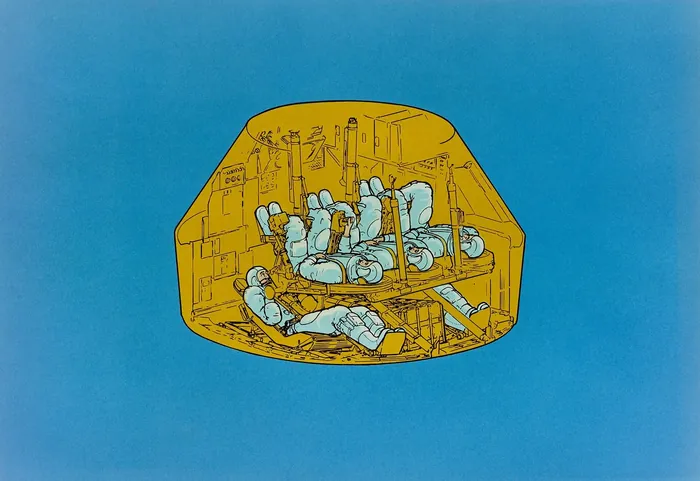
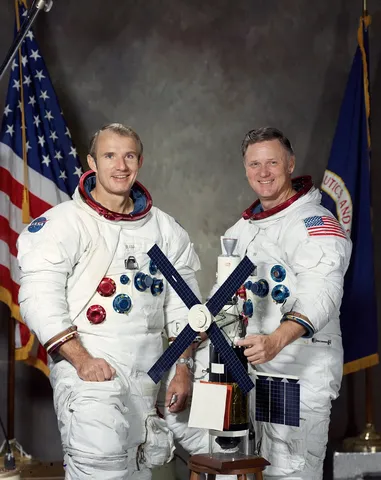
The first crew saved it. Pete Conrad, Paul Weitz and Joseph Kerwin launched with a hastily designed parasol that they pushed out through a small airlock and unfurled over the hull, dropping the temperature immediately. Then Conrad and Kerwin went outside and, in an unrehearsed spacewalk using a cable cutter on a pole, freed the jammed array by brute force — Conrad heaving on it until it sprang open and threw them both loose.
Three crews then occupied it for 28, 59 and 84 days, running a solar observatory that watched the Sun through an entire active period and conducting the first serious study of how humans deteriorate over months in weightlessness. The last crew's difficulties with an overloaded schedule — often exaggerated into a mutiny — led directly to the more humane workload planning used on stations since.
Nobody visited again. The Shuttle that was meant to boost it to a higher orbit arrived years too late, and increased solar activity dragged it down faster than predicted. It re-entered in July 1979, scattering debris across Western Australia, where the Shire of Esperance issued NASA a $400 fine for littering. It went unpaid for thirty years until a radio audience raised the money.