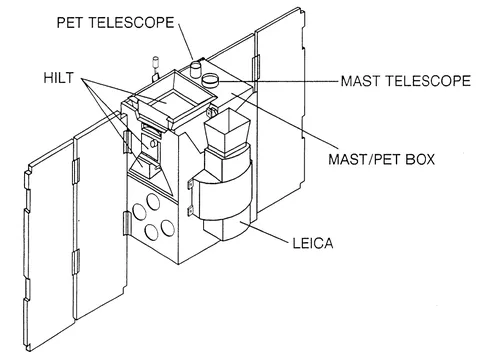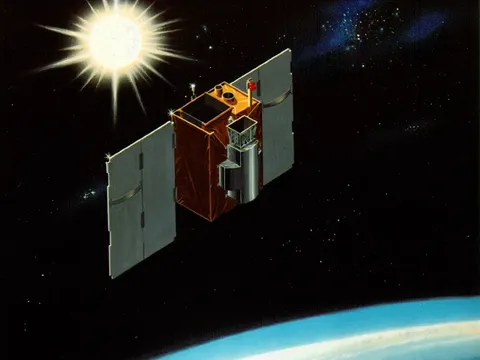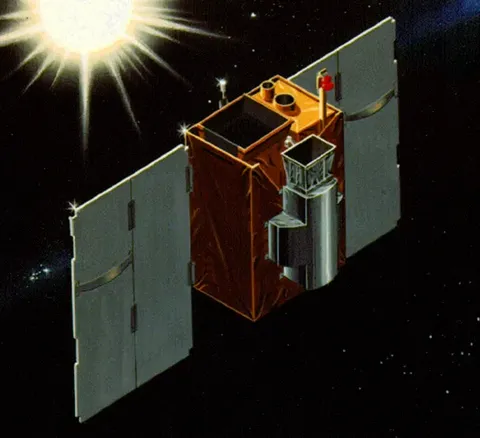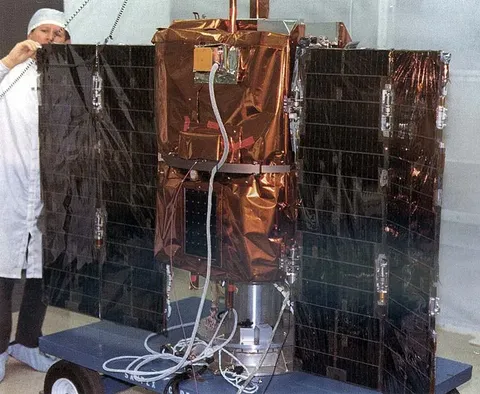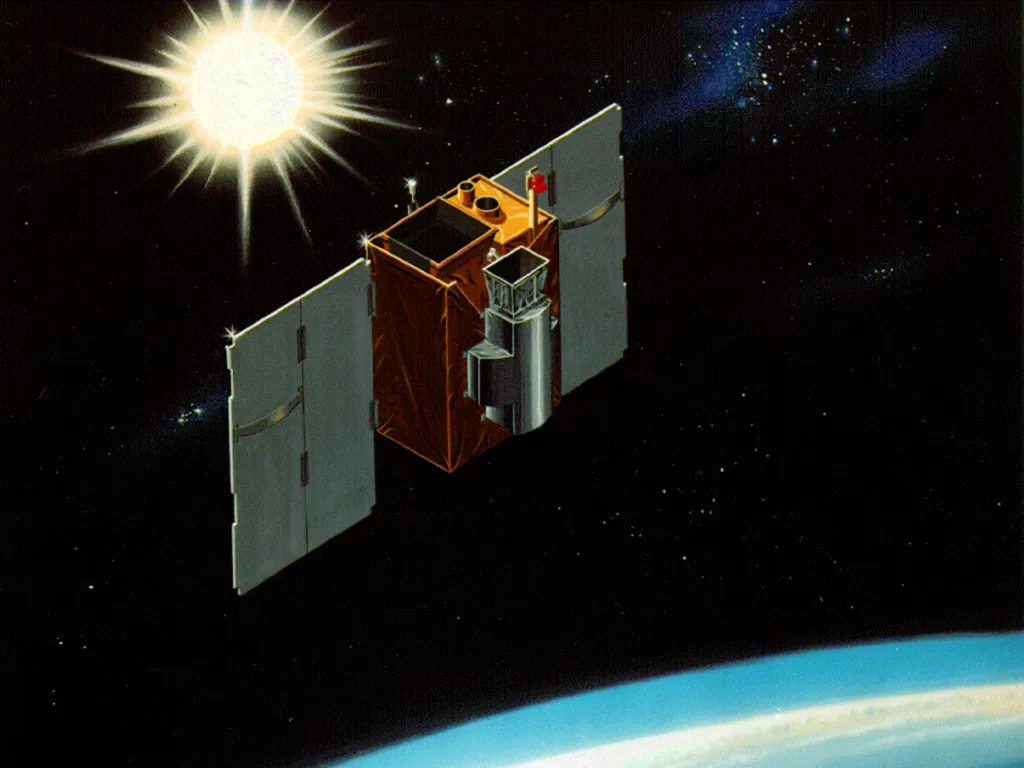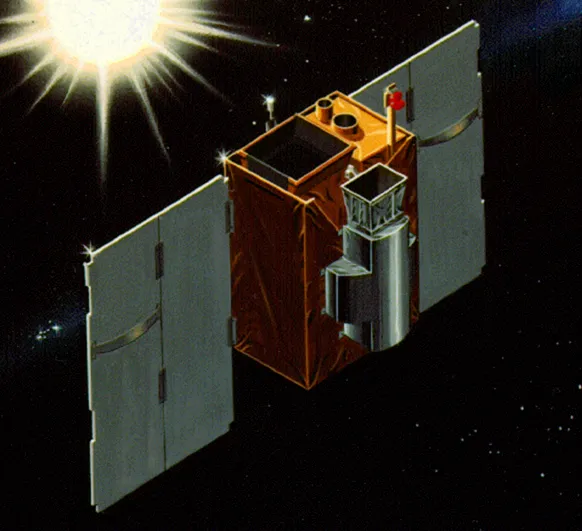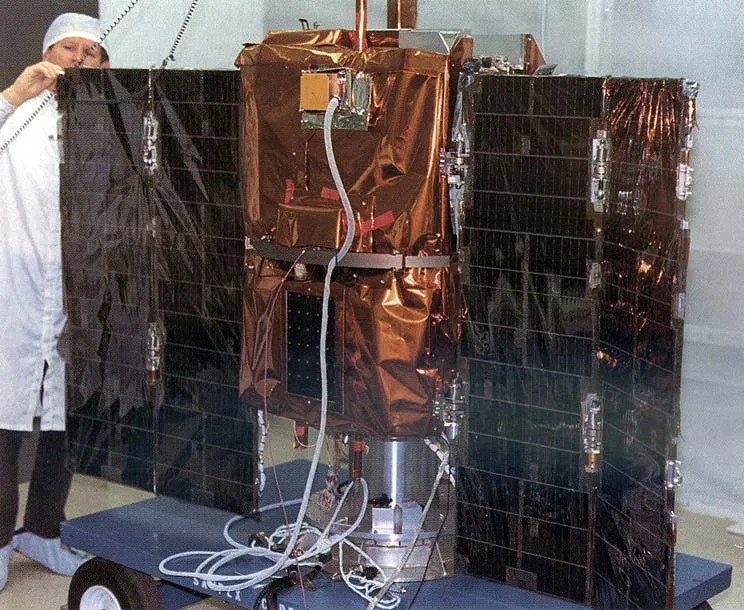
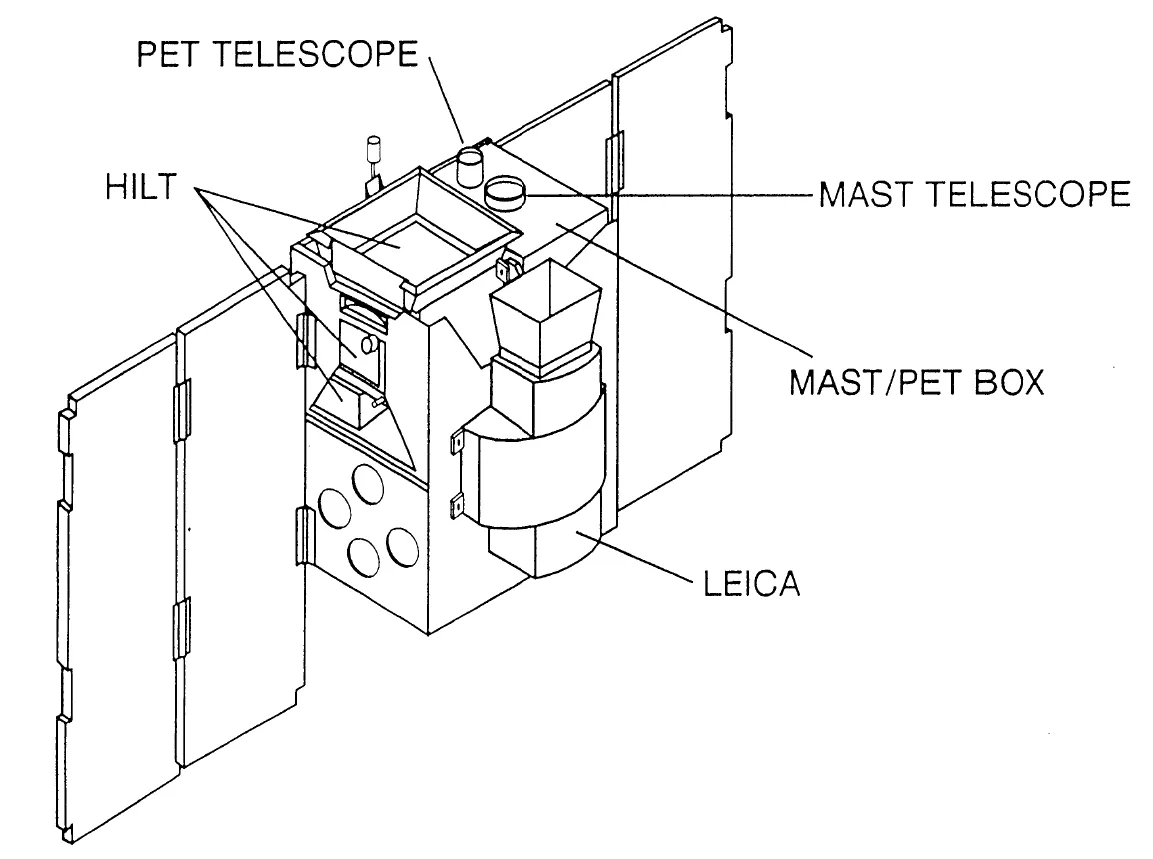

SAMPEX was the first of NASA's Small Explorer missions, a programme created to fly focused science quickly and cheaply after a decade in which every mission had become large, slow and expensive. It went from selection to launch in about three years for a fraction of a conventional budget.
Its subject was energetic particles: cosmic rays from the galaxy, particles accelerated by the Sun, and the populations trapped in Earth's radiation belts. It measured their composition — which isotopes of which elements — which is what distinguishes one source from another.
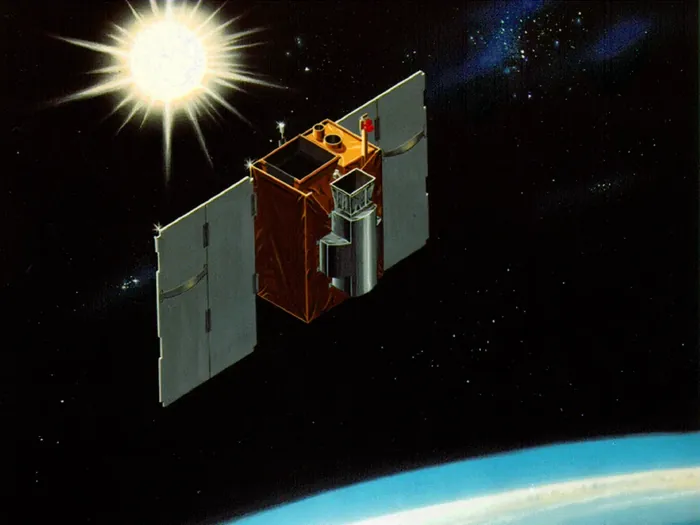
It resolved the nature of anomalous cosmic rays, showing them to be interstellar neutral atoms that drift into the solar system, become ionised, and are then accelerated at the boundary of the heliosphere before returning inward as energetic particles.
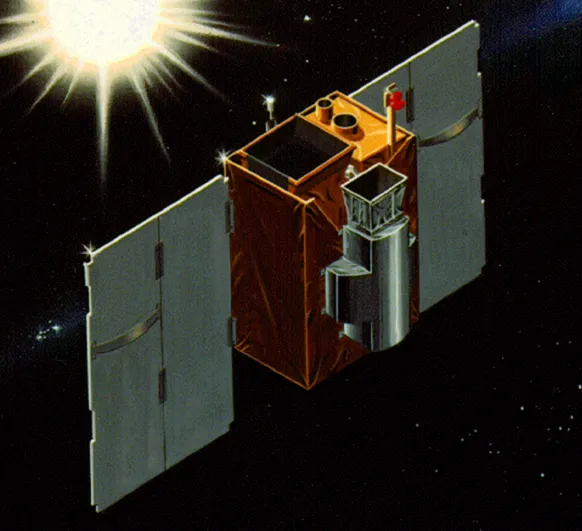
It also monitored the radiation belts through a full solar cycle, documenting how they swell and empty in response to solar storms — information of direct practical concern to every satellite operator, since the belts are what degrade spacecraft electronics.
Designed for three years, it operated for twelve and continued returning data through amateur ground stations for longer still, re-entering in 2012. It established that the small, fast, cheap model could produce first-rate science, and the Explorer programme it revived has since flown dozens of missions including Swift, WISE and TESS.