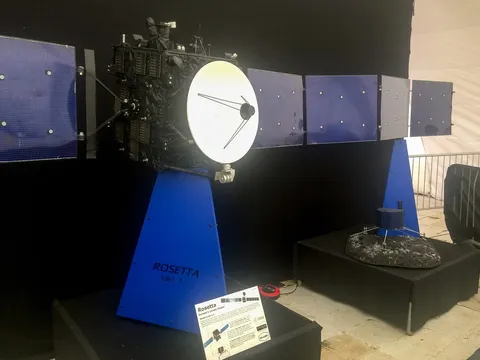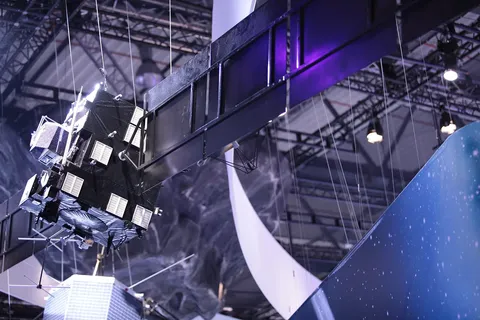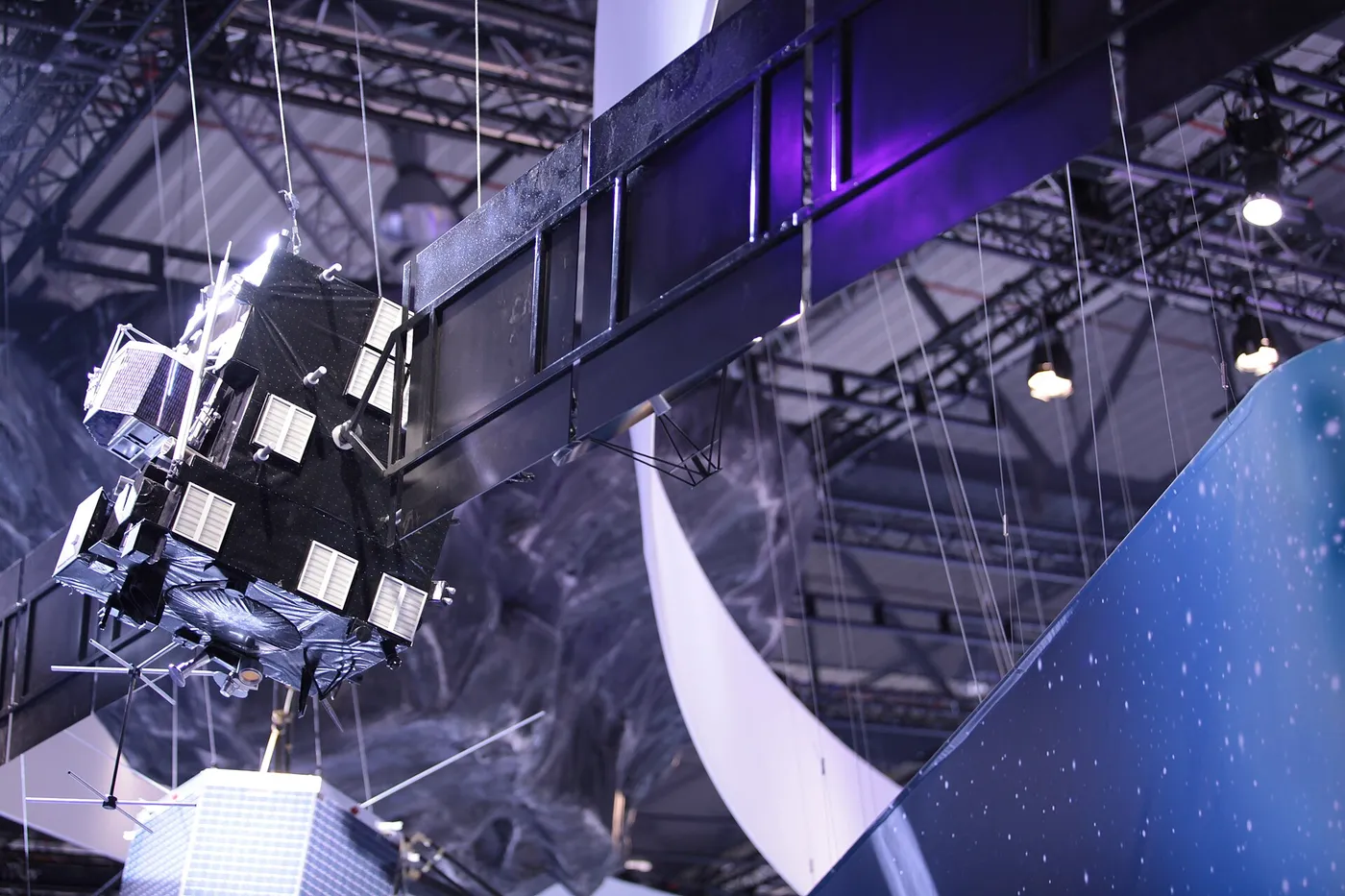
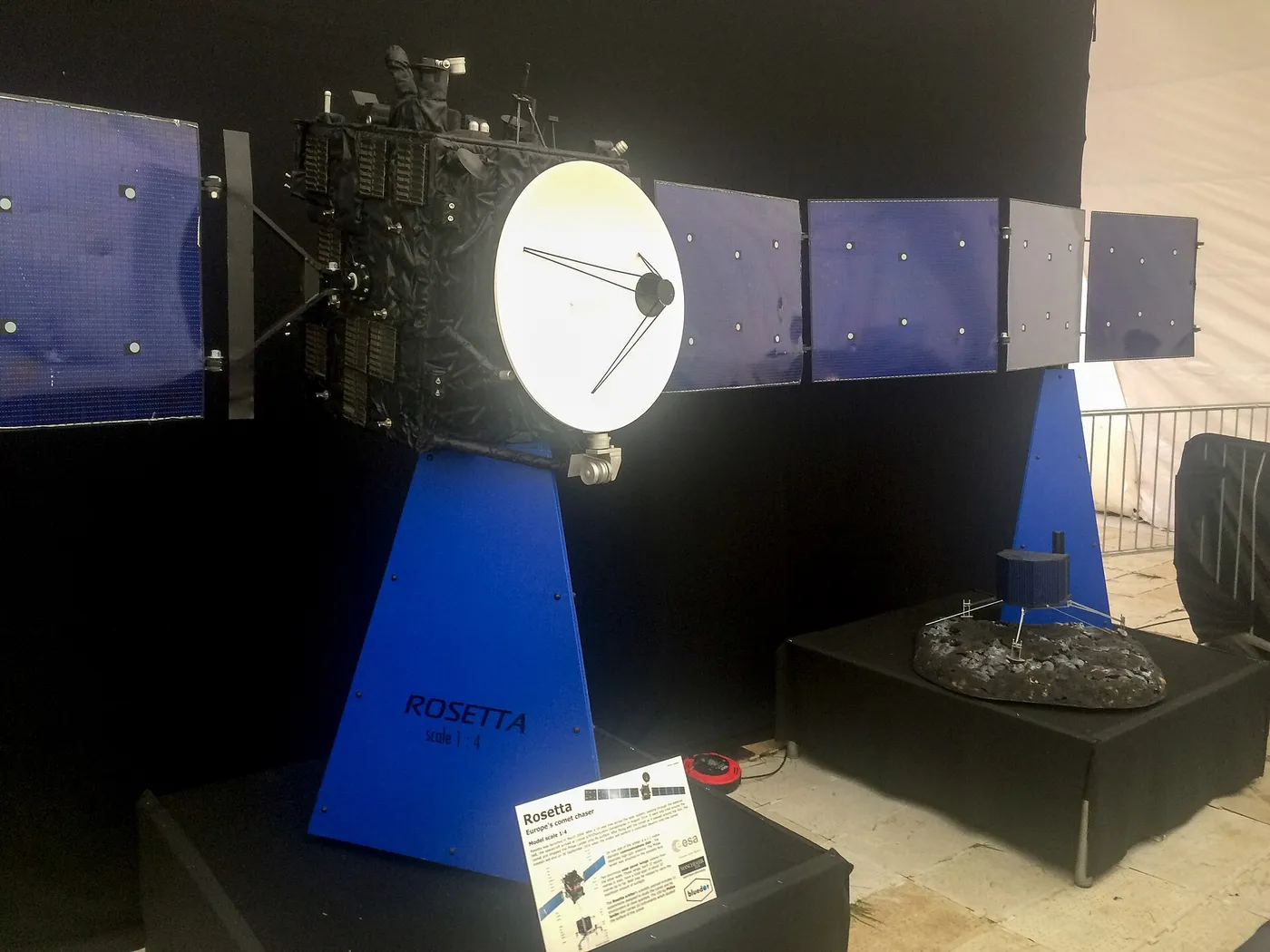

Rosetta spent ten years chasing a comet. Reaching 67P/Churyumov-Gerasimenko required three gravity assists from Earth and one from Mars, a pass by two asteroids, and then — because the spacecraft was travelling too far from the Sun for its solar panels to sustain it — thirty-one months of hibernation with everything switched off except a clock and a heater.
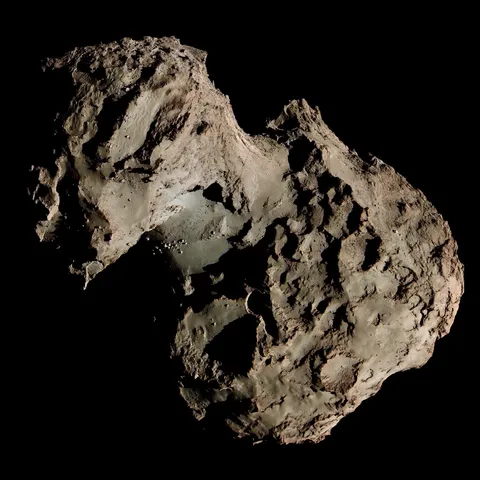
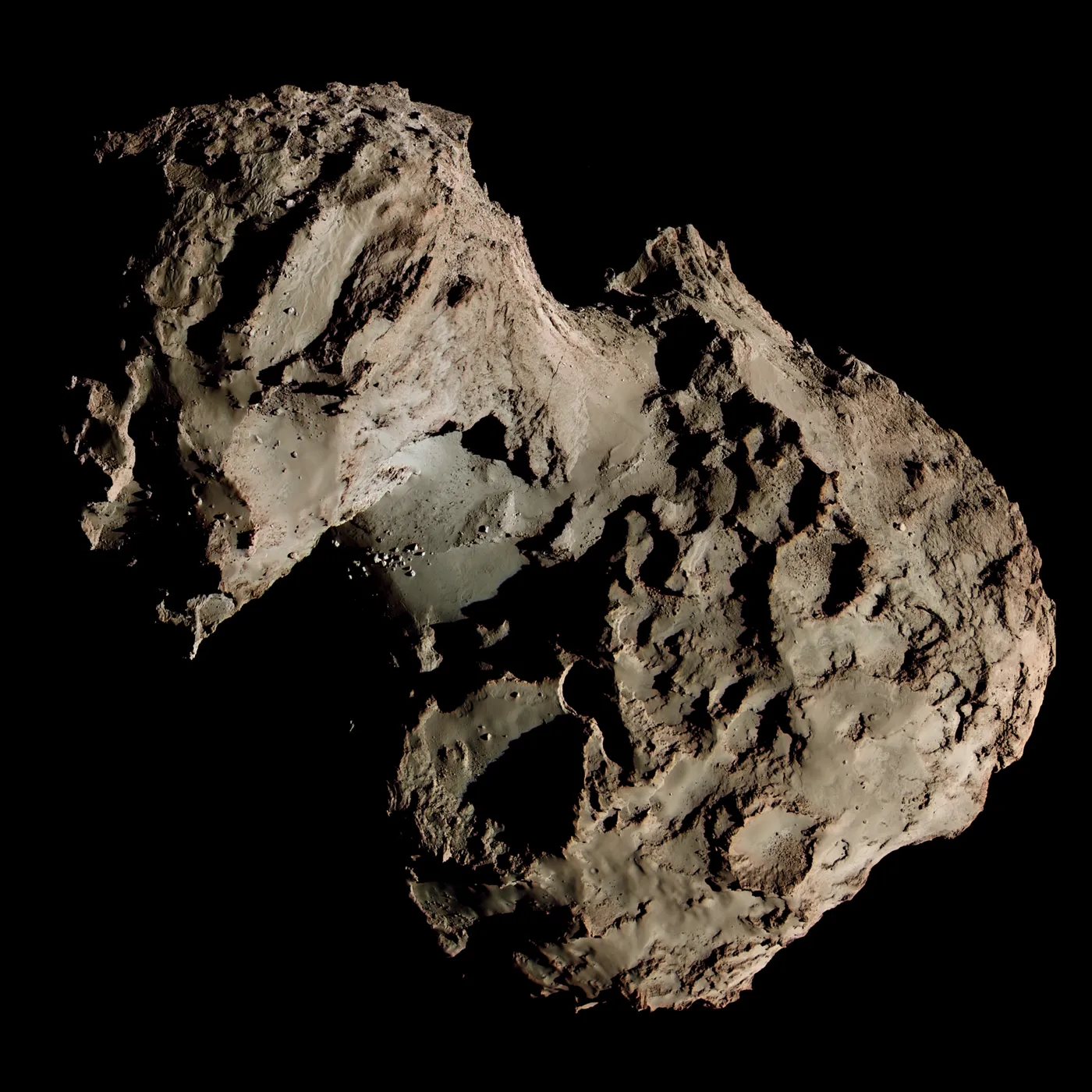
It woke on schedule in January 2014 and arrived that August to find a comet nothing like the potato everyone had modelled: two lobes joined by a narrow neck, promptly nicknamed the rubber duck, with cliffs, boulders, dunes and pits. It became the first spacecraft to orbit a comet and it stayed for two years, watching the nucleus wake up as it approached the Sun and then subside again.
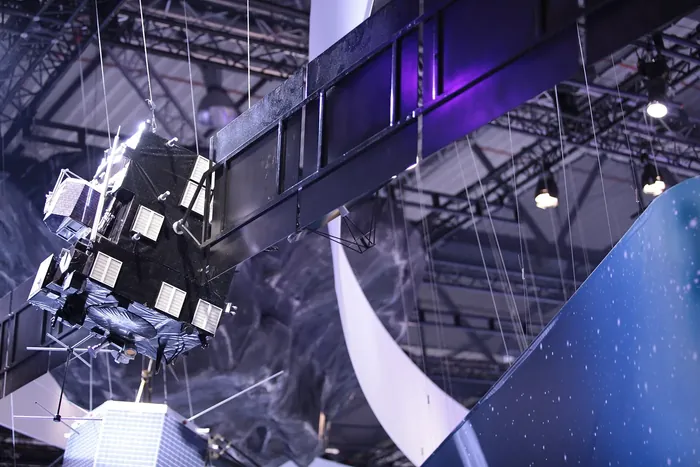
In November 2014 it dropped the lander Philae, and almost everything went wrong. The harpoons meant to anchor it did not fire and the hold-down thruster failed, so it struck the surface and bounced — rising perhaps a kilometre and drifting for two hours before a second bounce and a final stop, wedged on its side against a cliff in permanent shadow, where its solar panels were useless.
It worked anyway. On primary battery alone Philae ran about sixty hours of science, drilled, sniffed the surface and detected complex organic molecules, before falling silent. Its resting place remained unknown until September 2016, when Rosetta's camera finally picked it out of the shadows weeks before the mission ended.
The orbiter's headline result concerned water. The ratio of deuterium to ordinary hydrogen in 67P's vapour proved substantially different from Earth's oceans, arguing that comets of this family did not deliver our water — asteroids are now the favoured candidate. It also found molecular oxygen, glycine and phosphorus, and it ended in September 2016 with a slow controlled descent onto the nucleus, transmitting until contact.