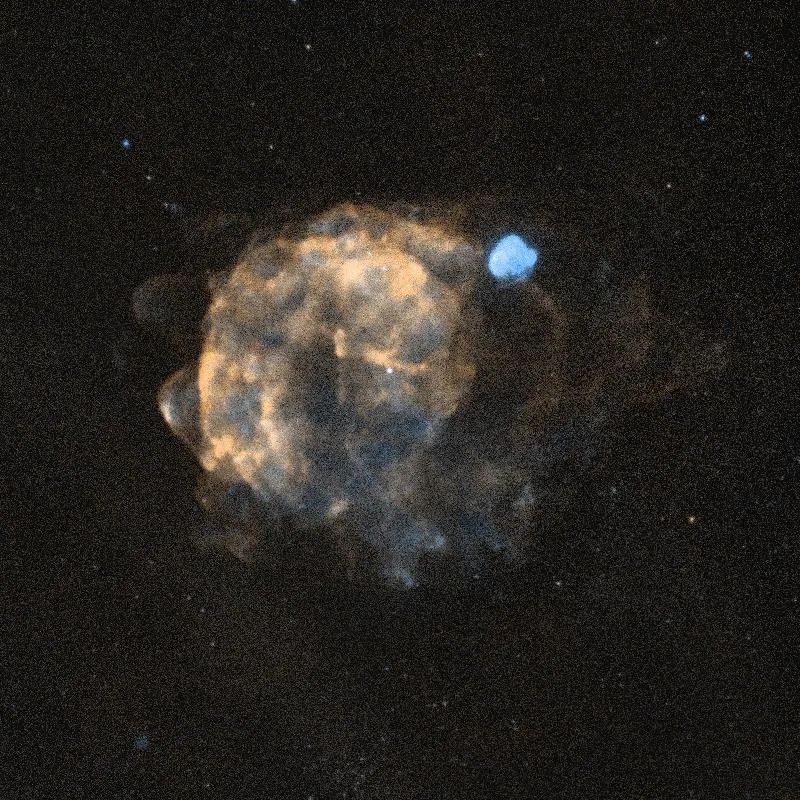
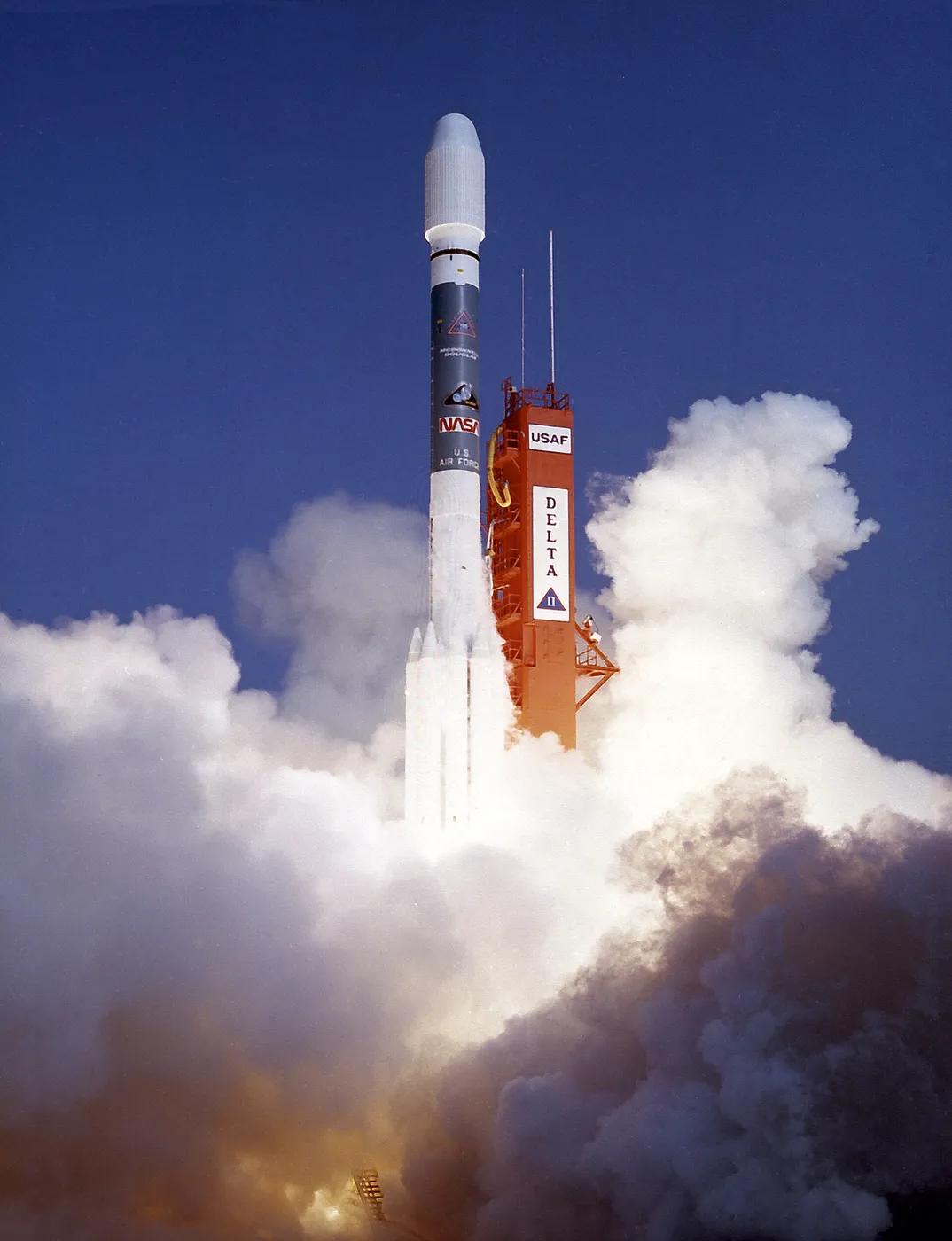

ROSAT was a German-led X-ray observatory that spent its first six months doing something no X-ray telescope had done: surveying the entire sky. Previous missions had pointed at known targets; this one swept systematically, producing a catalogue of more than 100,000 X-ray sources where a few thousand had been known.
That survey remains a foundational reference. It found X-ray emission from ordinary stars, white dwarfs, clusters of galaxies and active galactic nuclei in numbers that transformed the statistics of every class, and it is still the deepest all-sky soft X-ray map available for many purposes.
It also detected X-rays from a comet, which nobody expected. Comet Hyakutake was found to be emitting X-rays in 1996, a phenomenon eventually explained as charge exchange — solar wind ions stealing electrons from cometary gas and emitting as they relax. An entirely new emission mechanism had been sitting unnoticed.
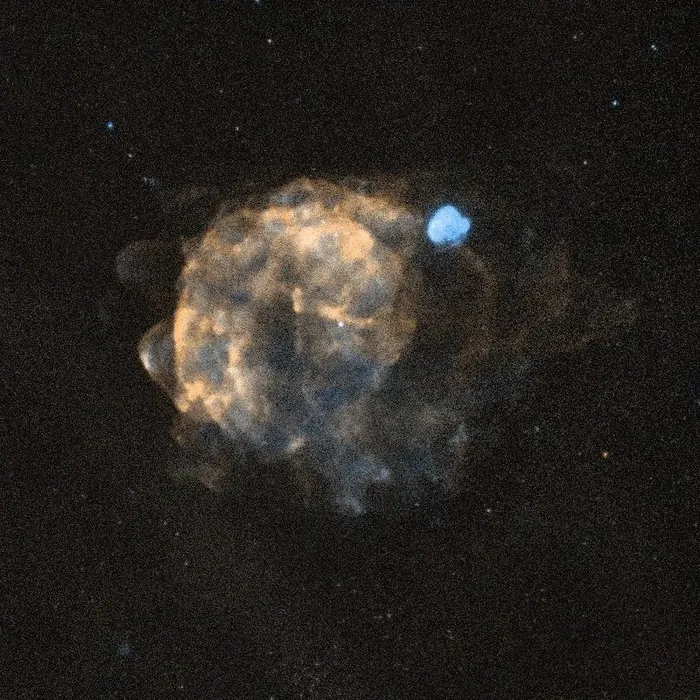
The mission ran nine years, ending in 1999 after its remaining star tracker failed and the telescope was accidentally pointed near the Sun, damaging the detectors.
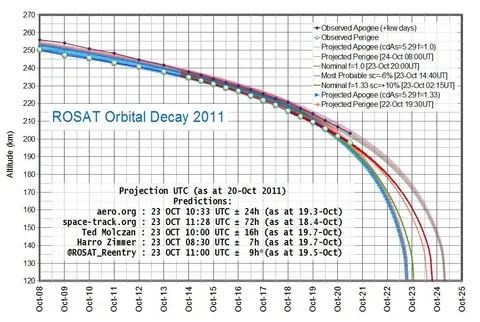
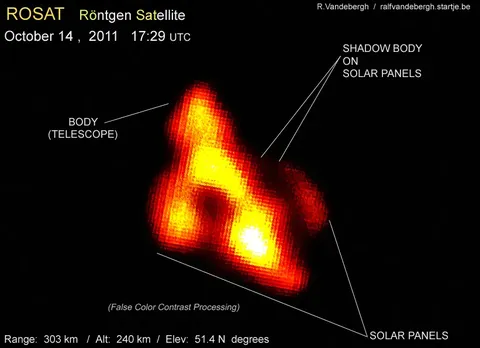
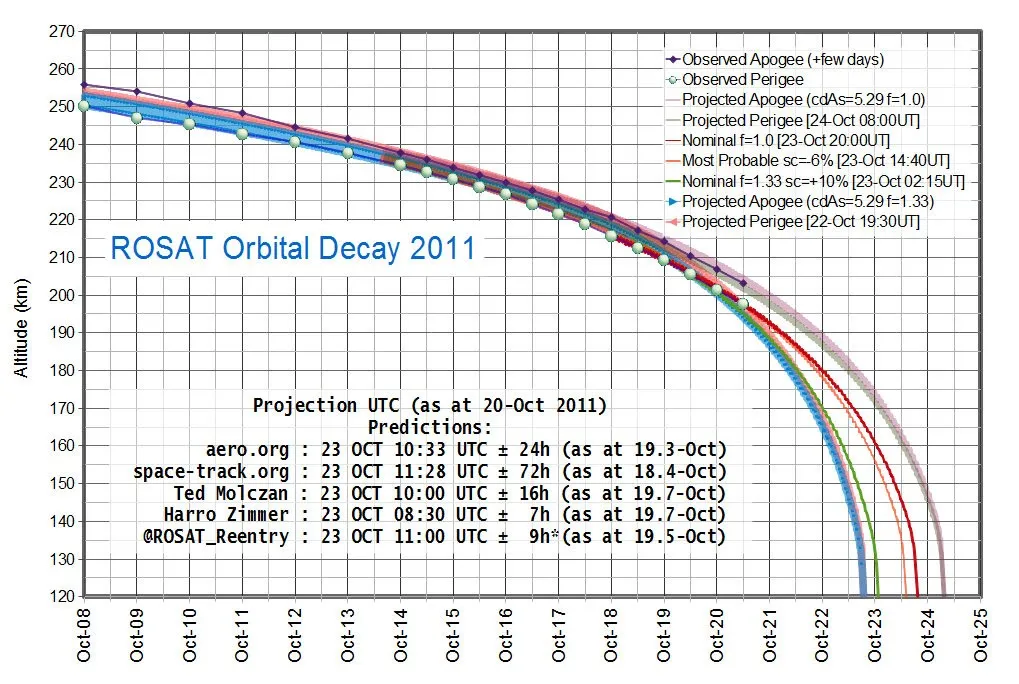
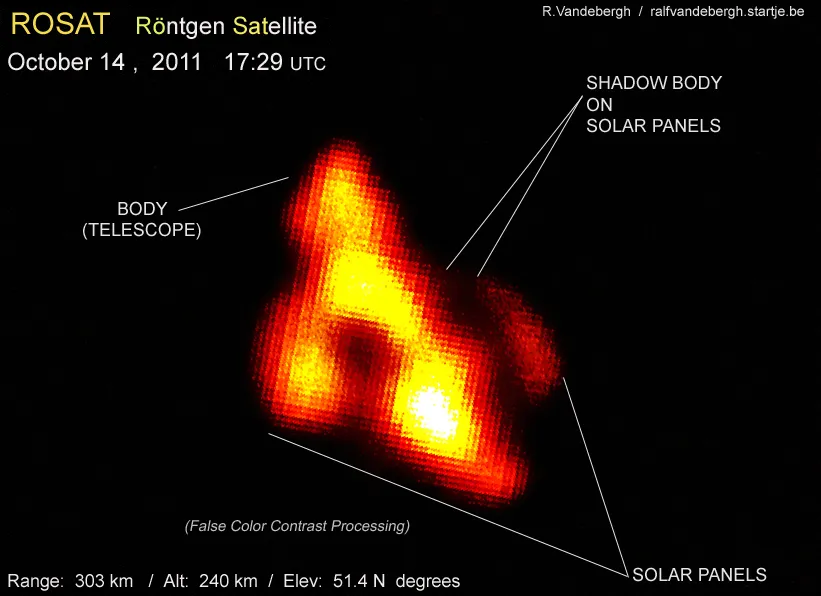
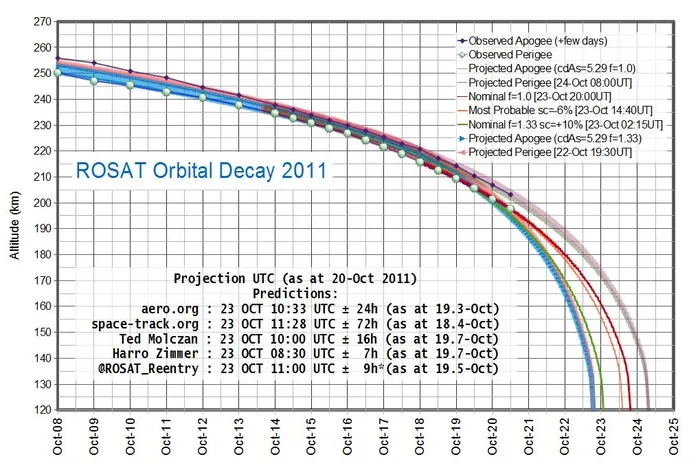
Its afterlife was more public than its science. When the two-and-a-half-tonne satellite re-entered uncontrolled in 2011, with a substantial fraction of its mass — including the heavy mirror assembly — expected to survive to the ground, it produced a fortnight of international news coverage. It came down over the Bay of Bengal.