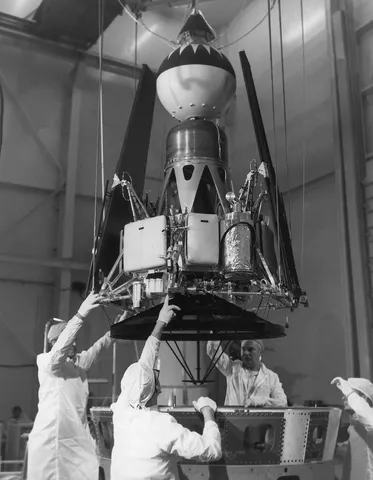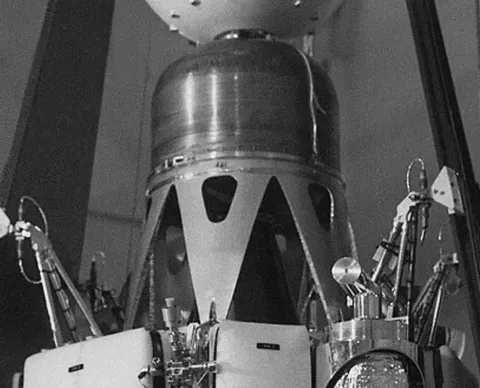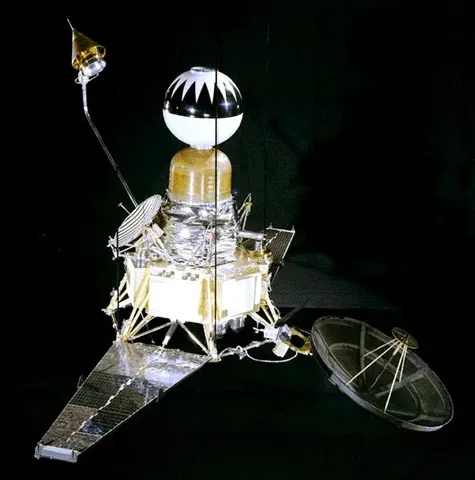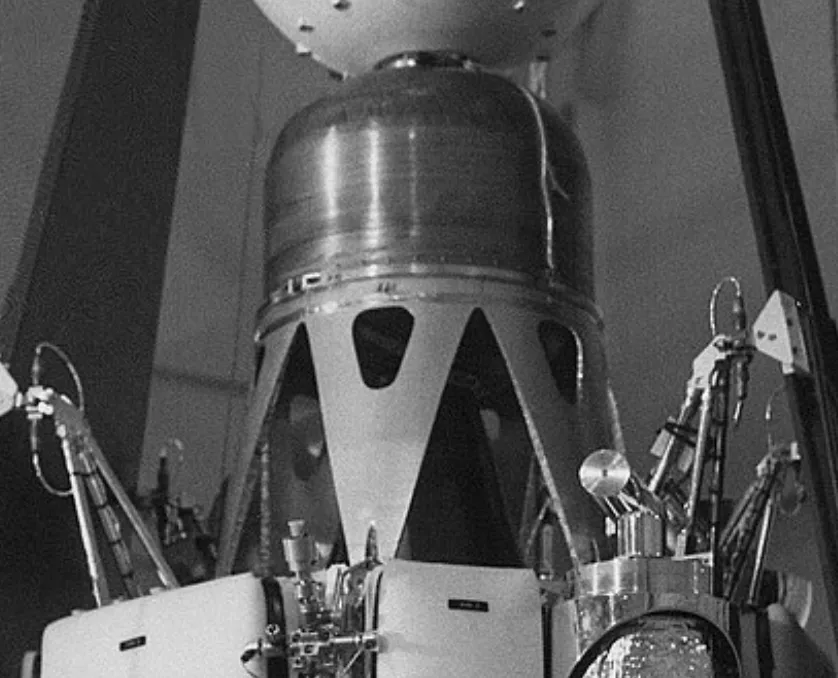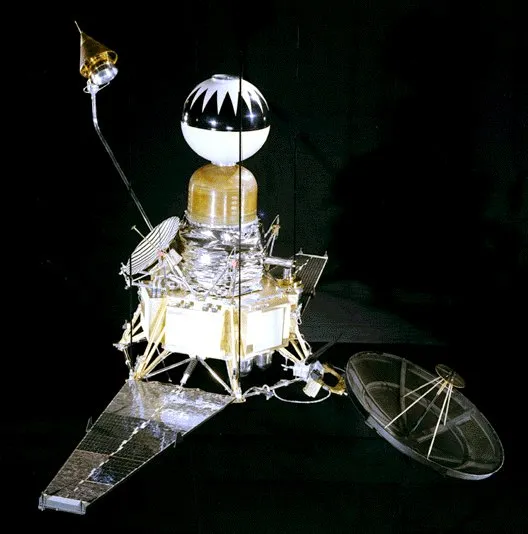
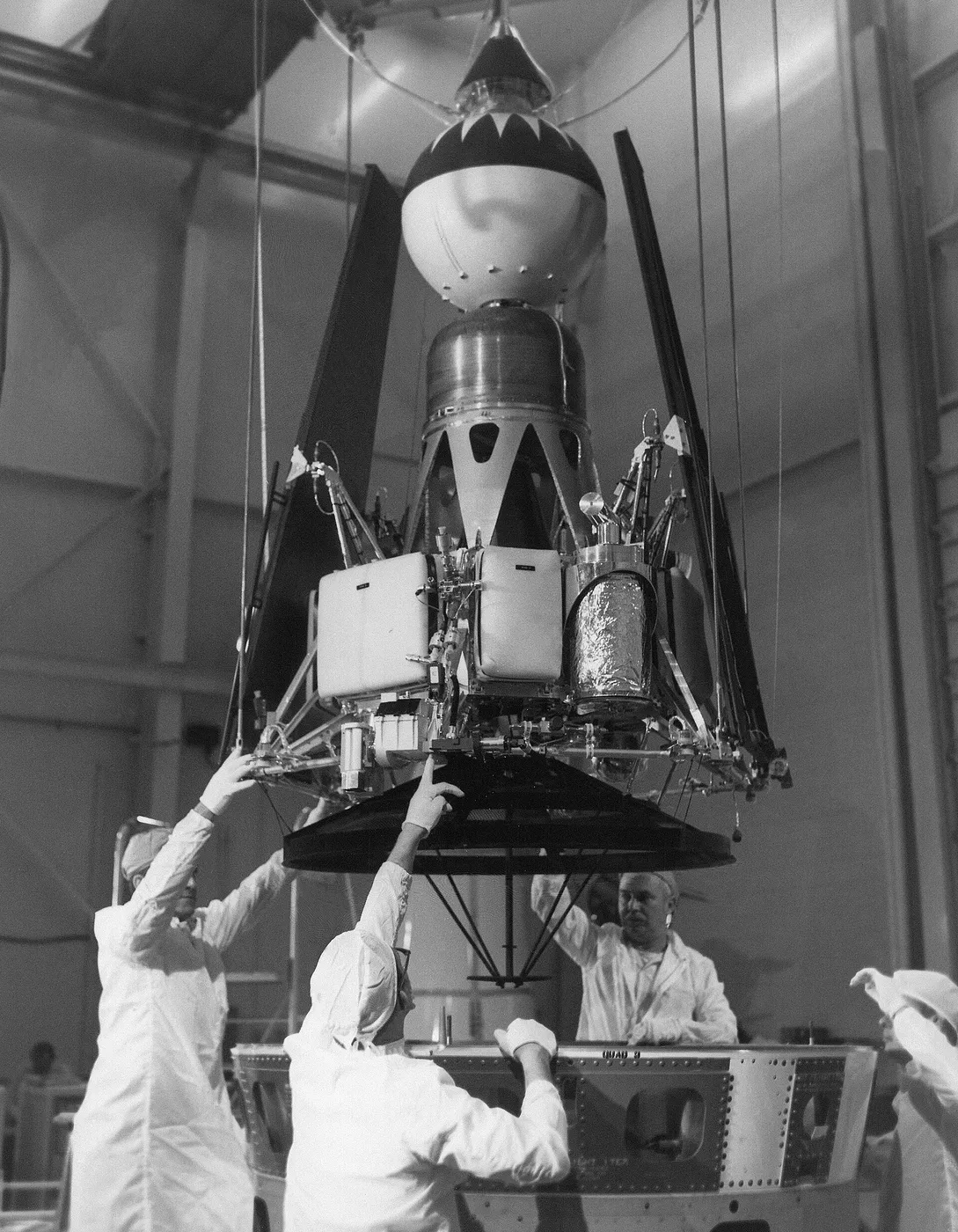

Ranger 4 flew on 23 April 1962 carrying the same design as Ranger 3 — cameras above, a seismometer capsule packaged for a survivable hard landing. This time the launch itself went smoothly, and for once the spacecraft was set cleanly on a genuine collision course with the Moon.
Then, within hours, it fell silent. A failure in the onboard timer left Ranger 4 unable to deploy its solar panels or high-gain antenna or to power up its instruments; it coasted onward as a dead, drifting shell while its central computer ignored every command. Controllers could do nothing but track the faint carrier tone of its beacon as it fell toward the lunar surface.
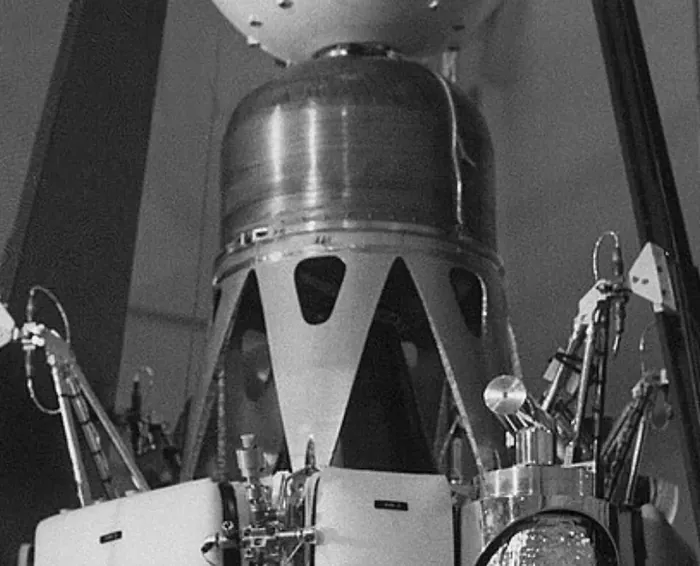
Three days after launch the spacecraft struck the far side of the Moon, becoming the first American object ever to reach the surface of another world. It was a hollow milestone — not one picture or measurement came home — but it proved that the trajectory could be flown accurately, even if the spacecraft still could not be trusted to survive the trip awake.
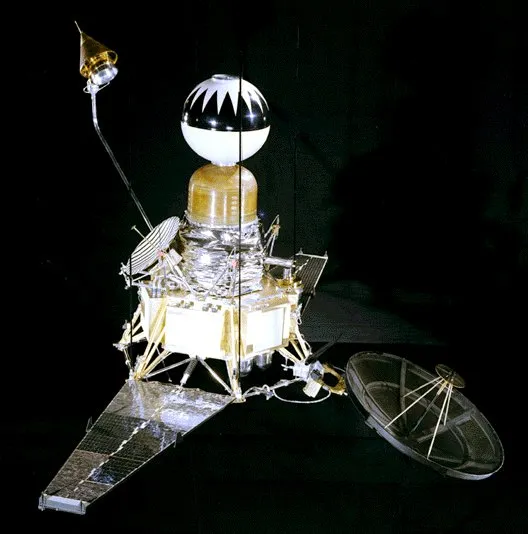
Ranger 4 reached the Moon, which was itself a first for the United States — and that was all it did. A failure in the onboard timer shortly after launch left the spacecraft without the ability to deploy its solar panels, orient itself or operate any instrument.
It coasted, dead, on a trajectory that happened to be good enough, and struck the far side of the Moon on 26 April 1962 while transmitting only the faint signal of a backup battery. It was described at the time as a successful failure: the first American object to reach another world, carrying instruments that had never been switched on.