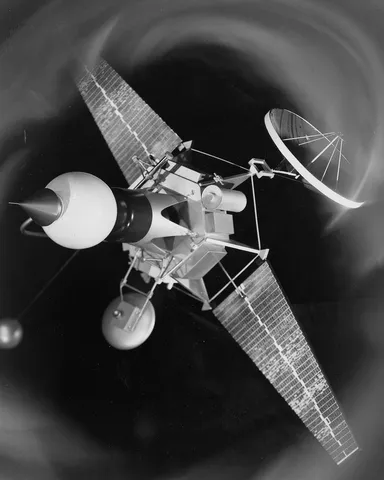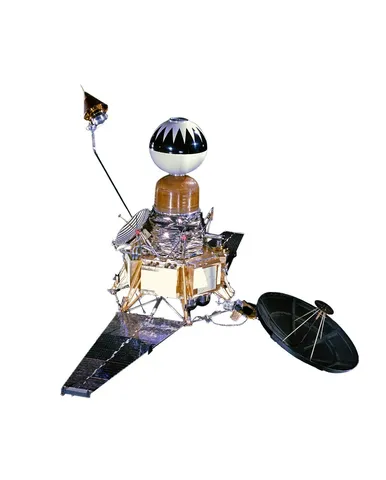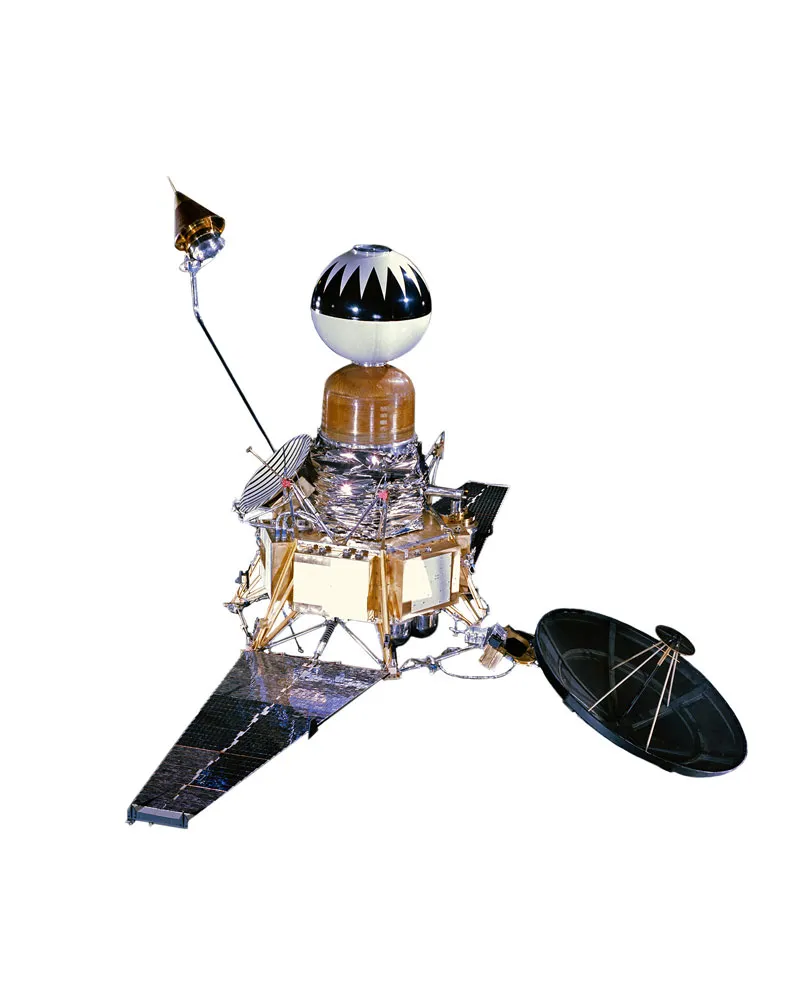
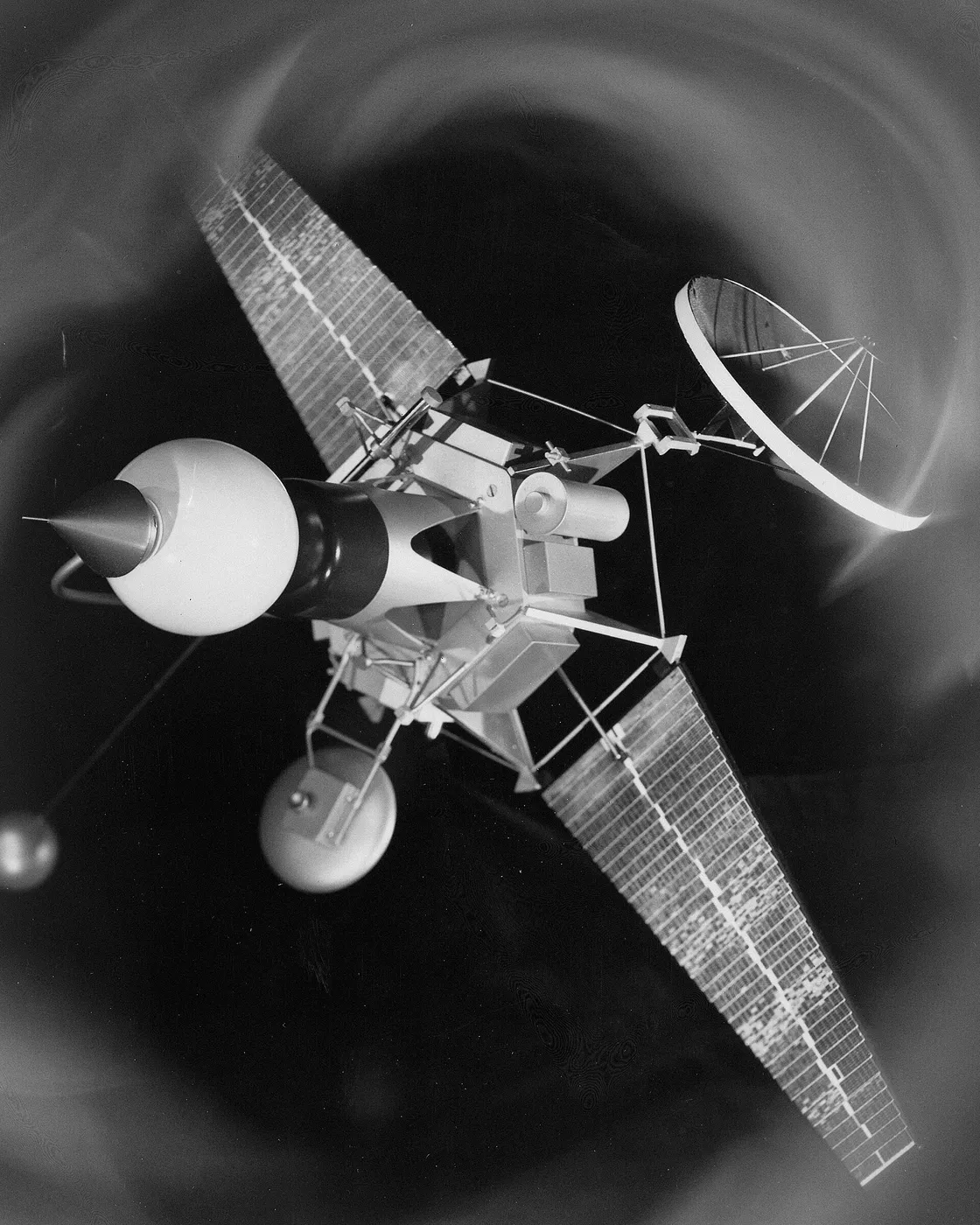

With the two shakedown flights behind it — however unsatisfying — the programme turned at last to its real purpose, and Ranger 3 became the first of the series actually aimed at the Moon. This second-generation craft carried television cameras and, perched on top, a balsa-wood sphere holding a seismometer that was meant to survive a rough impact and listen for moonquakes.
Launched on 26 January 1962, the mission came apart through a chain of small faults rather than one dramatic failure. A guidance error in the booster gave the spacecraft too much speed, and a malfunction in its onboard computer made matters worse. Ranger 3 swept past the Moon at a distance of some 36,000 kilometres, its cameras returning nothing of value, and drifted away into an orbit around the Sun.
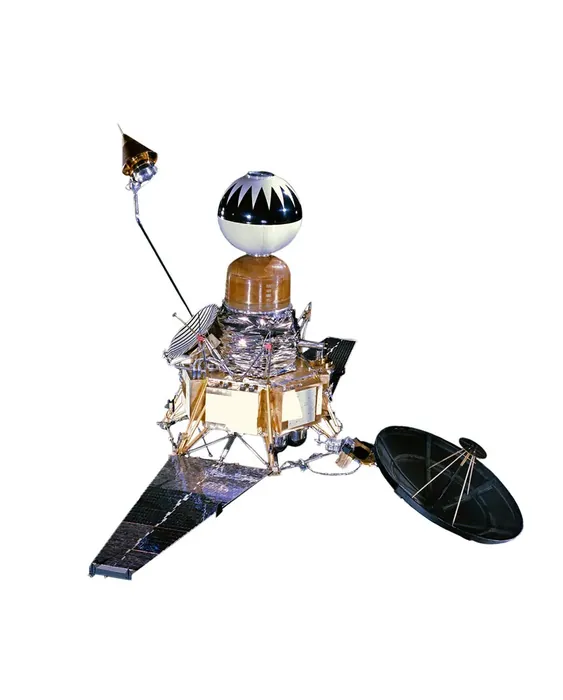
It was a demoralising outcome: this time the rocket had performed well enough, but the spacecraft's electronics and its aim had let the flight down. Reaching the Moon, it was becoming painfully clear, would demand a level of reliability the young programme had not yet come close to achieving.
Ranger 3 was the first to carry the full lunar payload — a camera, a seismometer packed in balsa wood to survive a rough landing, and a gamma-ray spectrometer. A guidance error during launch gave it too much velocity, and it missed the Moon by some 36,800 kilometres.
The spacecraft then failed in a second way, with the onboard computer malfunctioning so that even the flyby data could not be gathered properly. It sailed on into solar orbit. Three attempts had now produced three different failures, and JPL was under increasing pressure from headquarters about the programme's management.