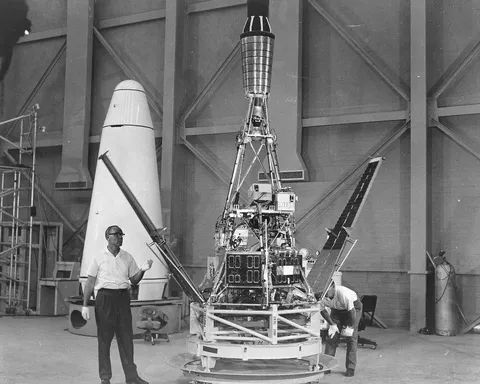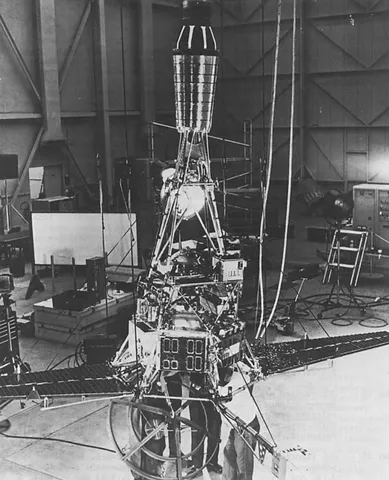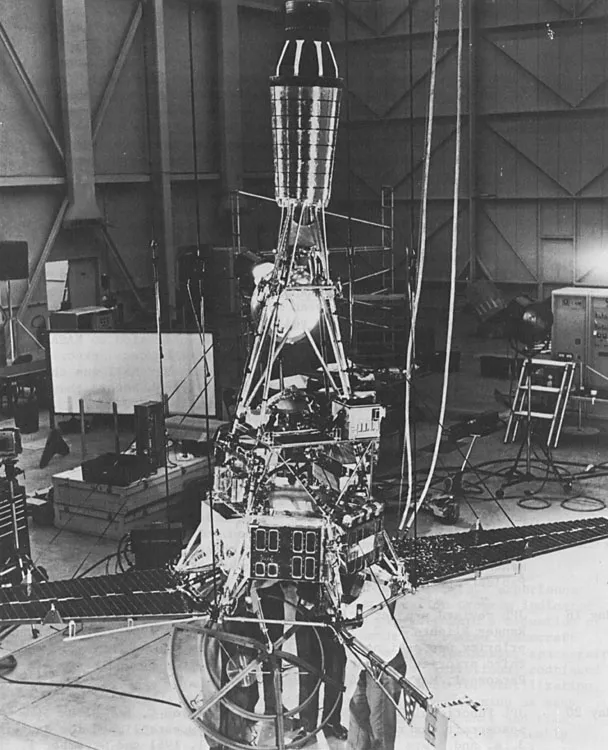
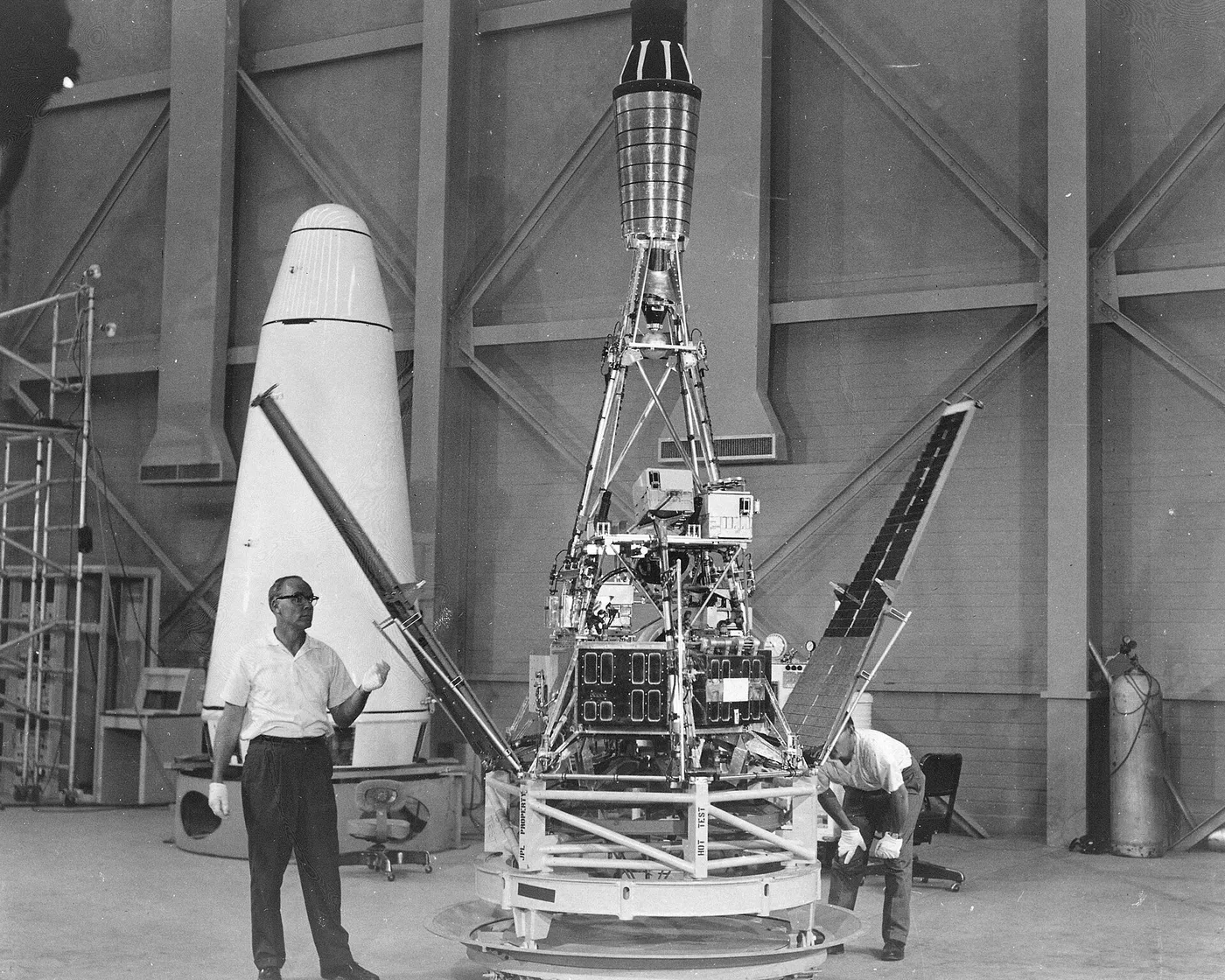

Ranger was the Jet Propulsion Laboratory's first serious campaign to reach the Moon, mounted to succeed where the earlier Pioneer probes had repeatedly fallen short. The plan was bold: fly a spacecraft straight at the lunar surface and have it stream back sharp television pictures right up to the instant it crashed. Before any of that could be risked, though, the new machine and its Atlas-Agena rocket had to be proven, and that unglamorous job fell to Ranger 1.
Its flight on 23 August 1961 was meant to reach a high, elongated test orbit far above the Earth, where the spacecraft could rehearse the manoeuvres a real lunar shot would demand. The Atlas did its part, but the Agena upper stage refused to make its planned second burn, leaving Ranger 1 stranded in a low orbit only a few hundred kilometres up — far too low for the checkout it had come to perform.
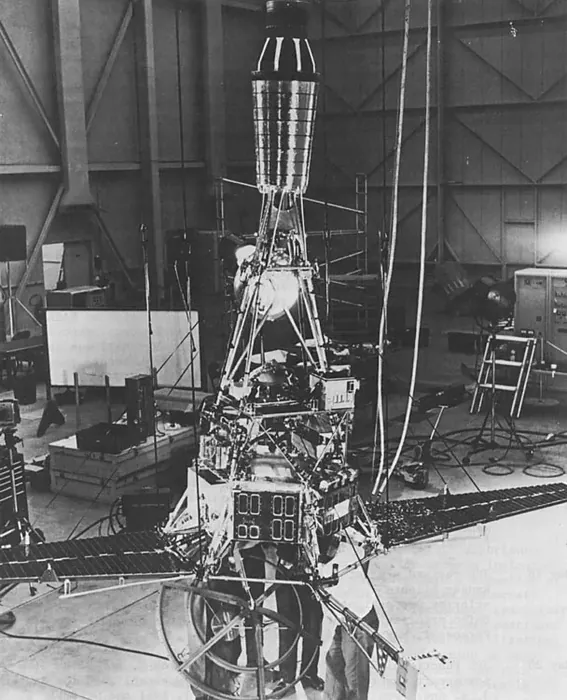
Tumbling and starved of sunlight on its solar panels, the spacecraft slipped back into the atmosphere within a week and burned up. It had barely been given the chance to prove or embarrass itself; the fault lay squarely with the launch vehicle. It was an inauspicious opening, and worse was to follow before anything went right.
Ranger 1 never left Earth orbit. The upper stage was meant to restart and throw it onto a deep-space trajectory for an engineering shakedown, and it failed to reignite, stranding the spacecraft in a low orbit that decayed within a week.
It was the first of six consecutive failures, a run that made Ranger notorious and nearly ended it. The programme was investigating a genuinely new problem — how to build a spacecraft that could operate autonomously for days and then work perfectly for the last quarter-hour of its life — and it was doing so with rockets whose upper stages were themselves barely proven.