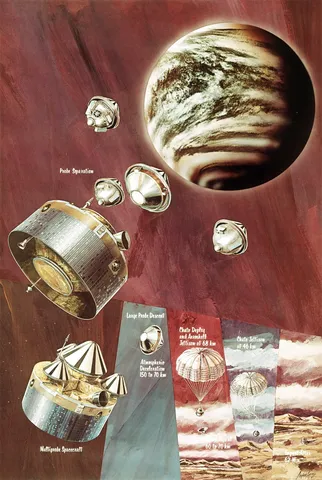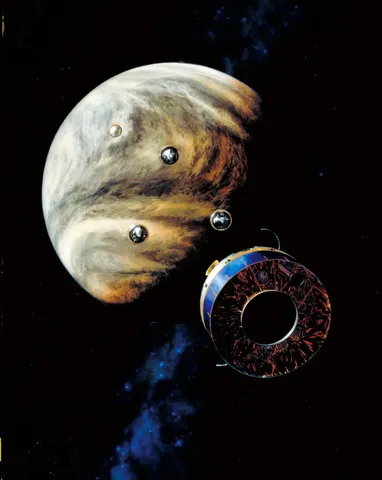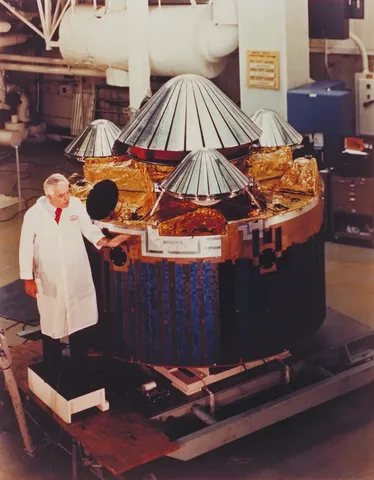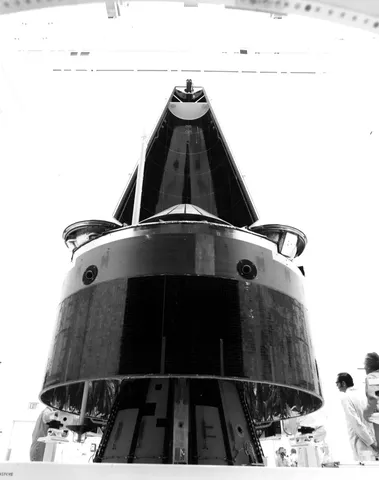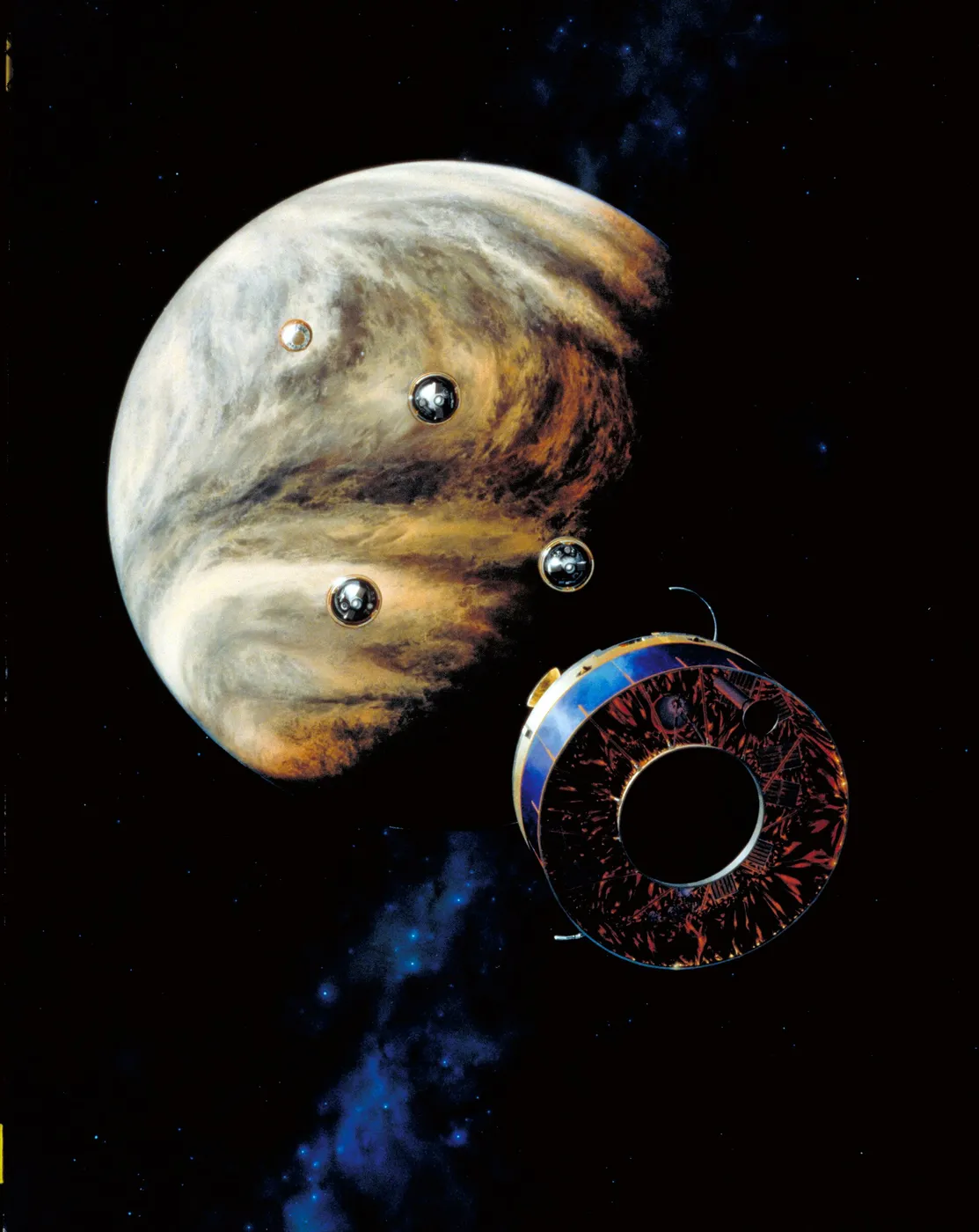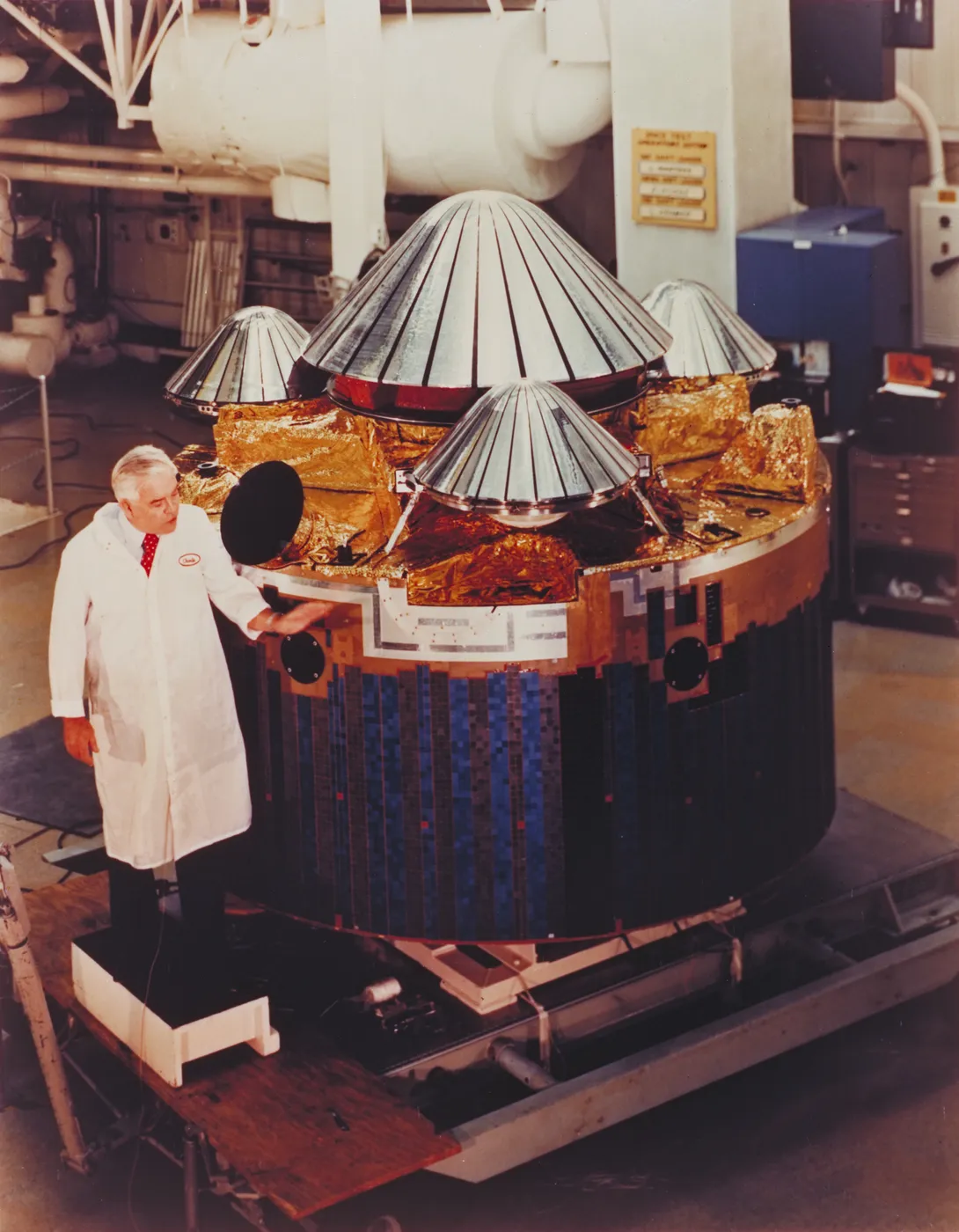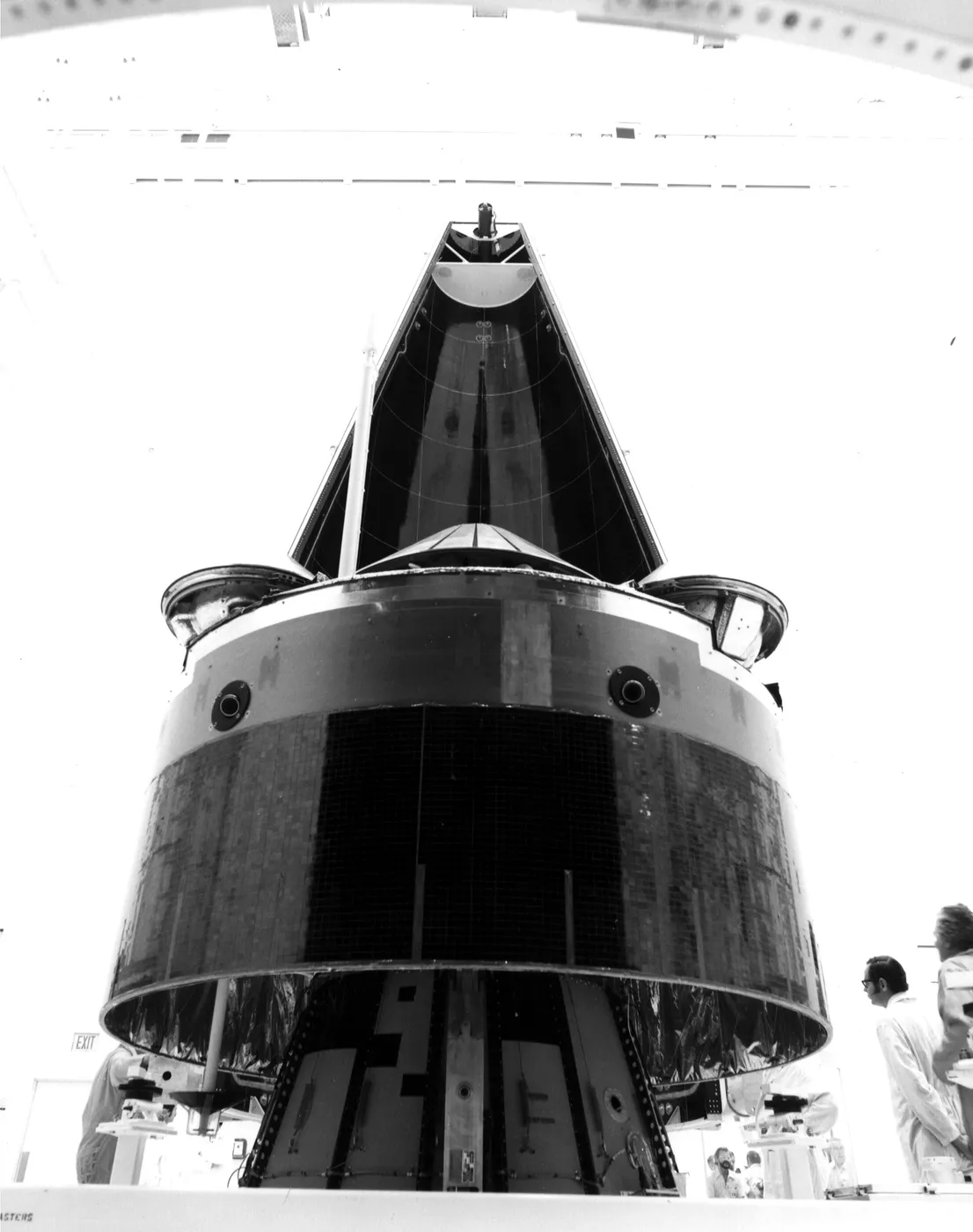
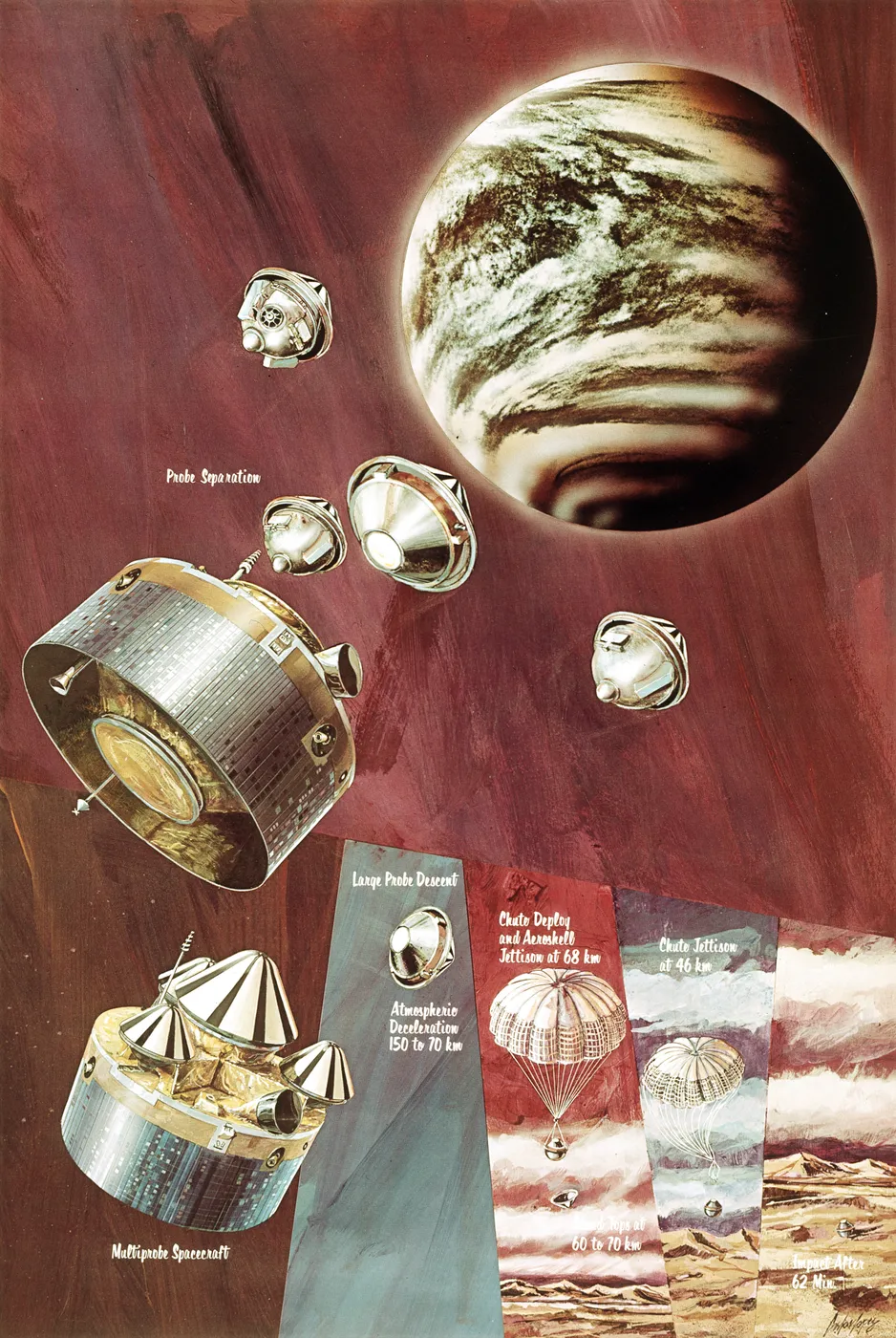

Pioneer Venus 2 took a wholly different approach to the same planet. Launched on 8 August 1978, this multiprobe mission was not an orbiter but a carrier bus bearing four atmospheric entry probes — one large and three small — meant to be dropped into the Venusian air at widely scattered points and to measure it directly as they fell.
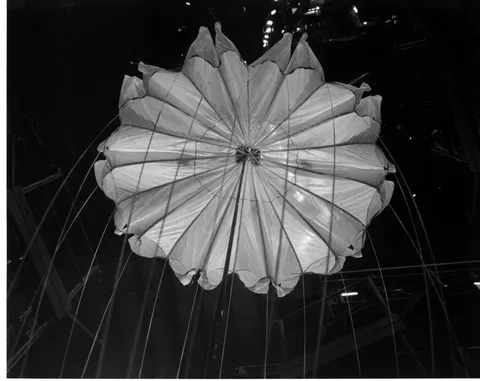
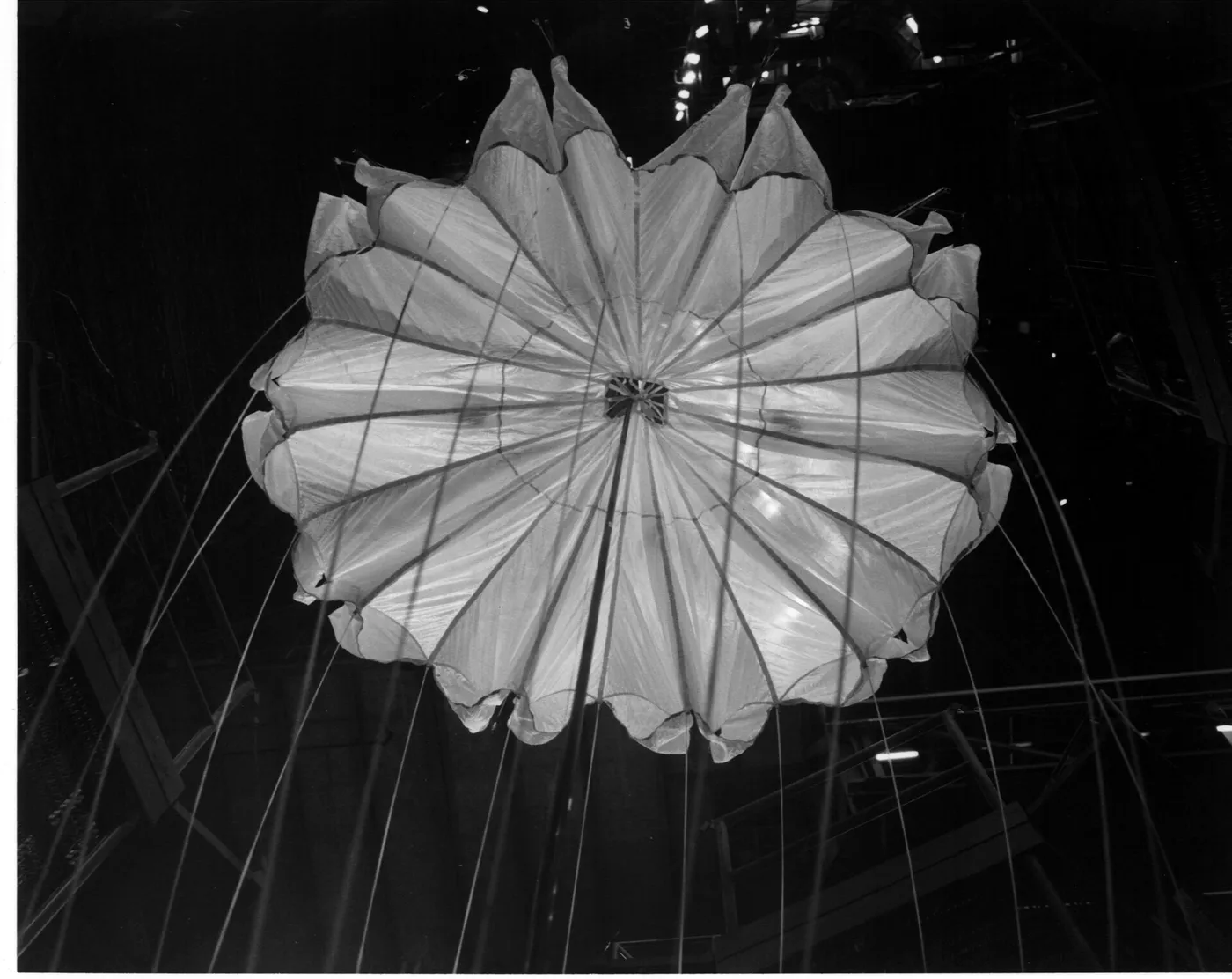
As the spacecraft closed on Venus that December the probes were cast loose, the large one weeks ahead of arrival and the smaller trio a little later. Diving in at tremendous speed behind conical heatshields, they shed that protection and, in the large probe's case, streamed a parachute before free-falling the rest of the way, sampling temperature, pressure, composition and cloud structure through a descent lasting about an hour.
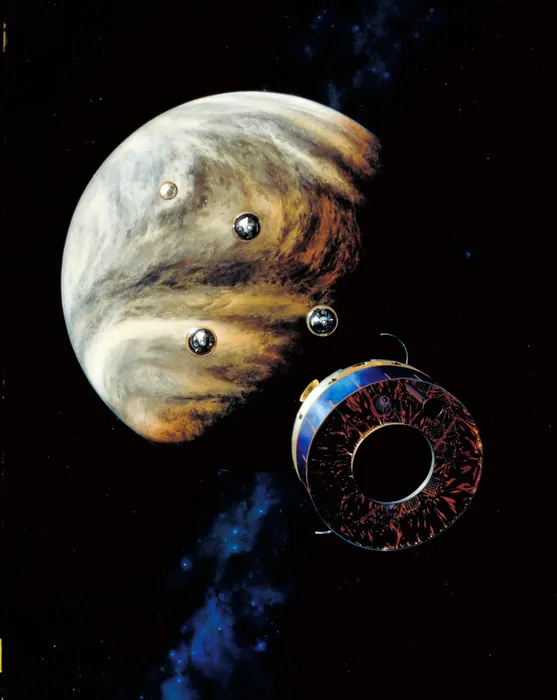
The probes were built to take readings all the way down rather than to survive on the surface, yet one of the small probes stunned its makers by continuing to transmit from the ground for more than an hour after landing. Together with the carrier bus, which sniffed the upper atmosphere as it too plunged in and burned, the multiprobe gave scientists their first detailed, in-place portrait of the crushing, furnace-hot air of Venus.
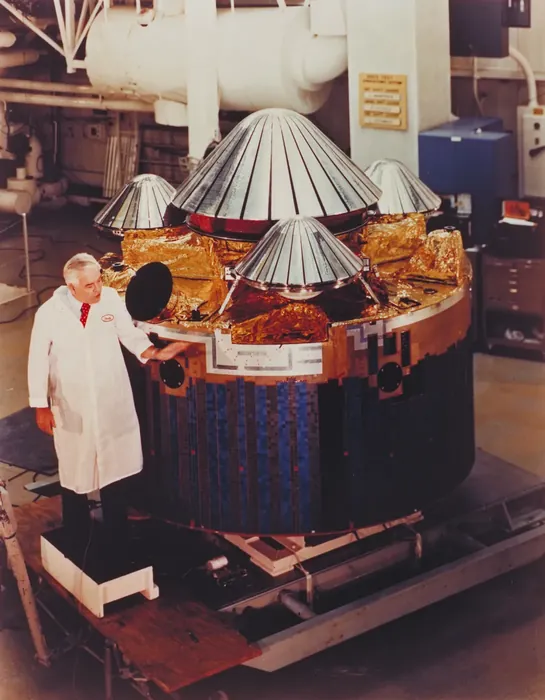
The multiprobe mission split into five pieces on the way. A carrier bus released one large probe and three small ones on separate trajectories so that they entered the atmosphere at widely separated points — day side, night side, high latitude — measuring temperature, pressure and composition all the way down in December 1978.
None was designed to survive the landing, and one did anyway. The probe aimed at the day side hit the surface at some 35 kilometres per hour and kept transmitting for 67 minutes from the ground, in an environment of 460 degrees and ninety atmospheres, returning data nobody had planned for and considerably outliving its own mission profile.