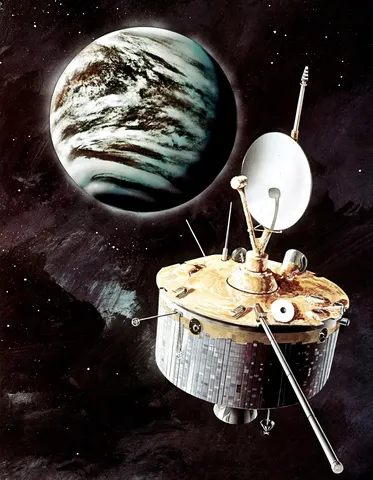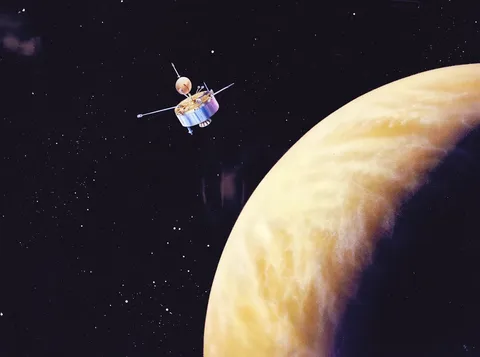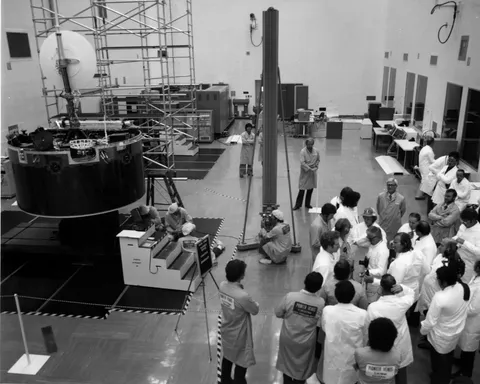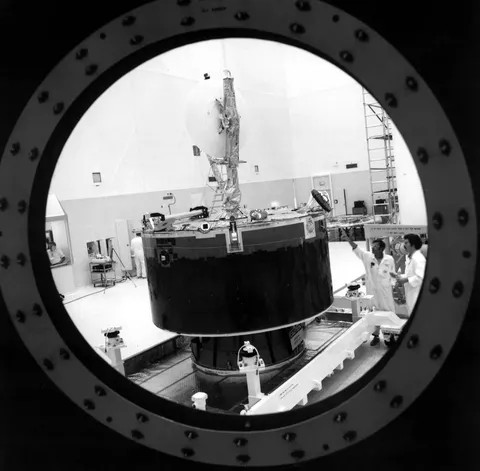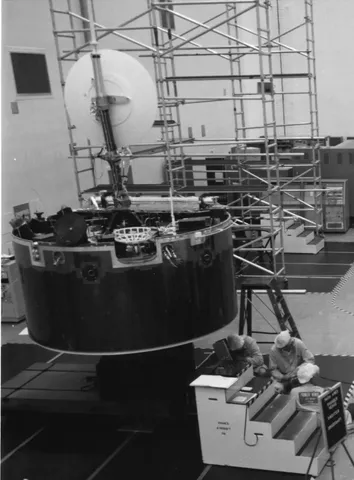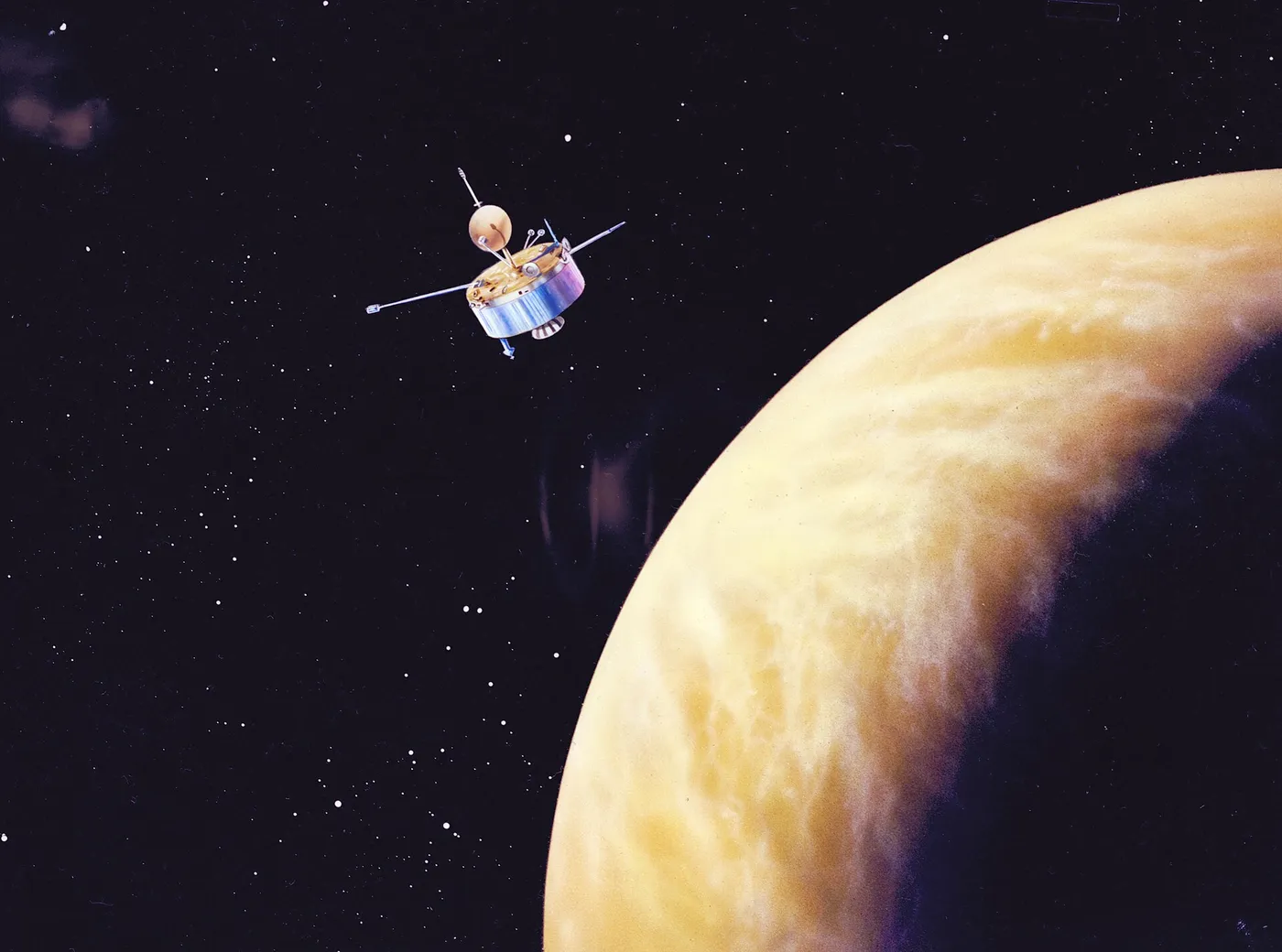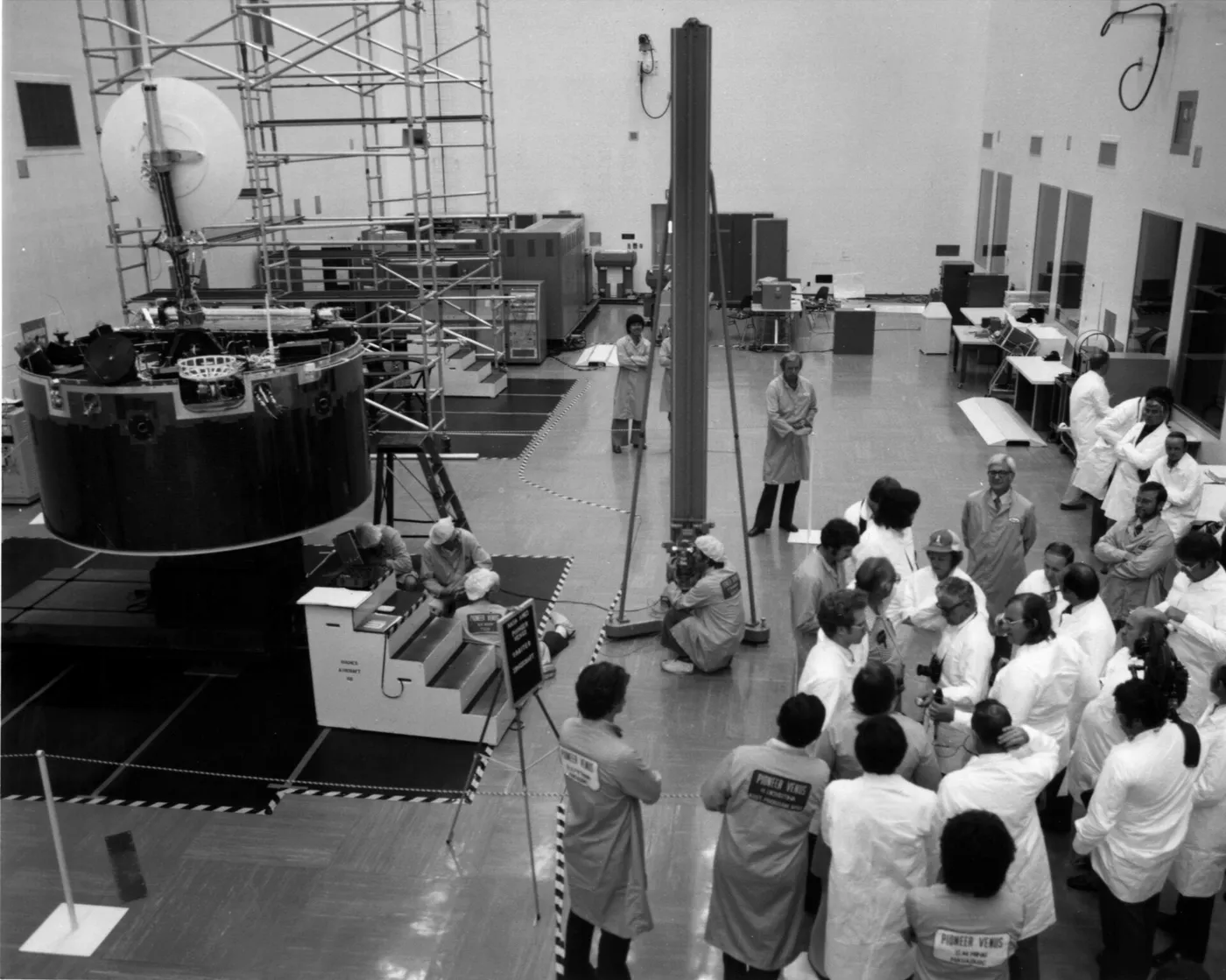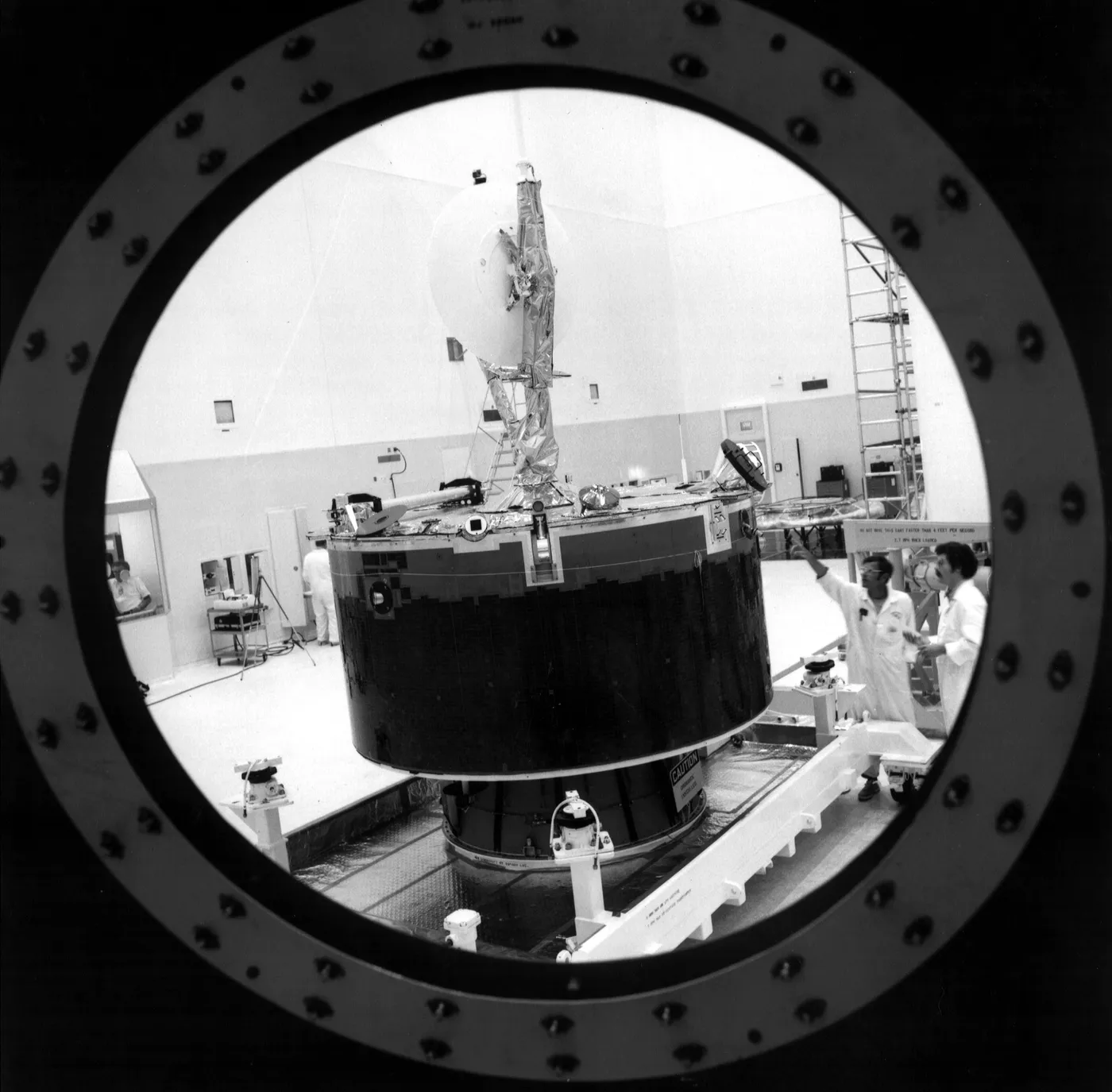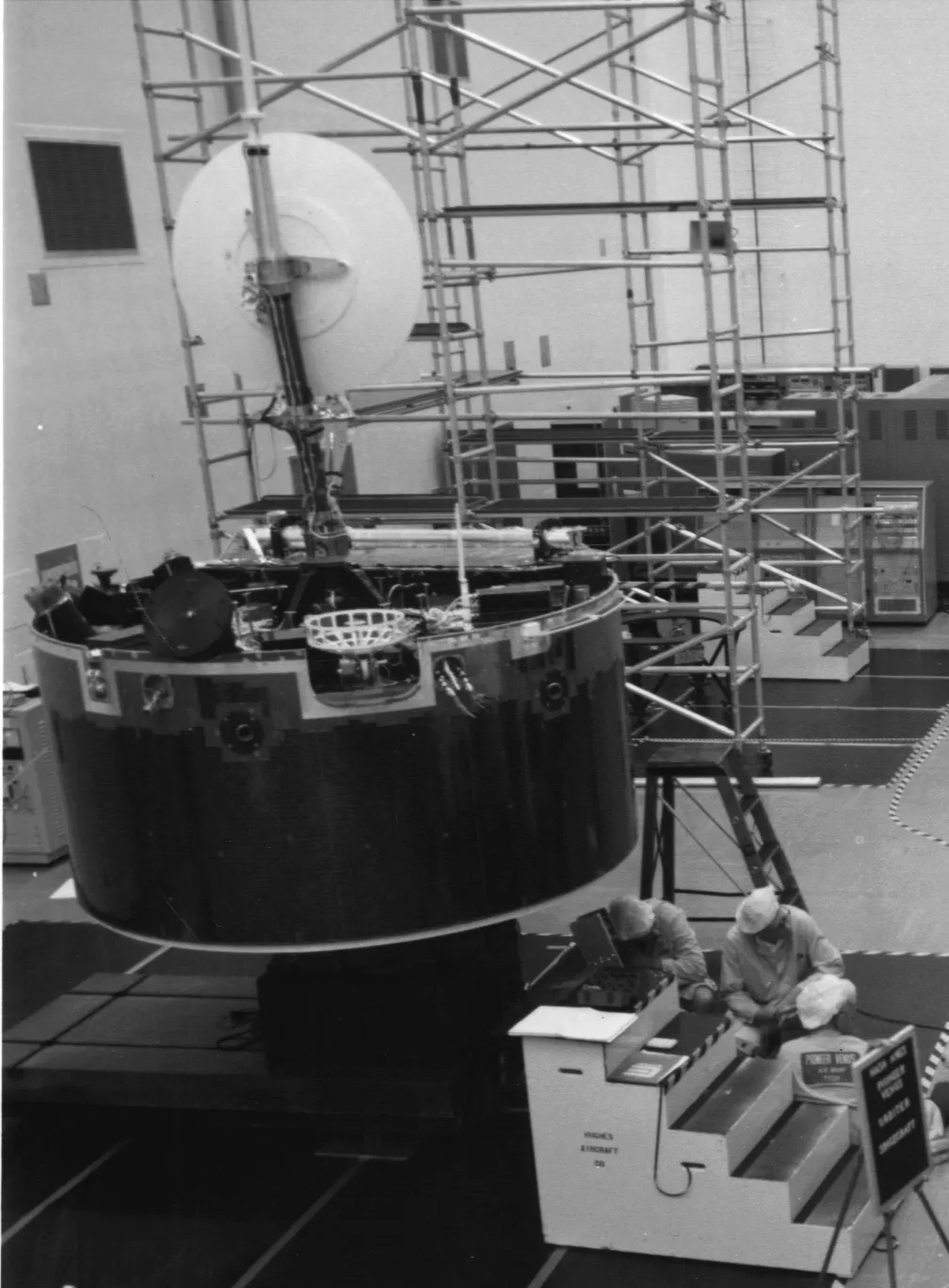
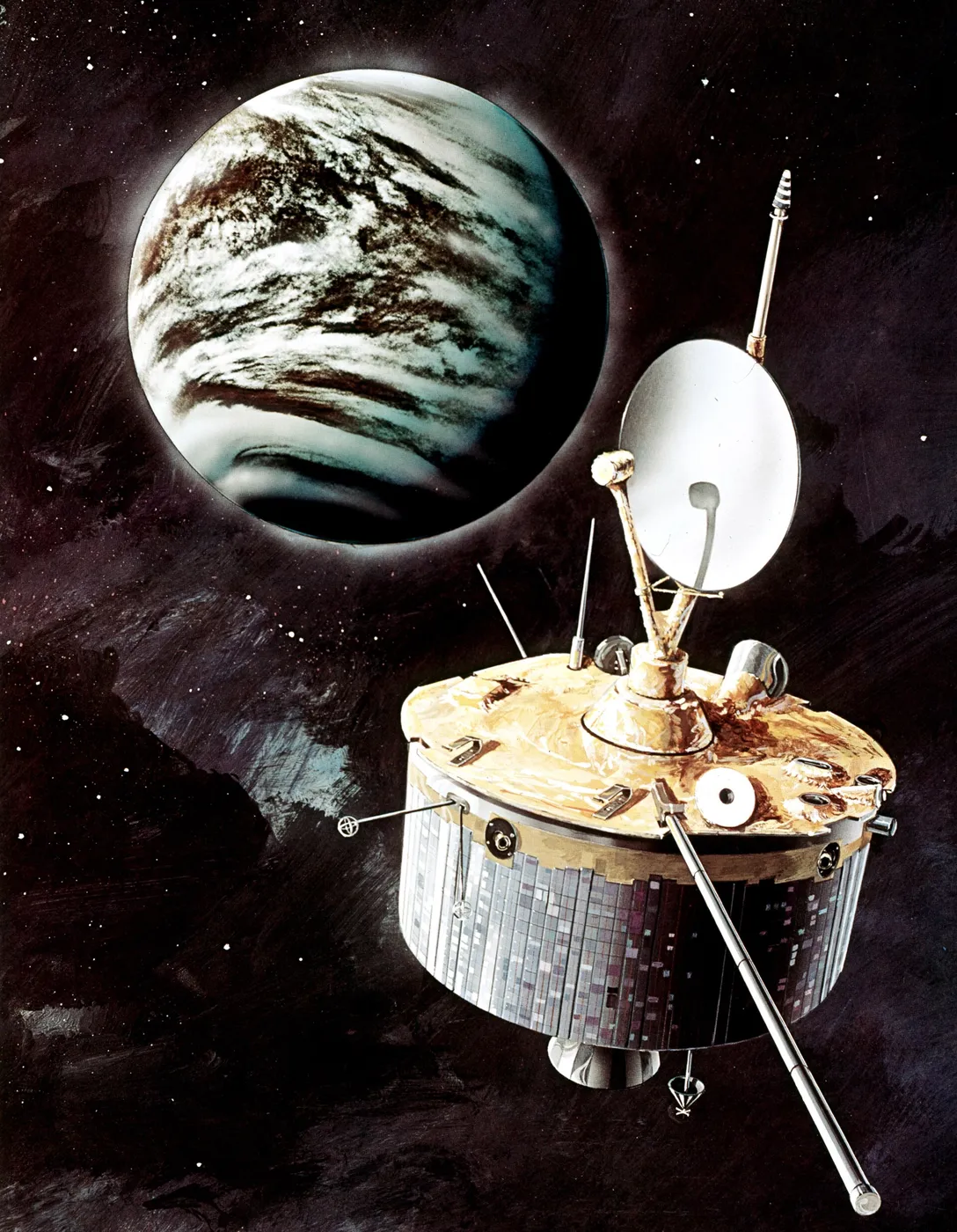

By the late 1970s the Pioneer name had moved on once more, this time to a pair of missions sent to unveil the cloud-wrapped planet Venus. Pioneer Venus 1, the orbiter, lifted off on 20 May 1978 — a drum-shaped, spin-stabilised craft built to keep a long watch over the planet from above.
Arriving that December, it fired its onboard motor to slip into a steeply stretched orbit that swung it from a couple of hundred kilometres above the surface out to tens of thousands and back each day. From that vantage its radar altimeter pierced the permanent clouds to chart the terrain below, while its other instruments probed the thick atmosphere, the ionosphere, and the way the solar wind buffeted a world with almost no magnetic field of its own.
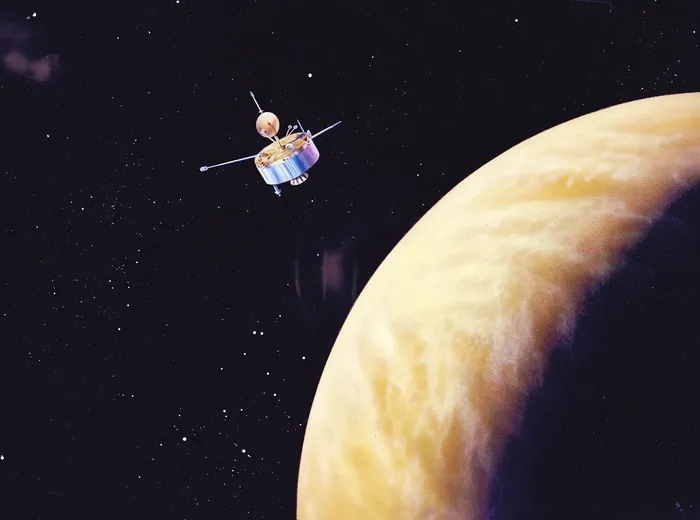
Designed to last a single Venus year — around 225 days — the orbiter comfortably outlived that modest target, returning data for well over a decade before it finally sank into the atmosphere. Among its lasting achievements was the first global radar map of Venus, revealing broad volcanic plains and towering highland "continents" hidden beneath the clouds.
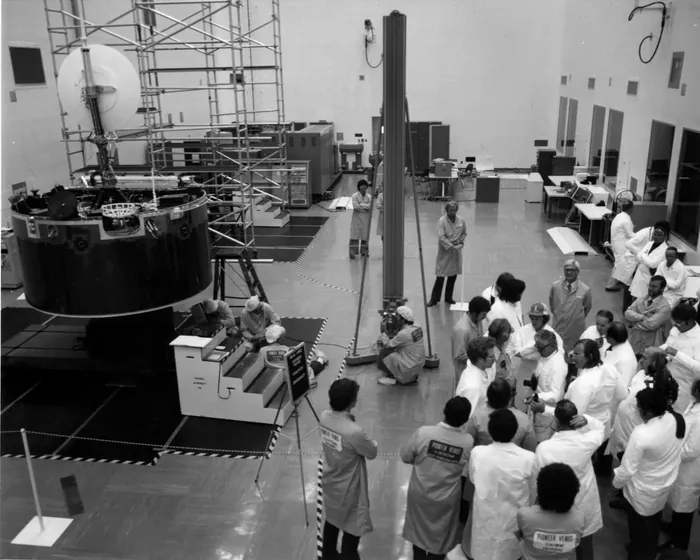
The orbiter carried a radar mapper, and for fifteen years it held the best global picture of the surface beneath Venus's clouds. At a resolution of some tens of kilometres it was crude compared with what Magellan would later produce, but it covered about 93 per cent of the planet and revealed the basic geography — the highland continents, the vast rolling plains, the enormous volcanic structures.
It also studied the atmosphere continuously for far longer than any flyby could, watching the four-day superrotation of the cloud deck through more than a decade and measuring how the solar wind interacts with a planet that has no magnetic field. It finally ran out of propellant in 1992 and burned up in the atmosphere it had spent fourteen years observing.