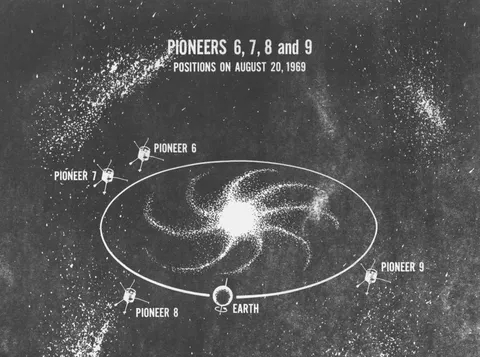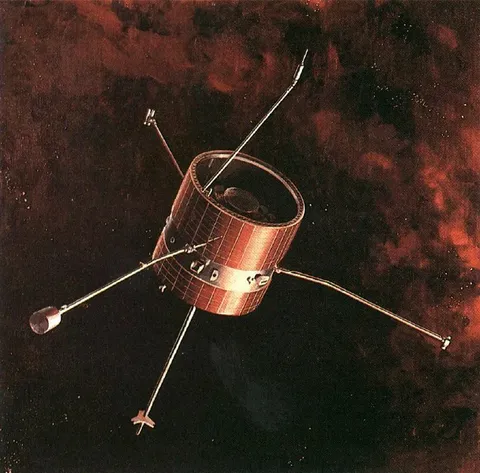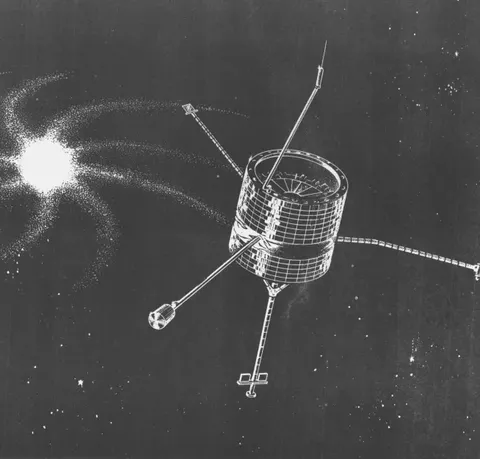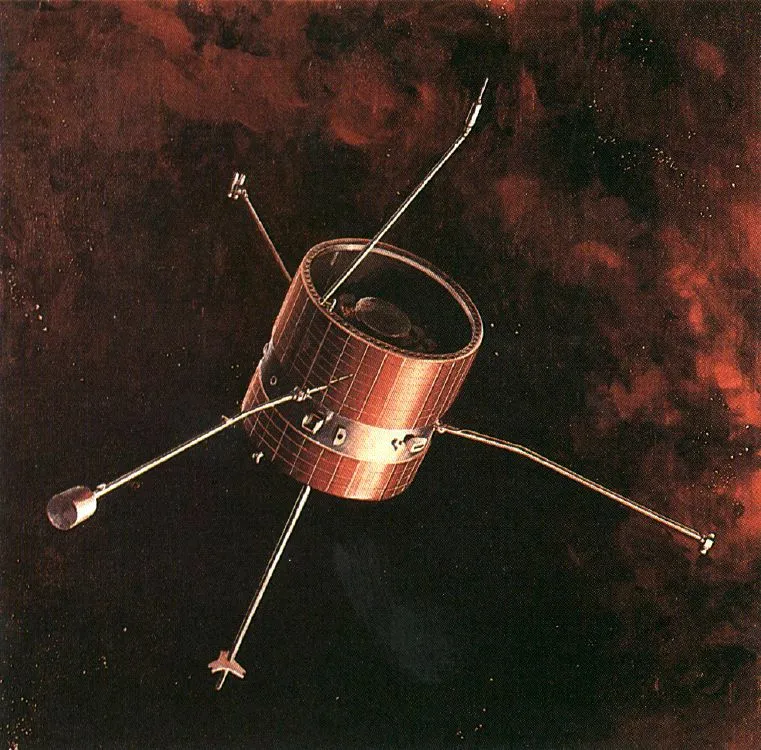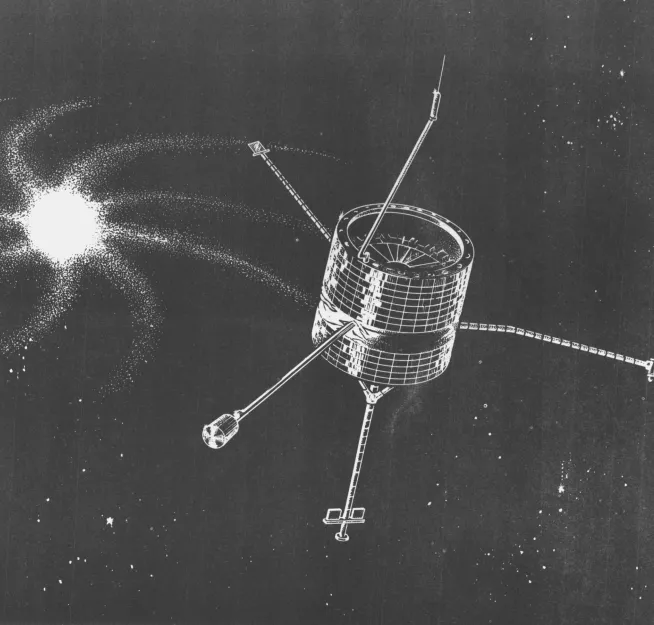
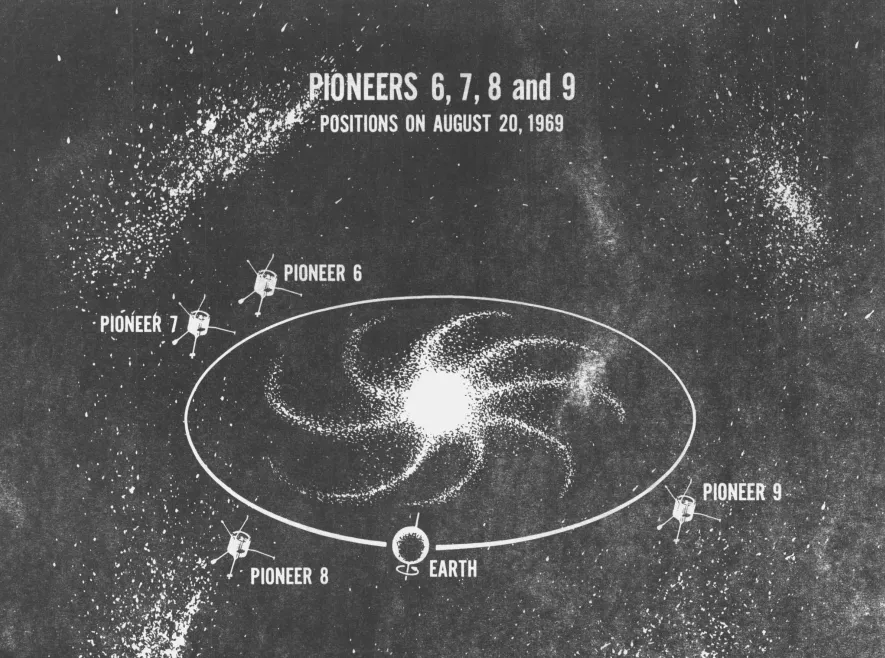

Pioneer 9, launched on 8 November 1968, completed the quartet of Sun-watching Pioneers, sharing its ride to space with a small test satellite. Of the four it was sent closest to the Sun, into an orbit that carried it inward to about three-quarters of the Earth's distance, giving it the most extreme view of the solar environment in the series.
From there it measured the solar wind, magnetic fields and cosmic rays alongside its more distant siblings, the whole fleet acting together as an early solar-weather service that could warn of dangerous activity days ahead.
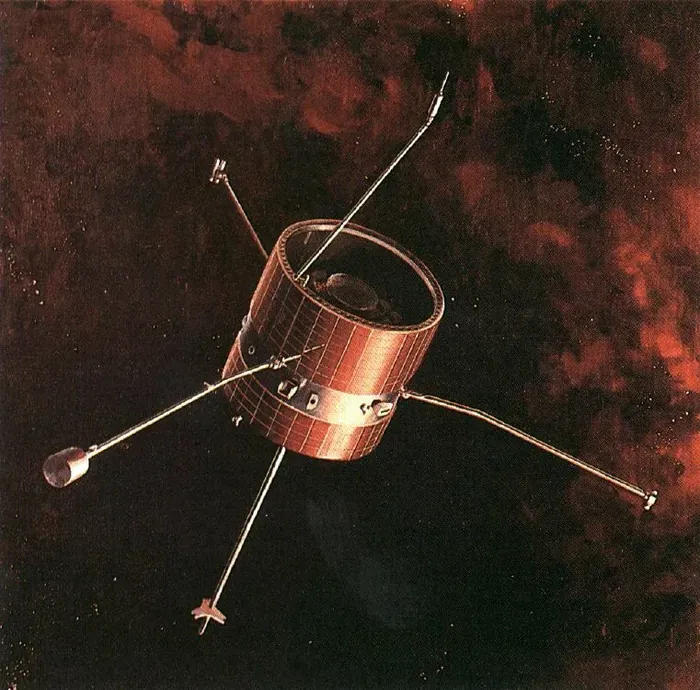
A fifth spacecraft, Pioneer E, was meant to join them a year later, but it was destroyed when its rocket failed, ending the series at four. Pioneer 9 itself kept working into the 1980s, closing out a modest, long-serving family of probes that had watched over the Sun through the Apollo years and long after.
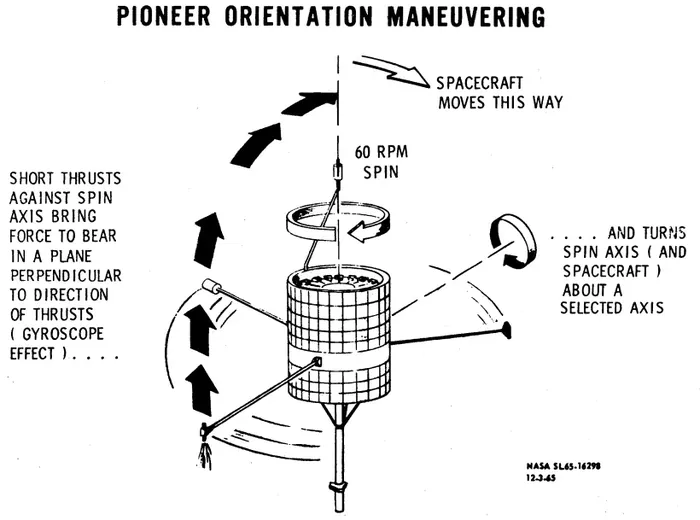
The last of the operational solar network launched in November 1968 into an orbit inside Earth's, closer to the Sun, completing a spread of monitoring points that gave researchers their first genuinely three-dimensional picture of conditions in the inner heliosphere.
It operated until 1983 and was declared dead in 1987. A fifth spacecraft intended to complete the set was lost in a launch failure in 1969, which is why the series ends at nine — and the network's approach, of multiple simple spacecraft measuring the same medium from different places, is the direct ancestor of missions like STEREO and the constellations now proposed for space weather.