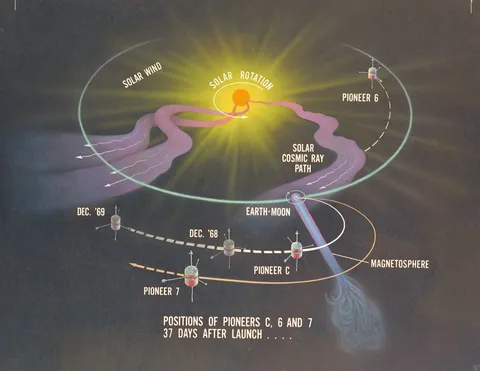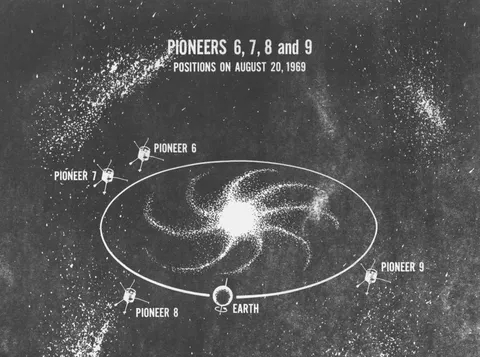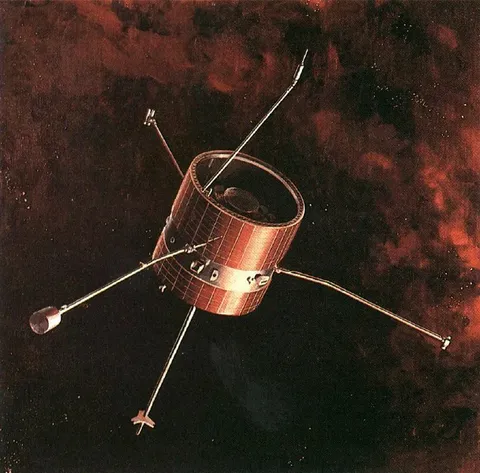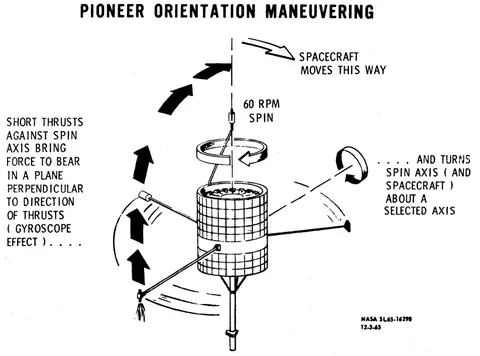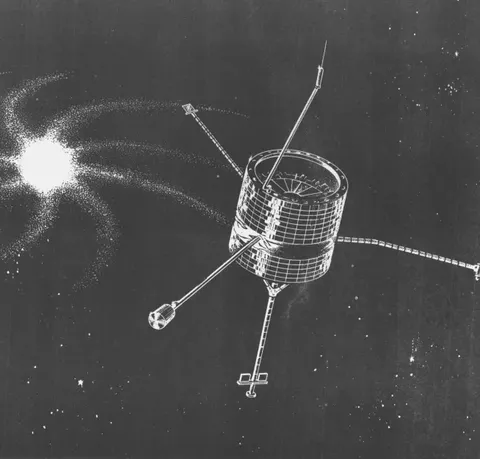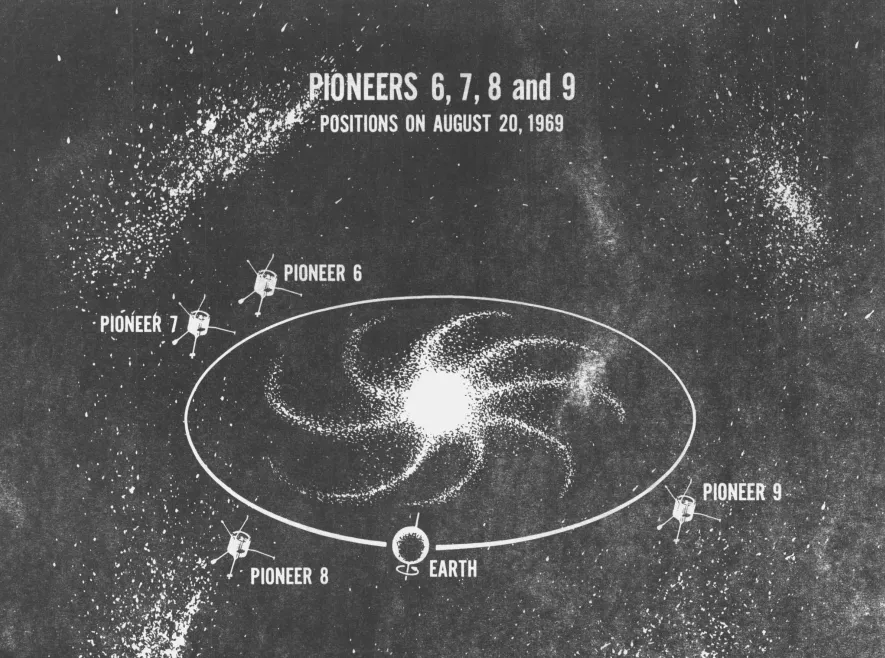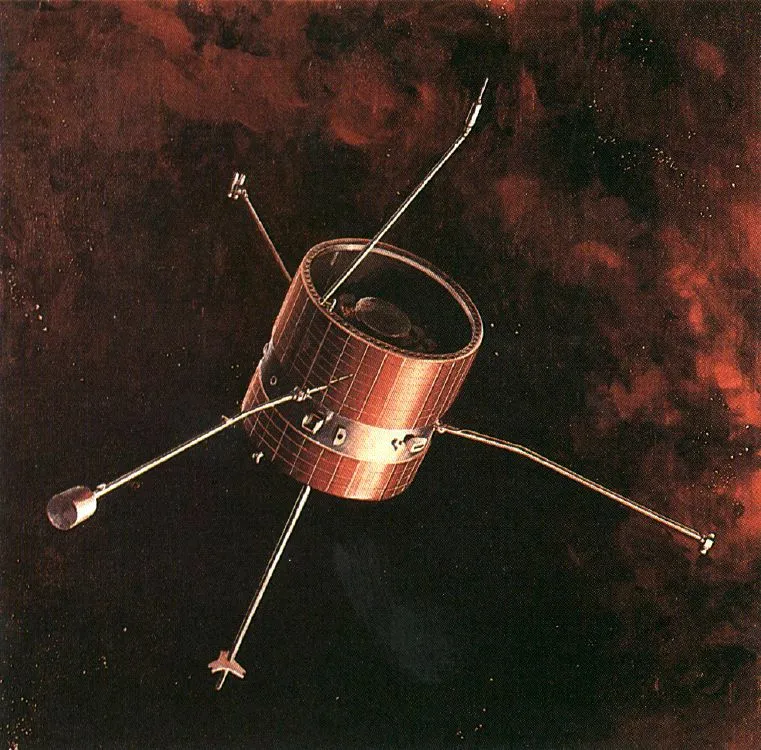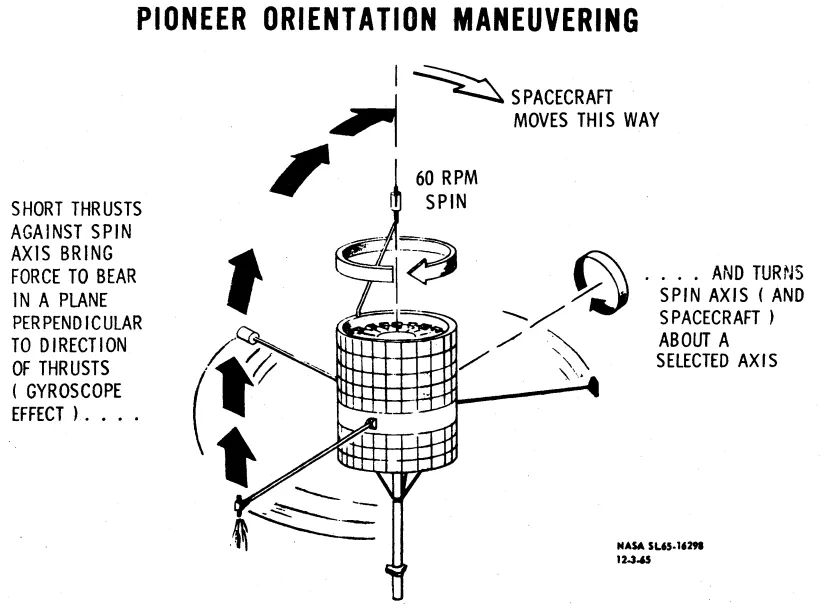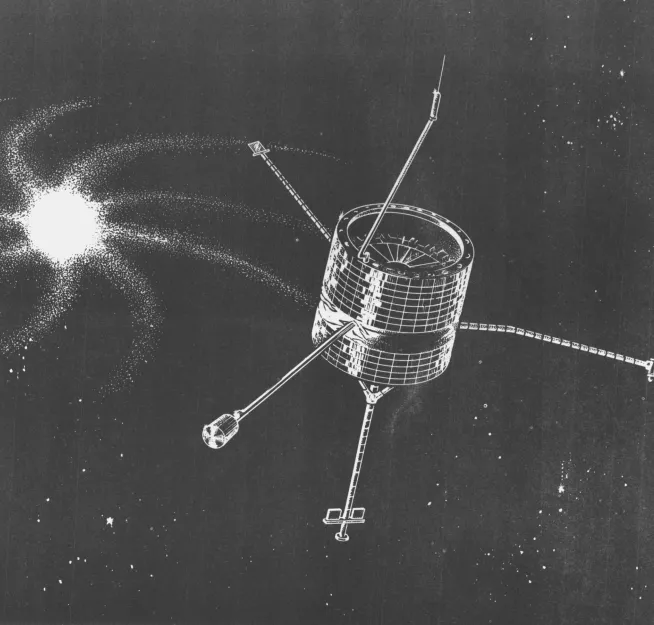
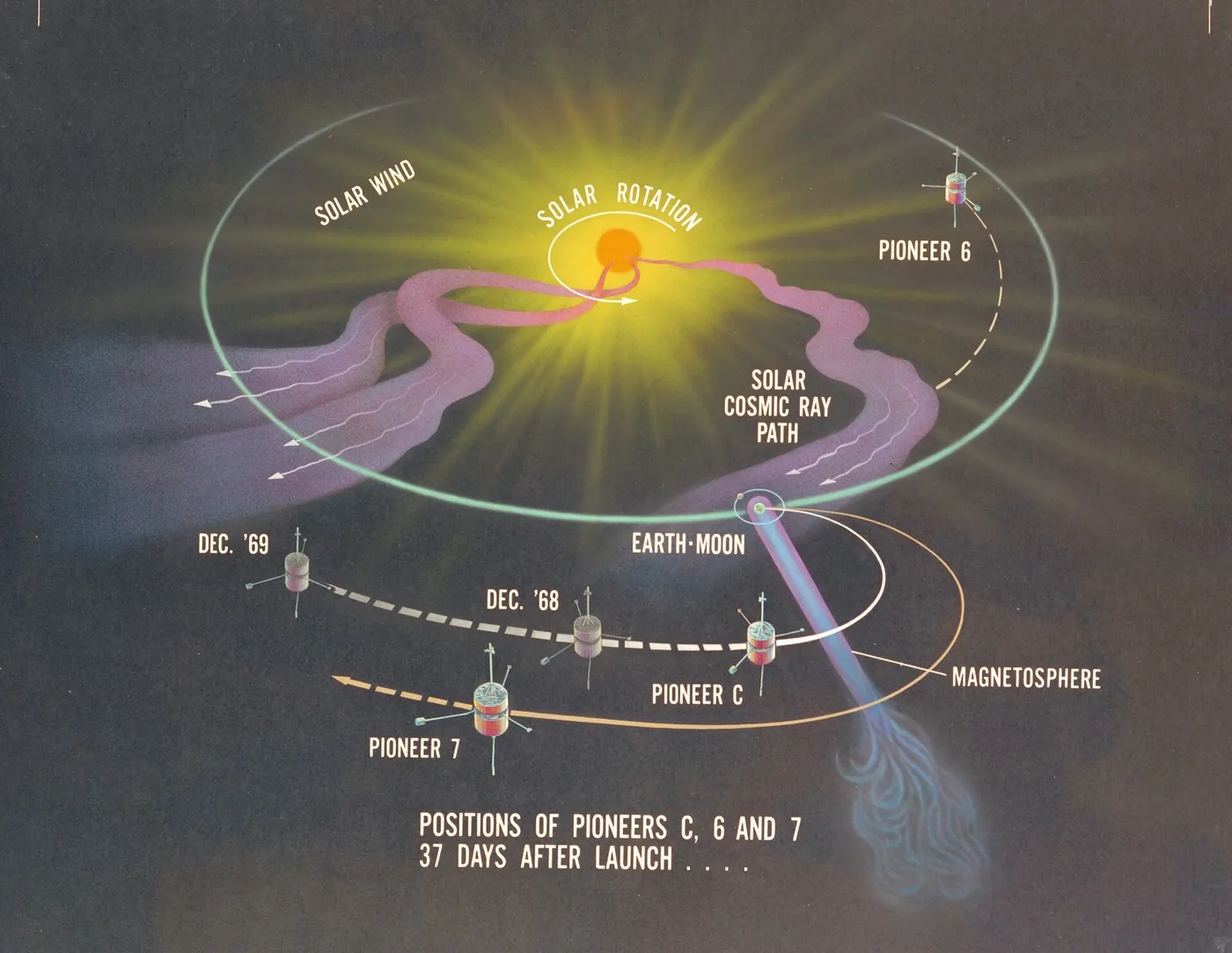

Pioneer 8 was launched on 13 December 1967, the third of the identical solar-orbiting Pioneers, and like Pioneer 7 it took up station a little beyond the Earth's orbit around the Sun. It carried the same instruments — a boom-mounted magnetometer and detectors for the solar wind, cosmic dust and energetic particles — and spun steadily to keep them sweeping the sky.
Its purpose was the same as its siblings': to add another listening post to the network watching the Sun, feeding a picture of solar activity detailed enough to forewarn of the storms that could threaten astronauts and satellites alike.
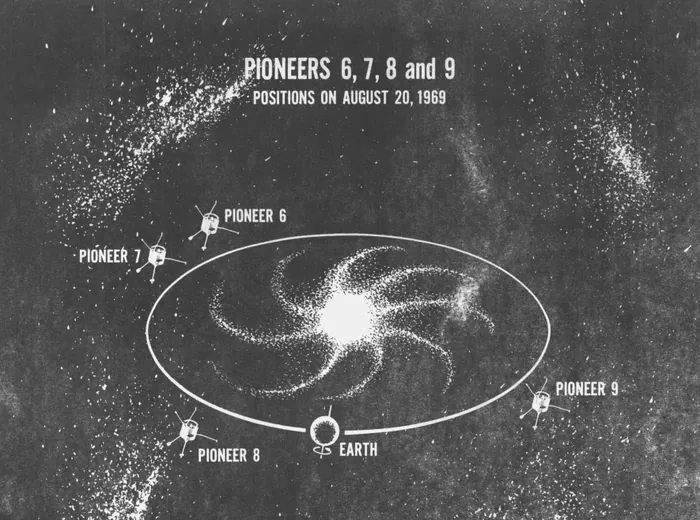
And like them it proved astonishingly durable, working far beyond its planned life and staying in occasional contact into the 1990s — a small, inexpensive spacecraft that quietly did its job for the better part of thirty years.
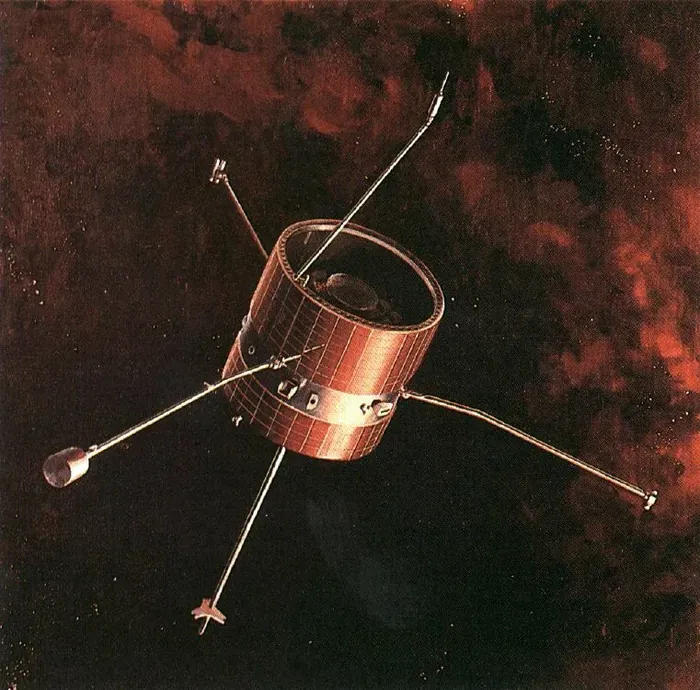
Launched in December 1967, the third of the solar monitors carried instruments to measure plasma, magnetic fields, cosmic rays and cosmic dust, adding another sampling point to the network spread around the Sun.
Its practical value was in forecasting. By the early 1970s the constellation could detect a solar disturbance at one spacecraft and warn of its arrival at Earth — the beginning of operational space weather prediction, which now protects power grids, aviation and satellites. The last successful contact was made in 1996, nearly thirty years after launch.