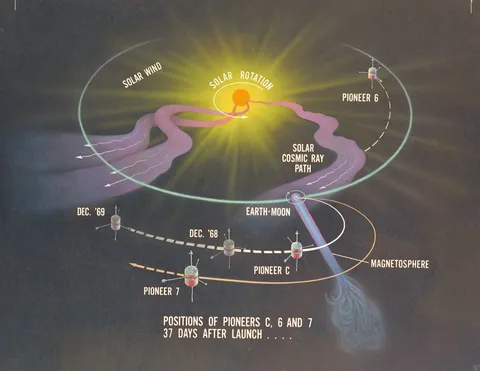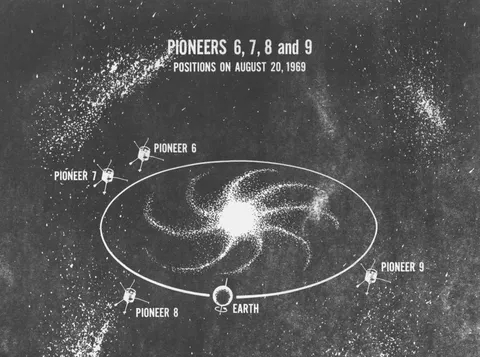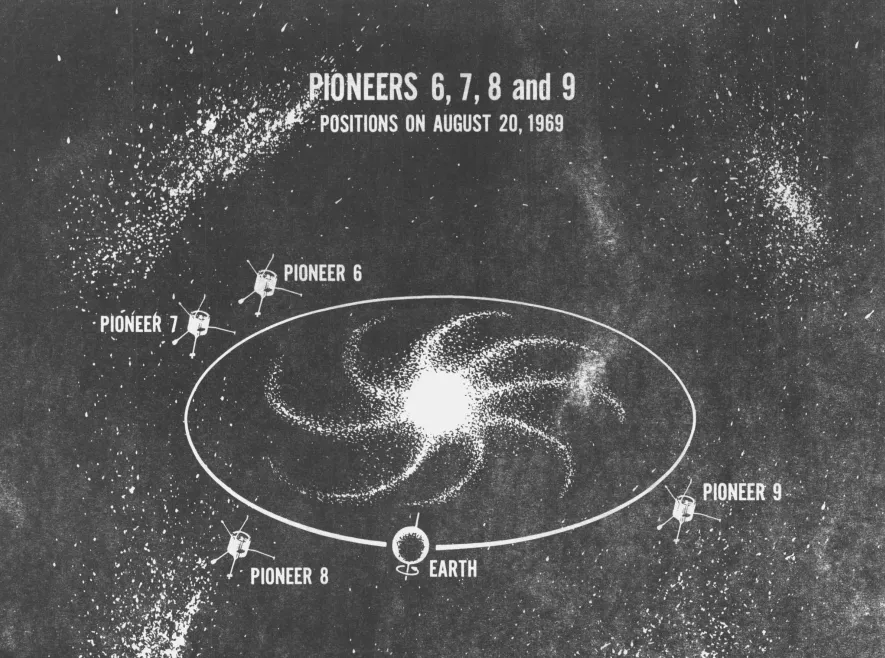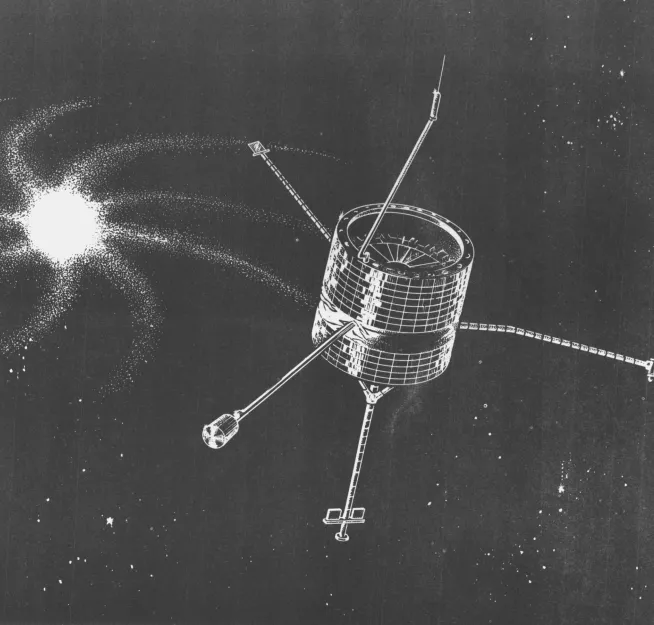
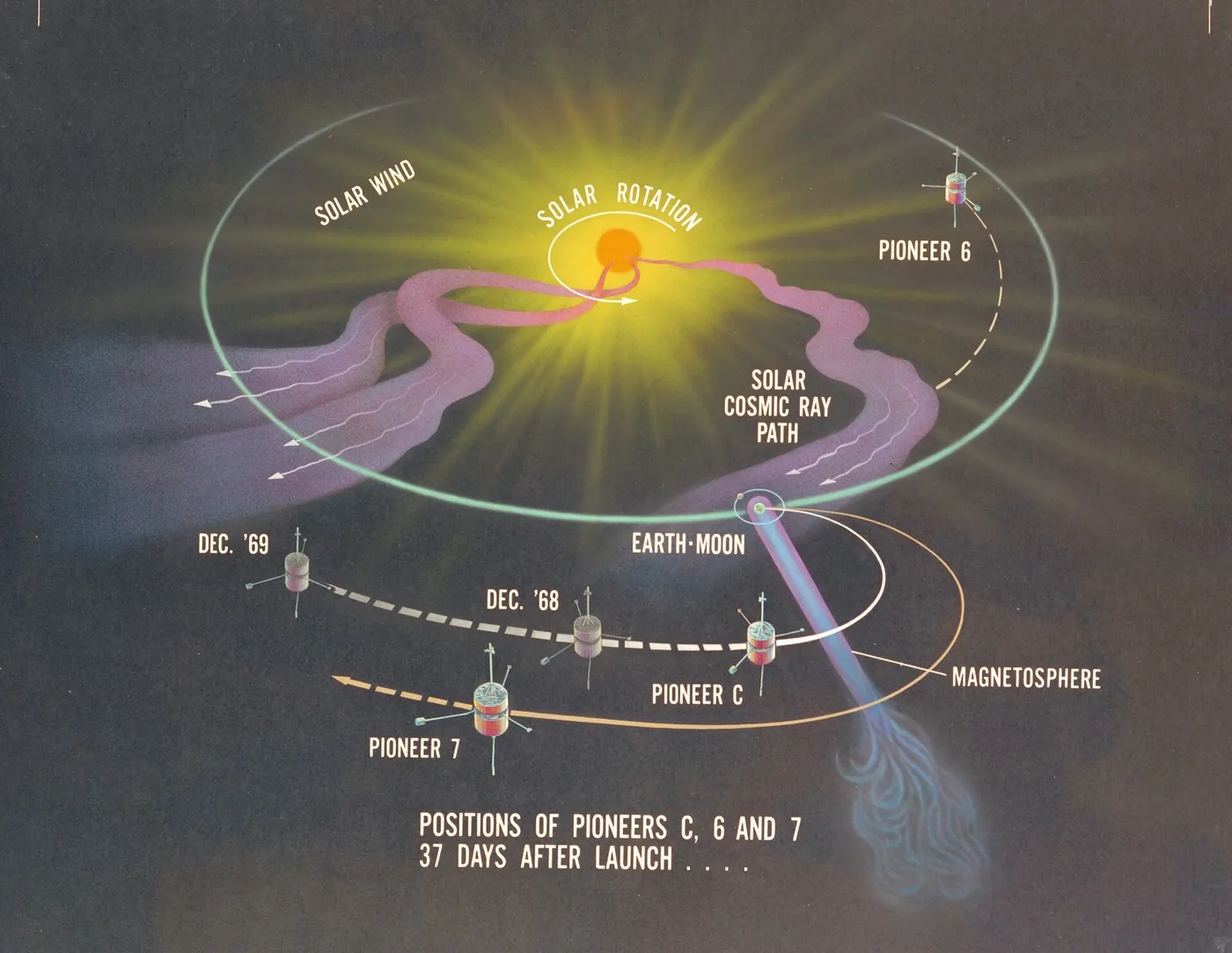

Pioneer 7 followed its predecessor into solar orbit on 17 August 1966, the second of the Sun-watching quartet. Where Pioneer 6 circled just inside the Earth's path, Pioneer 7 was placed a little farther out, so that between them the two probes could observe the solar wind from different vantage points at the same time.
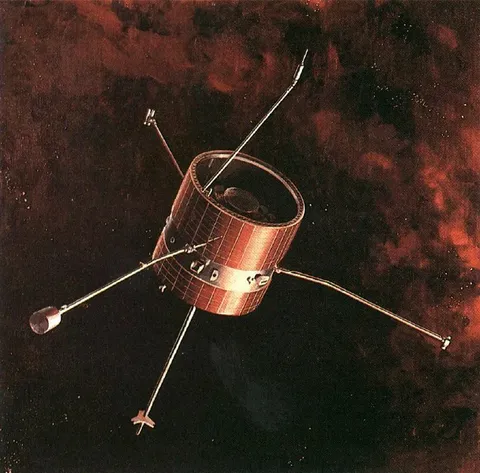
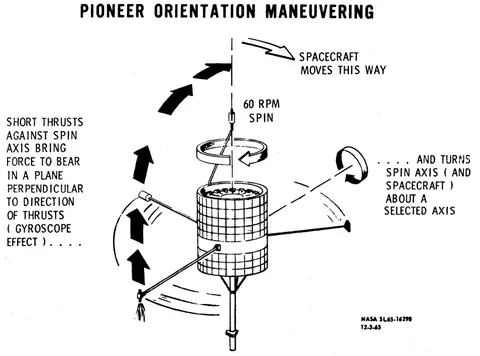
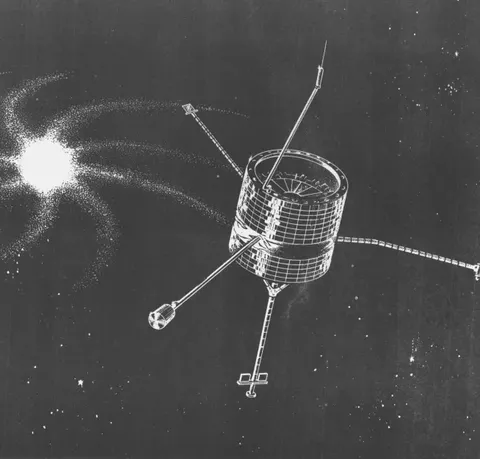
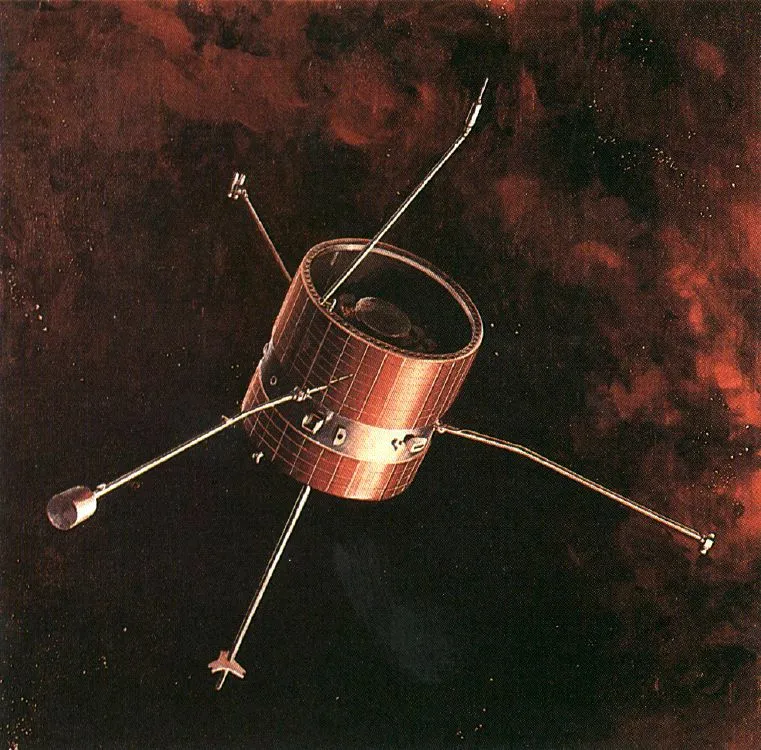
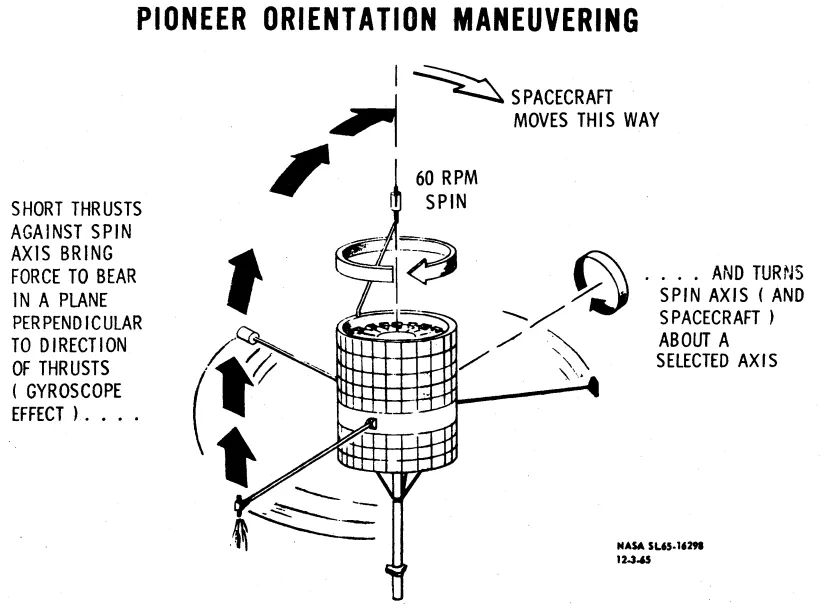
Identical to its sibling — a spinning drum turning some sixty times a minute, carrying a boom-mounted magnetometer and a suite of particle and field sensors — it settled in to measure the constant stream of matter and magnetism flowing outward from the Sun.
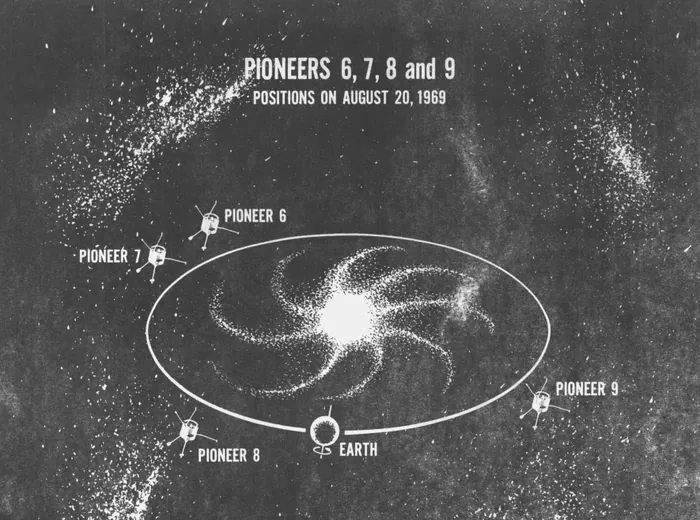
Like the other solar Pioneers it far outlasted its planned life, returning useful data for many years and staying contactable into the mid-1990s. Together the fleet built up the first long-term, multi-point picture of conditions across the inner solar system.
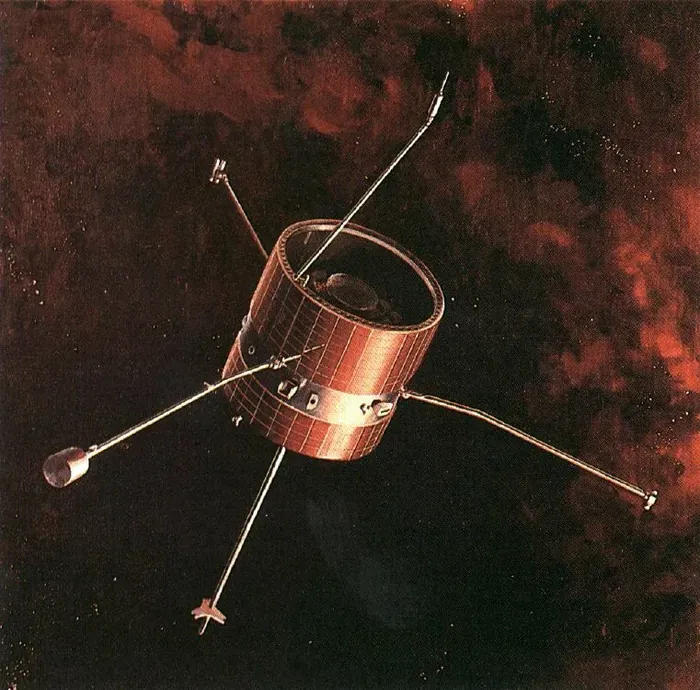
The second of the solar network, launched in August 1966 into an orbit slightly outside Earth's, spent decades measuring the solar wind, the interplanetary magnetic field and cosmic rays from a vantage point that slowly drifted ahead of and behind the planet.
In 1986 it was put to an unplanned use, flying through the tail of Halley's Comet at a distance of about 12 million kilometres and measuring the interaction between cometary ions and the solar wind — a contribution to the Halley campaign from a twenty-year-old spacecraft that had been designed for something else entirely.