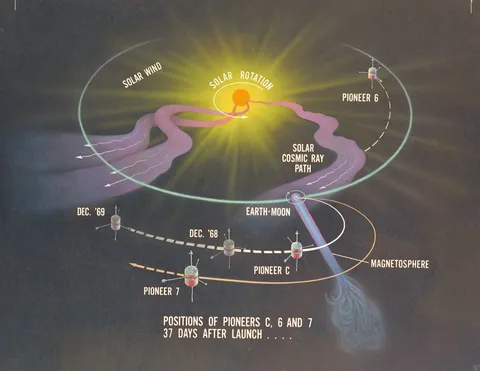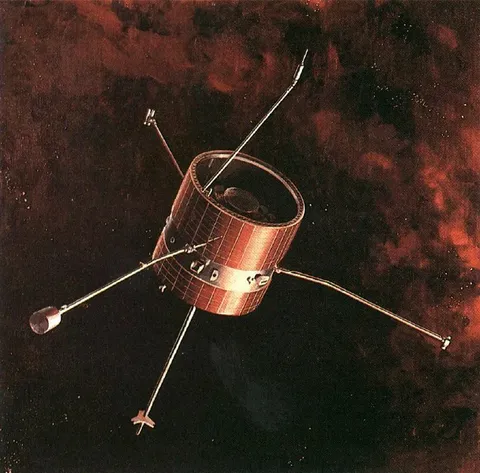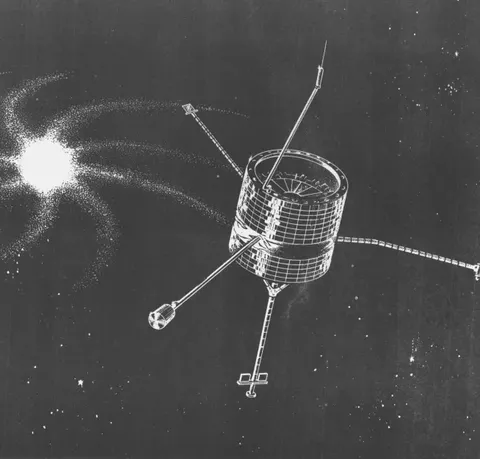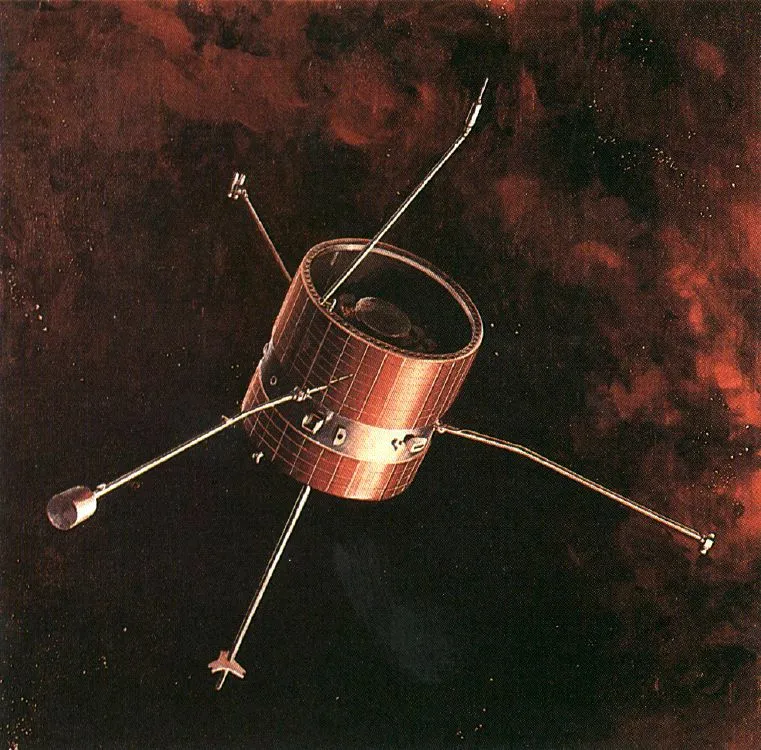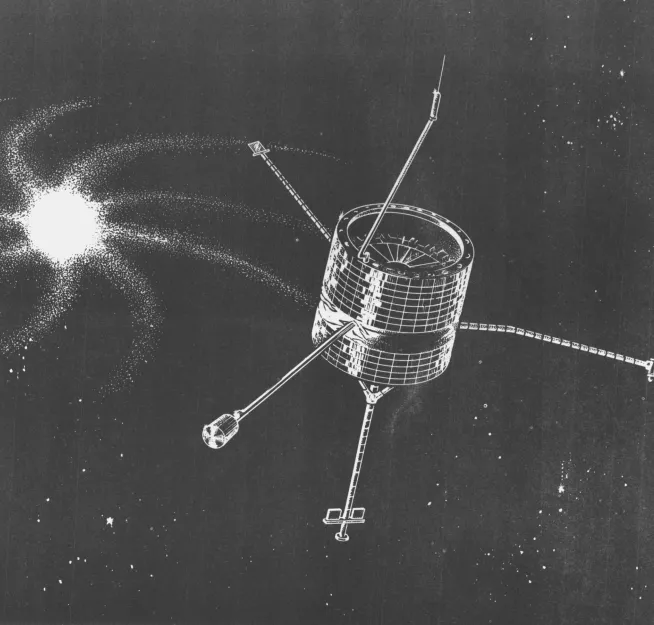
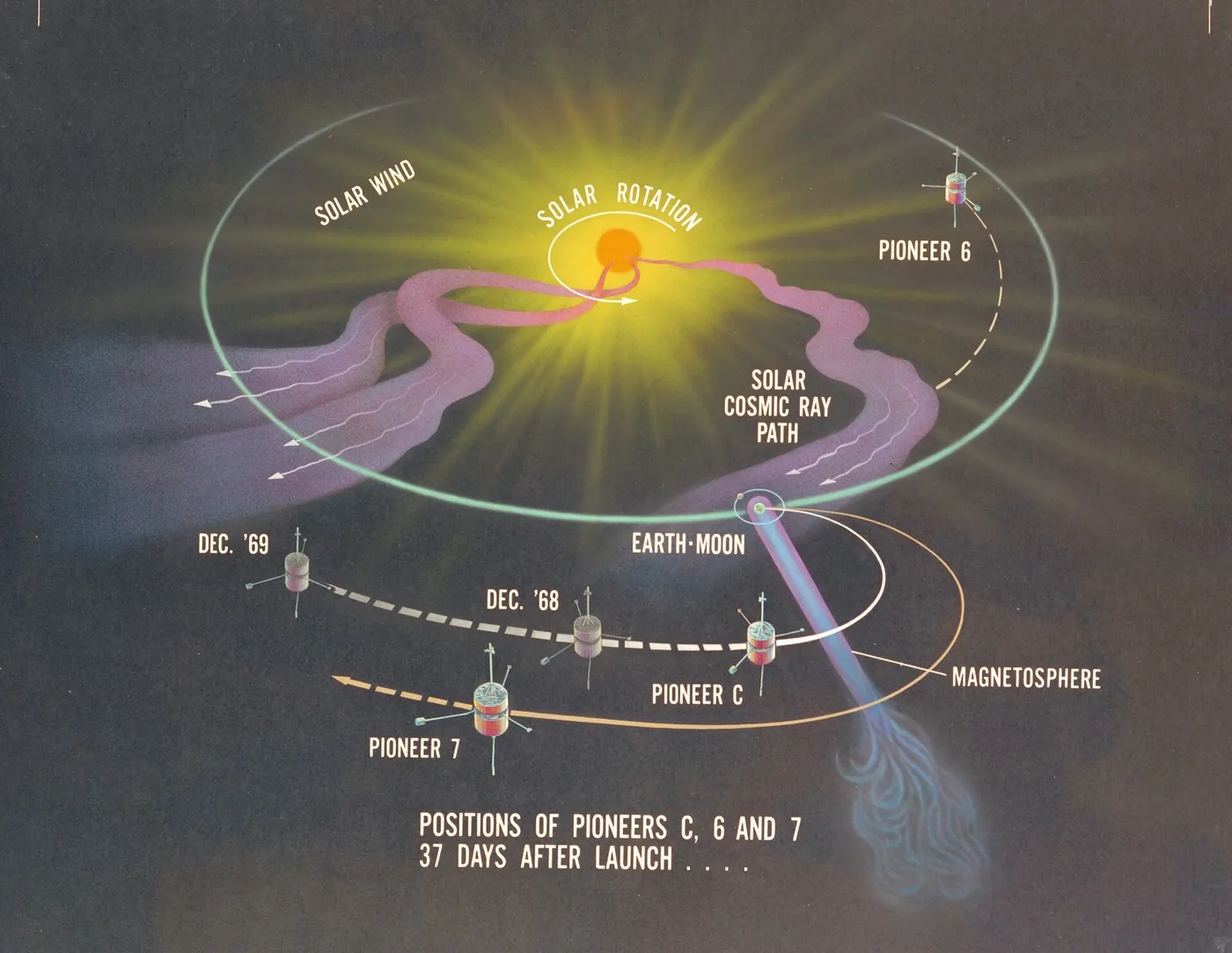

By the mid-1960s NASA wanted a standing watch on the Sun, and the answer was a set of small, near-identical probes scattered into their own orbits around it. Pioneer 6, launched on 16 December 1965, was the first of them — a spinning cylinder clad in solar cells and packed with instruments to sample the solar wind and the magnetic fields threading interplanetary space.
Placed in an orbit a little inside the Earth's, it joined a growing network designed to give days of warning before bursts of solar activity — a service of real value as NASA prepared to send Apollo astronauts beyond the shelter of the Earth's magnetic field.
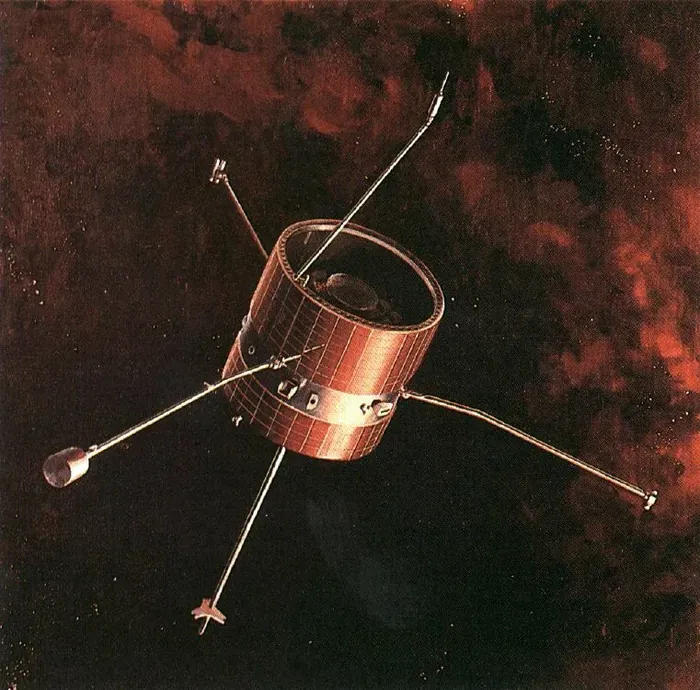
What no one expected was how long it would last. Built for a mission of months, Pioneer 6 kept working for decades; NASA made successful contact with it as late as 2000, thirty-five years after launch, making it one of the oldest functioning spacecraft ever flown.
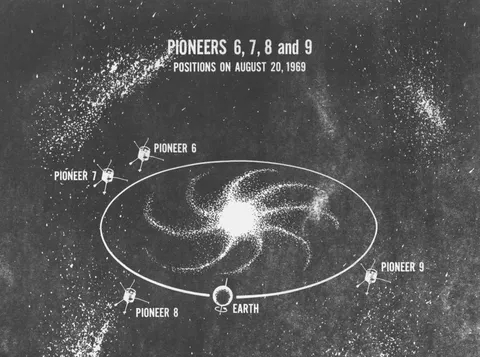
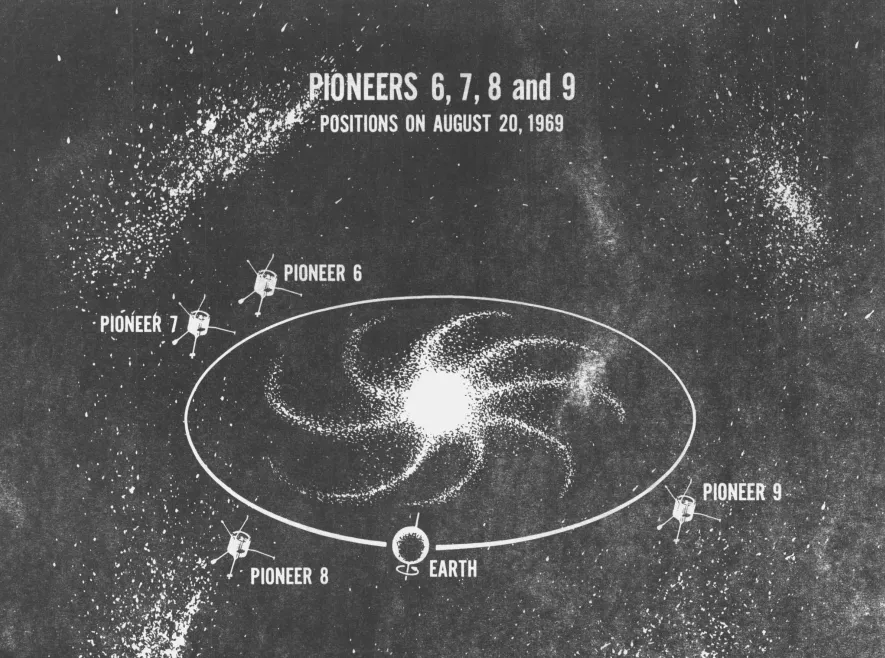
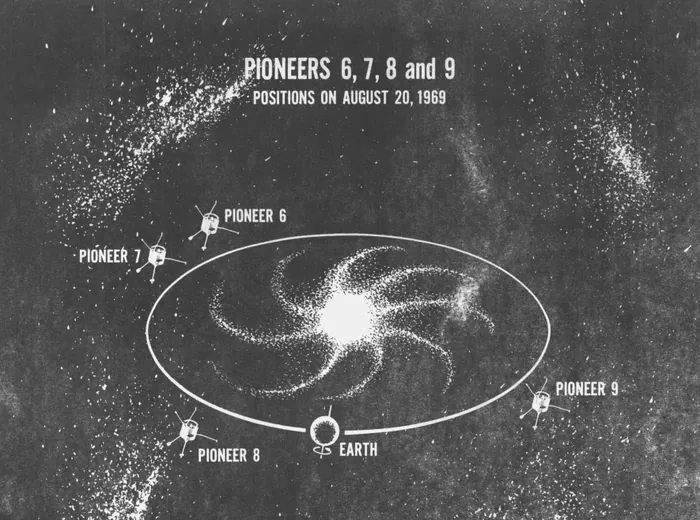
Pioneer 6 began a small constellation. Between 1965 and 1968 four spacecraft were placed in orbits around the Sun at slightly different distances, so that they drifted apart and could sample the solar wind from widely separated points simultaneously — the first space-weather monitoring network.
It was also extraordinarily long-lived. Built for six months, it was still answering commands decades later; a successful contact was made in December 2000, more than 35 years after launch, making it for a long time the oldest functioning spacecraft. Its measurements of solar wind structure and of a comet's tail composition were incidental to a design life it exceeded by a factor of about seventy.