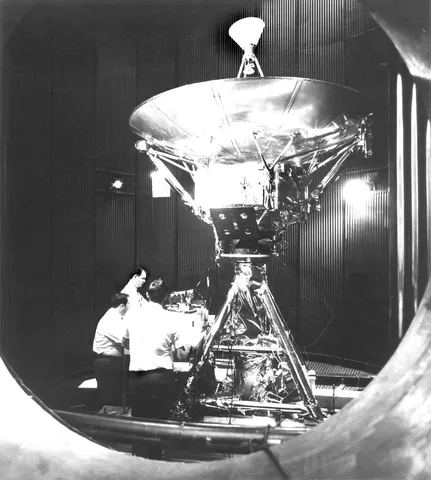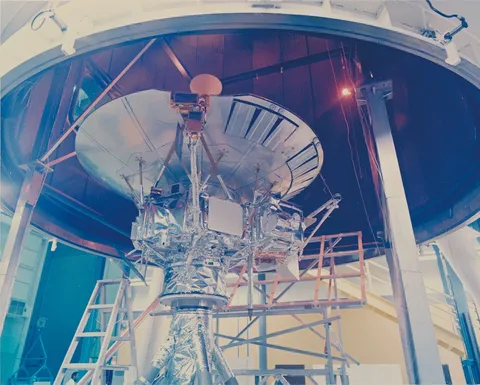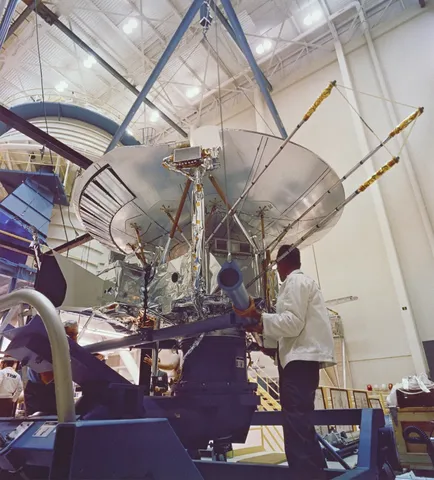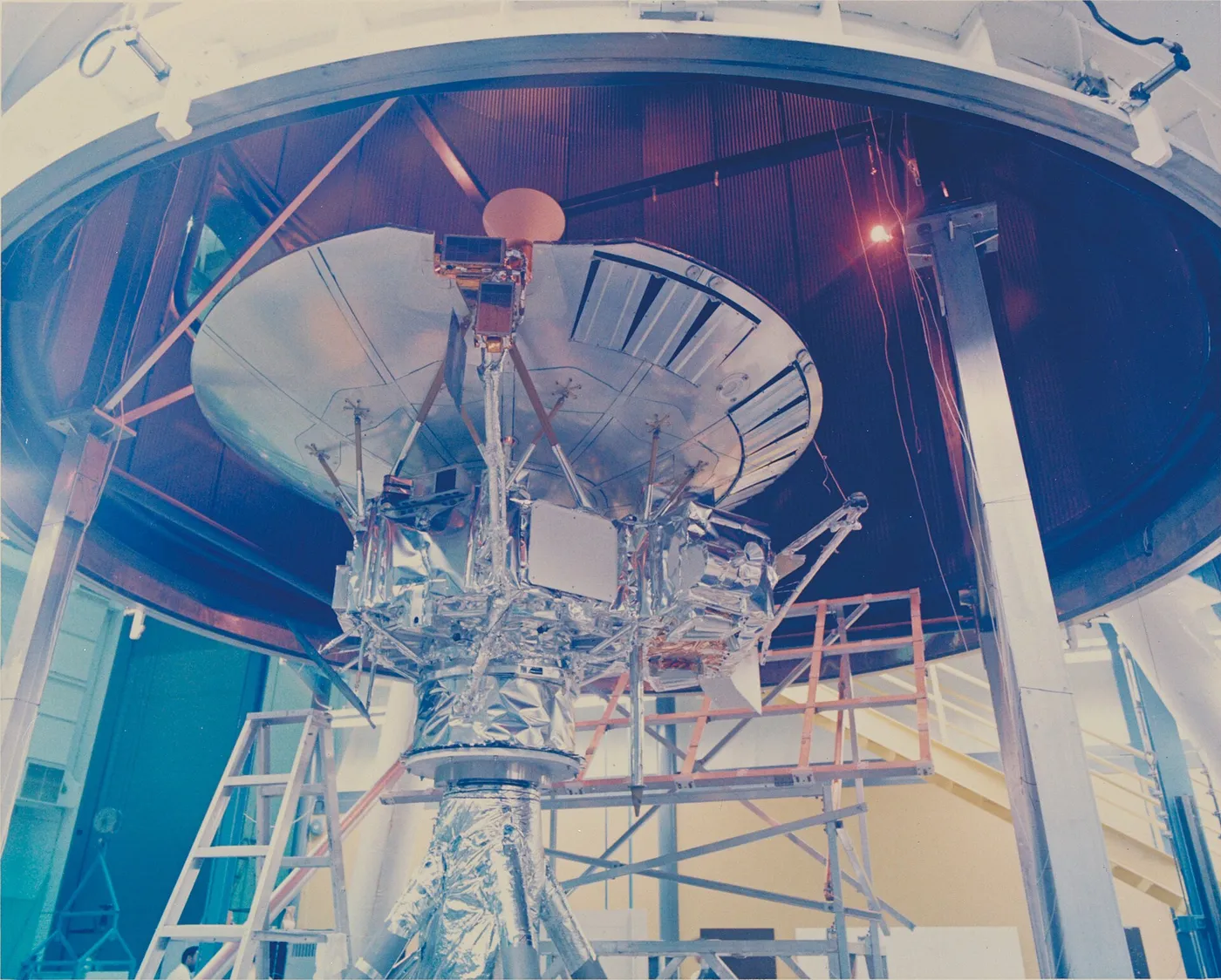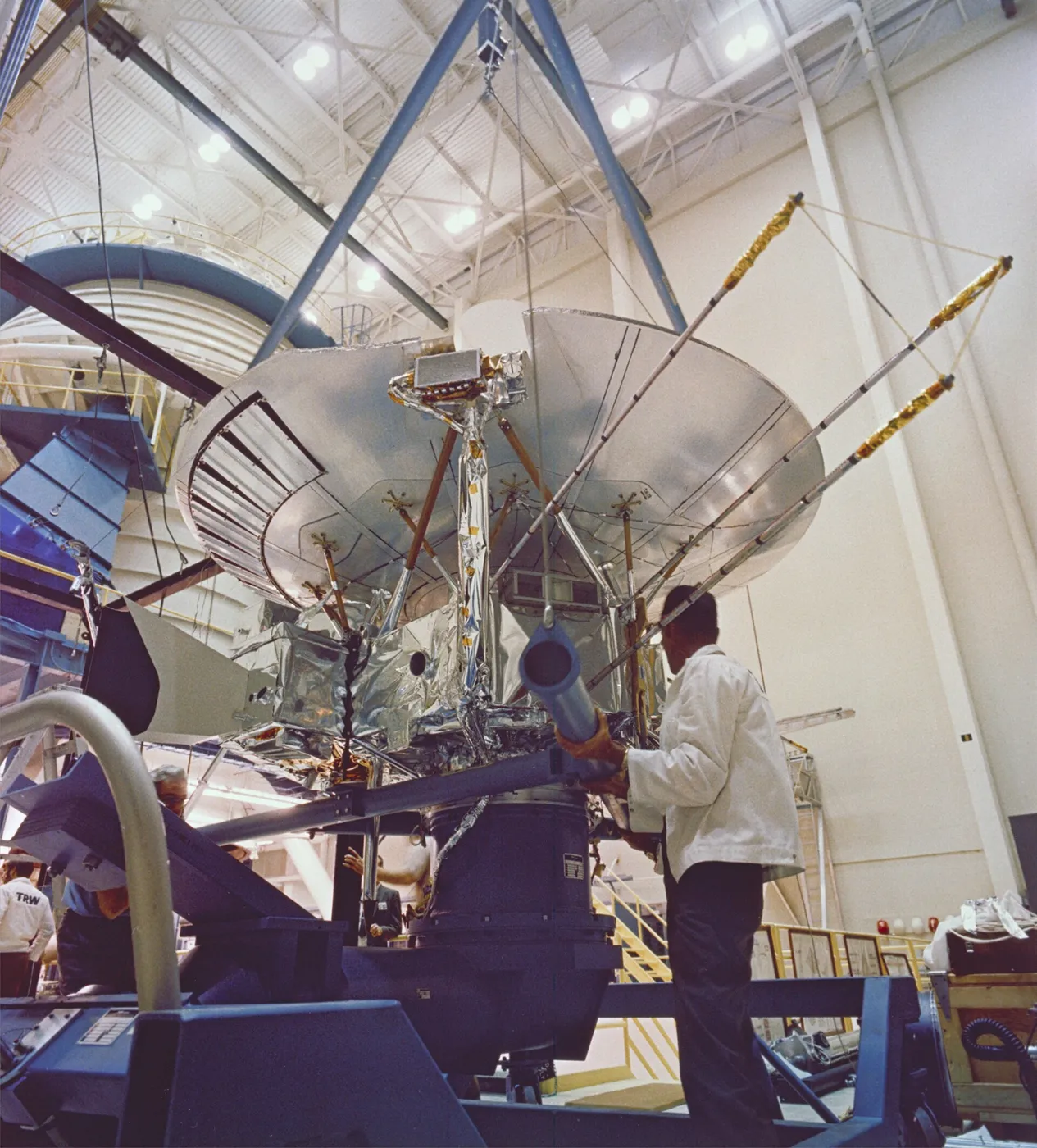
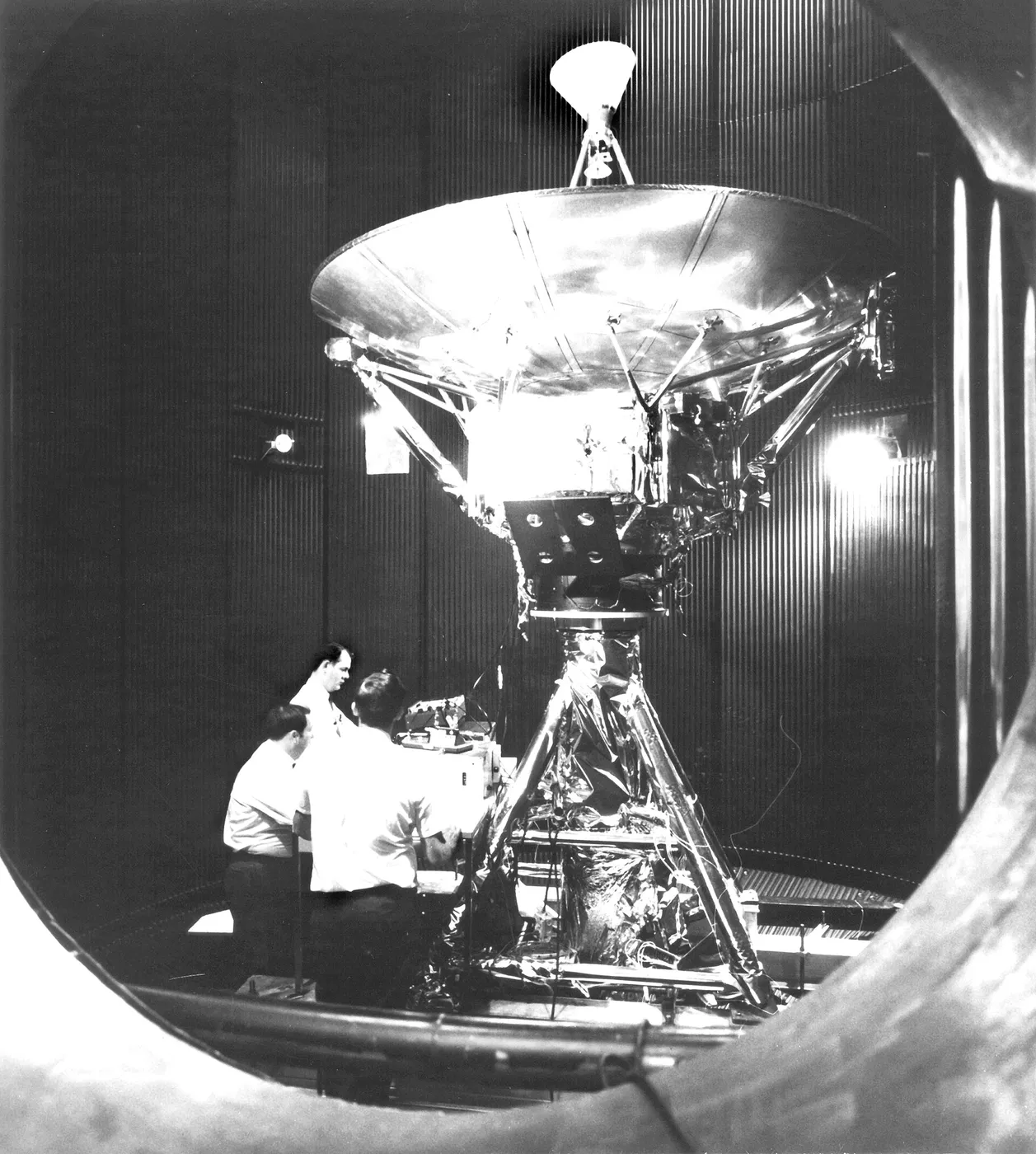

Pioneer 4 finally gave the programme something to celebrate. Launched on 3 March 1959, another JPL probe carried aloft by a Juno II, it was aimed to sweep close past the Moon and carry on into deep space.
The rocket at last performed well enough, and Pioneer 4 became the first American spacecraft ever to escape the pull of the Earth. It passed the Moon at a distance of around 60,000 kilometres — too far, as it turned out, for the light sensor it carried to trigger, so no lunar data came back — and then coasted onward into the dark.
Freed of the Earth, the little probe settled into an orbit around the Sun, the first US object to do so. It was a modest triumph — no close look at the Moon, no images — but after four straight disappointments it proved the Pioneers could at least slip the bonds of Earth, and it closed the programme's lunar chapter on a hopeful note.
After four failures, this one worked well enough. In March 1959 Pioneer 4 became the first American spacecraft to escape Earth's gravity altogether, passing the Moon at about 60,000 kilometres and continuing into orbit around the Sun, where it presumably remains.
It missed by too much to do its job. The photoelectric sensor built to trigger on the Moon's brightness never fired, because the spacecraft passed roughly twice as far away as the design required, so no lunar photography or close-range measurement took place. It did track successfully to some 655,000 kilometres, a communications record at the time, and it demonstrated that escaping Earth was possible — which after four consecutive losses was not a trivial thing to prove.