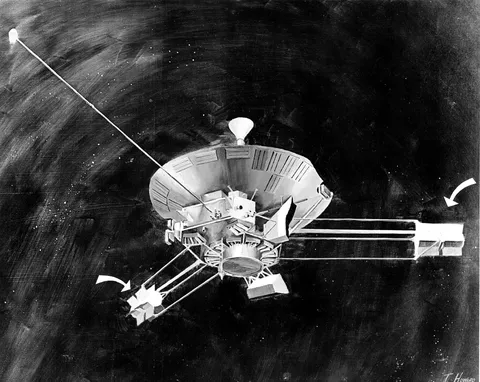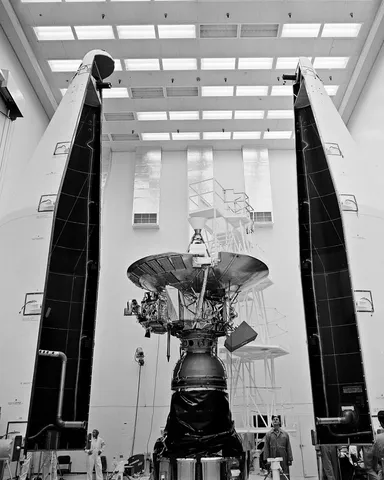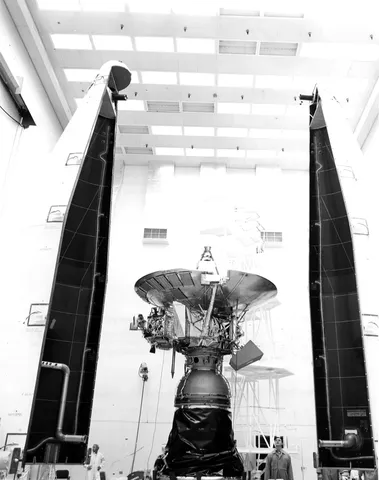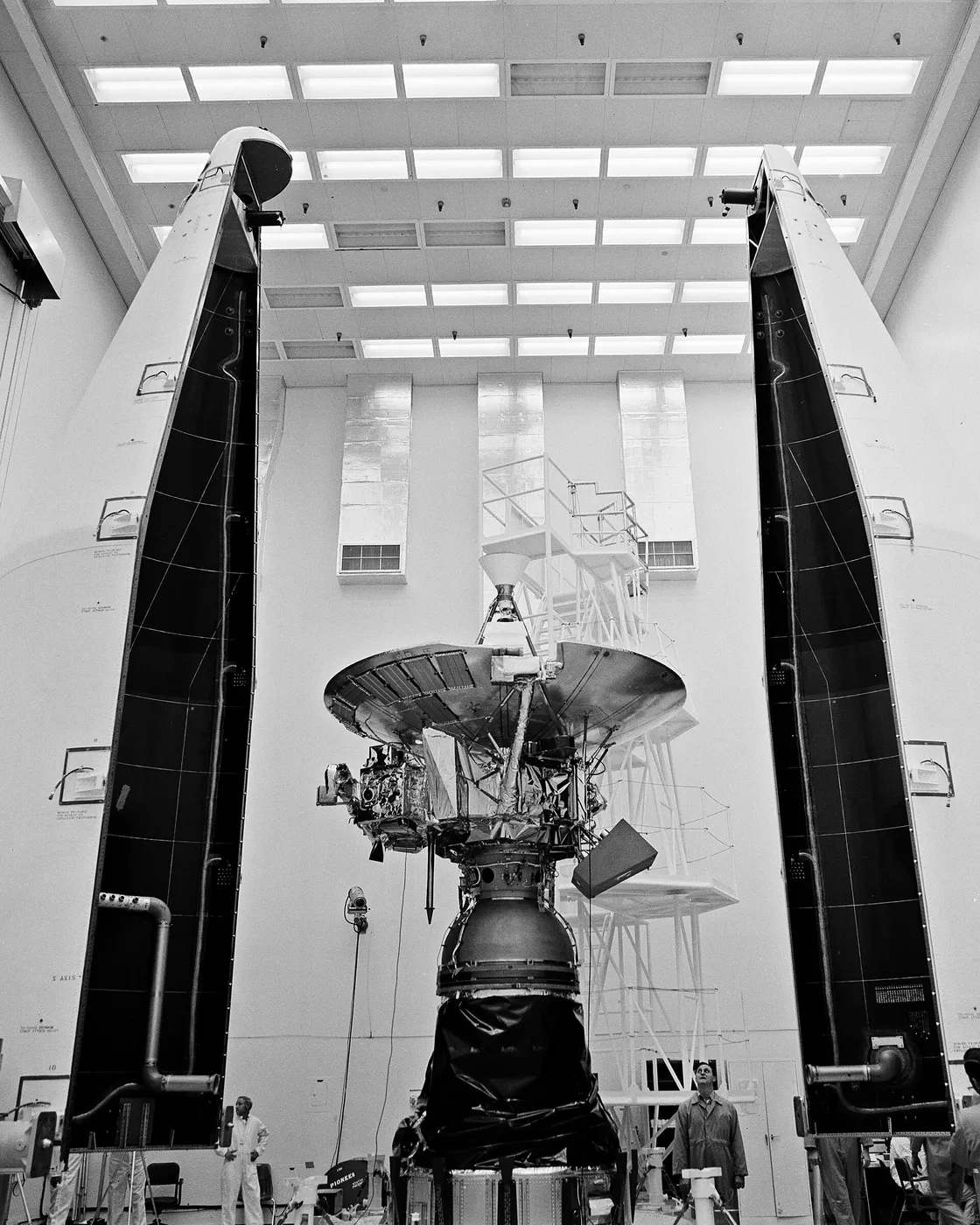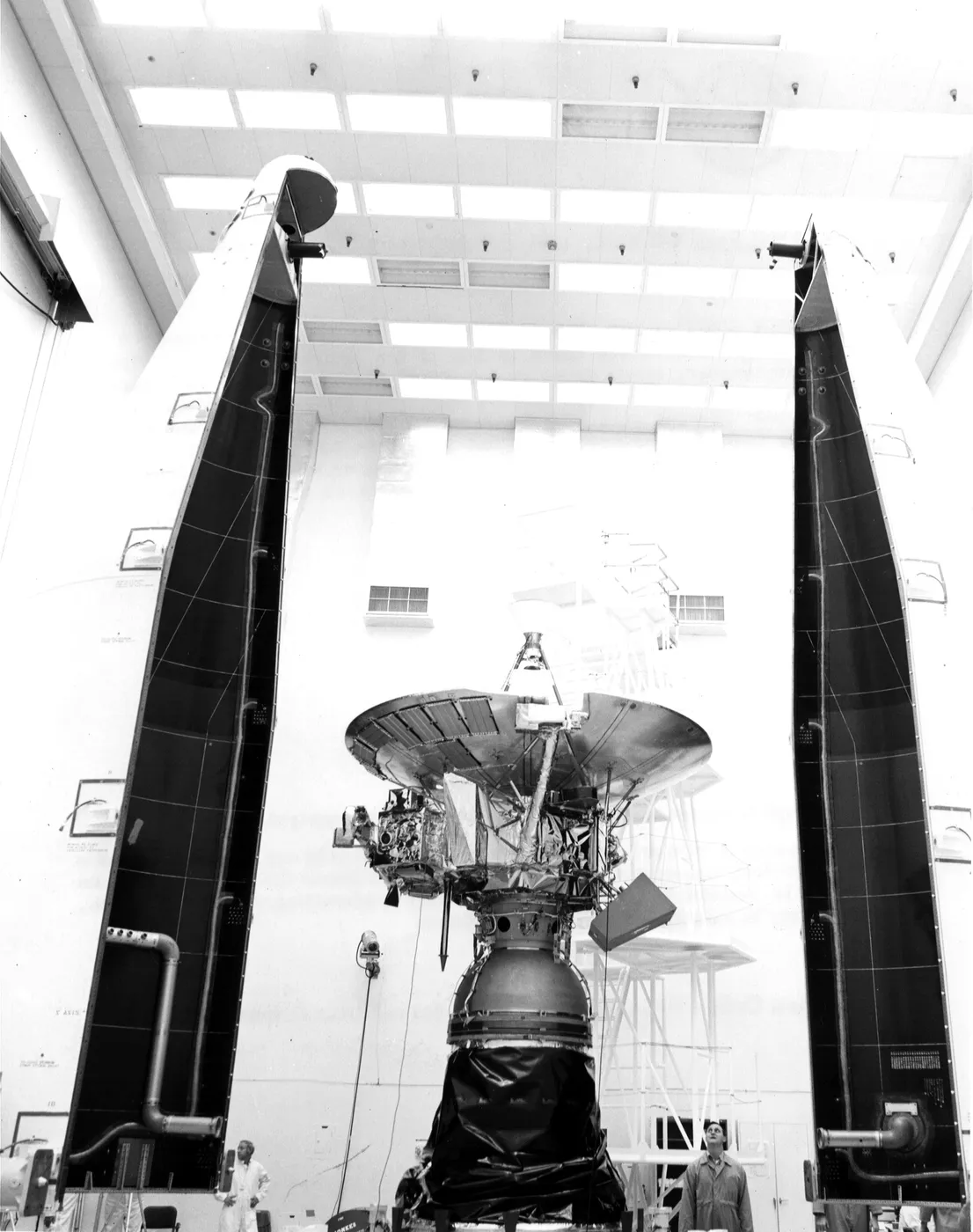
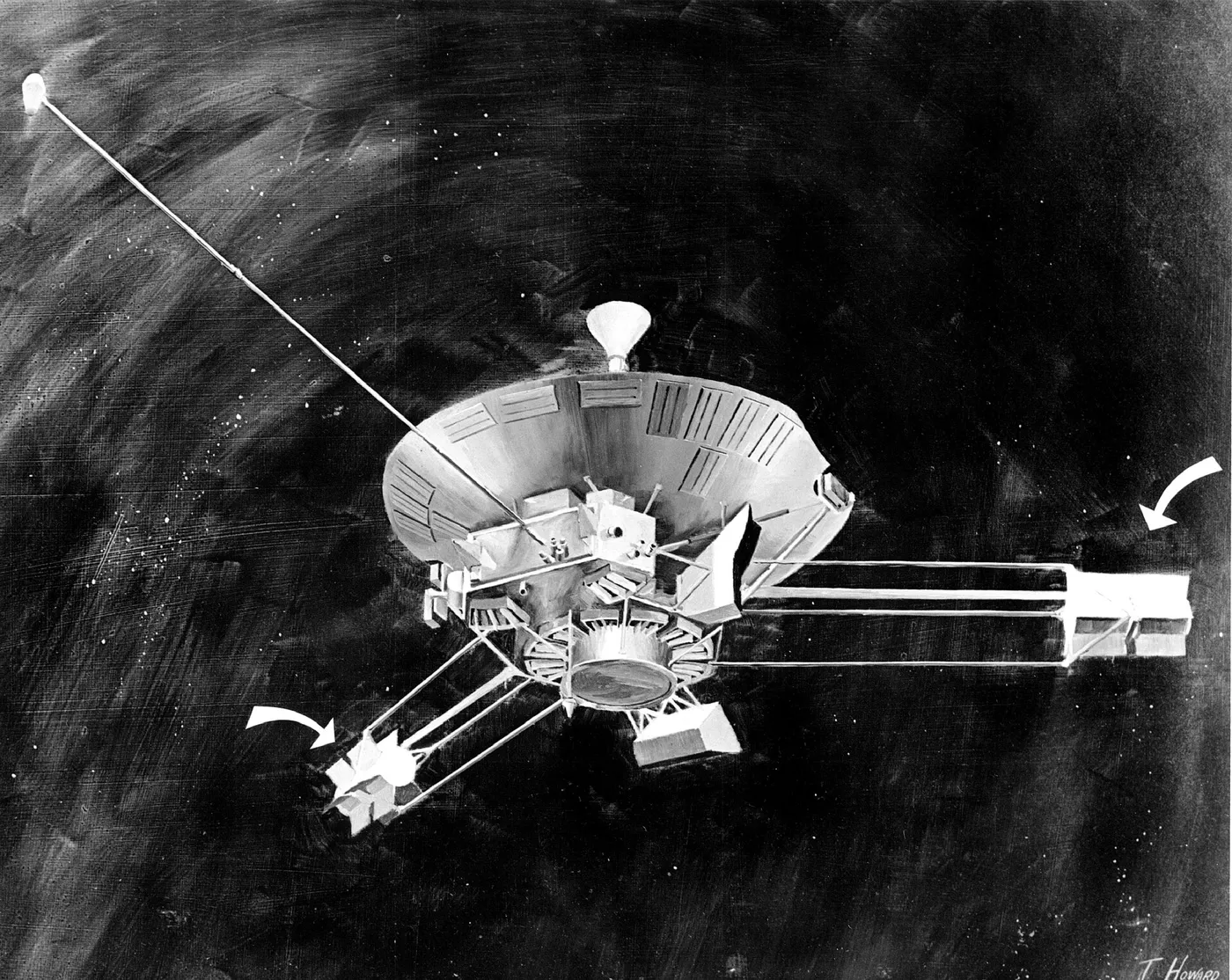

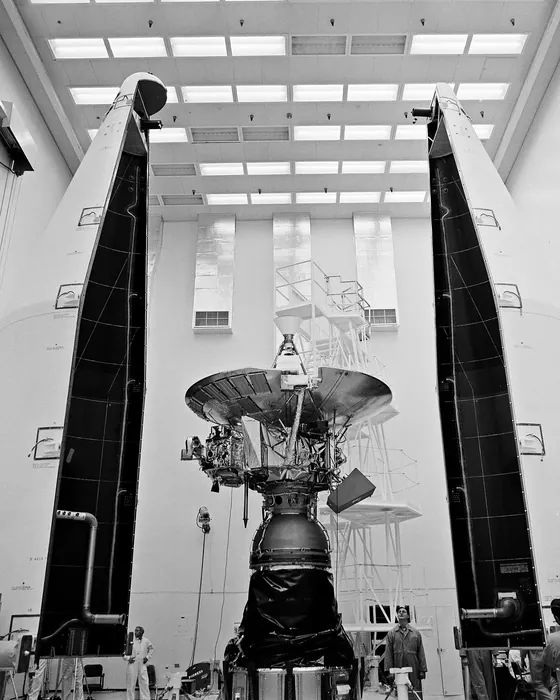
Pioneer 11 was Pioneer 10's near-identical twin, launched a year later on 5 April 1973 to follow its sibling out through the asteroid belt and on to Jupiter. Having watched the first craft survive the crossing, controllers grew bolder with the second.
On 3 December 1974 Pioneer 11 raced past Jupiter at just under 43,000 kilometres — three times closer than Pioneer 10 had dared — plunging deep into the planet's punishing radiation to capture sharper data and the first good views of its polar regions. It too carried the engraved plaque, a second copy of humanity's calling card bound for the emptiness beyond the planets.
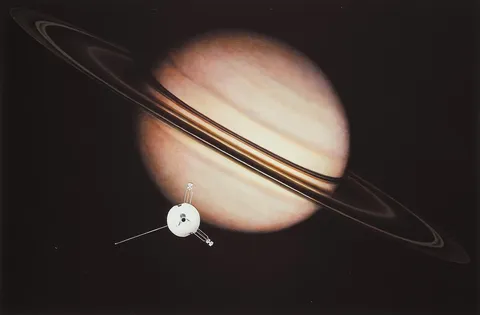
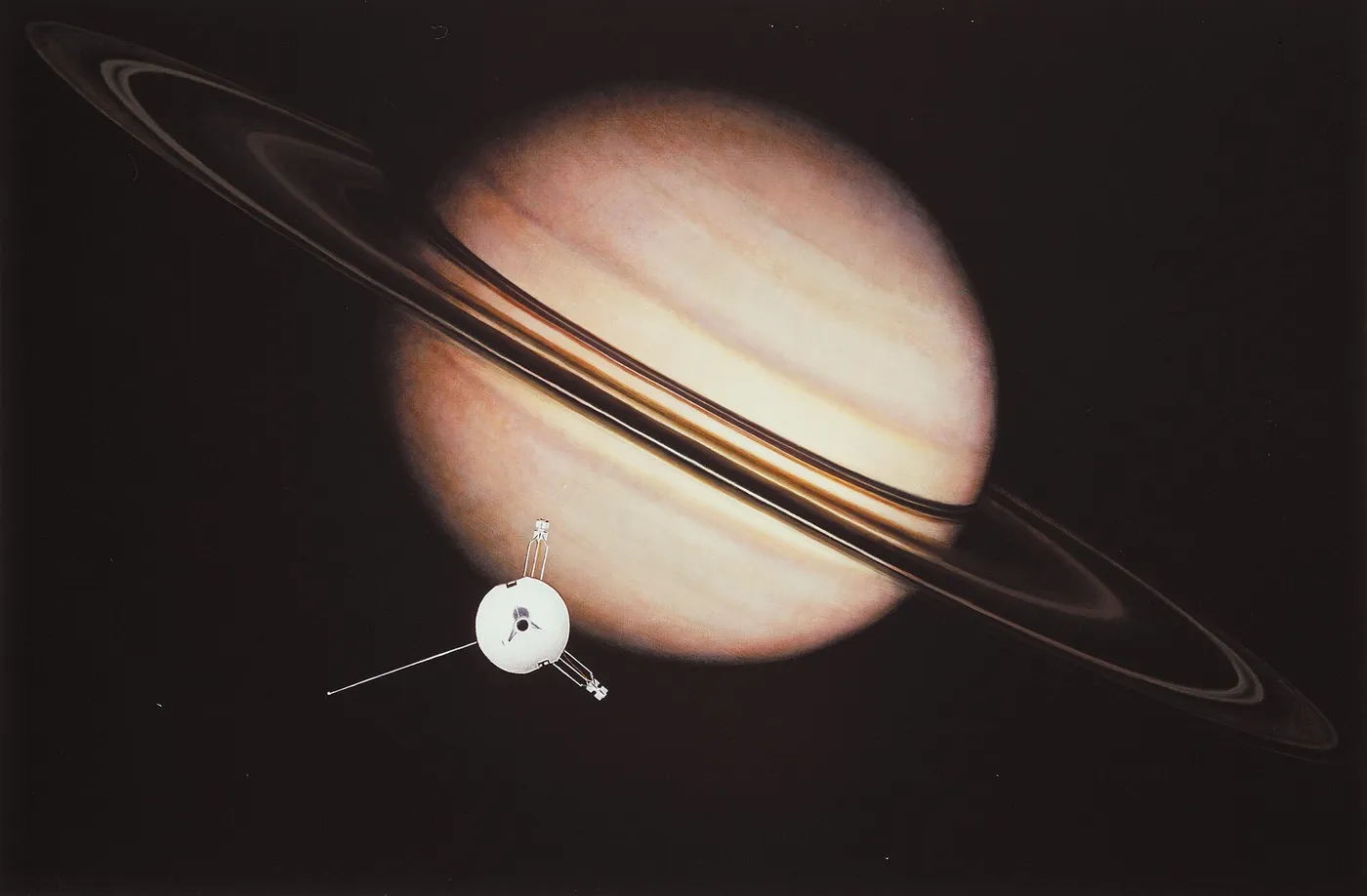
But the flyby was more than an end in itself. Mission planners used Jupiter's immense gravity to hurl the spacecraft clear across the solar system toward Saturn, which it reached in 1979 to become the first probe ever to visit the ringed planet. Like its twin, Pioneer 11 then carried on outward, coasting endlessly beyond the reach of the Sun's planets.
Pioneer 11 did something its twin could not: it used Jupiter's gravity to change course entirely, swinging over the planet's pole in December 1974 and being flung back across the solar system to arrive at Saturn five years later. It was the first spacecraft to reach Saturn and the first to use a giant planet as a slingshot to another one.
At Saturn it acted deliberately as a scout. Controllers sent it through the ring plane along the exact path the Voyagers were due to follow, accepting the risk of destruction to find out whether the region was safe. It survived, discovered a previously unknown ring and at least one small moon, and cleared the way for the far more capable spacecraft behind it. Its own power faded steadily as its plutonium decayed, and the last coherent contact came in November 1995, when the spacecraft could no longer keep its antenna pointed at Earth. It carries the same plaque as its twin, on a different course out of the solar system.