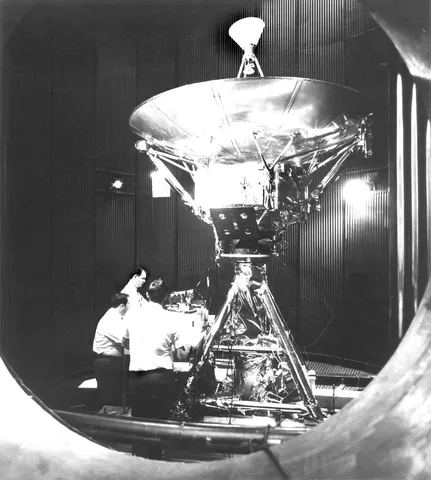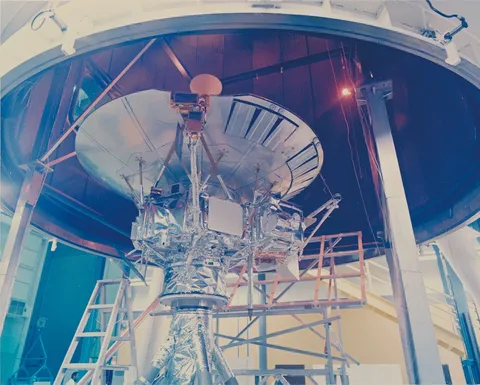
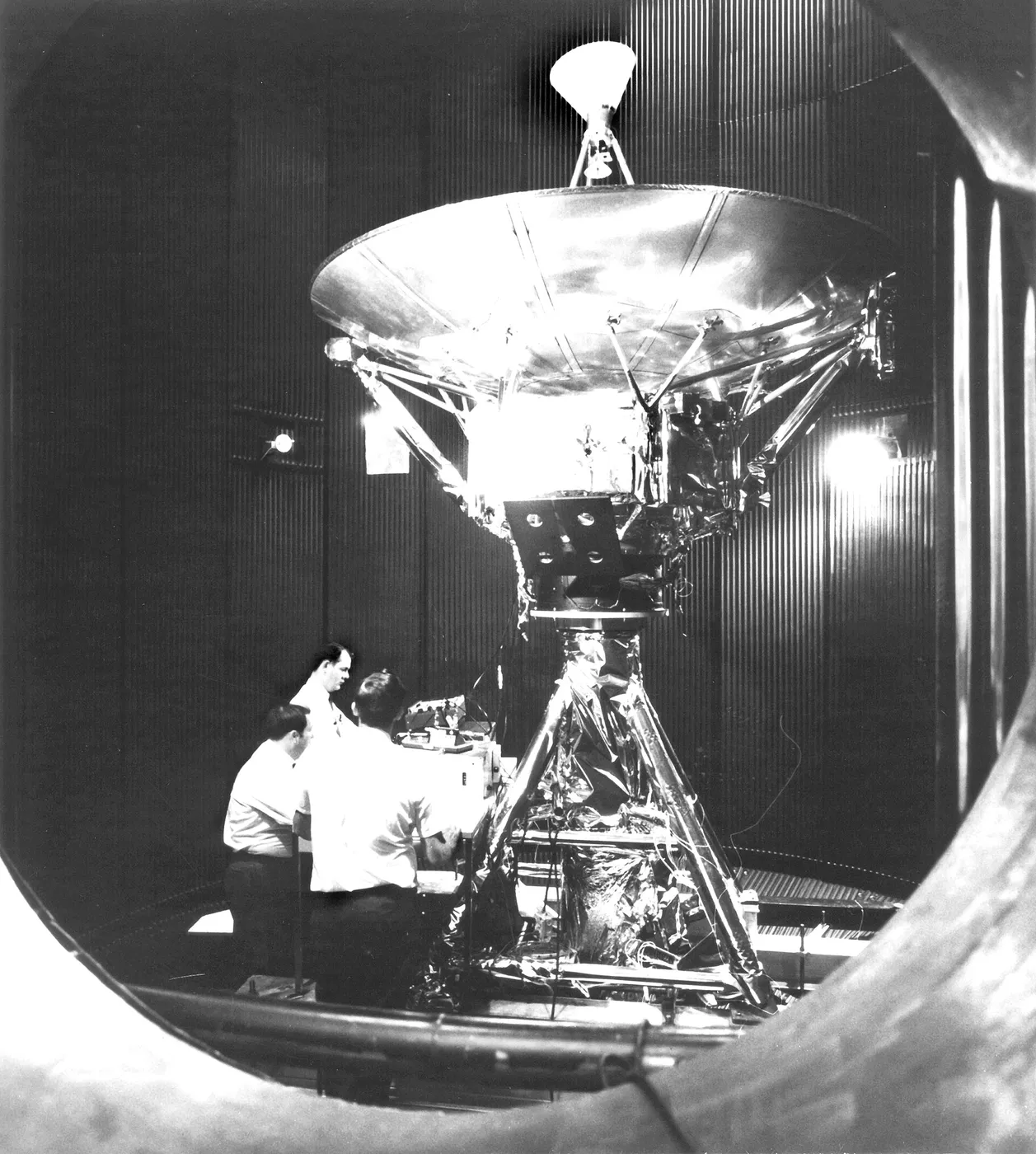

More than a decade after the faltering lunar Pioneers, the name was revived for one of the boldest ventures NASA had yet attempted. Pioneer 10, launched on 2 March 1972, was built to do what nothing had done before: cross the asteroid belt intact and make the first close study of Jupiter. To reach the giant planet quickly it left the Earth faster than any craft before it, driven by an extra rocket stage to some 50,000 kilometres an hour.
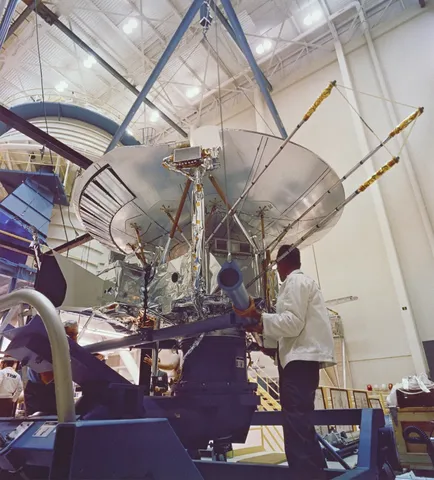
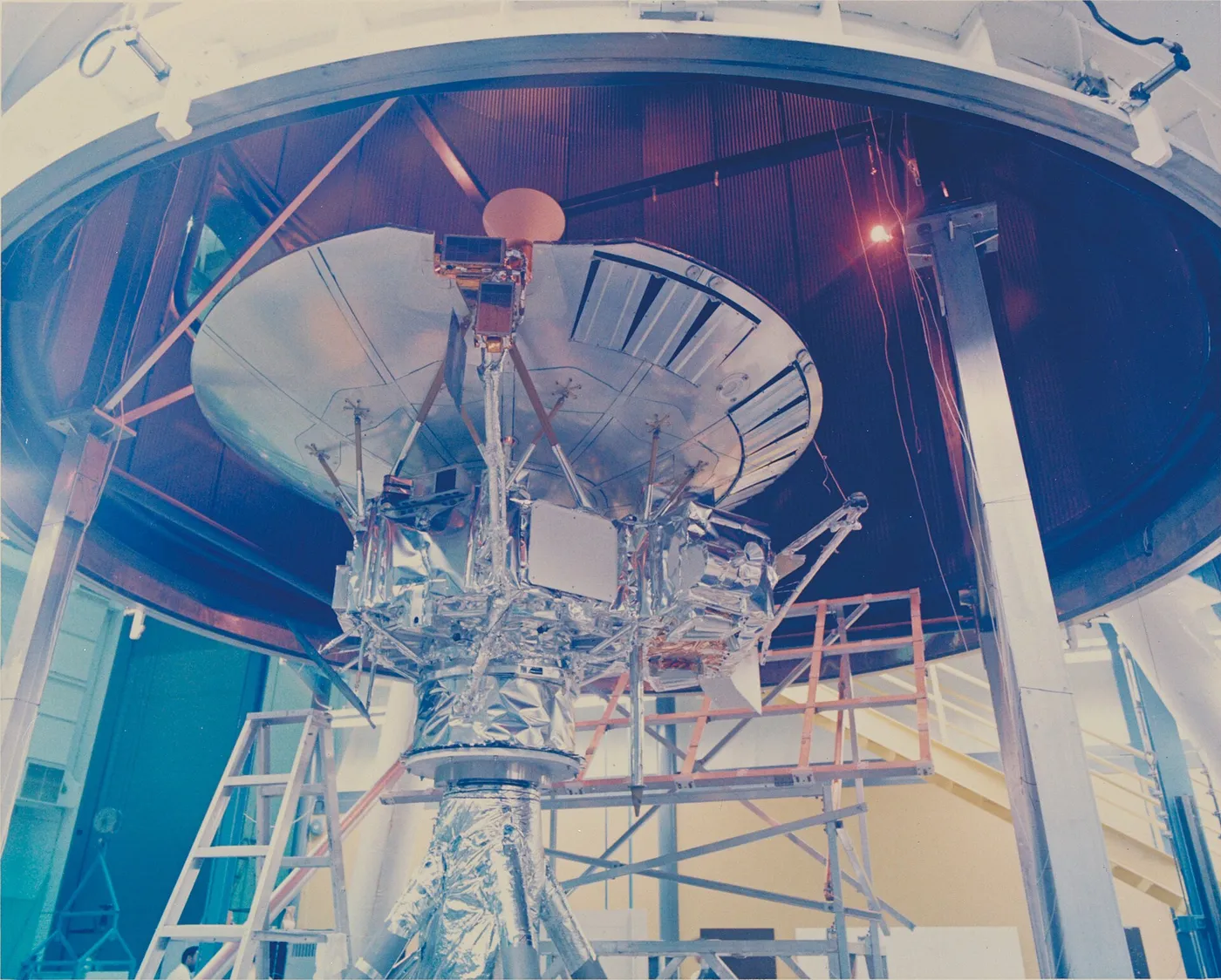
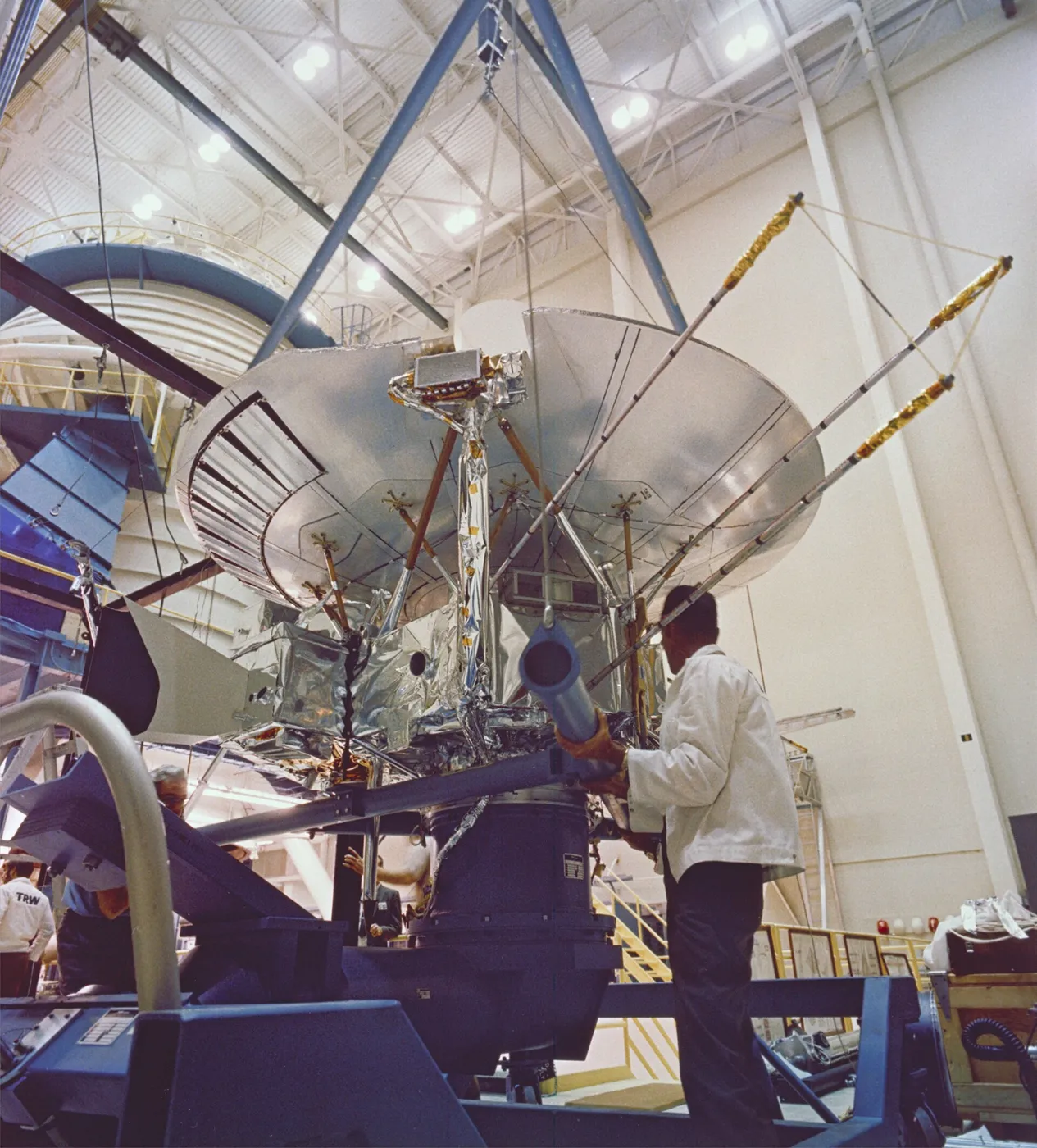
The spacecraft — a compact hexagonal body slung beneath a broad dish antenna, drawing its power from nuclear generators because sunlight grows so feeble that far out — sailed through the asteroid belt unharmed, dispelling fears that the region was an impassable storm of debris. On 3 December 1973 it swept past Jupiter at about 130,000 kilometres, sending home the first close-up pictures of the banded giant and the first measurements of its ferocious radiation.

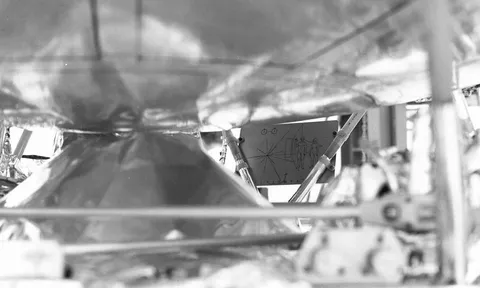
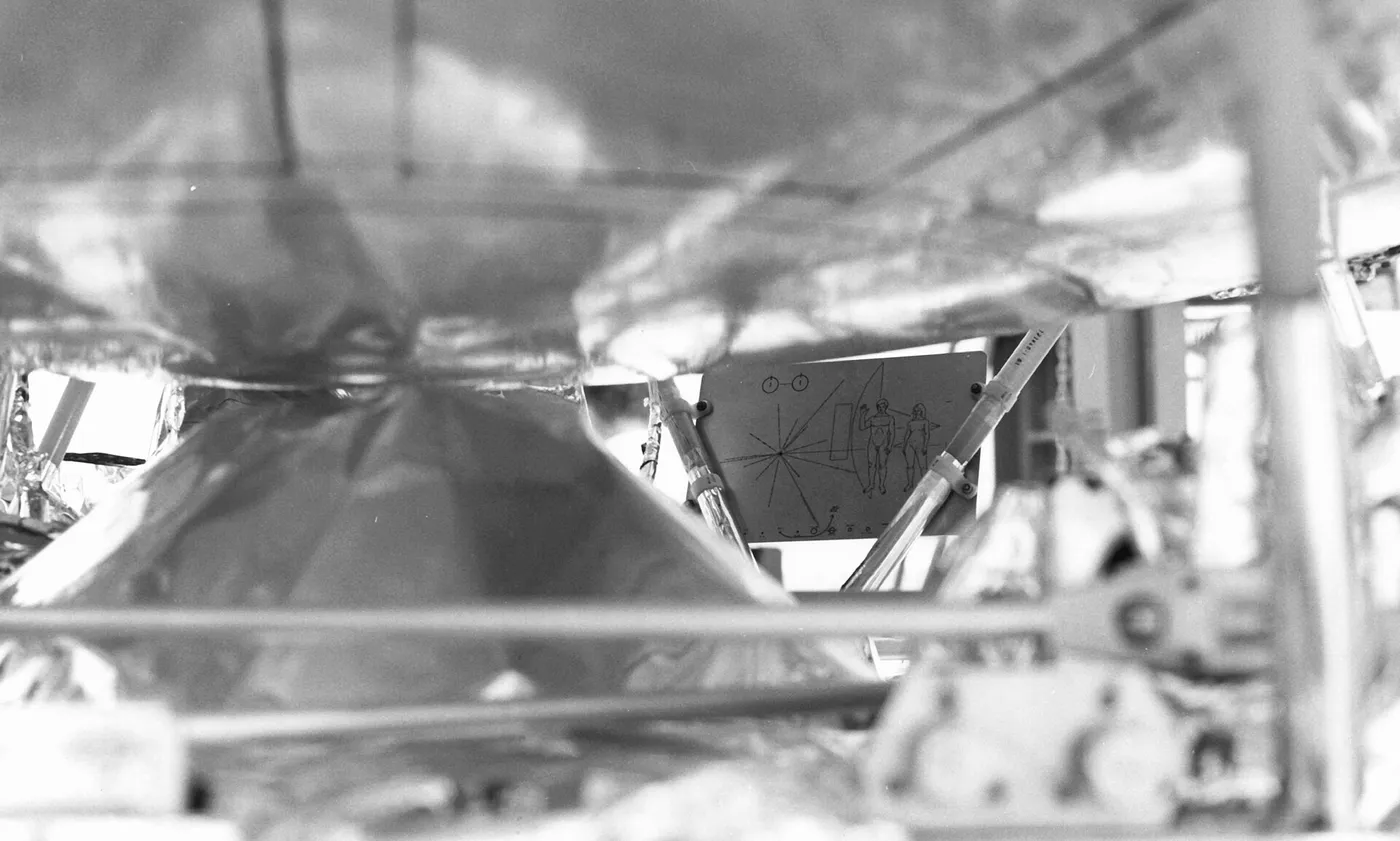
Its work at Jupiter done, Pioneer 10 was flung onward toward the fringes of the solar system, becoming the first spacecraft ever set on a course to leave it entirely. Fixed to its frame was an engraved plaque depicting a man, a woman and the craft's place of origin — a message, however unlikely ever to be read, for any intelligence that might one day come upon it in the gulf between the stars.
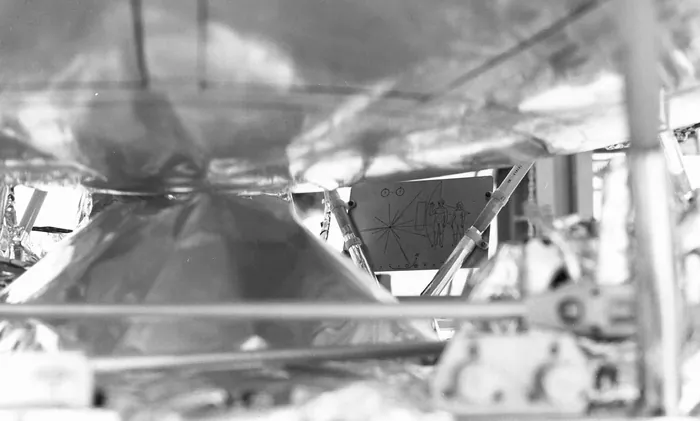
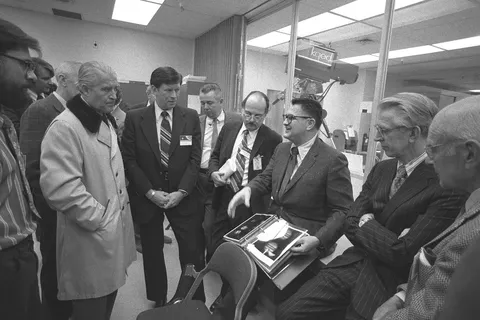
The plaque was an afterthought, added in about three weeks. Carl Sagan, Frank Drake and the artist Linda Salzman Sagan designed a gold-anodised aluminium plate showing a man and a woman, the spacecraft's origin marked against fourteen pulsars, and the hyperfine transition of hydrogen as a unit of measurement. It attracted immediate criticism, some of it about the nudity and some about which humans had been chosen to represent everybody.
The spacecraft then produced a genuine physics puzzle. Precise tracking showed it decelerating very slightly more than gravity alone could explain — the Pioneer anomaly — and for two decades the effect was seriously discussed as possible evidence of new physics. It was eventually resolved in 2012 as thermal recoil: heat radiating asymmetrically from the spacecraft's own nuclear generators, pushing it gently sunward. The last faint signal was received in January 2003 from about 12 billion kilometres away, thirty years after launch, and it is heading in the general direction of the star Aldebaran — which it will reach in something over two million years, still carrying its plaque.