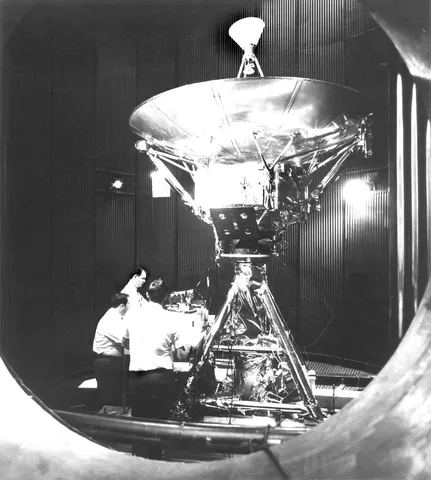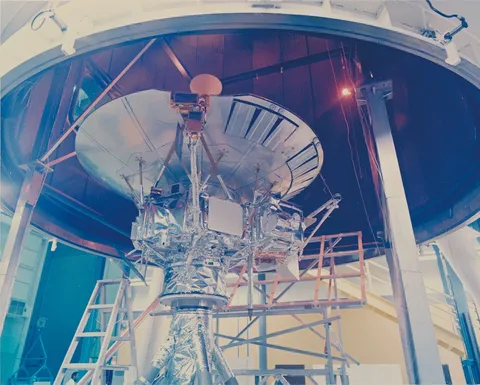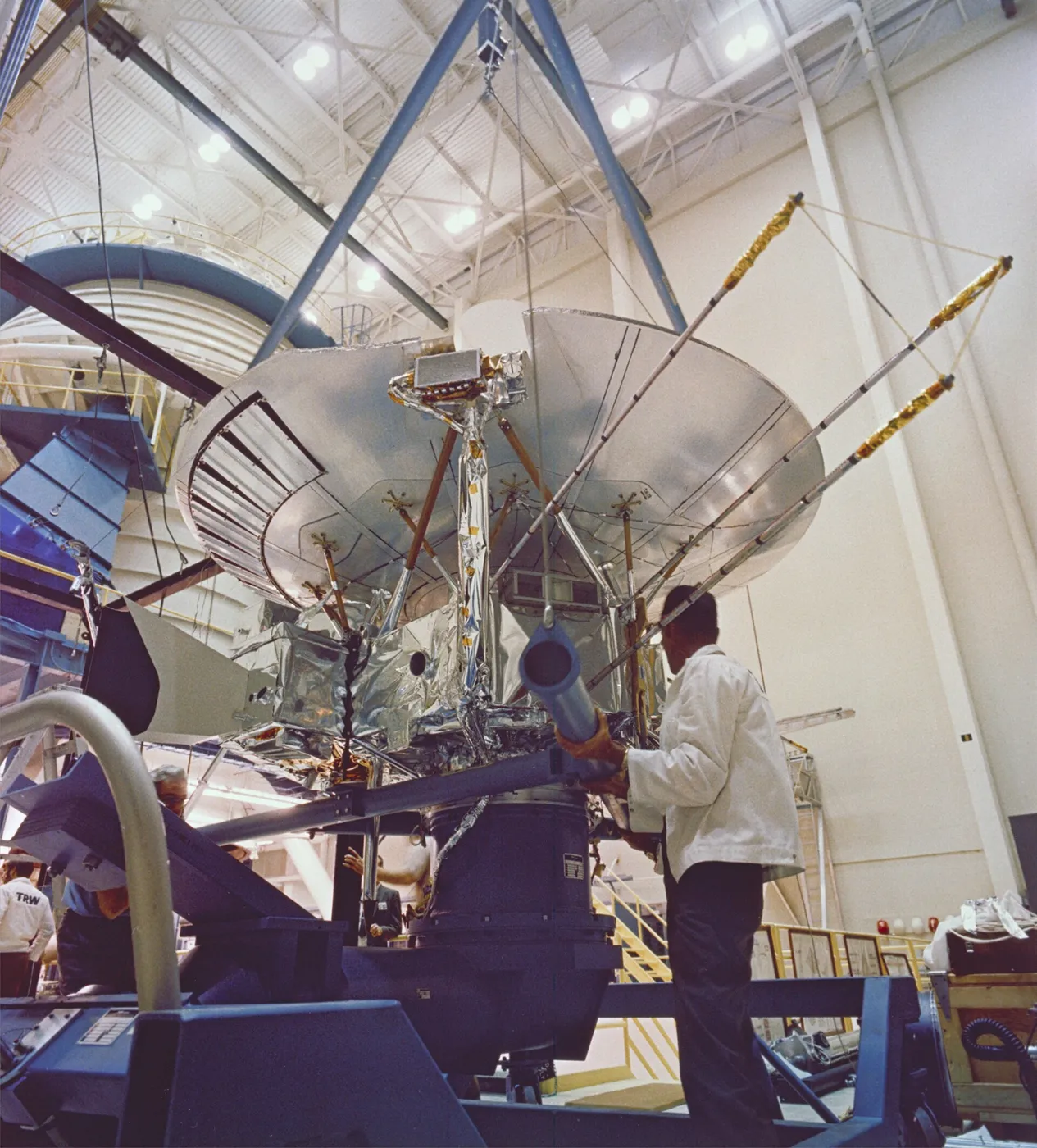
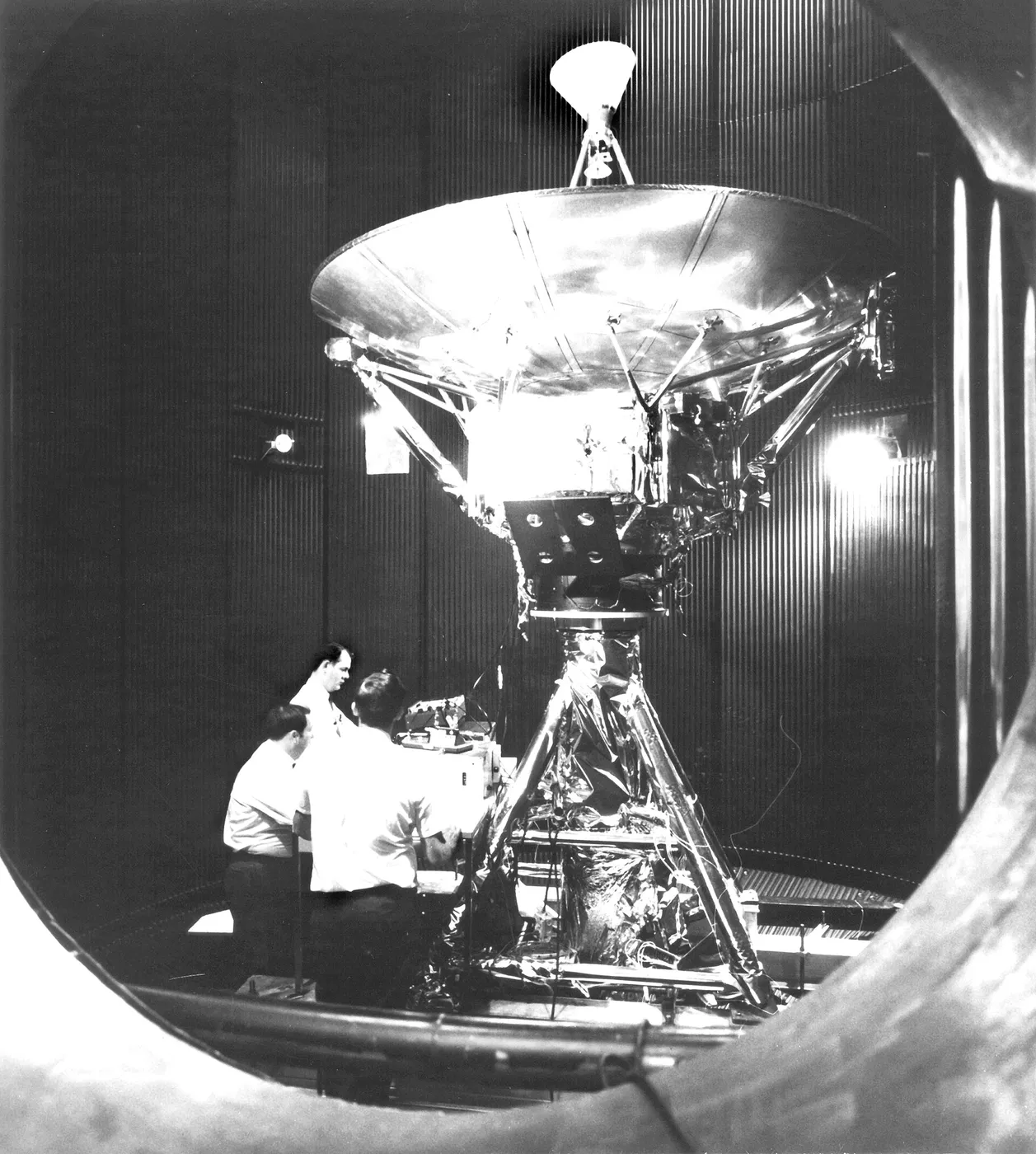

Pioneer 1 holds a quiet distinction: launched on 11 October 1958, only days after NASA opened its doors, it was the first spacecraft the new agency ever sent aloft. Like its ill-fated predecessor it was meant to reach the Moon and slip into orbit around it, gathering data on radiation and cosmic dust along the way.
The rocket performed better than Pioneer 0's, but still fell short. Its upper stage delivered too little velocity, and instead of escaping toward the Moon the probe arched out to roughly 113,000 kilometres — about a third of the way — before the Earth's gravity dragged it back.
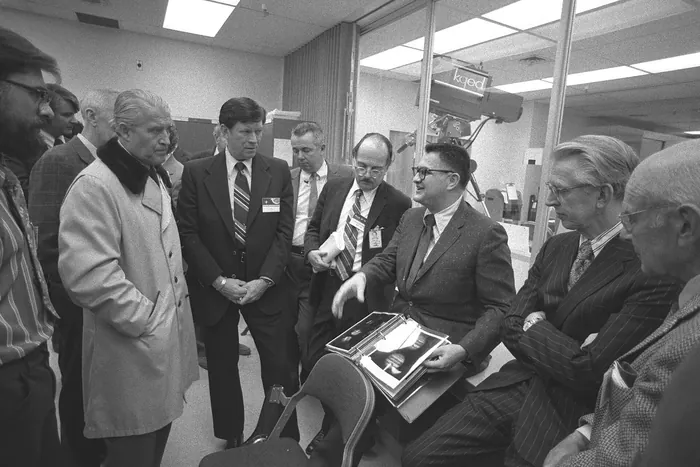
It reentered the atmosphere less than two days after launch. The Moon had eluded it, yet the flight was far from wasted: during its brief climb Pioneer 1 returned valuable measurements of the newly discovered radiation belts encircling the Earth, an early sign that even a failed lunar shot could pay scientific dividends.
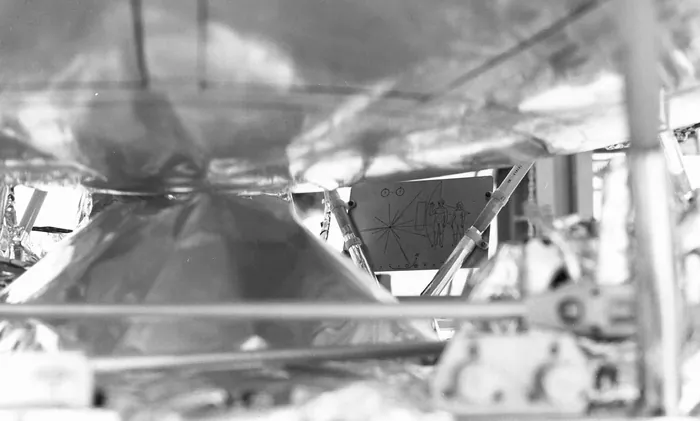
This was the first spacecraft NASA ever launched, eleven days after the agency opened its doors. It failed to reach the Moon — a guidance error left it short of the velocity needed — but it climbed to about 113,800 kilometres, by far the greatest distance anything had travelled from Earth at that point.
That altitude turned the failure into a genuine scientific mission. On the way out and back it mapped the extent of the radiation belts discovered by Explorer 1 earlier that year, measured the micrometeorite environment and made the first measurement of the interplanetary magnetic field near Earth. It re-entered after 43 hours, having returned more data than most of the successful missions of its generation.