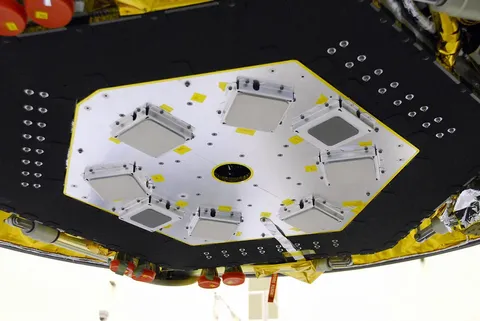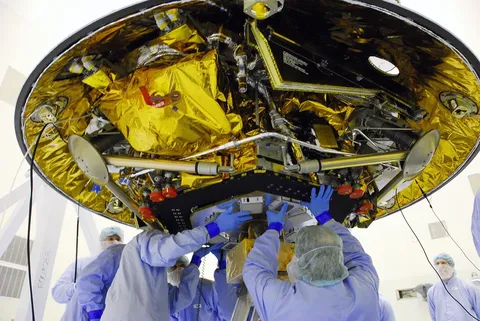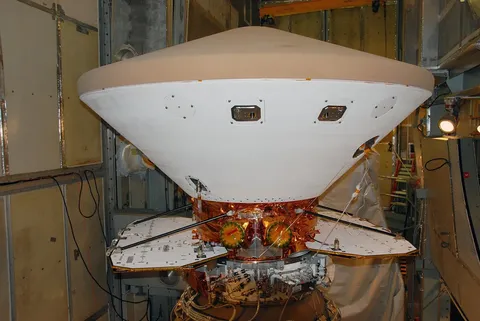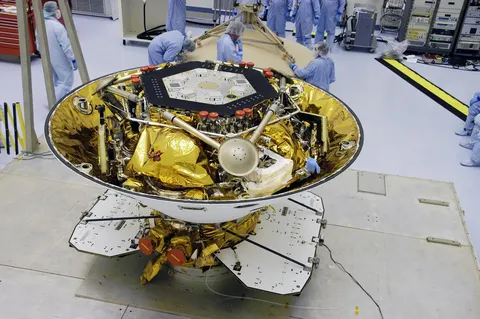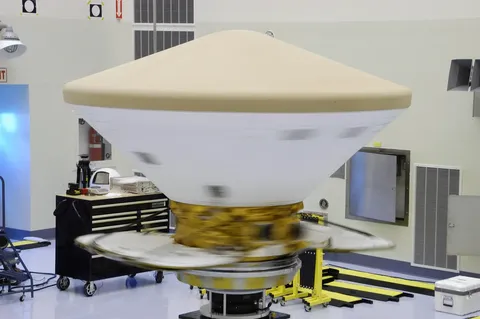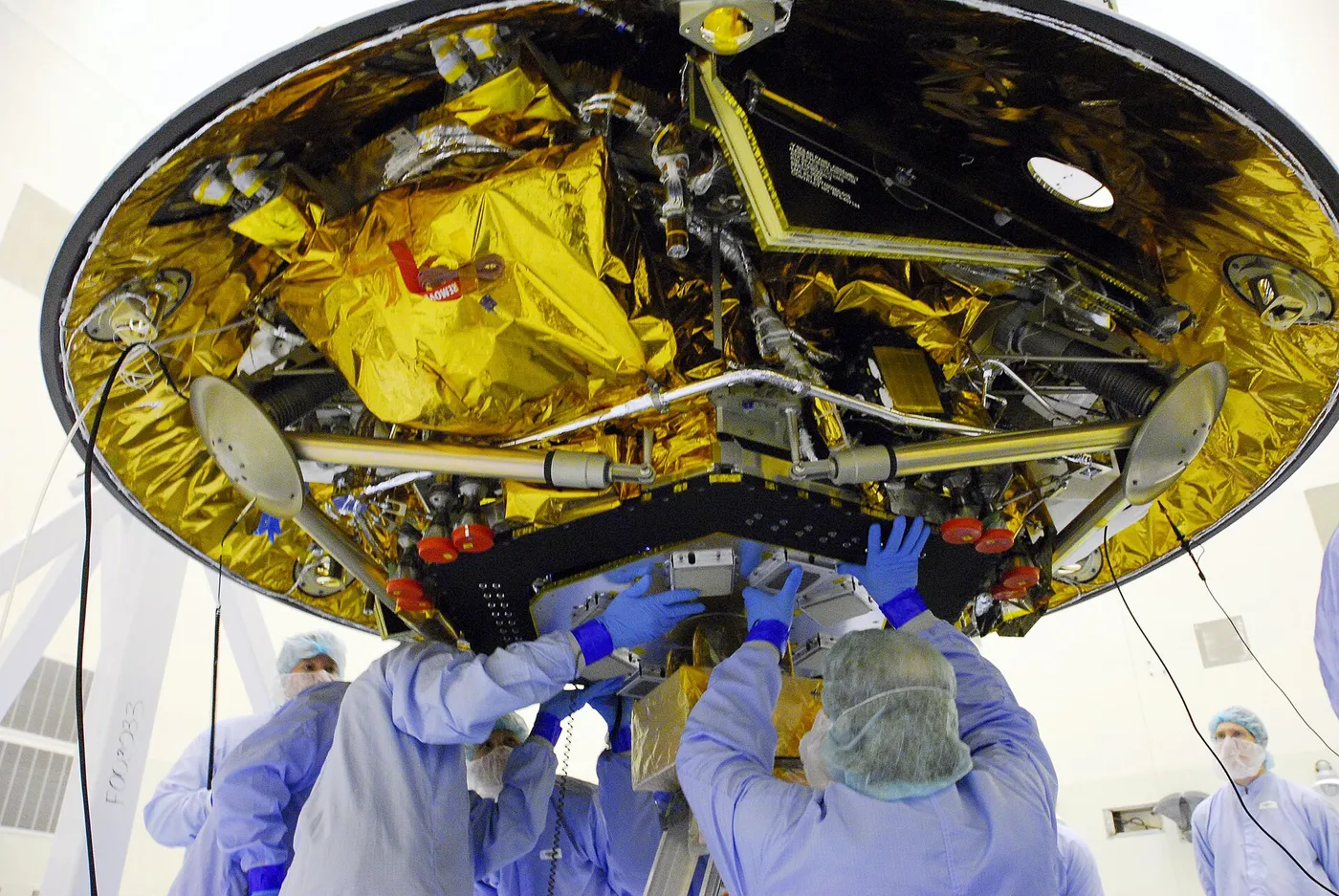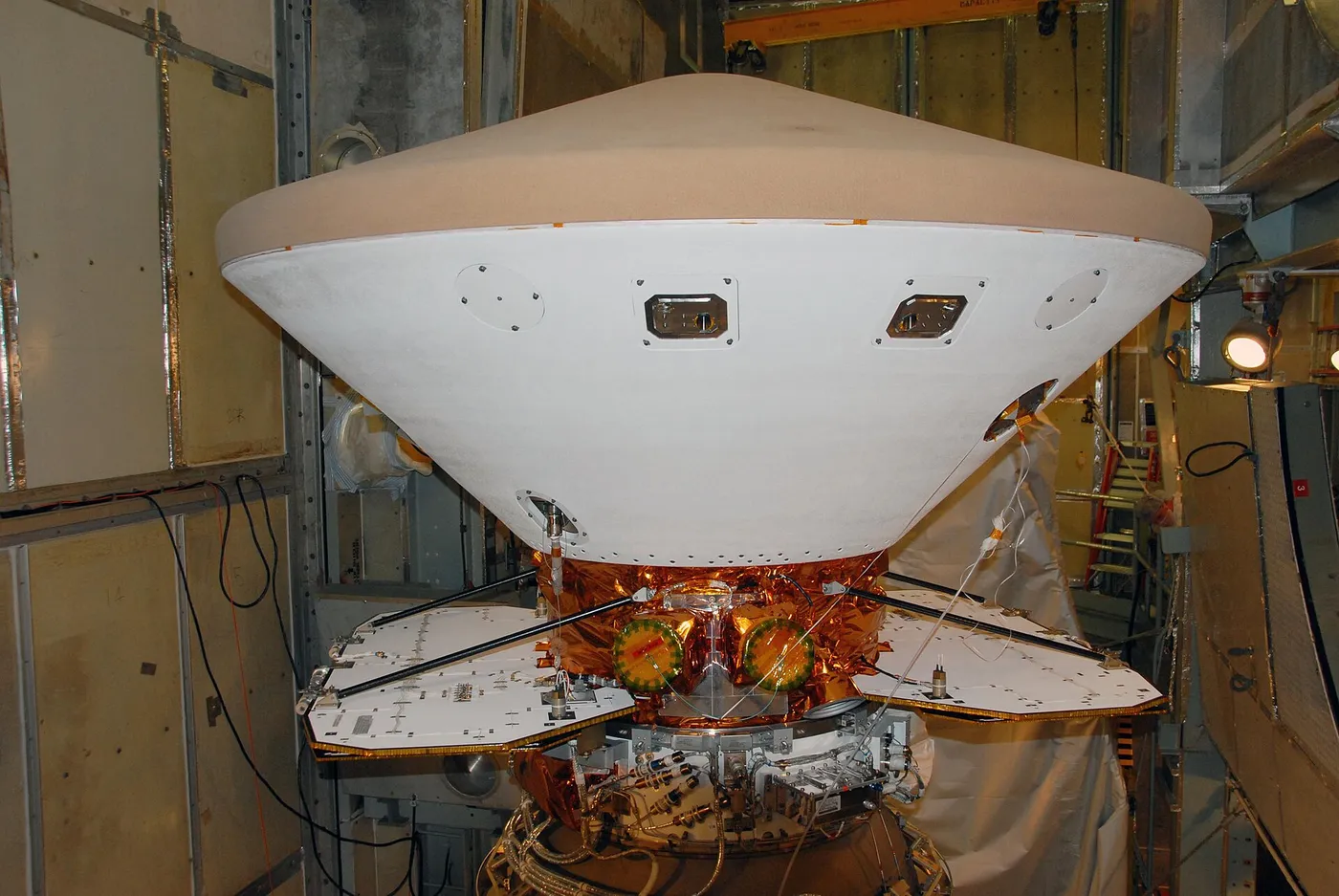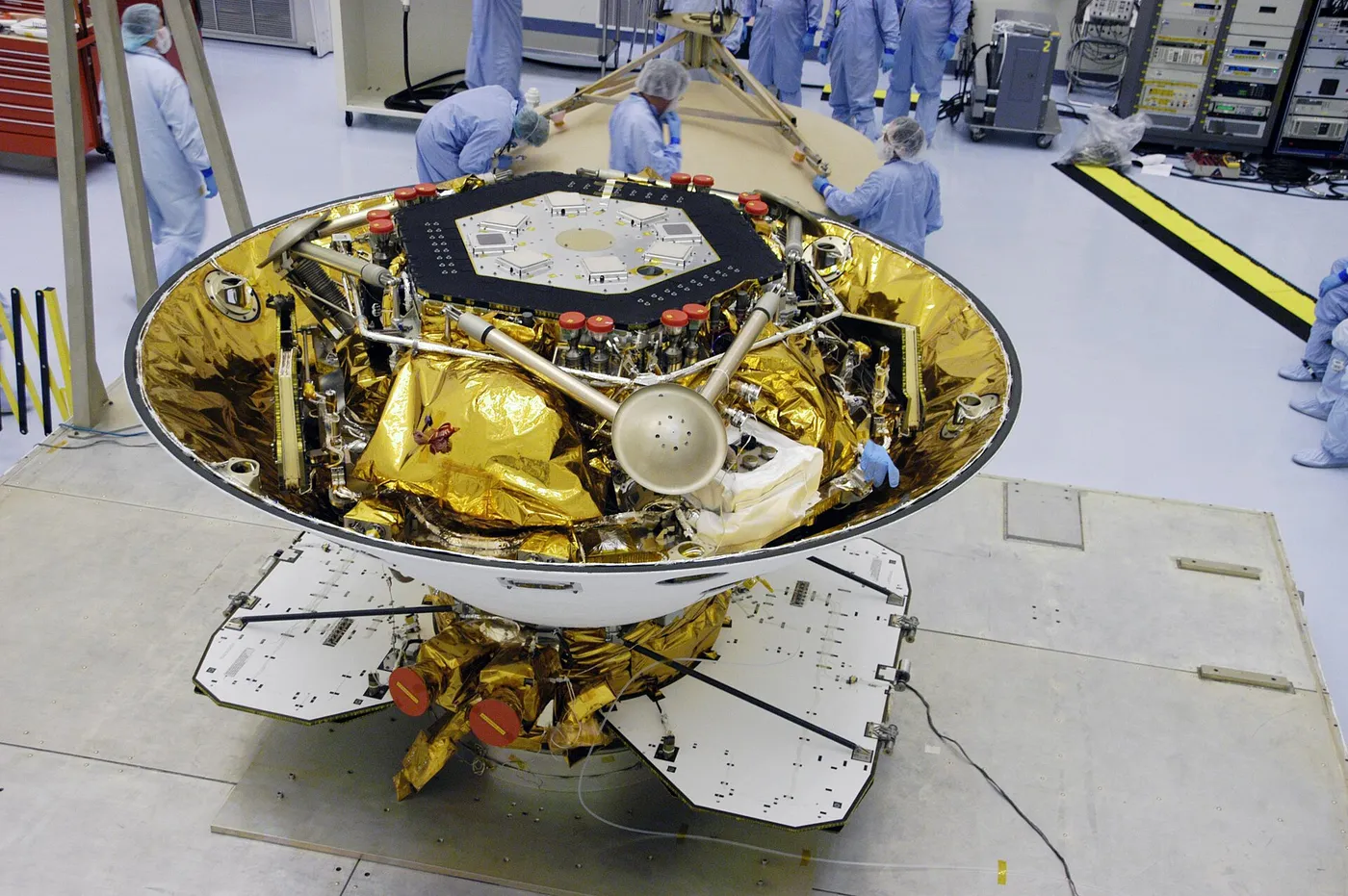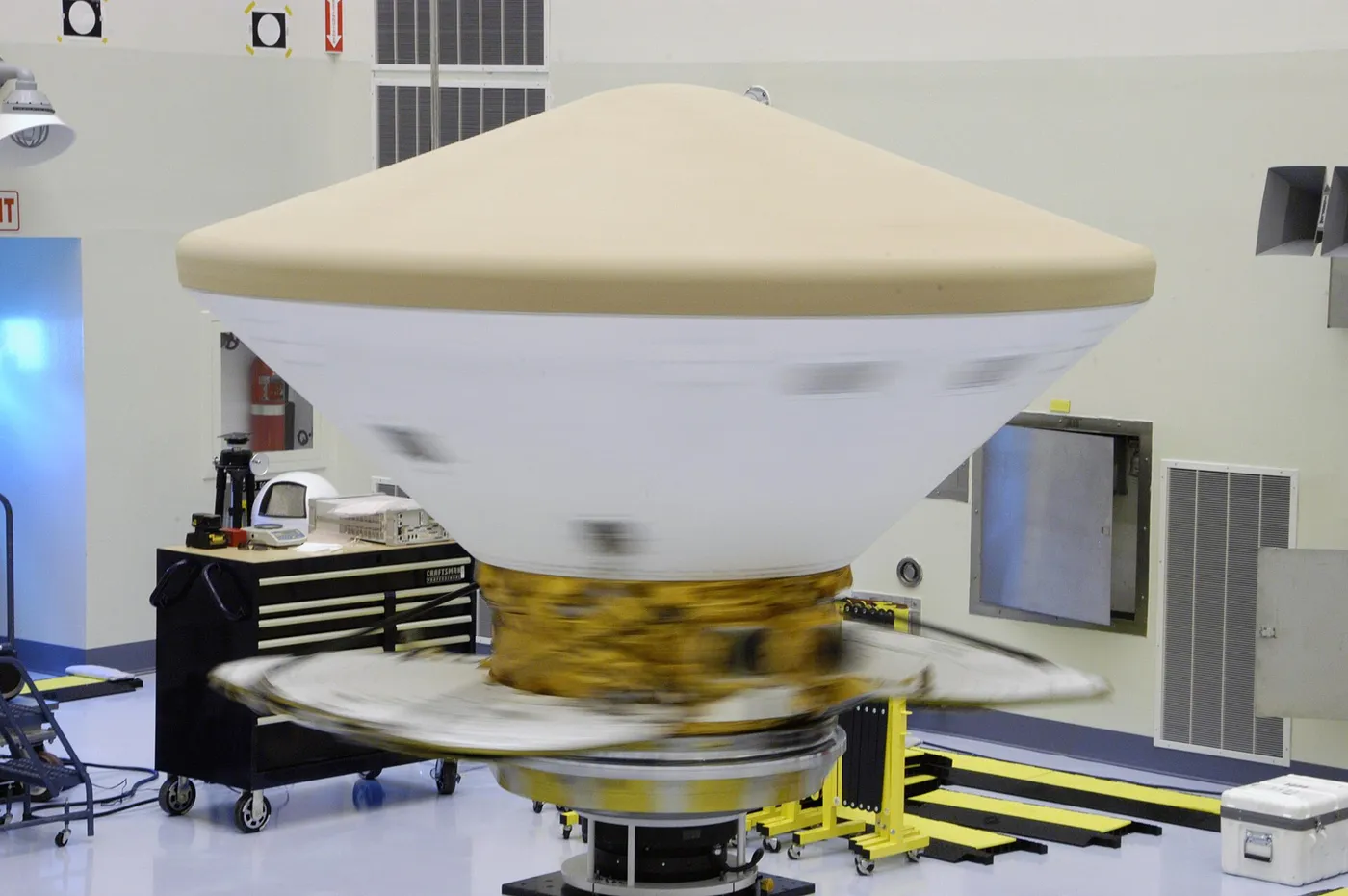
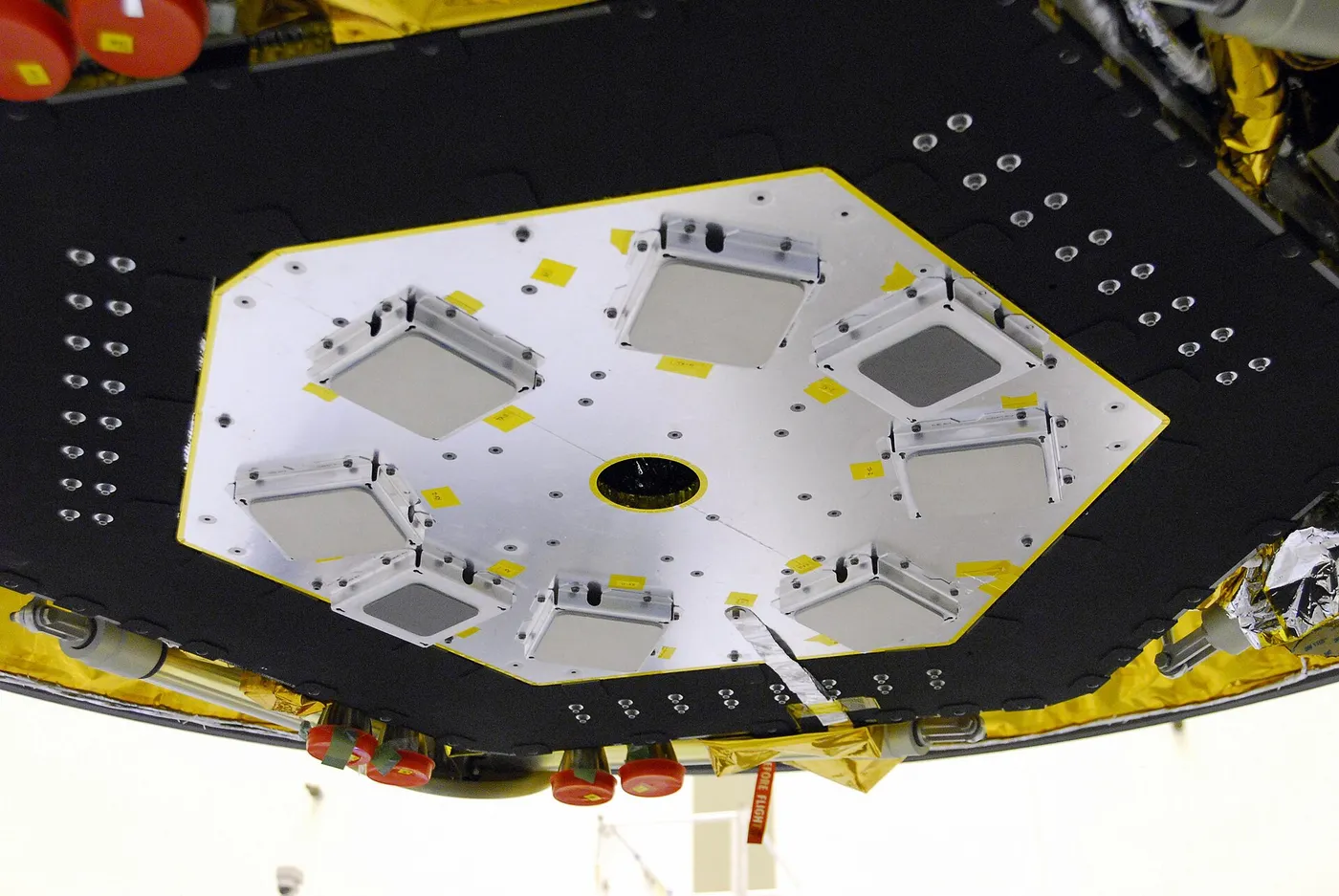

Phoenix was assembled from a dead mission. After Mars Polar Lander was lost in 1999, a nearly complete twin spacecraft sat in storage; the Phoenix proposal rebuilt it with corrected software and improved instruments, and flew the hardware its predecessor never got to use — which is where the name comes from.
It landed in May 2008 far north, at about 68 degrees latitude, deliberately targeting the buried ice that Odyssey's neutron measurements had mapped from orbit six years earlier. Within days its robotic arm scraped a trench and exposed a bright white layer a few centimetres down.
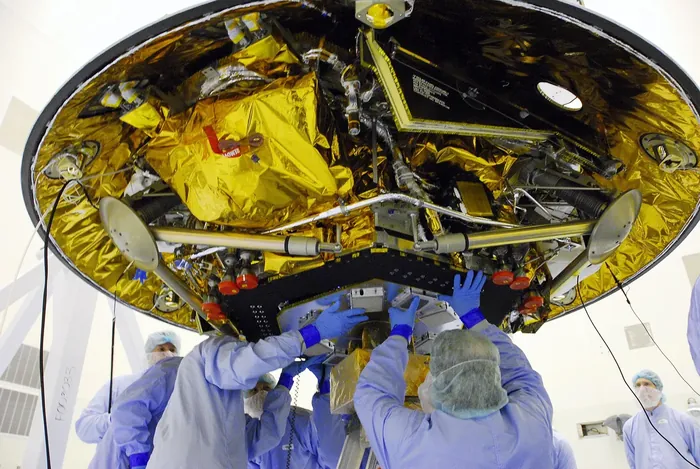
Proving it was ice rather than salt took an elegant piece of observation: the crumbs were photographed again four days later and some had vanished, sublimating directly into the thin air exactly as water ice must. It was the first time water had been touched and directly confirmed on the Martian surface.
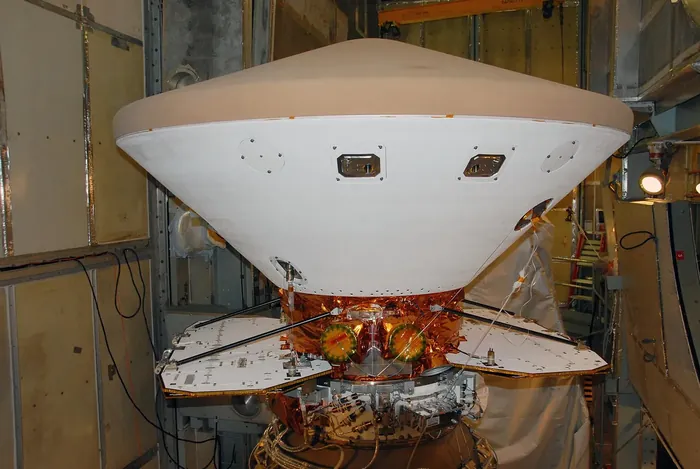
The chemistry lab produced a bigger surprise. The soil contained perchlorate salts at around one per cent — highly reactive compounds that lower the freezing point of water enough to allow liquid brines at Martian temperatures, and which also, in a long-delayed twist, helped explain the confusing Viking biology results of 1976 by destroying organic molecules when heated.
The lander also watched snow falling from clouds, detected by laser as it descended and evaporated before reaching the ground. Solar-powered and in the Arctic, it was always going to die with the season; as winter closed in and frost accumulated on its panels, it fell silent in November 2008. Orbital images later showed its solar arrays collapsed under carbon dioxide ice.