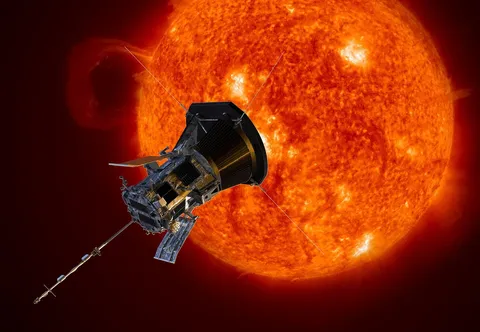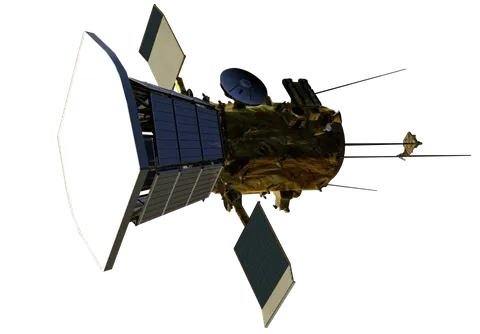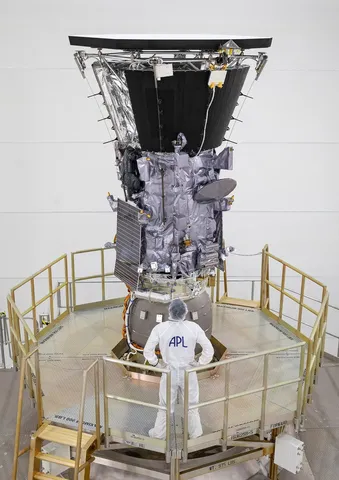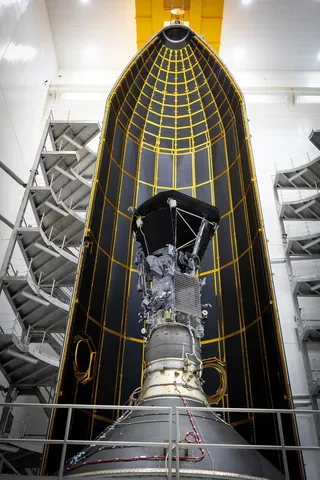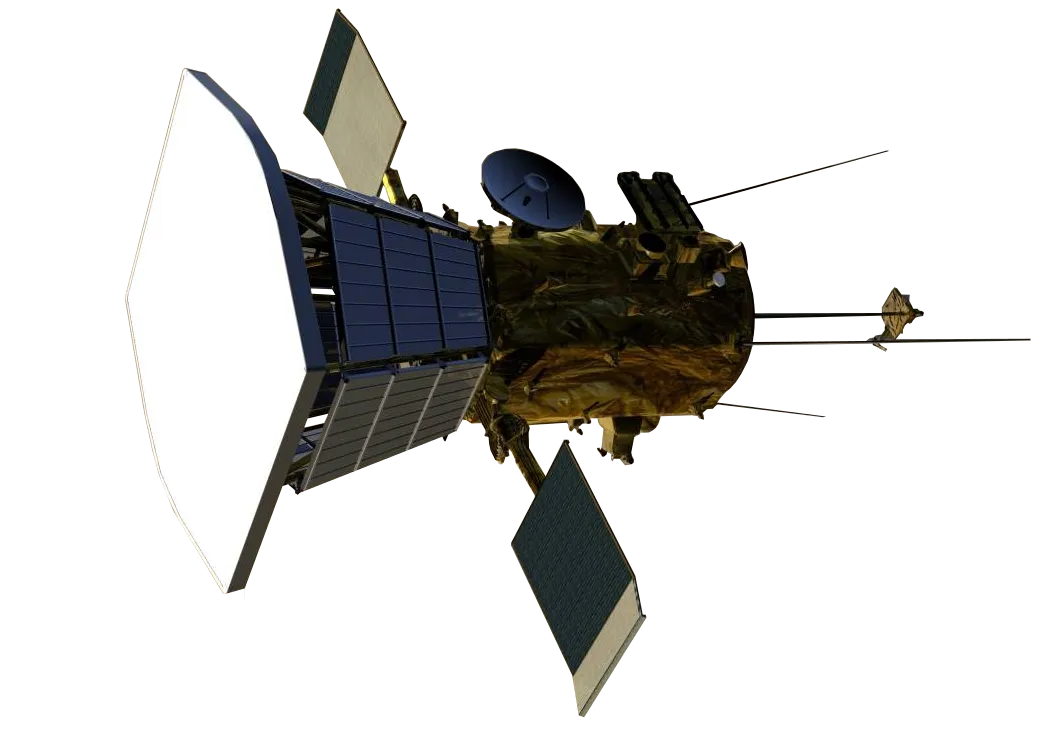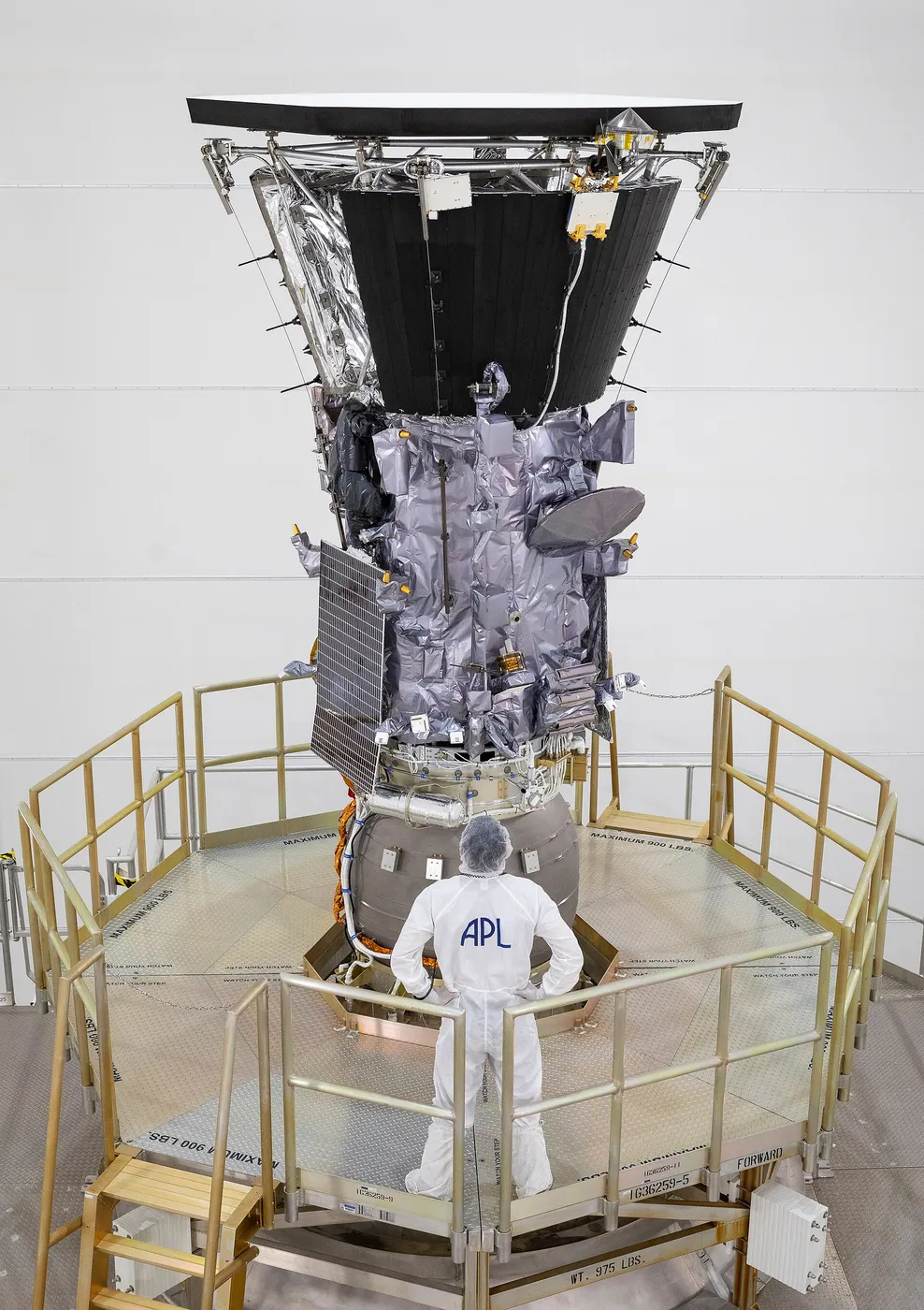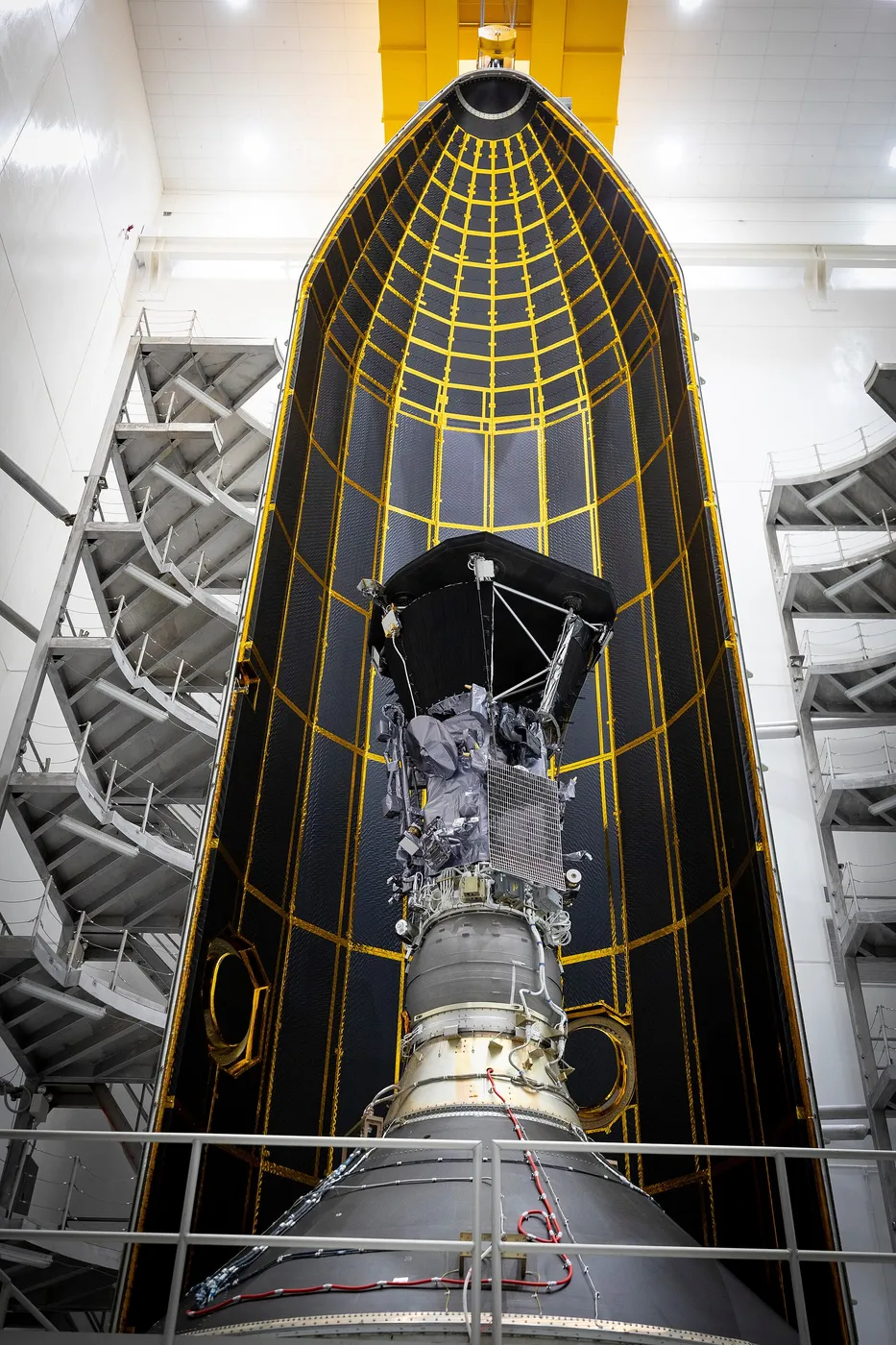
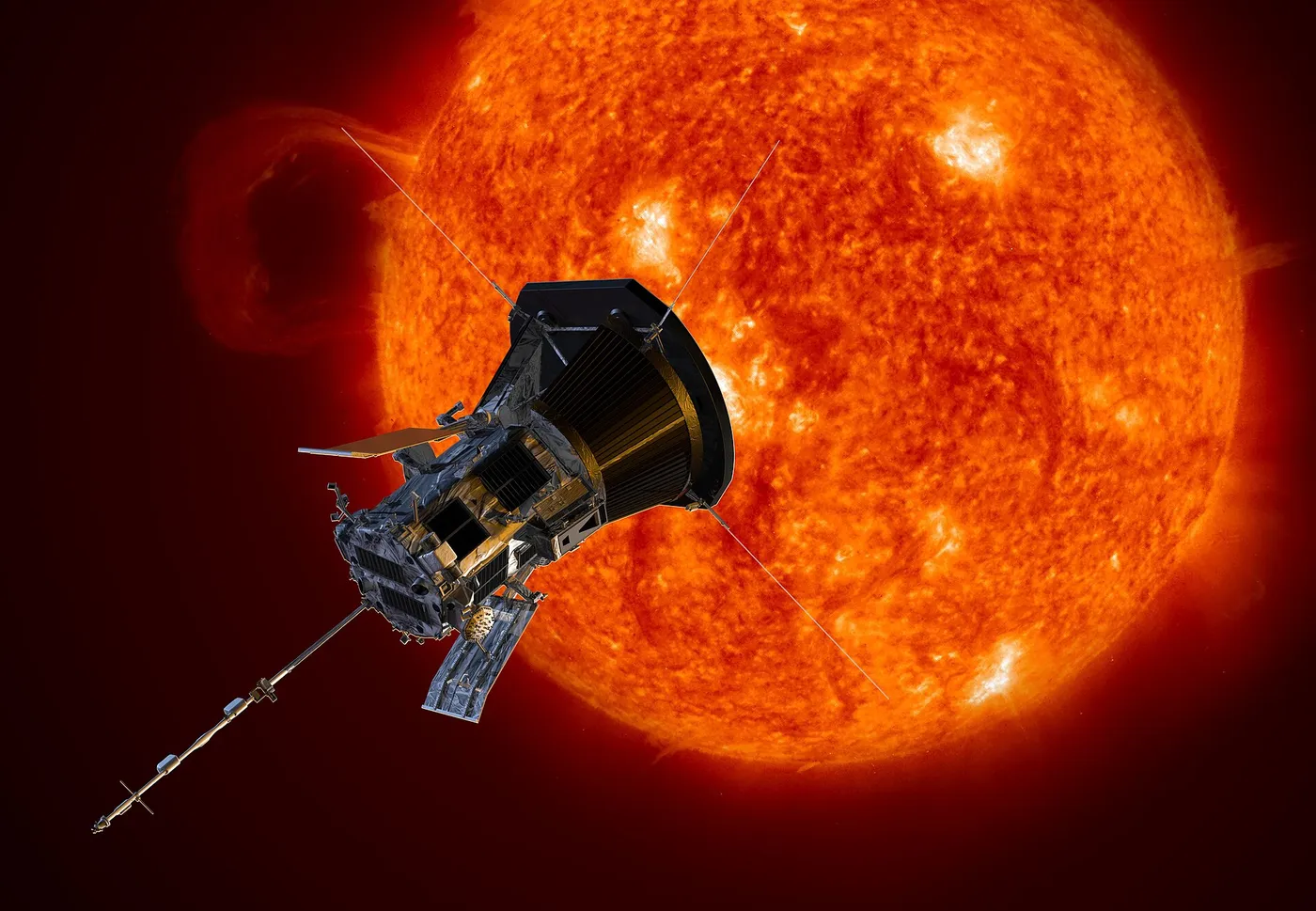

Parker Solar Probe flies closer to the Sun than anything has ever flown, and survives behind a carbon-composite shield eleven centimetres thick. The front face reaches around 1,400 degrees Celsius while the instruments in its shadow stay near room temperature — an engineering problem that had defeated the mission's designers, in various forms, since it was first proposed in 1958.
Reaching the Sun is counter-intuitively difficult. Earth carries an enormous sideways velocity that must be shed to fall inward, and the spacecraft has used seven gravity assists at Venus to gradually cancel it, tightening its orbit each time. In December 2024 it passed within about 6.1 million kilometres of the surface at some 690,000 kilometres per hour, making it comfortably the fastest object humans have built.
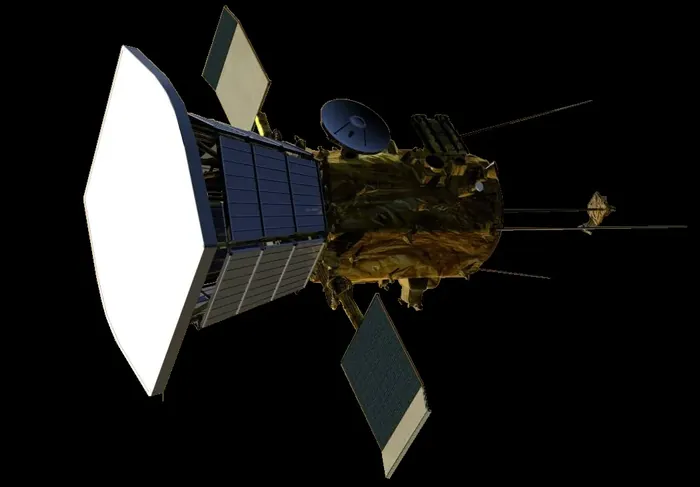
In April 2021 it crossed the Alfvén surface, the boundary below which the Sun's atmosphere is still magnetically bound to the star rather than streaming away as the solar wind. It became the first spacecraft to enter the corona — the popular description was that it had touched the Sun, and for once the phrase was reasonably accurate.
Its discoveries include switchbacks: sharp S-shaped kinks in the magnetic field, ubiquitous close to the Sun, which appear to originate where magnetic loops from the surface reconnect and fling material outward. They are now a leading candidate for the mechanism that heats the corona to a million degrees while the surface below sits at six thousand.
The mission is named for Eugene Parker, who predicted the solar wind in 1958 to widespread scepticism — his paper was rejected by two referees before an editor overruled them. He was the first living person to have a NASA mission named after him, and he attended the launch in 2018 at the age of 91.