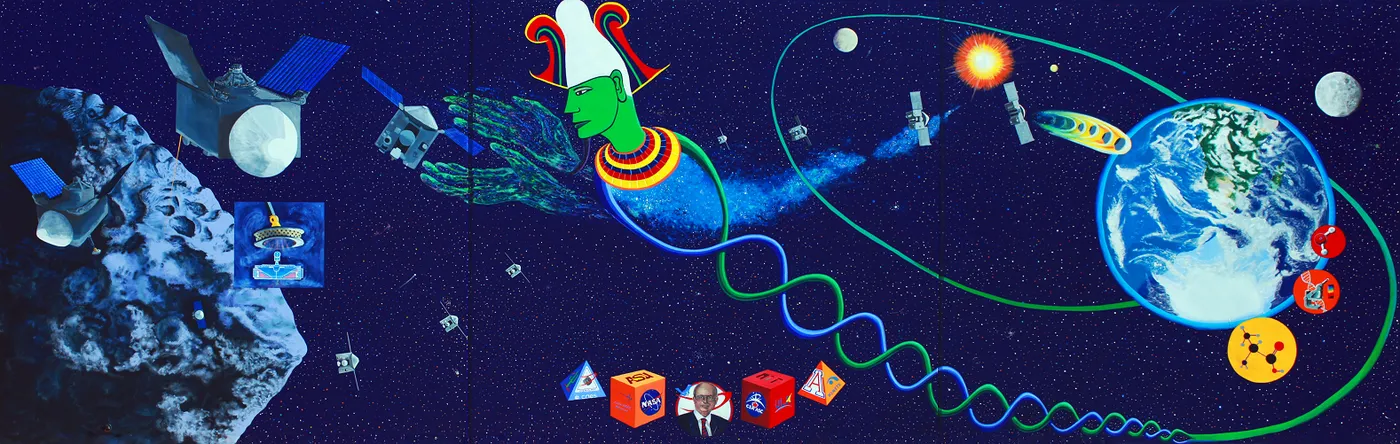

Bennu was chosen partly because it might hit us. The asteroid has roughly a one-in-2,700 chance of striking Earth in the late twenty-second century, which made understanding its composition and the subtle thermal forces that shift its orbit a matter of more than academic interest.
The spacecraft arrived in 2018 to find the mission's central assumption wrong. Ground-based observations had indicated a smooth, sandy surface with wide beaches of fine material; the reality was a rubble pile covered in boulders, with no clear area larger than a few metres. The team spent two years re-planning, eventually squeezing the sampling into a crater just eight metres across, ringed by rocks the size of buildings.
The touch-and-go in October 2020 lasted about six seconds and was startling. The spacecraft did not bounce off a solid surface; it sank in, roughly half a metre, as though into a ball pit, before its thrusters pushed it clear. Bennu turned out to be so weakly bound that a person could plausibly walk into it.
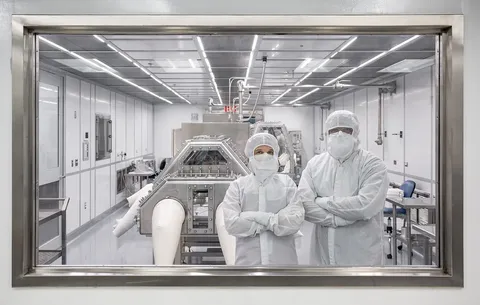
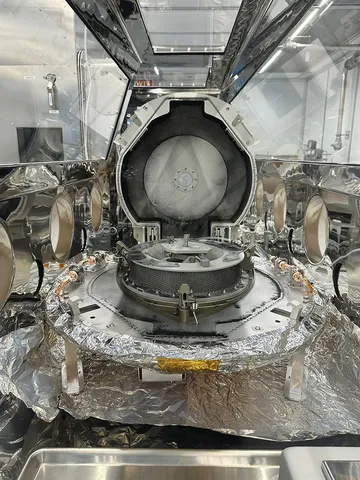
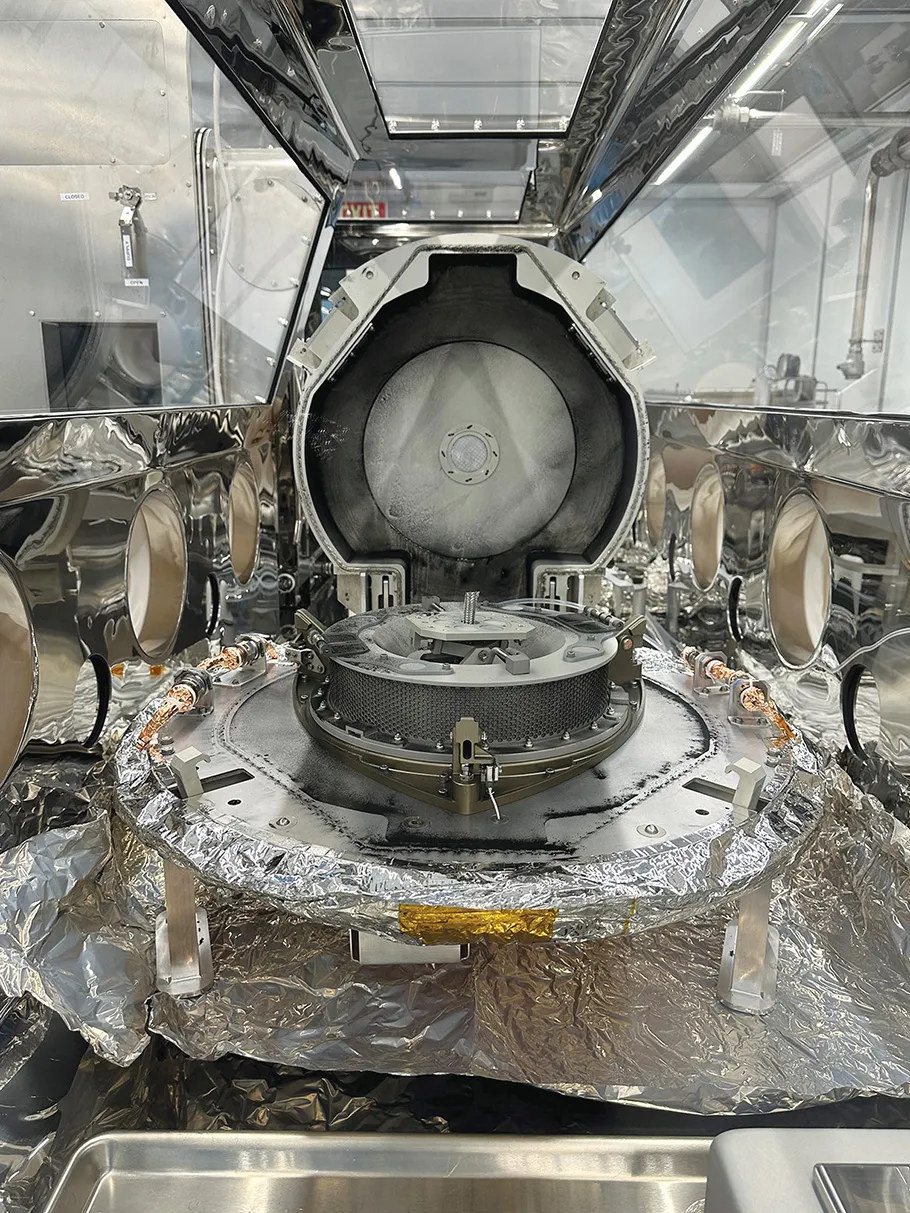
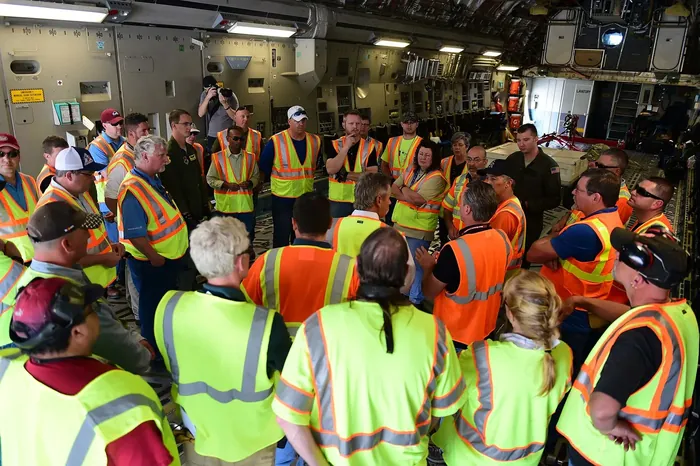
It collected far too much. Perhaps 250 grams of material jammed the sample head's flap open, and particles were visibly drifting away in the imagery; the team abandoned the planned measurement of the sample mass and stowed it immediately to stop the leak. The capsule landed in Utah in September 2023 with about 120 grams — the largest sample returned from beyond the Moon.
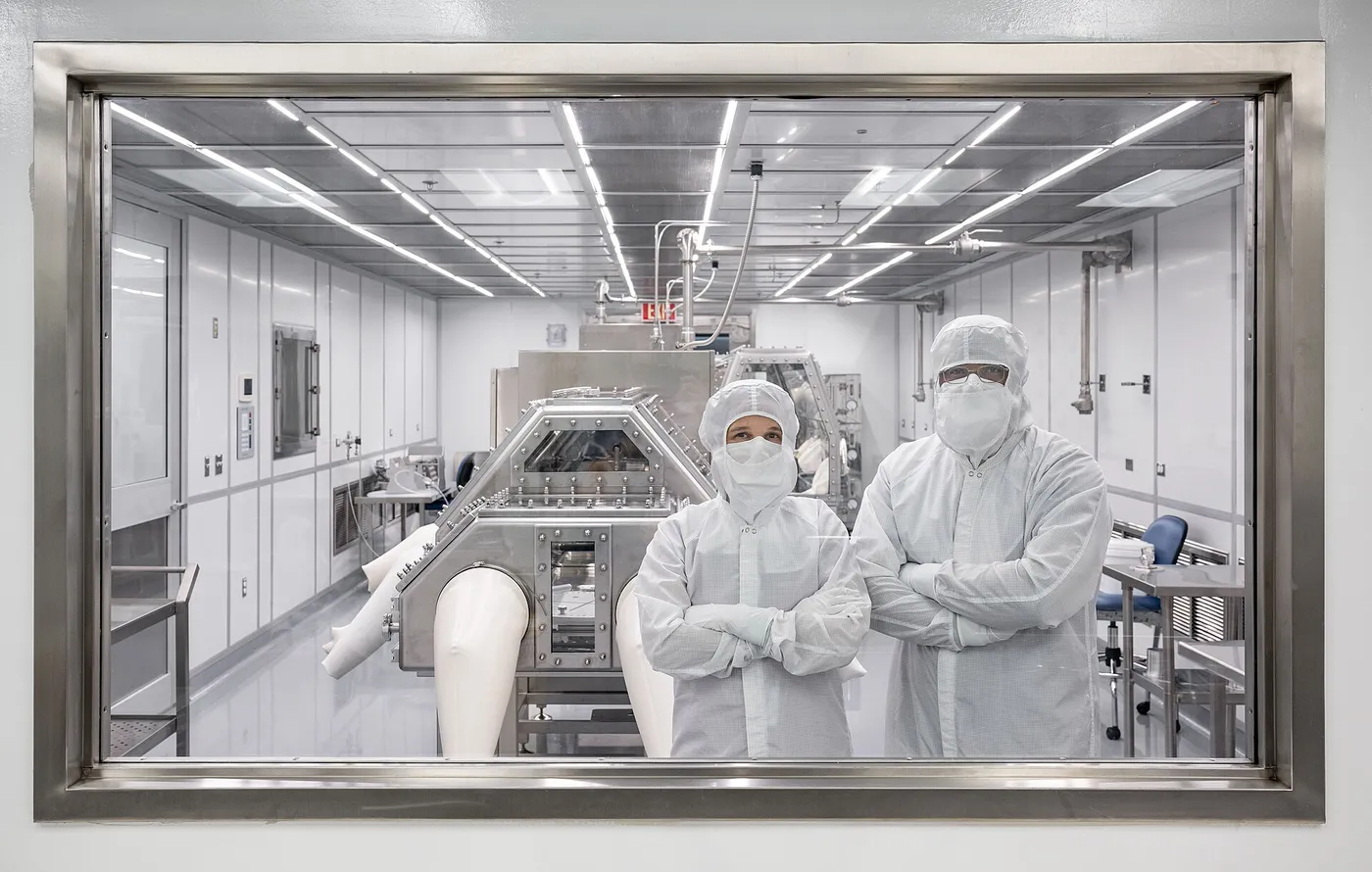
Early analysis has found clay minerals containing water, abundant carbon, amino acids and all five nucleobases used by DNA and RNA, alongside unexpected salts that suggest briny water once evaporated on the parent body. The material is being distributed to laboratories worldwide, with a substantial fraction deliberately preserved untouched for analysis techniques that have not been invented yet.