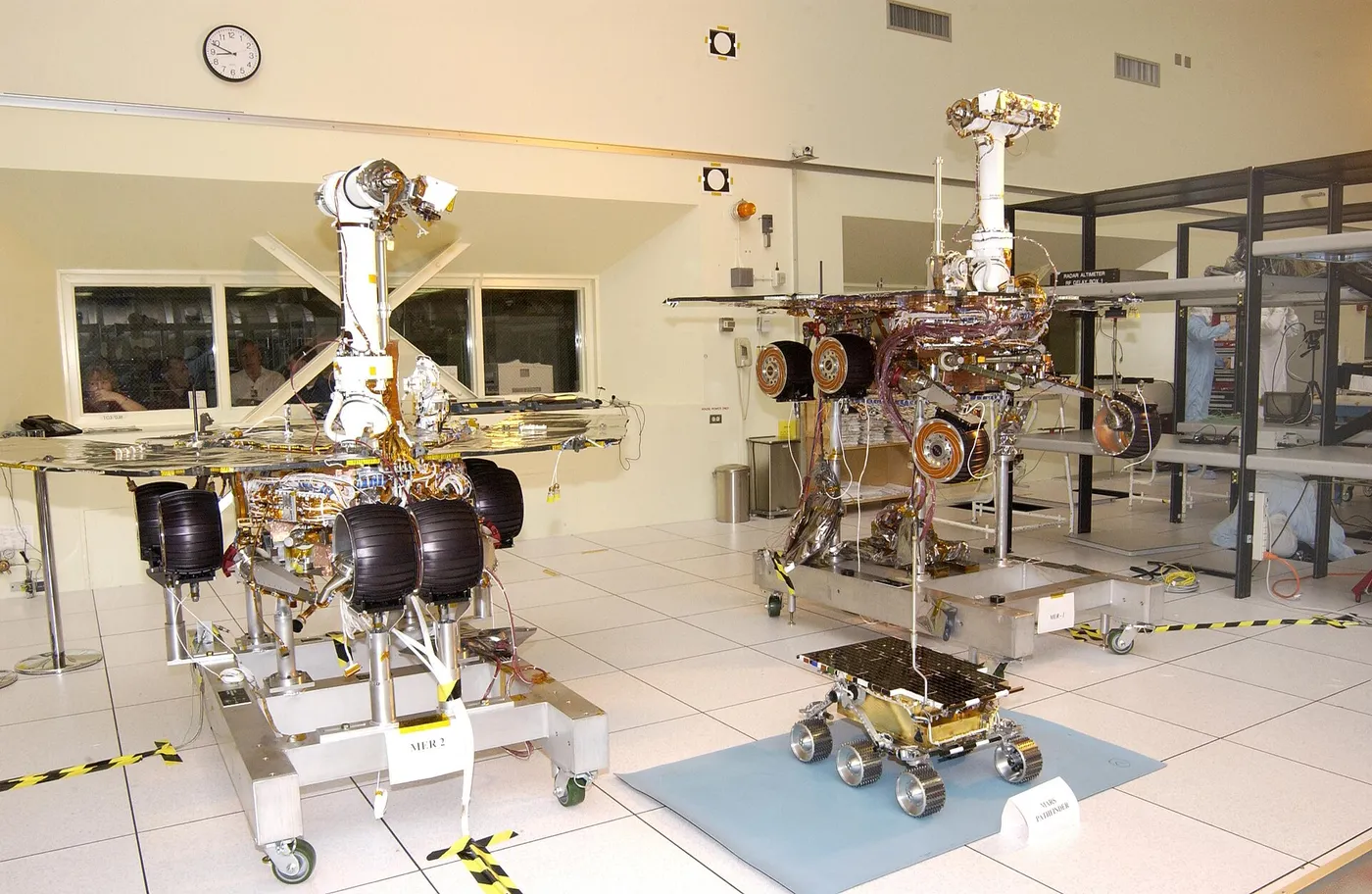
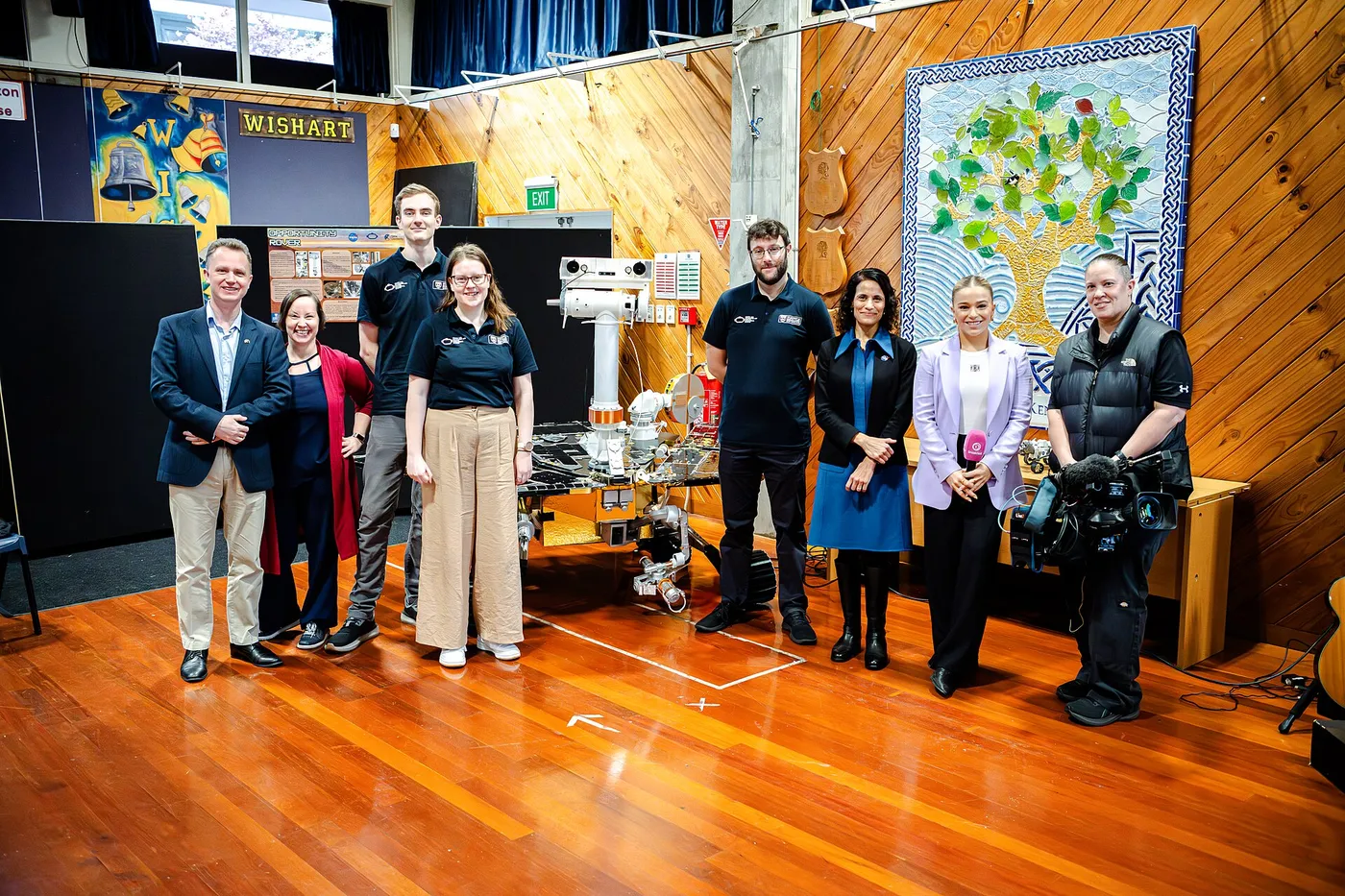

Opportunity landed with what the team called an interplanetary hole in one. Bouncing across Meridiani Planum, it came to rest inside a crater just 22 metres across — one of the few features in an otherwise featureless plain — with an outcrop of bedrock exposed in the wall directly in front of it.
That outcrop delivered the mission's objective within weeks. The rocks were sulphate-rich, finely layered with the cross-bedding that flowing water leaves, and studded with millimetre spheres of haematite that the team nicknamed blueberries. Together they were unambiguous: this ground had been soaked in water, if highly acidic water, a very long time ago.
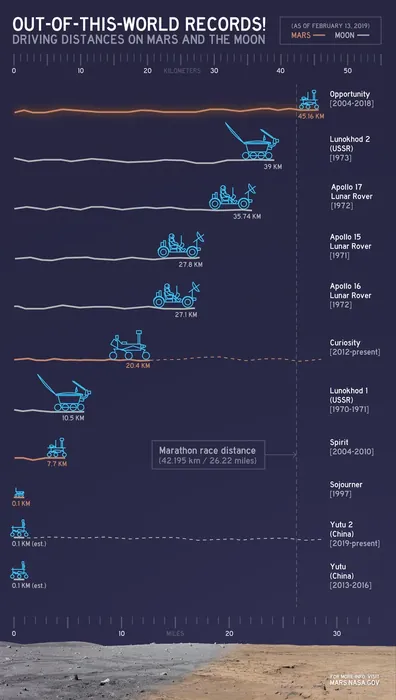
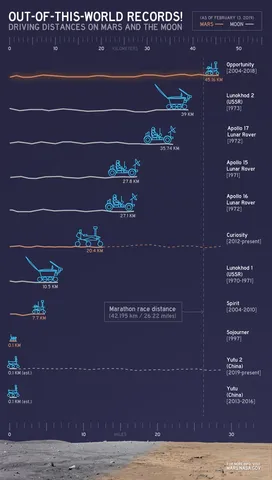
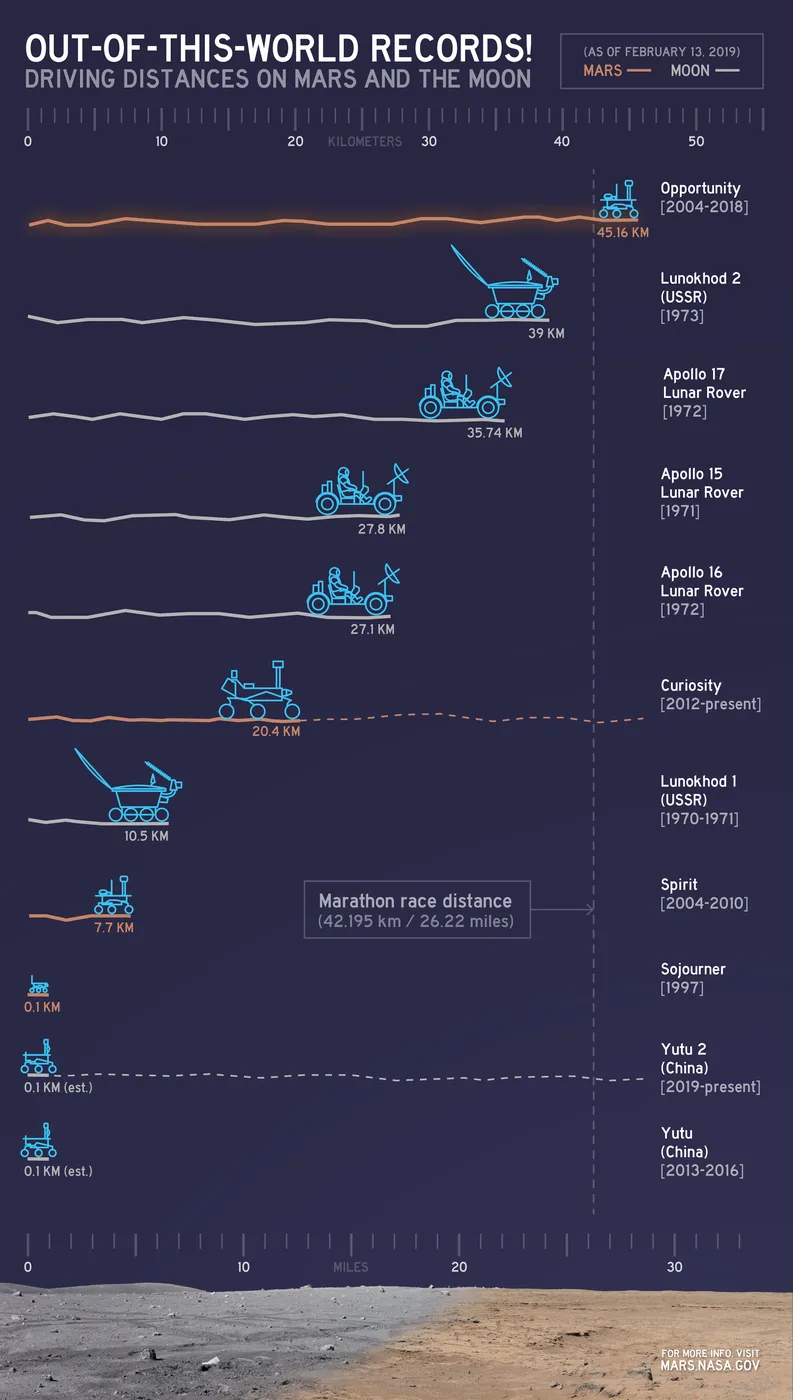
Then it kept going. Designed for 90 days and one kilometre, it drove for fourteen years and more than 45 kilometres — a marathon, which it marked formally in 2015 — visiting ever larger craters, Endurance, Victoria and finally Endeavour, whose rim exposed clay minerals formed in gentler, less acidic water than anything at the landing site.
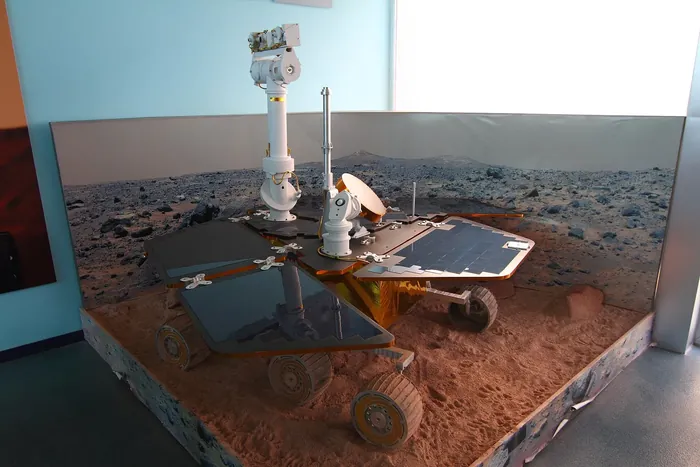
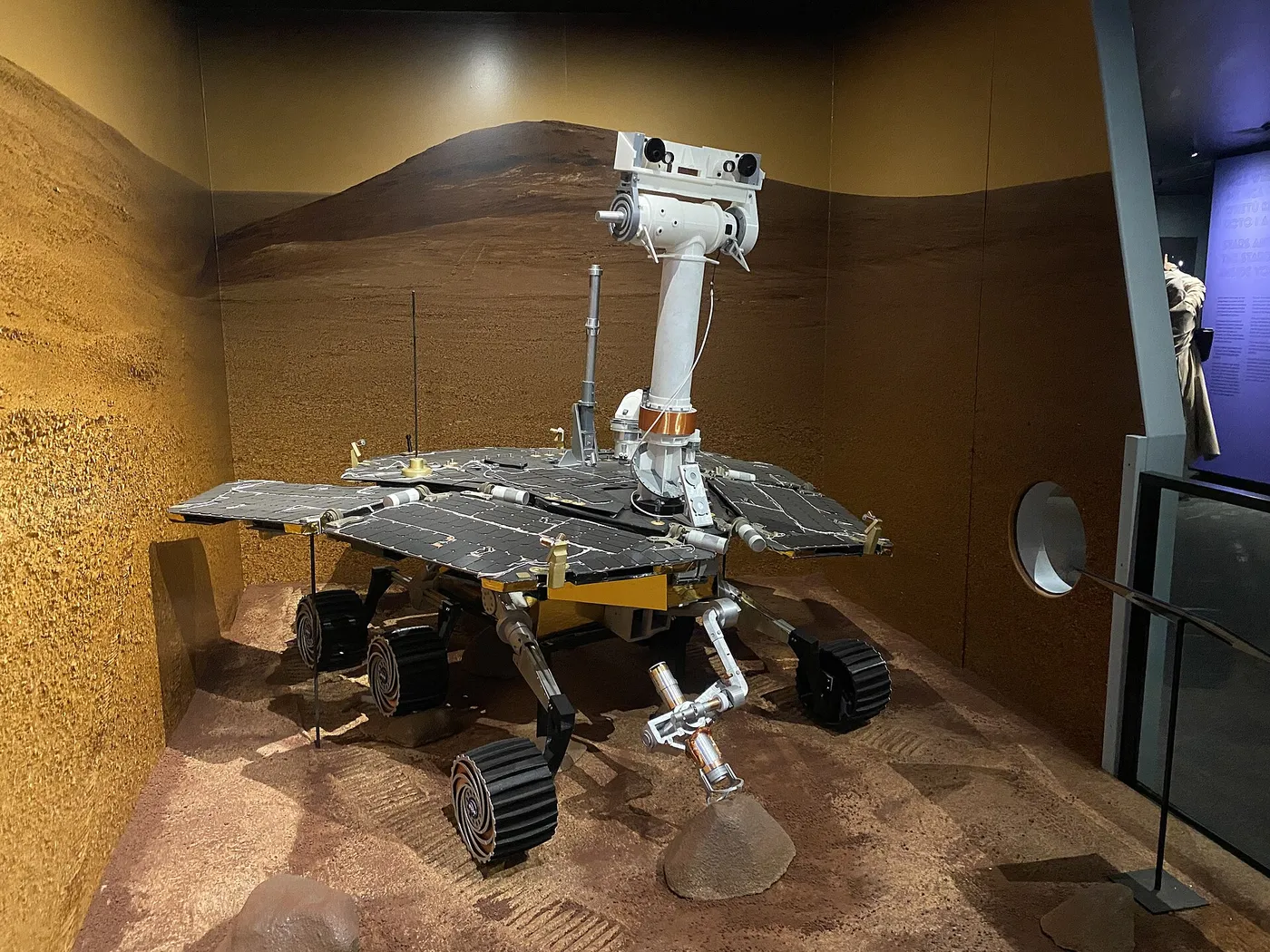
It aged like a machine that had been asked to work far past its warranty: a heater stuck on that drained power for years, an arthritic shoulder joint, one wheel that had to be dragged, flash memory that eventually had to be abandoned entirely so the rover worked from volatile memory and lost its notes each night.
A planet-encircling dust storm in June 2018 finally blotted out the Sun. The last transmission was routine engineering telemetry reporting low power and darkening skies; the widely quoted line about the battery being low and it getting dark is a journalist's paraphrase rather than anything the rover said. NASA listened for eight months, sent more than a thousand commands, and declared the mission over in February 2019.