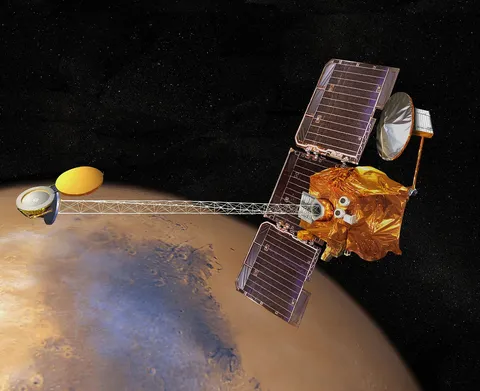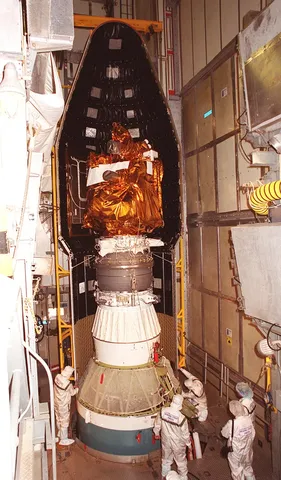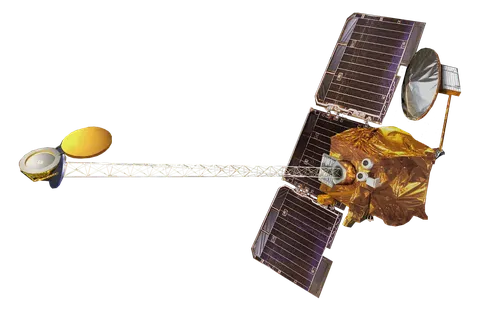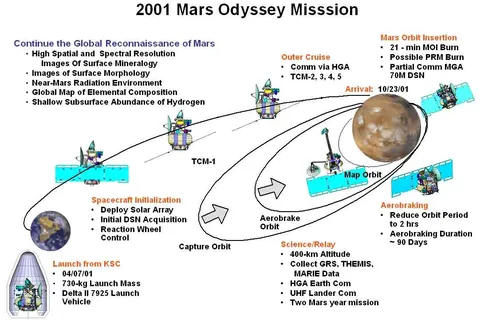

2001 Mars Odyssey has been orbiting Mars for more than two decades and is the longest-serving spacecraft at any planet other than Earth. It was named, with Arthur C. Clarke's explicit blessing, after the novel — a small piece of whimsy from an agency that had just lost two Mars missions in a row and badly needed a success.
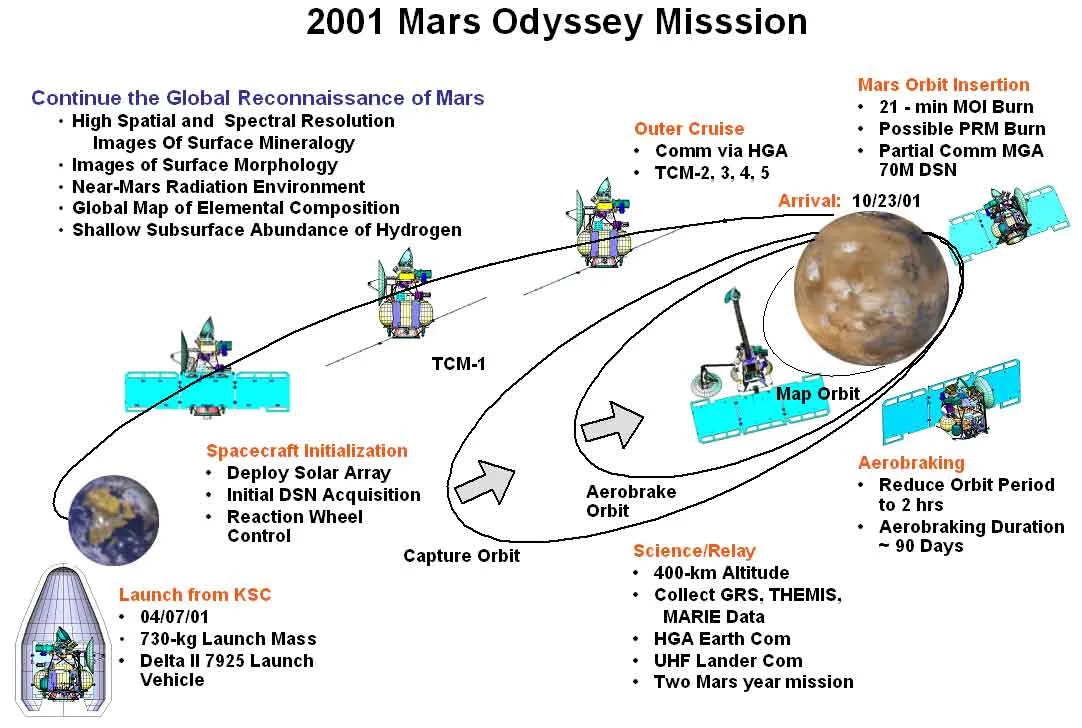
Its most important result came within months. A gamma-ray and neutron spectrometer mapped hydrogen across the whole planet and found enormous quantities of it in the shallow subsurface at high latitudes — in places the top metre of soil appeared to be more than half water ice by volume. Mars was not merely once wet; it is currently, substantially, frozen wet.
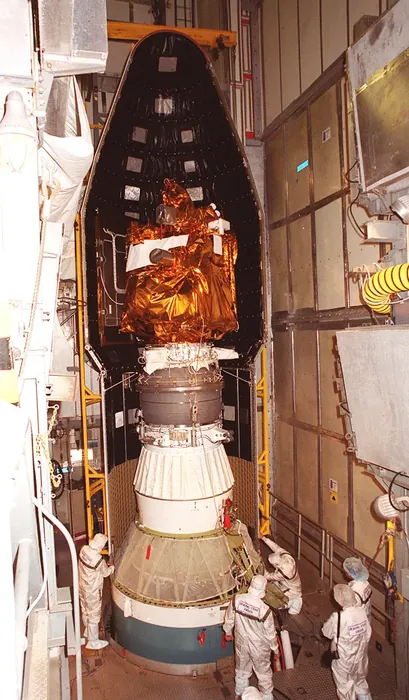
That finding directed the next twenty years of exploration. Phoenix was sent to dig into exactly the deposits Odyssey identified, and found ice a few centimetres down precisely as predicted; the ice maps now inform every discussion of where a crewed mission might land and find water.
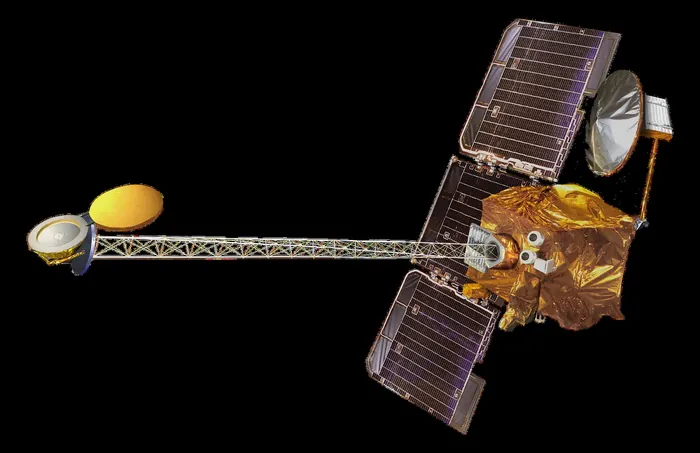
Its second career has been as a switchboard. Most of the data returned by Spirit, Opportunity, Curiosity, Phoenix and Perseverance has reached Earth through Odyssey, which passes overhead and relays it — a rover on the surface has a small antenna and little power, while an orbiter has a clear line to Earth. Without the relay orbiters, surface missions would return a small fraction of their science.
It also mapped the planet's mineralogy in thermal infrared, identifying the chlorides, clays and sulphates that record ancient water chemistry. Twenty-odd years on it is running on carefully rationed fuel, its orbit gradually drifting, still relaying and still mapping.