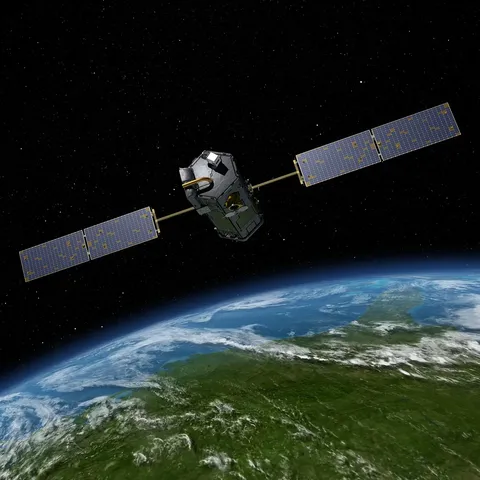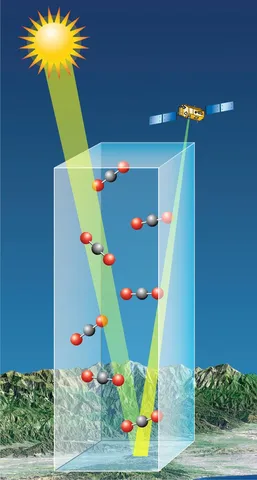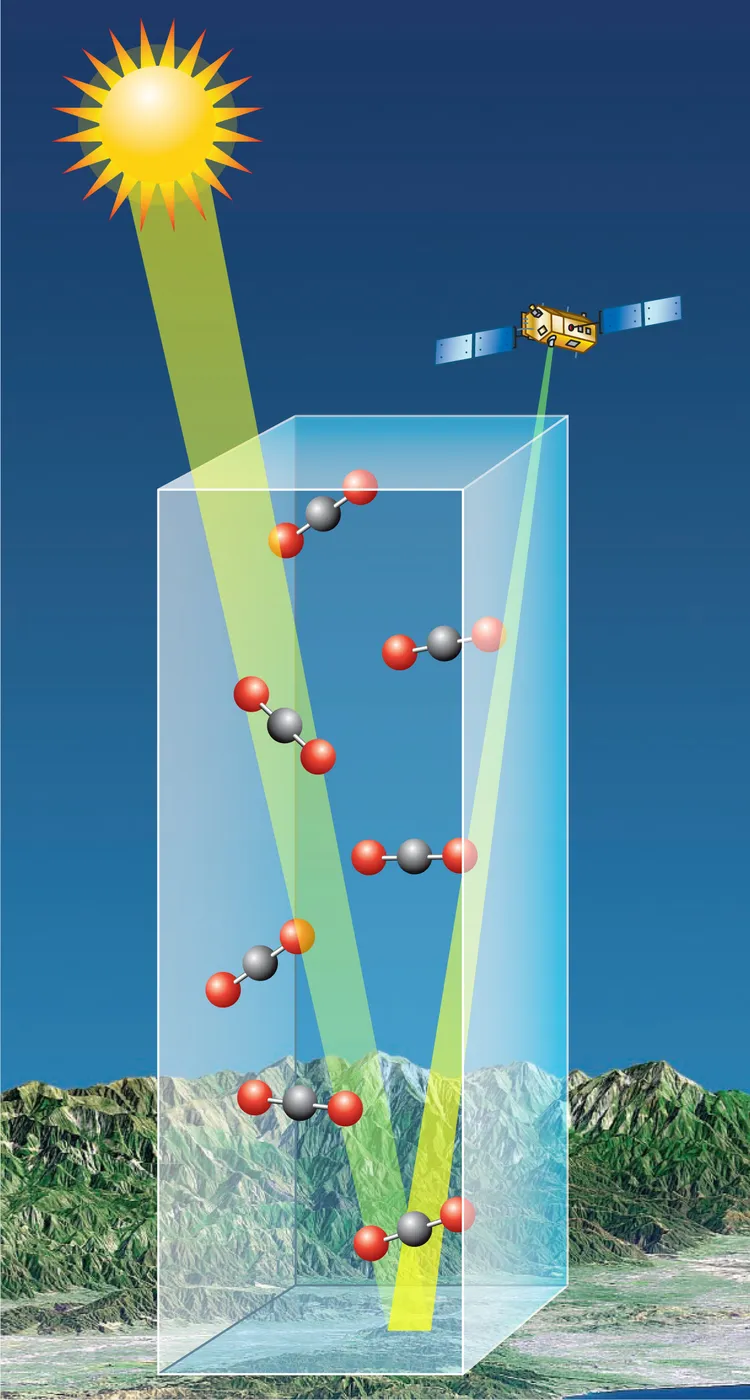
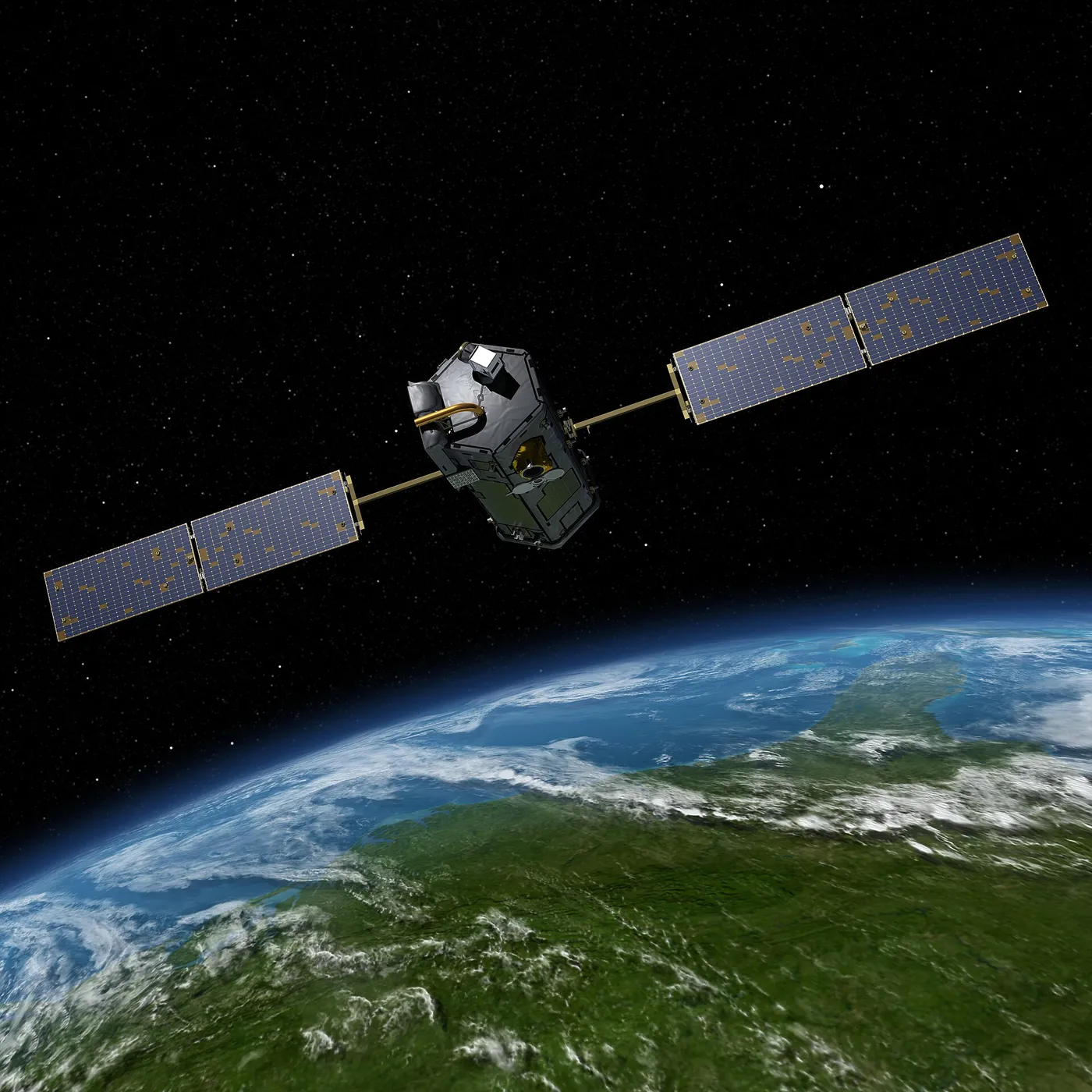

OCO-2 measures carbon dioxide in the atmosphere by looking at sunlight reflected off the Earth and detecting the specific wavelengths CO2 absorbs. The required precision is severe: concentrations must be determined to about one part in a thousand to see the regional differences that matter.
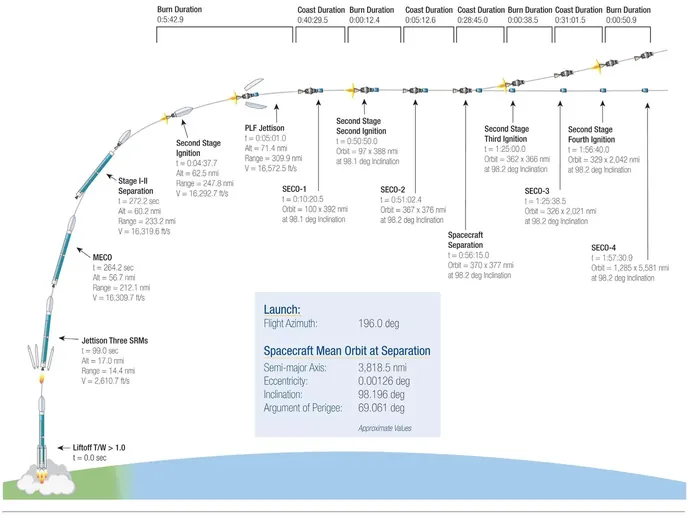
It is a replacement. The original Orbiting Carbon Observatory was lost in 2009 when its launch vehicle's payload fairing failed to separate, leaving the spacecraft too heavy to reach orbit; it fell into the ocean near Antarctica. A near-identical satellite was built and flown five years later.
Its purpose is not to measure the global total, which ground stations already do well, but to locate the sources and sinks. Roughly half of human carbon emissions are absorbed by land and ocean, and which ecosystems are doing the absorbing — and whether they will continue — is among the largest uncertainties in climate projection.
It found the tropics responding dramatically to the 2015-16 El Niño, with drought, heat and fire turning tropical land from a carbon sink into a source and releasing an amount comparable to a substantial fraction of annual fossil emissions — a preview of how a warmer world's ecosystems may behave.
It also detects solar-induced fluorescence, a faint glow emitted by plants during photosynthesis, which provides a direct measure of photosynthetic activity rather than an inference from greenness. That measurement was not part of the original mission design and has become one of its most widely used products.