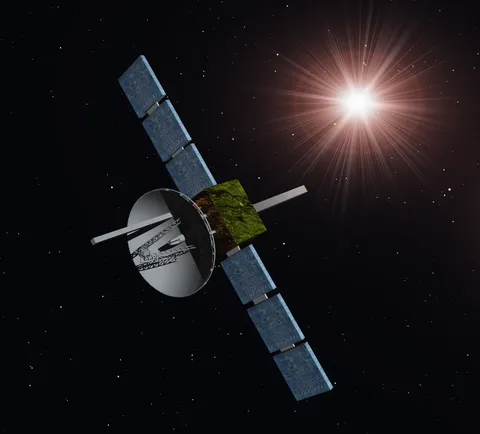
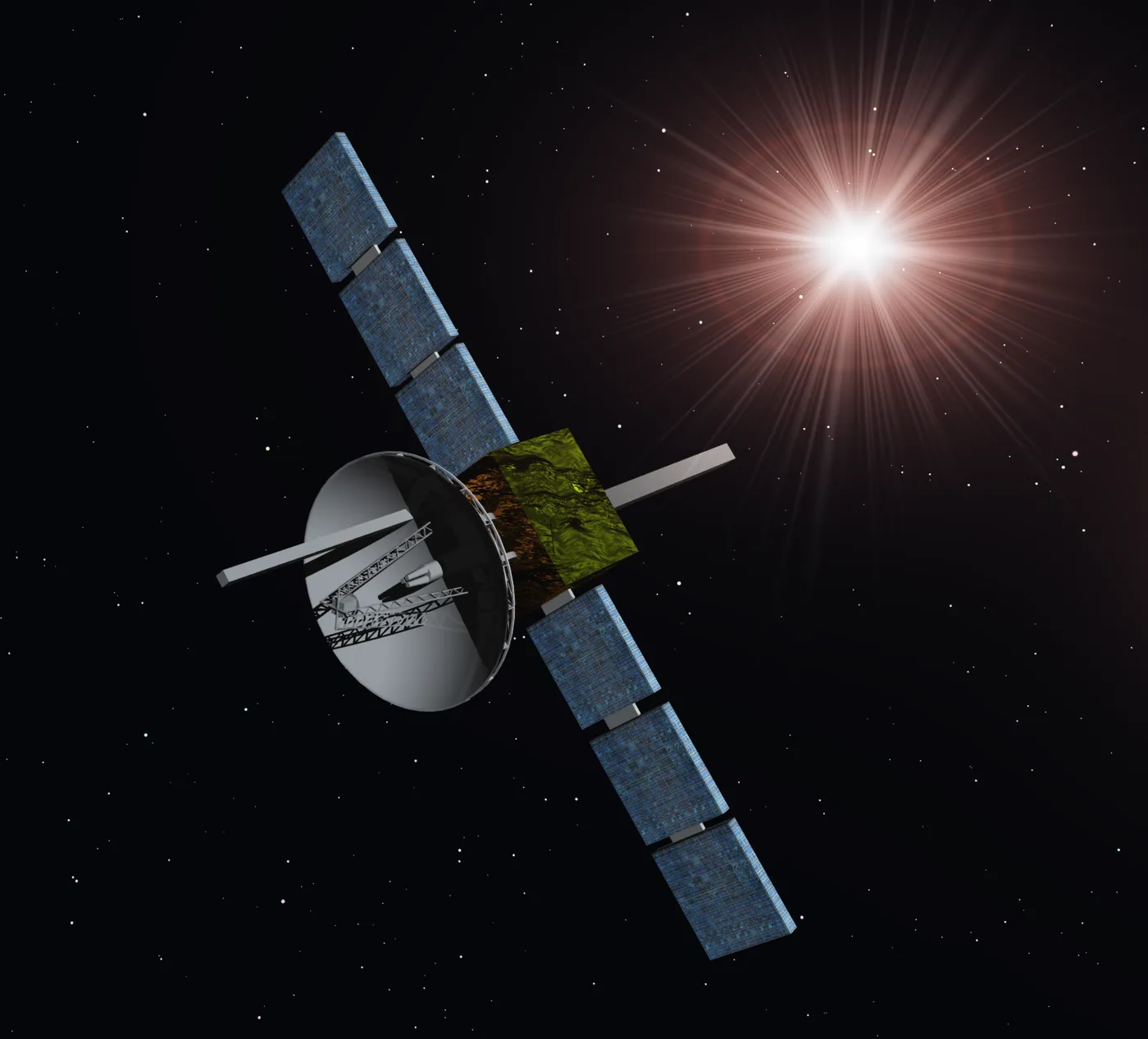
Japan's first Mars mission was defeated by a single stuck valve. Nozomi — the name means hope — launched in 1998 and used a lunar and Earth gravity assist to gain speed, but during the critical Earth flyby a malfunctioning thruster valve caused it to burn far more propellant than planned and leave on the wrong trajectory.
The recovery plan was audacious and slow: rather than abandon the mission, controllers put the spacecraft on a four-year loop around the Sun with two additional Earth flybys, delaying arrival at Mars from 1999 to the end of 2003 and accepting the risks of a much longer cruise.
Those risks materialised. In April 2002 a powerful solar flare damaged the spacecraft's power and communications systems, disabling the heaters that kept its hydrazine from freezing. The fuel lines froze, and although engineers eventually thawed them by careful orientation of the spacecraft, the propulsion system was never fully reliable again.
It reached Mars in December 2003 and could not stop. With the orbital insertion burn impossible, the team sent commands attempting a last-ditch manoeuvre, then accepted the outcome and steered the spacecraft away from any chance of impact — planetary protection rules apply even to a mission that has failed. It flew past at about 1,000 kilometres and entered solar orbit.
The loss was compounded by timing: Britain's Beagle 2 was lost within weeks, making it a bleak season for Mars exploration. Japan did not return to Mars, but the engineering experience fed directly into Hayabusa, launched five months before Nozomi's failure, whose own improbable recovery drew on exactly this kind of long-duration improvisation.