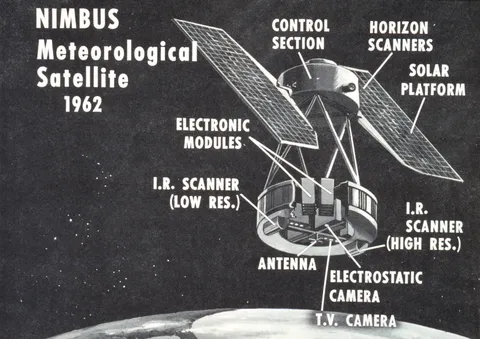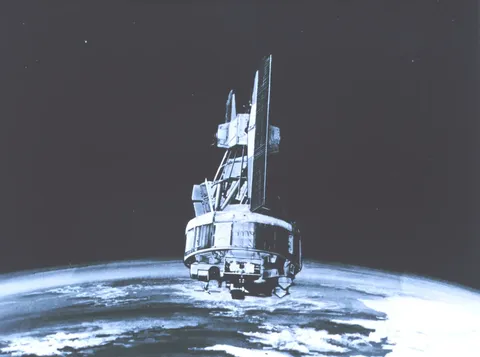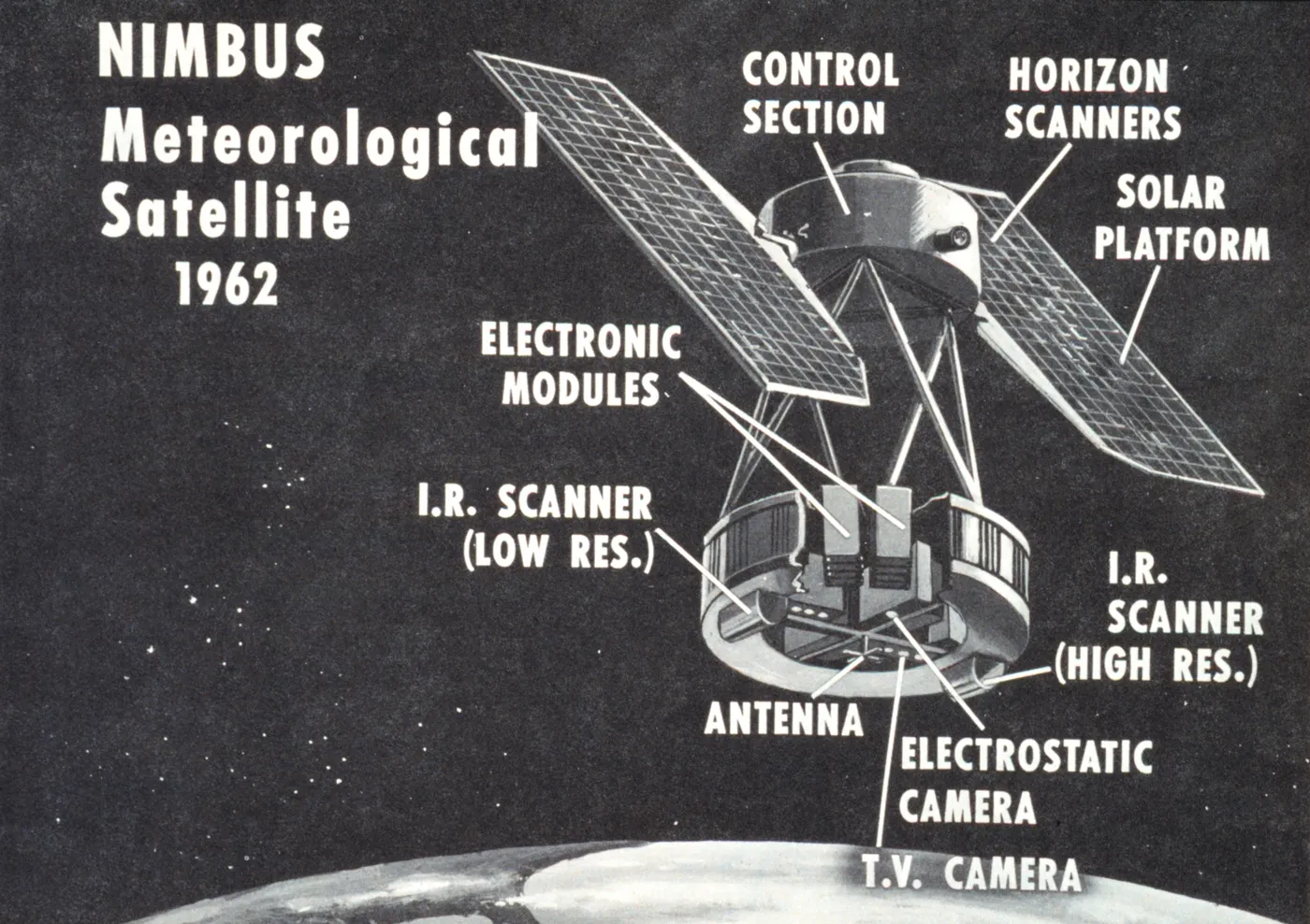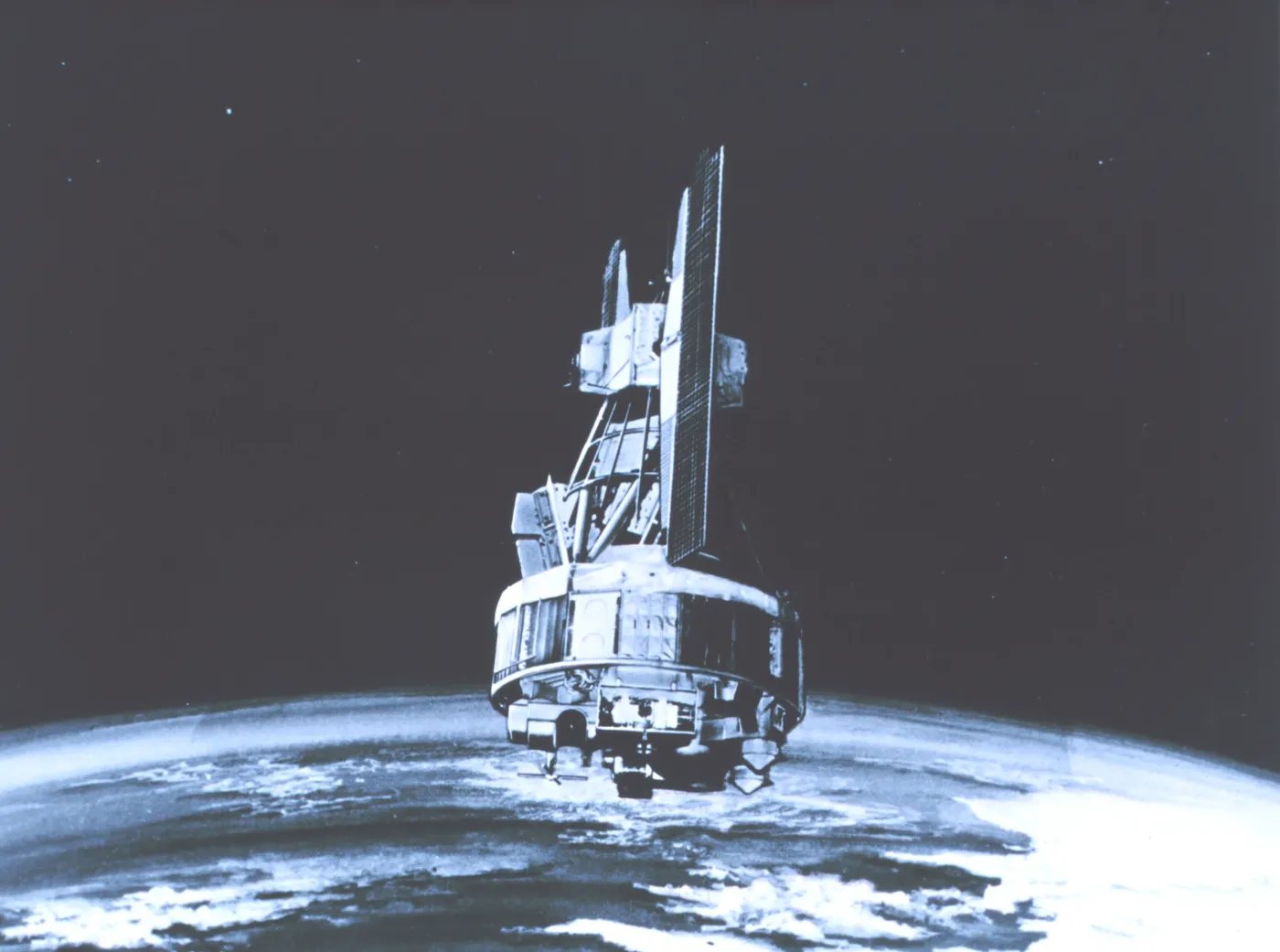
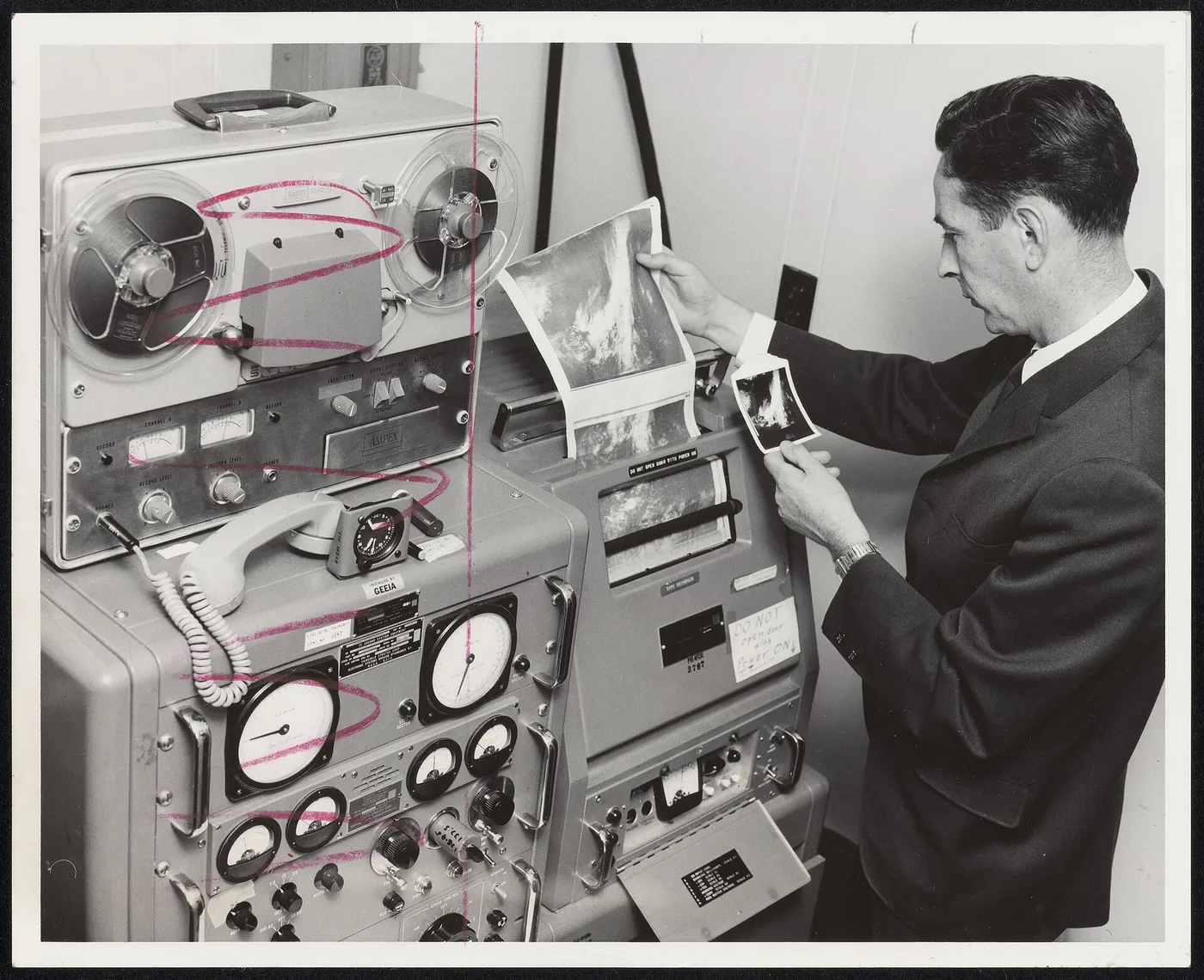

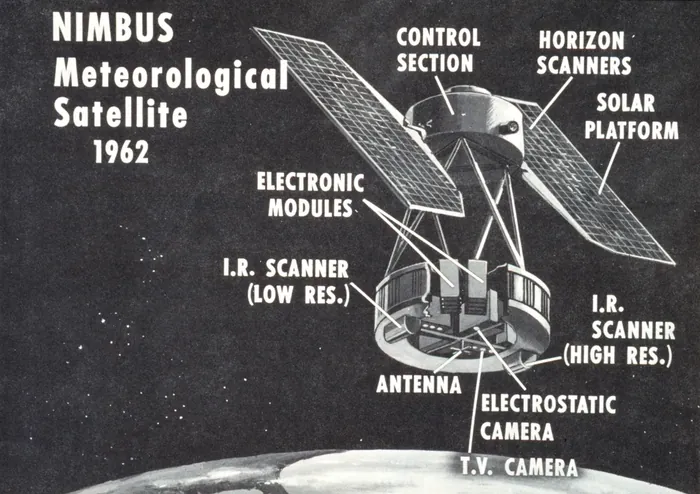
Nimbus-3 made the first measurements of atmospheric temperature from space. Its infrared spectrometer observed the Earth at wavelengths where carbon dioxide absorbs, and because absorption occurs at different altitudes at different wavelengths, the resulting spectrum could be mathematically inverted into a vertical temperature profile.
This was transformative for weather forecasting. Numerical prediction requires knowing the three-dimensional state of the atmosphere, and before satellite sounding that meant balloon launches — dense over populated land, essentially absent over oceans and the southern hemisphere.
Satellite soundings filled those gaps and are now the largest single source of data in operational forecast models. The improvement in southern hemisphere forecast skill, which historically lagged well behind the north, dates from the introduction of this technique.
The spacecraft also carried a small radioisotope generator supplementing its solar power — one of very few nuclear power sources flown in Earth orbit, and included as a demonstration rather than a necessity.
It operated for about a year and a half. The sounding capability it pioneered has been carried by every operational weather satellite since, in progressively more capable form, and remains the primary reason forecasts have improved so markedly over the past half century.