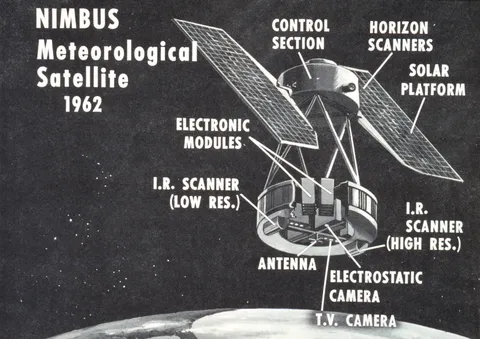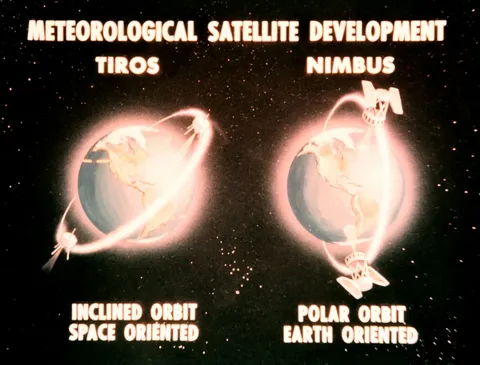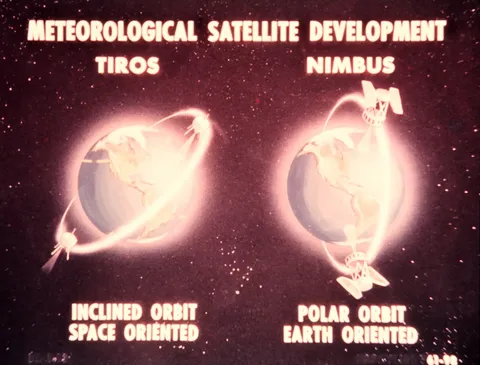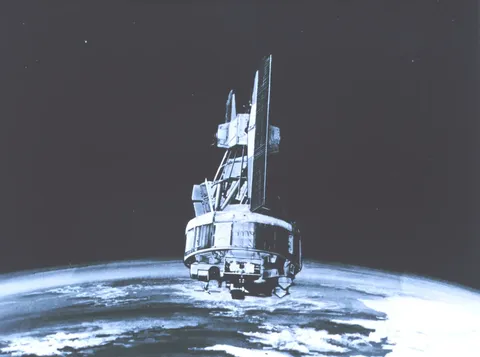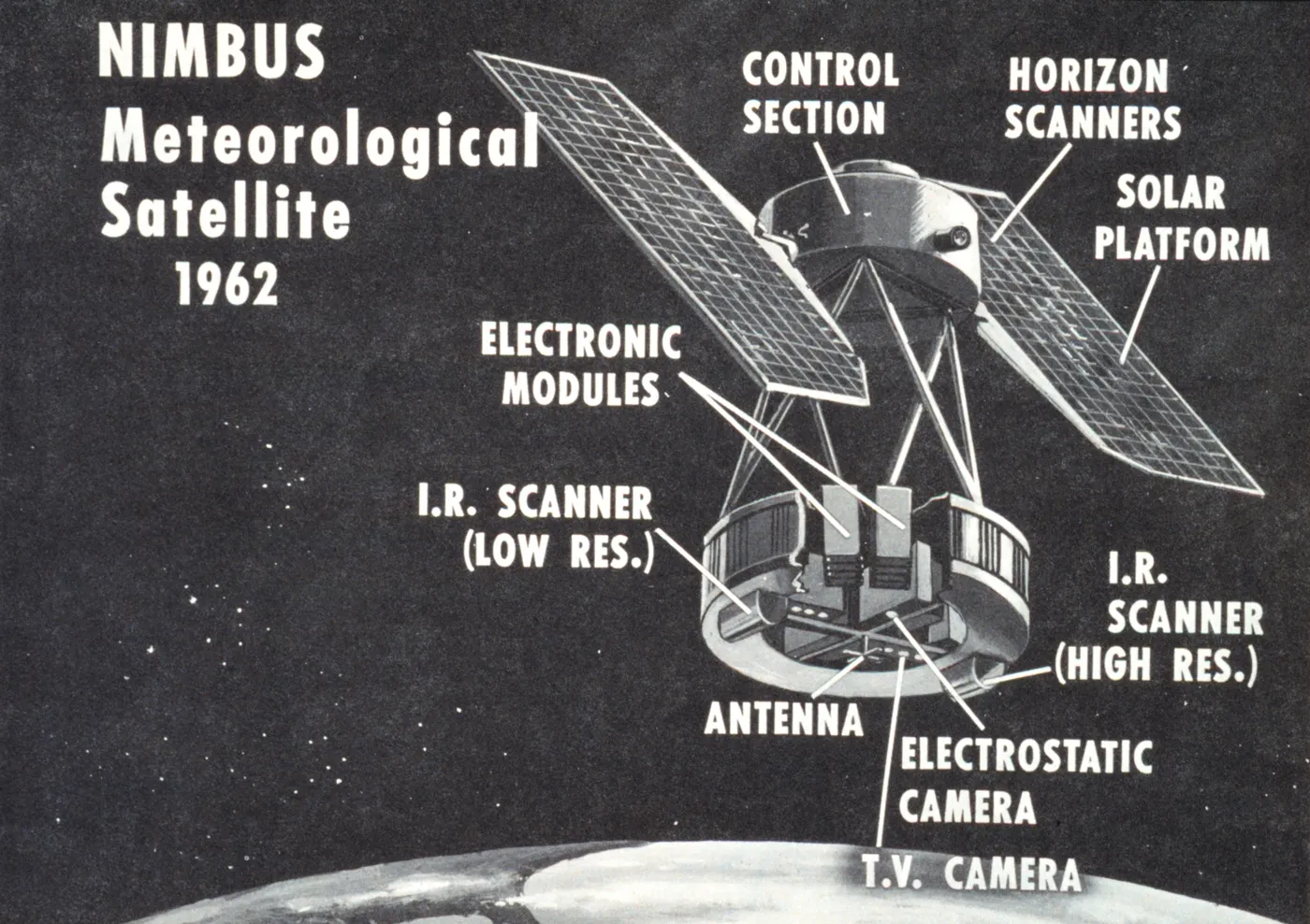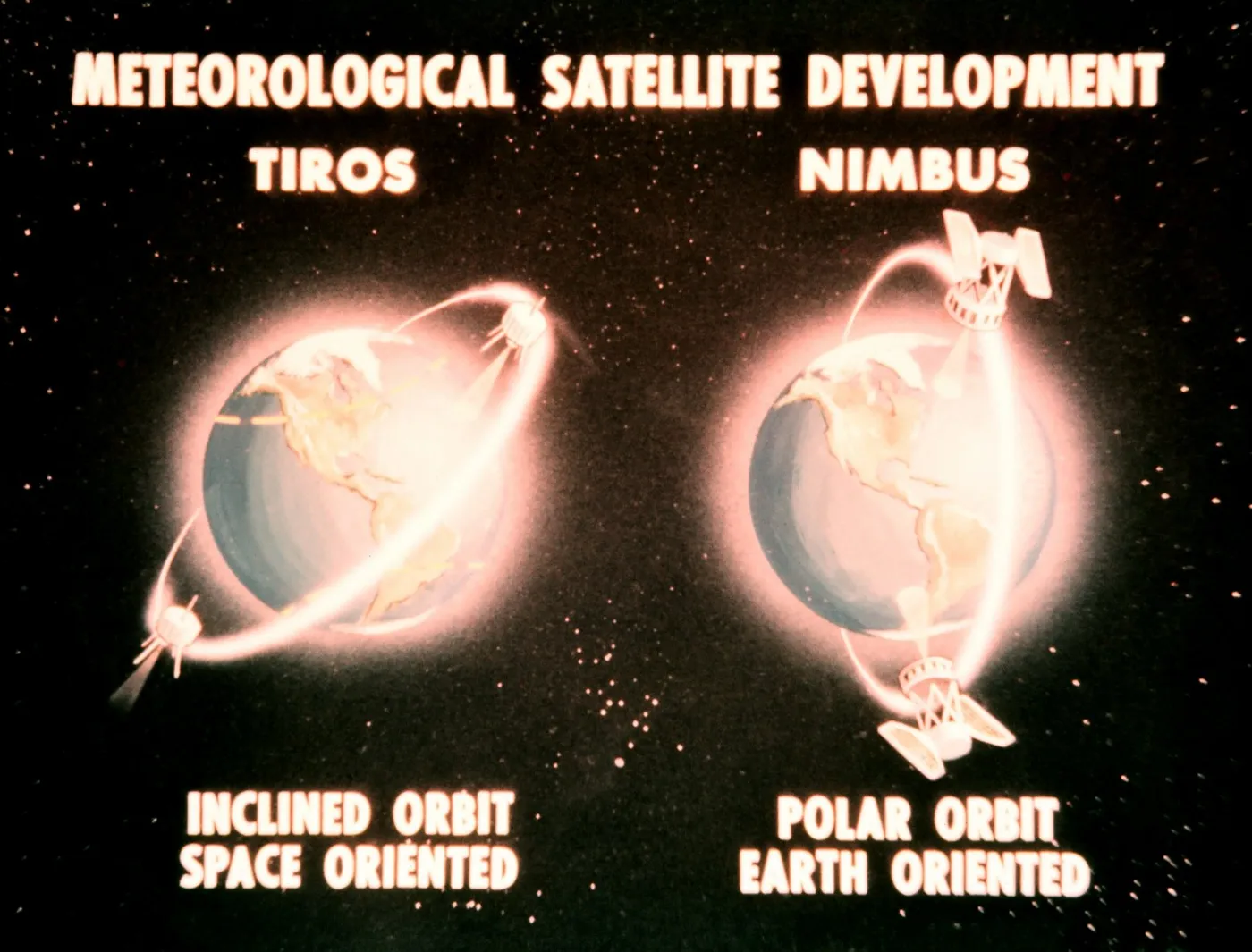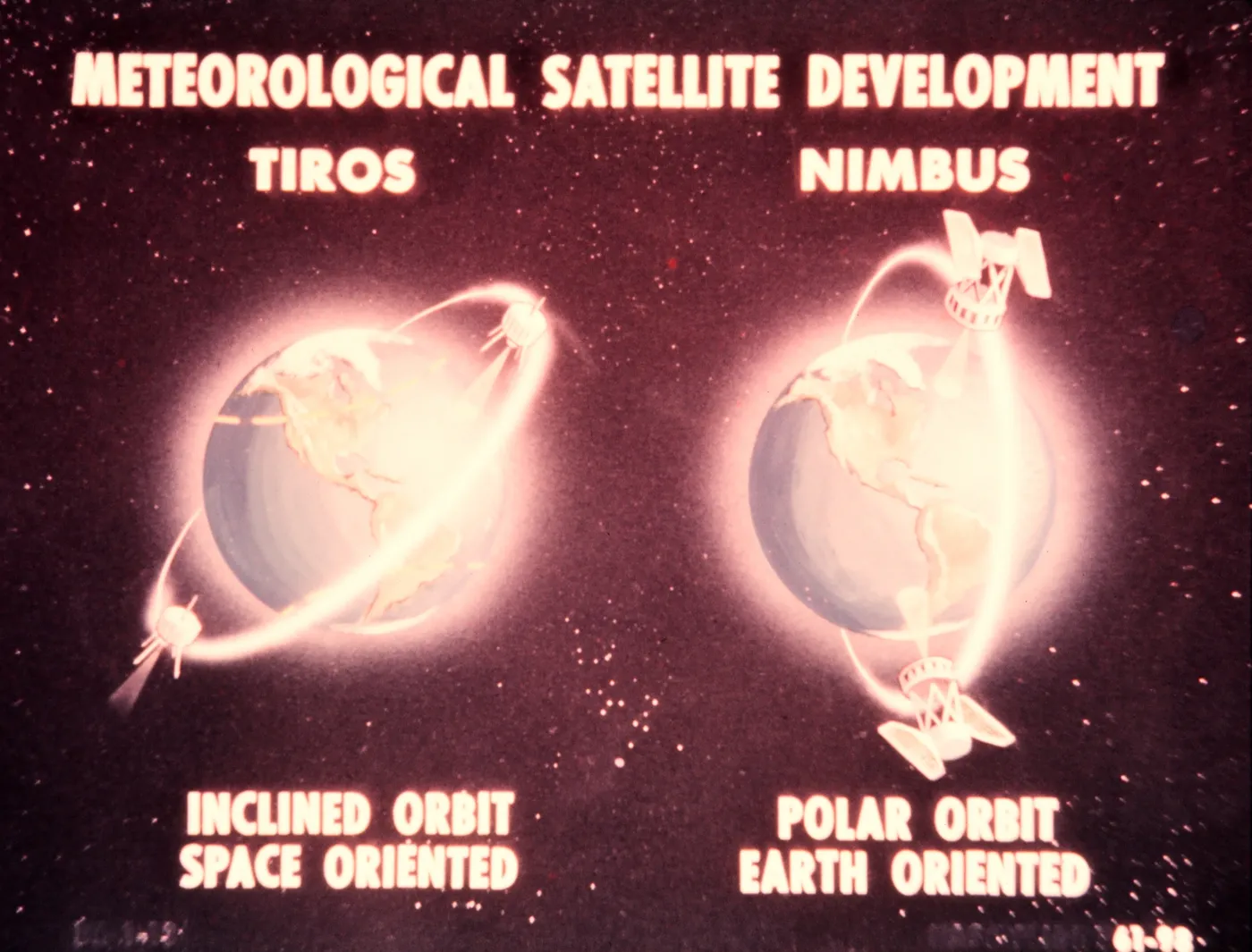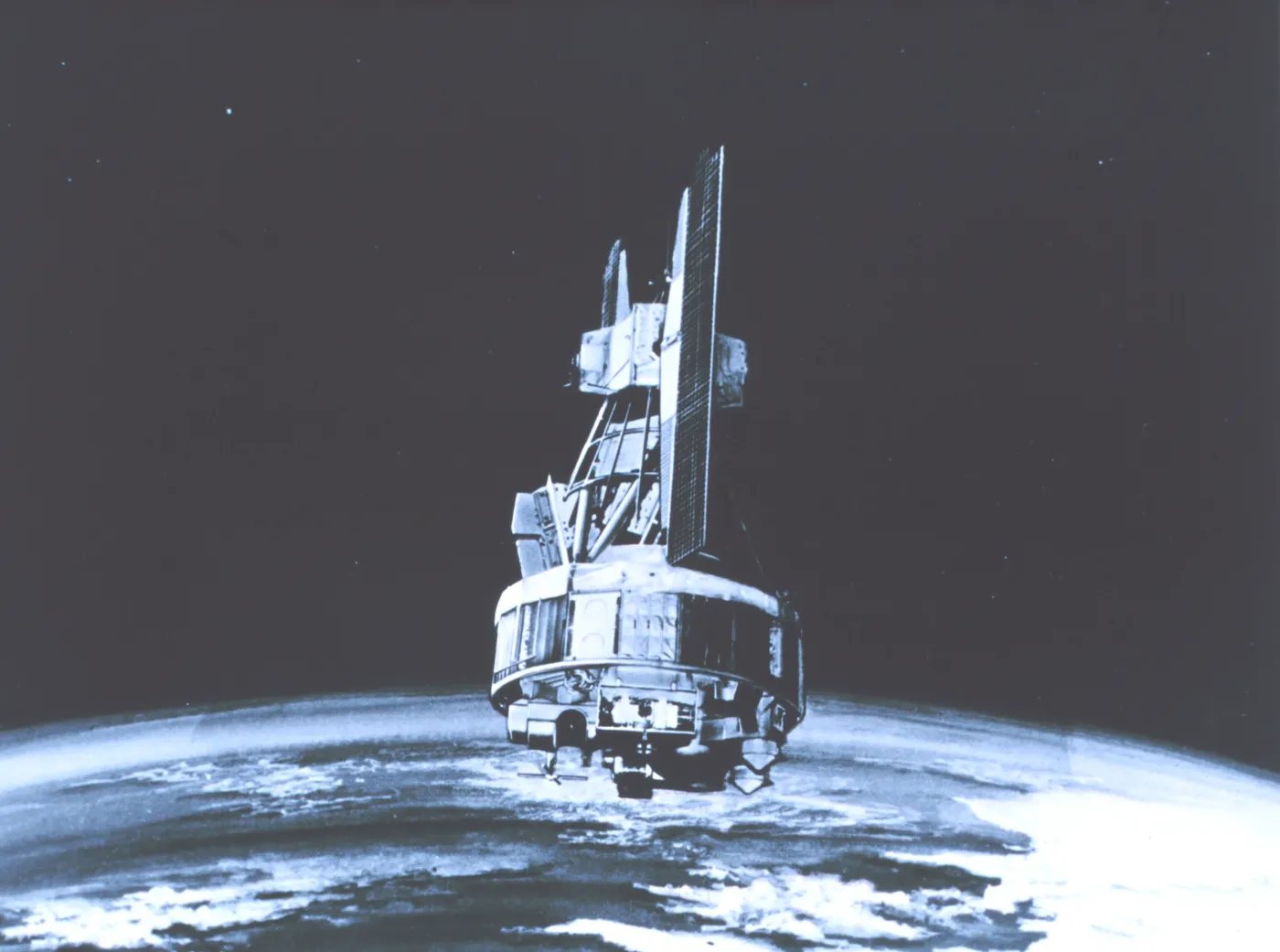
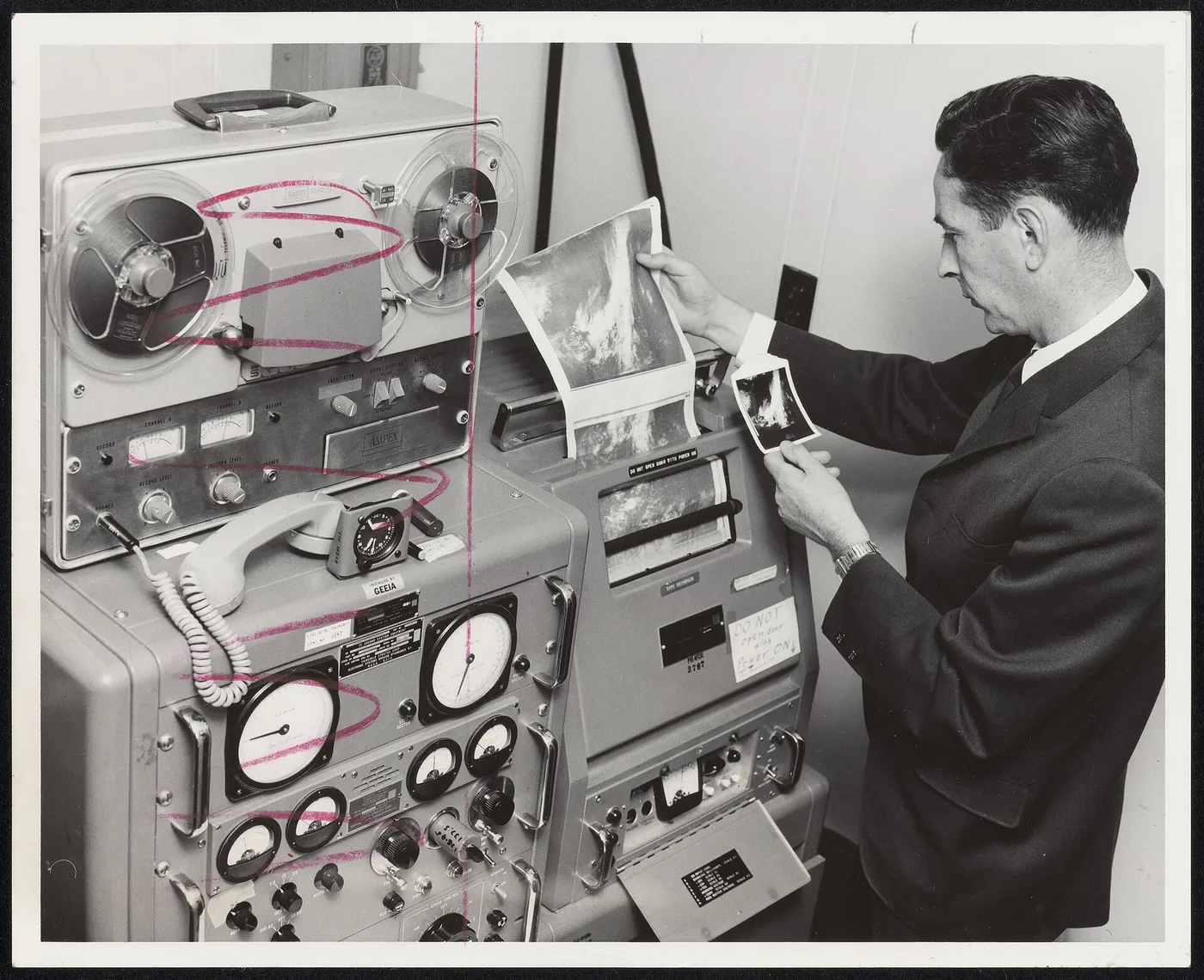

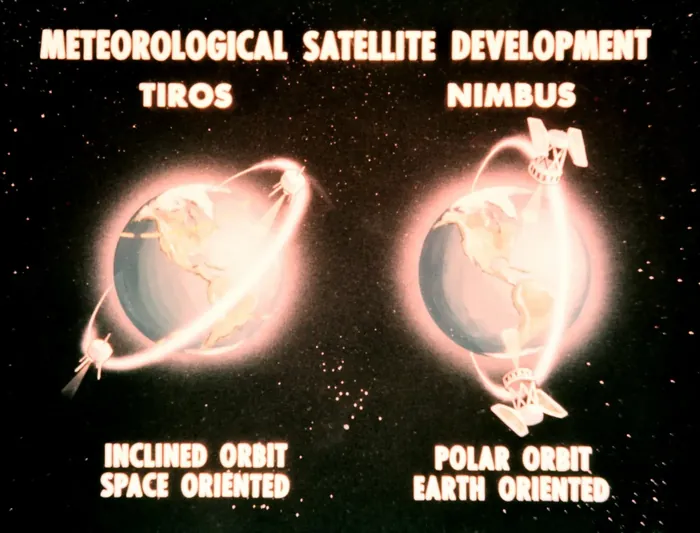
Where TIROS was built to prove the concept, Nimbus was built to advance it. The series was explicitly experimental — a testbed for instruments that would later fly on operational weather satellites — and it introduced the three-axis stabilised design that let a spacecraft point continuously at the Earth instead of spinning.
Its most important innovation was seeing in the dark. Nimbus-1 carried a high-resolution infrared radiometer that imaged cloud cover at night by measuring thermal emission rather than reflected sunlight, doubling the observational day and making continuous monitoring possible for the first time.
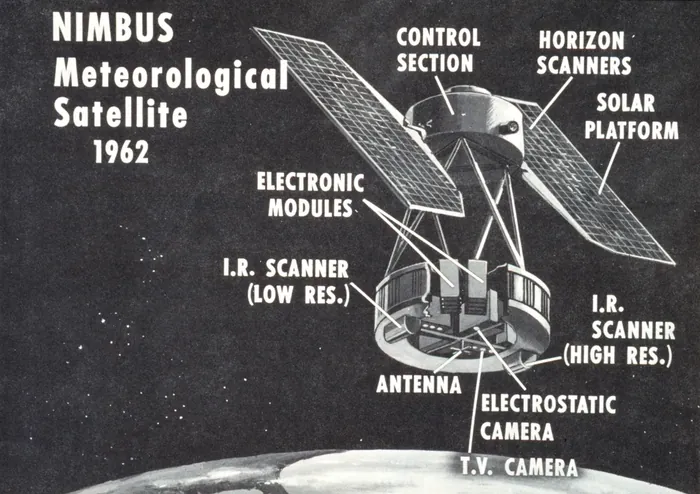
It also flew in a Sun-synchronous polar orbit, crossing the equator at the same local time on every pass, so that images taken days or years apart have comparable illumination. That geometry is now standard for almost every Earth-observation satellite, and it is what makes long-term climate records possible.
The mission was cut short after 26 days when a solar array drive jammed and the power supply failed. In under a month it had returned some 27,000 images and demonstrated both technologies well enough to justify six more spacecraft in the series.
Those successors carried the instruments that first measured atmospheric ozone from orbit, mapped sea ice, and detected the Antarctic ozone hole — though not before the automated processing had discarded the readings as implausibly low for several years, an object lesson in how quality-control assumptions can hide a discovery.