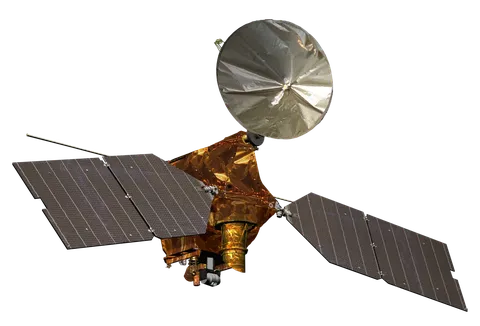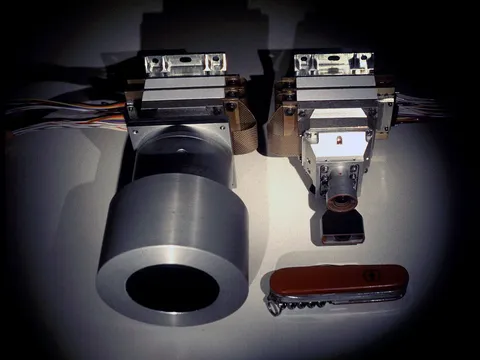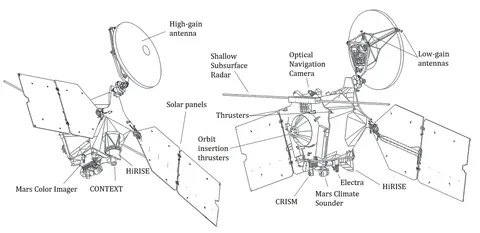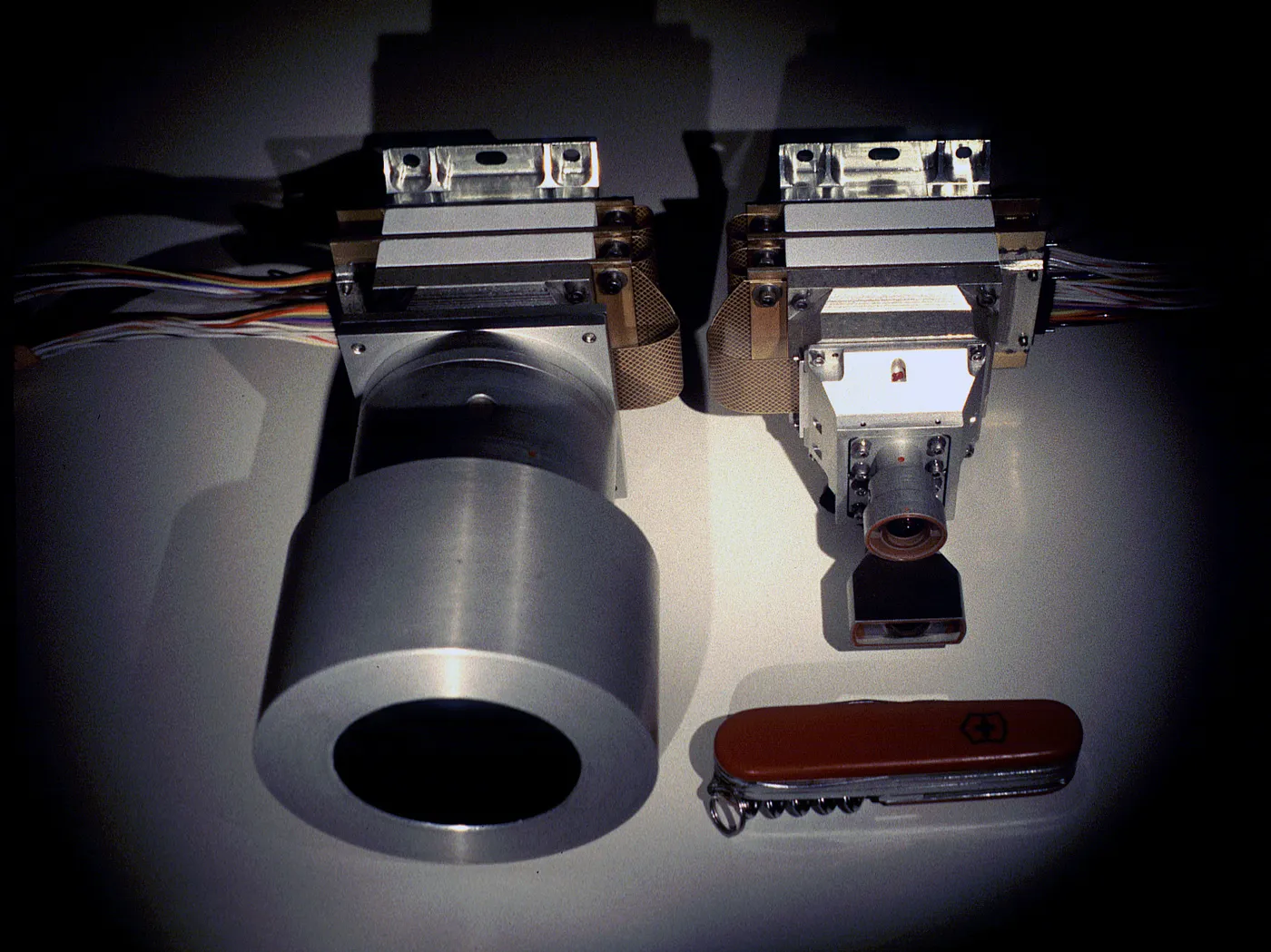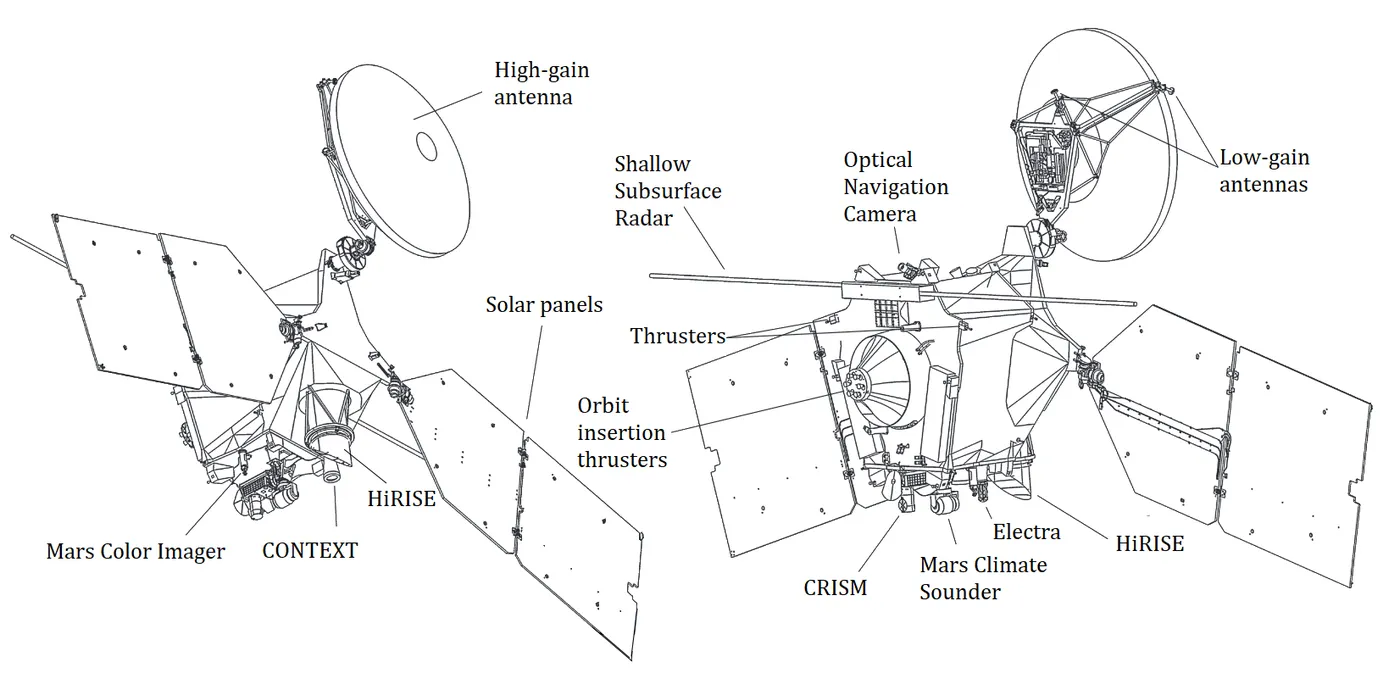
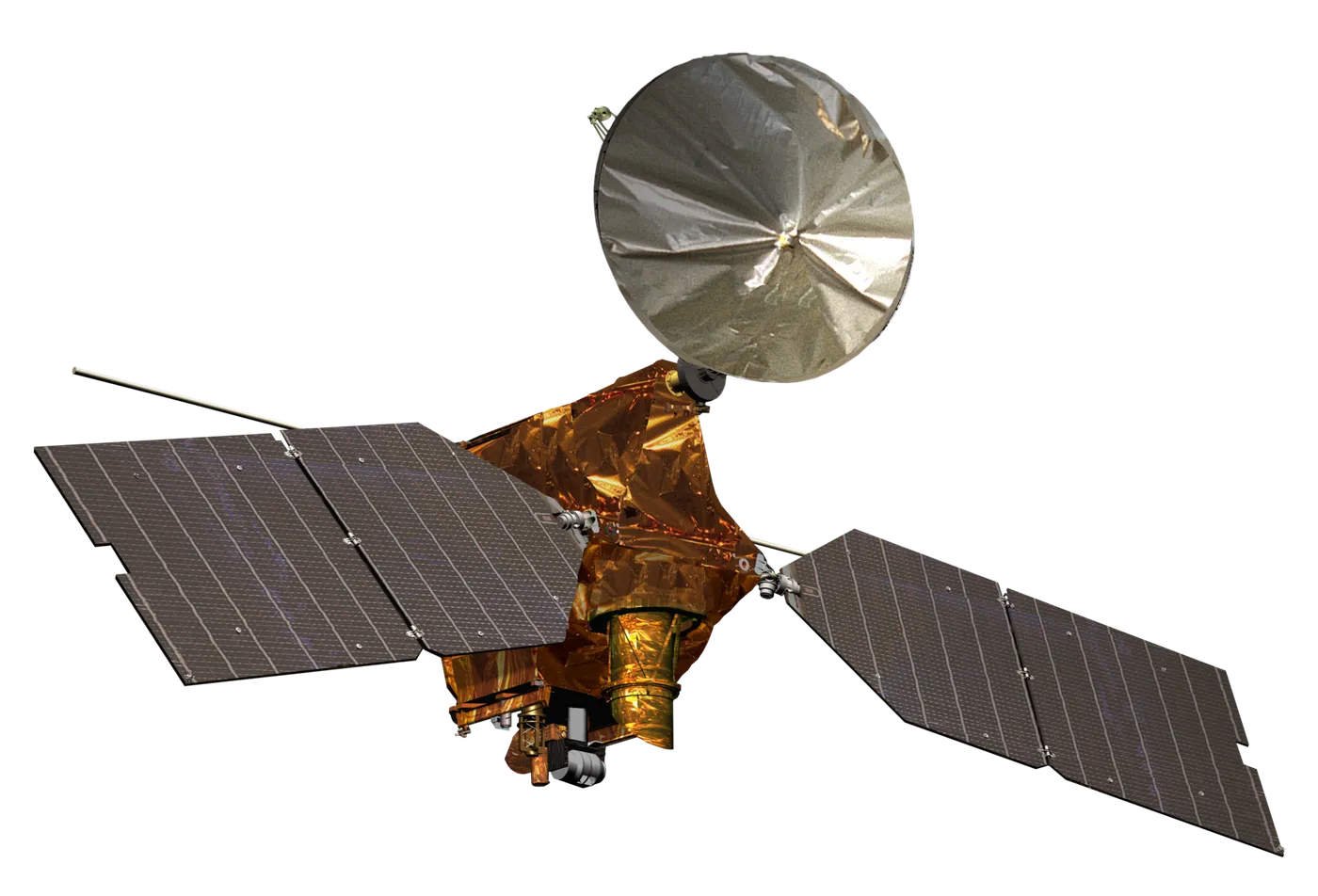

The Mars Reconnaissance Orbiter carries the sharpest camera ever sent to another planet. HiRISE resolves objects around thirty centimetres across from an altitude of 300 kilometres, which is roughly the difference between knowing a landscape exists and being able to read it — it can see individual boulders, dust devil tracks, and the wheel ruts of rovers.
That capability has been used for some remarkable photographs. It caught Phoenix descending under its parachute in 2008, and Curiosity's parachute in 2012, both against the Martian surface — pictures of one spacecraft landing taken by another, from orbit, requiring the imaging to be timed to the second.
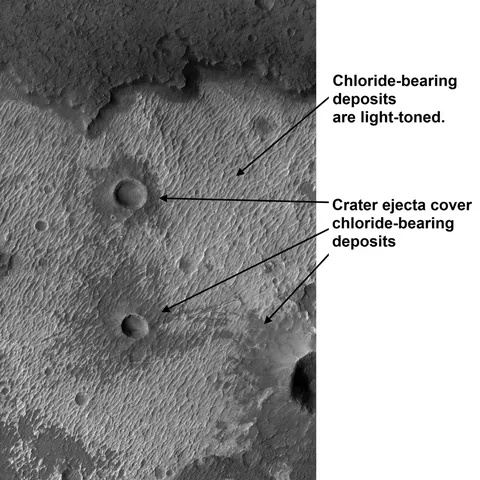
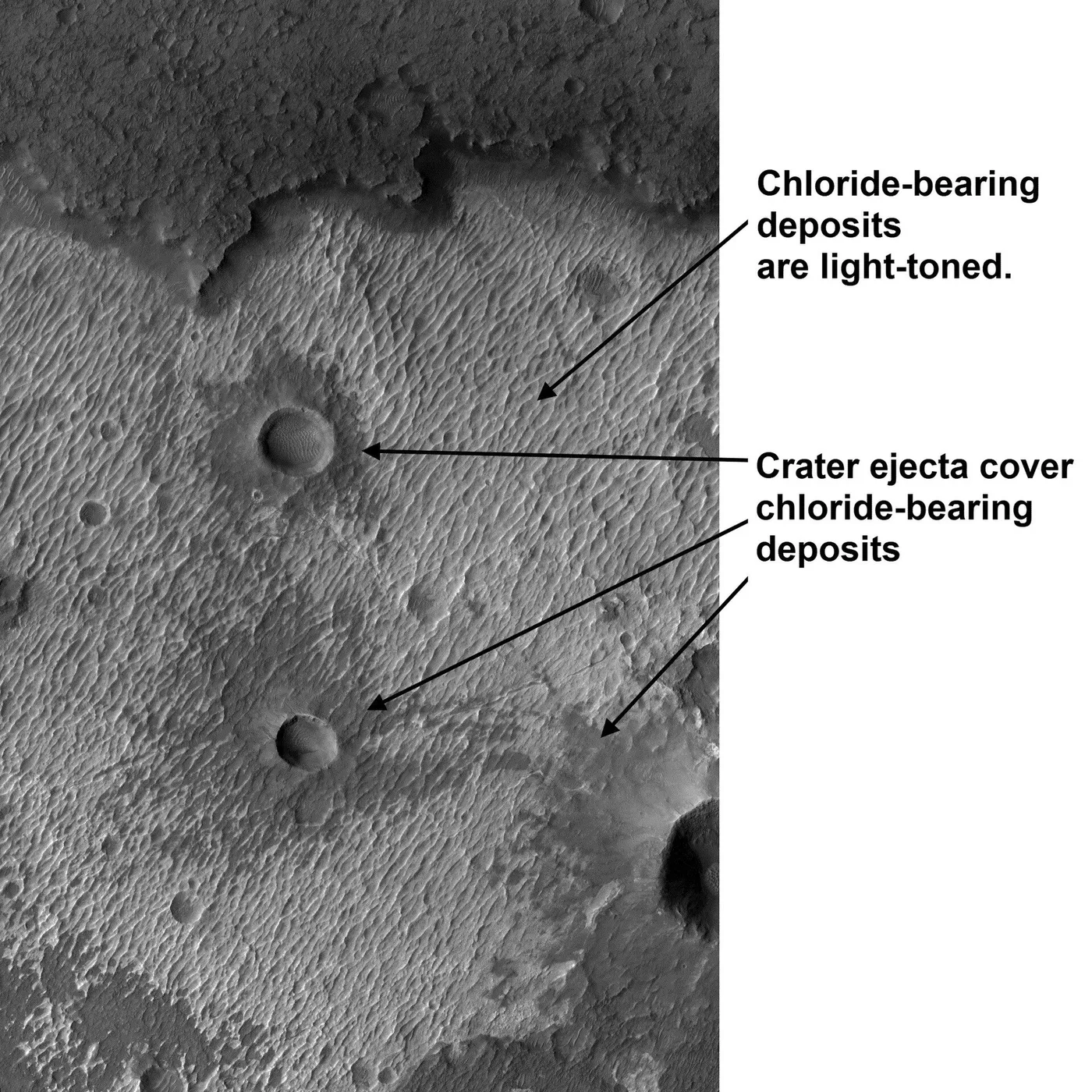
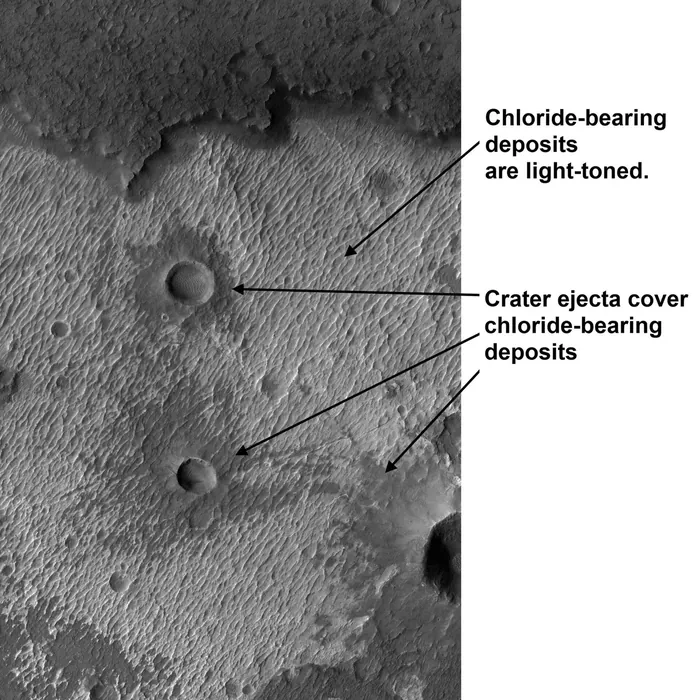
Its spectrometer mapped the mineralogy that established the planet's wet history in detail: clays formed in neutral water in the oldest terrains, sulphates from later acidic conditions, and a chronology of drying that now frames every discussion of Martian habitability. Its ground-penetrating radar traced buried ice sheets and layered polar deposits hundreds of metres thick.
It also found the most contested features on Mars: dark streaks that appear on warm slopes and fade in cold seasons, named recurring slope lineae. Initially interpreted as flows of briny water, they are now more often explained as dry granular avalanches, and the argument has run for over a decade without resolution.
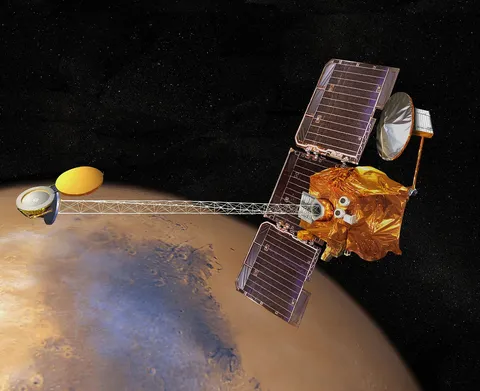
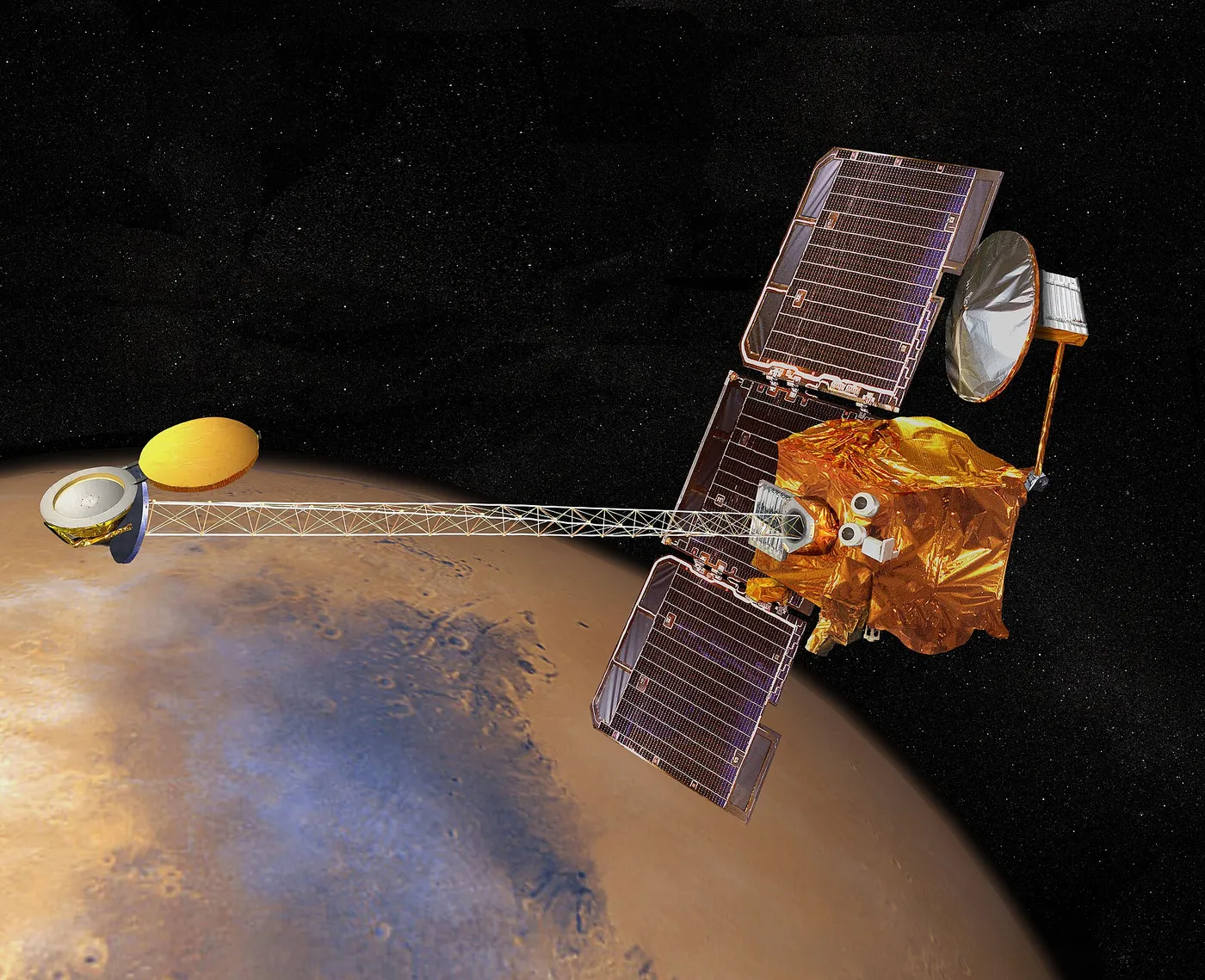
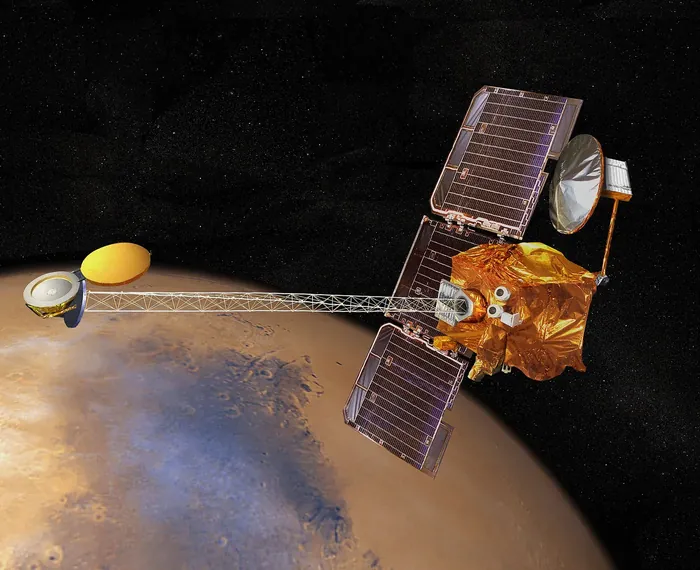
Like Odyssey before it, its unglamorous second job is being a switchboard. It relays the great majority of data from the surface missions, has returned more data than all other Mars missions combined, and it surveys candidate landing sites years before anything is sent to them — including for missions that have not yet been designed.