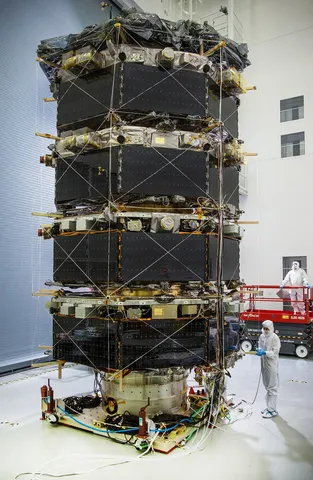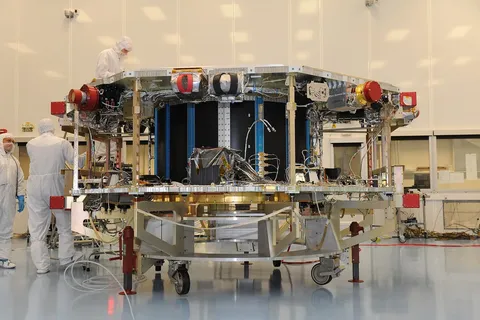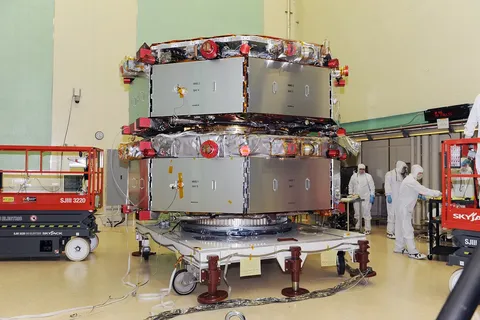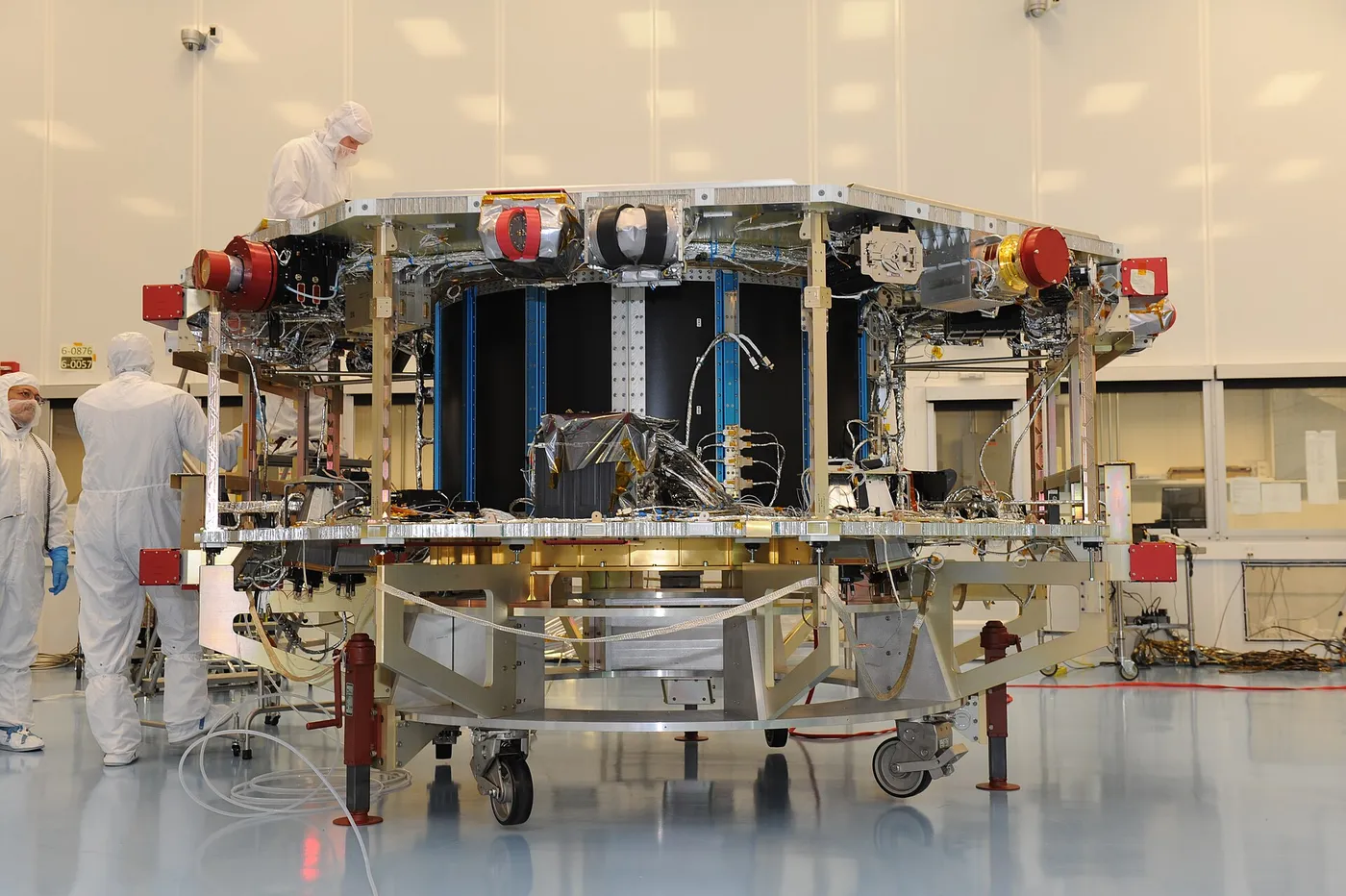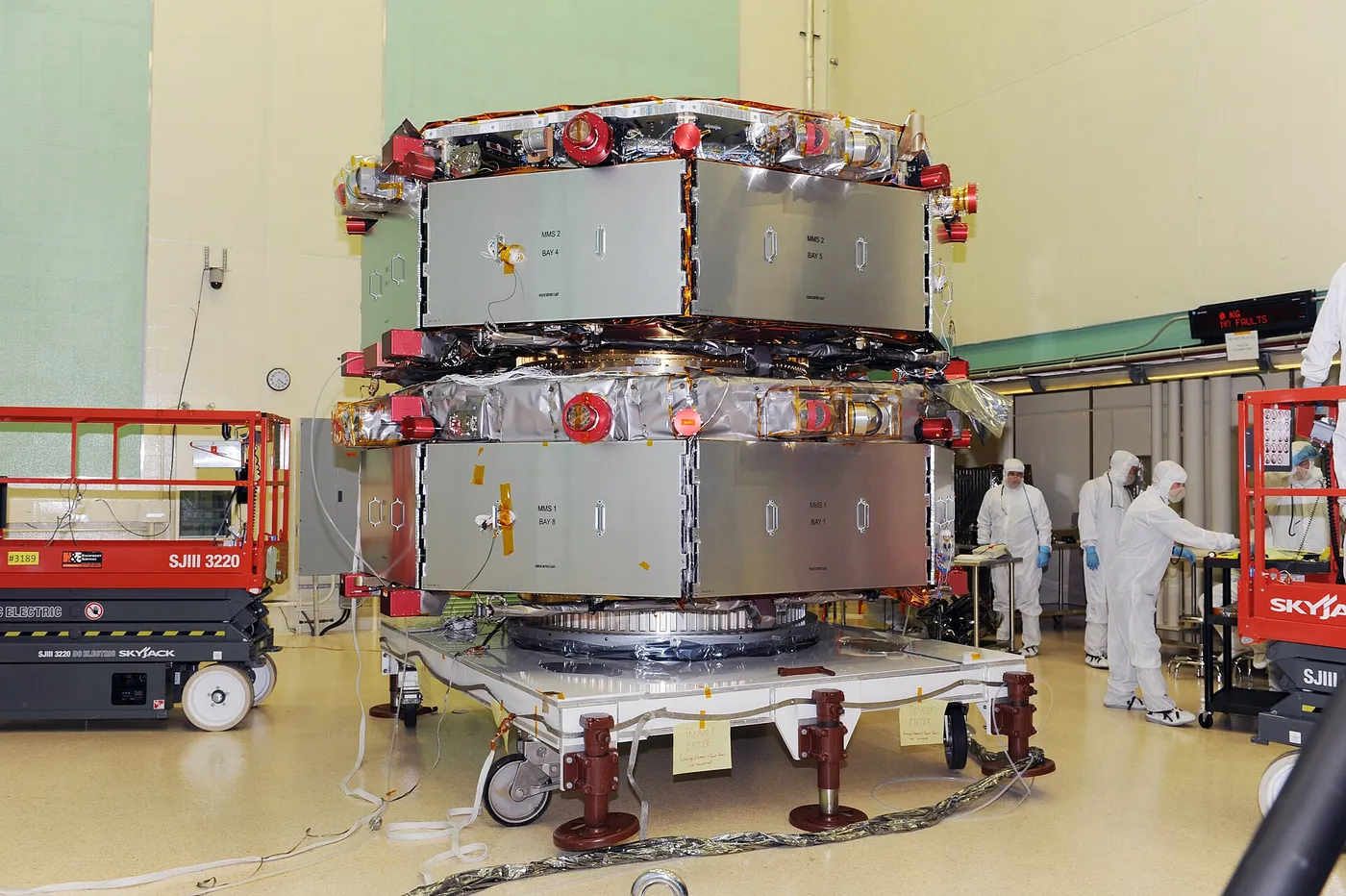
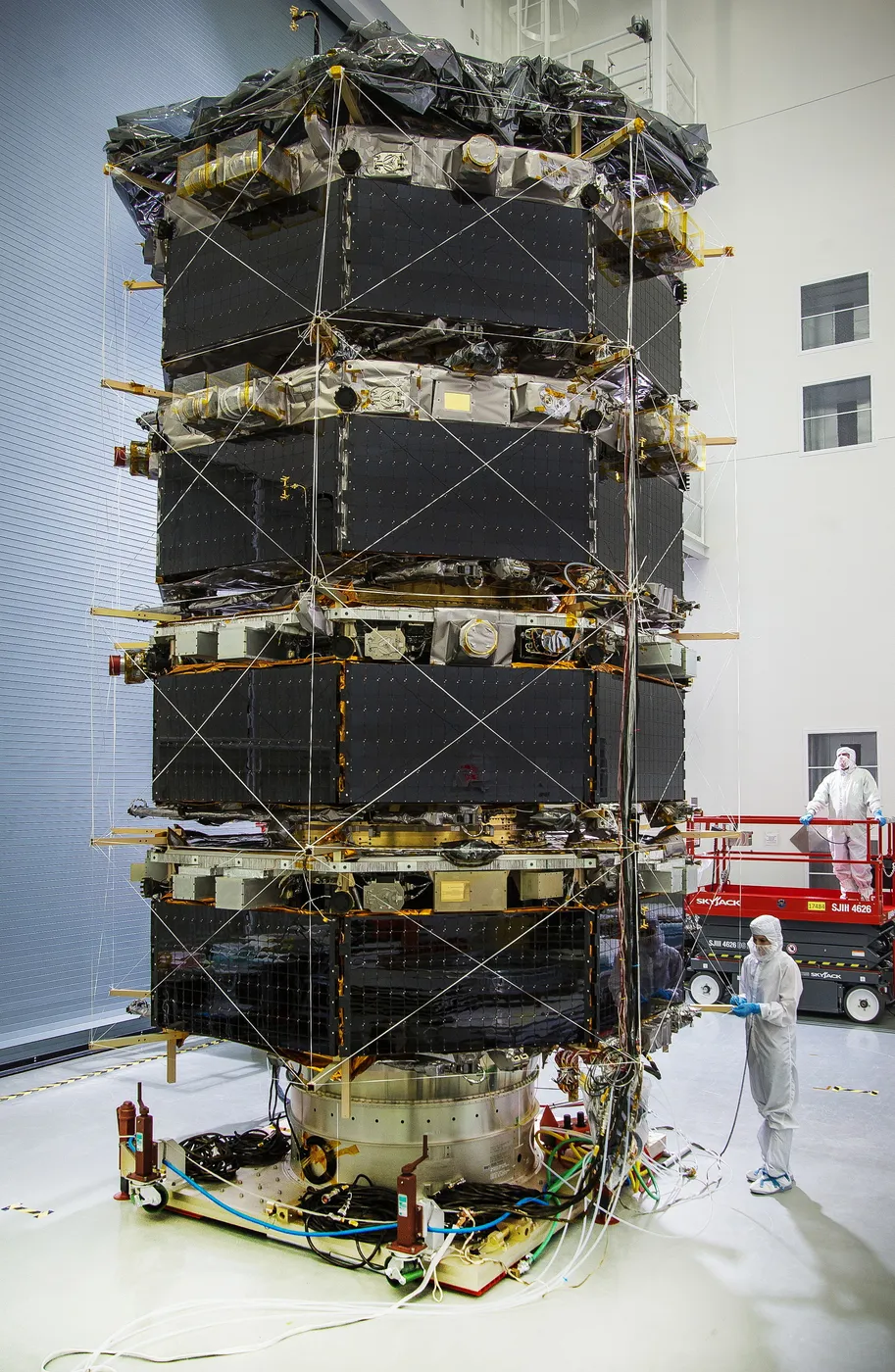

MMS flies four identical spacecraft in a tetrahedron, sometimes only seven kilometres apart — the tightest formation ever flown, requiring navigation accurate to a fraction of that and manoeuvres coordinated across all four. It exists to study one phenomenon: magnetic reconnection.
Reconnection is the process by which magnetic field lines break and rejoin, converting stored magnetic energy explosively into heat and particle motion. It drives solar flares, auroral substorms and disruptions in fusion reactors, and it happens in a region a few kilometres across where the physics becomes governed by individual electrons.
Measuring that region requires instruments a hundred times faster than anything flown before — sampling the full three-dimensional electron distribution every thirty milliseconds — and four spacecraft close enough to resolve the structure spatially while it sweeps past at hundreds of kilometres per second.
It worked. MMS caught the electron diffusion region directly, measured the electric fields that break the field lines, and showed that the process is far more turbulent and asymmetric than the idealised models assumed. It has since observed reconnection in the magnetotail, at the magnetopause and in the turbulent magnetosheath.
The formation flying itself was a significant achievement, and the mission holds records for the closest sustained formation and the highest altitude at which GPS has been used for navigation — well above the constellation itself, tracking signals that spill past the far side of the Earth.