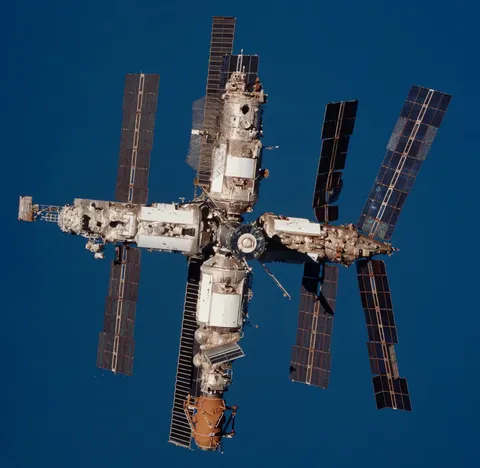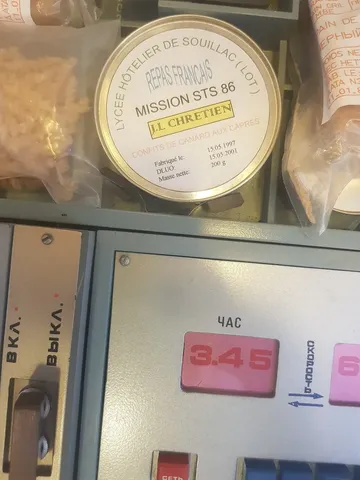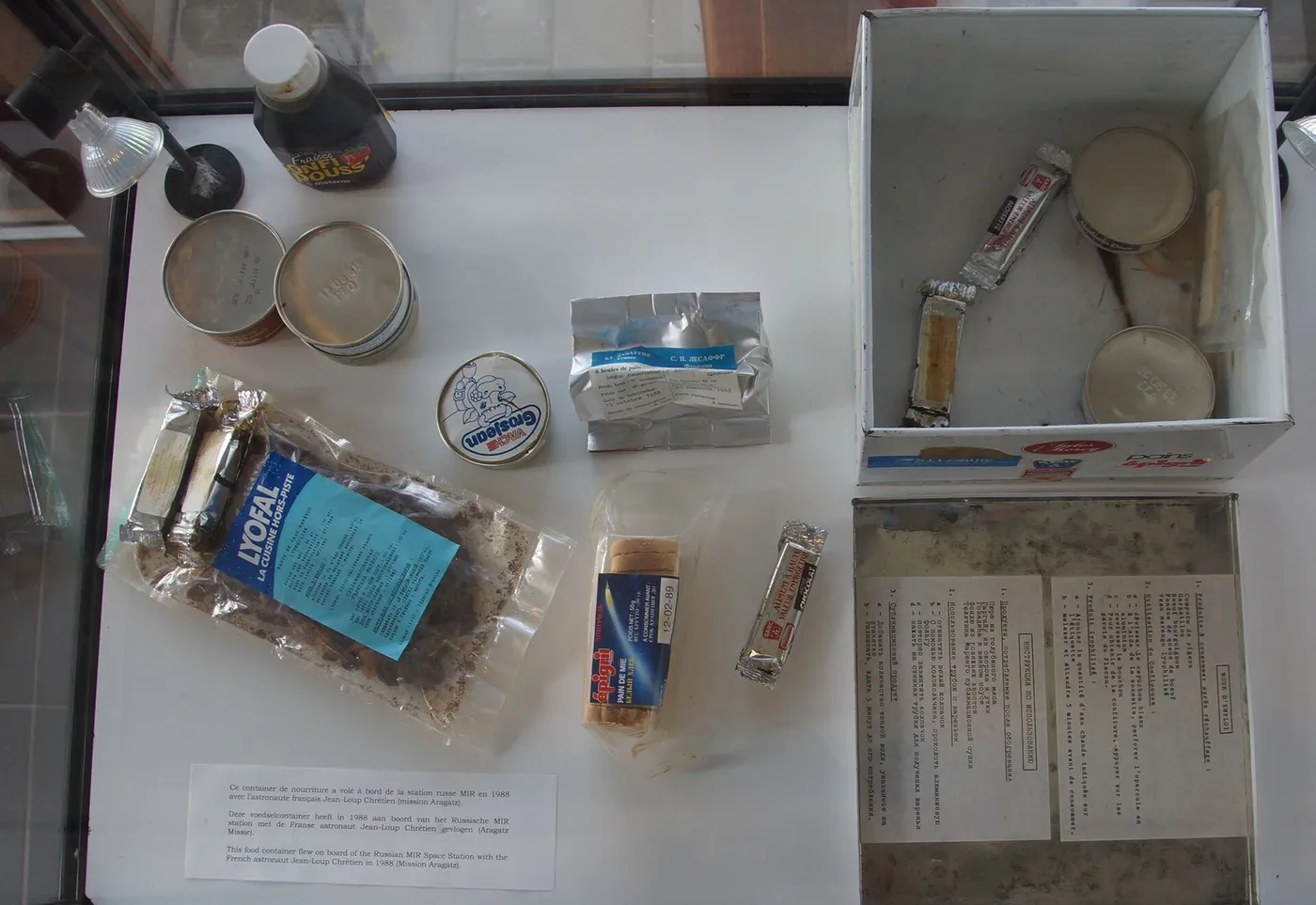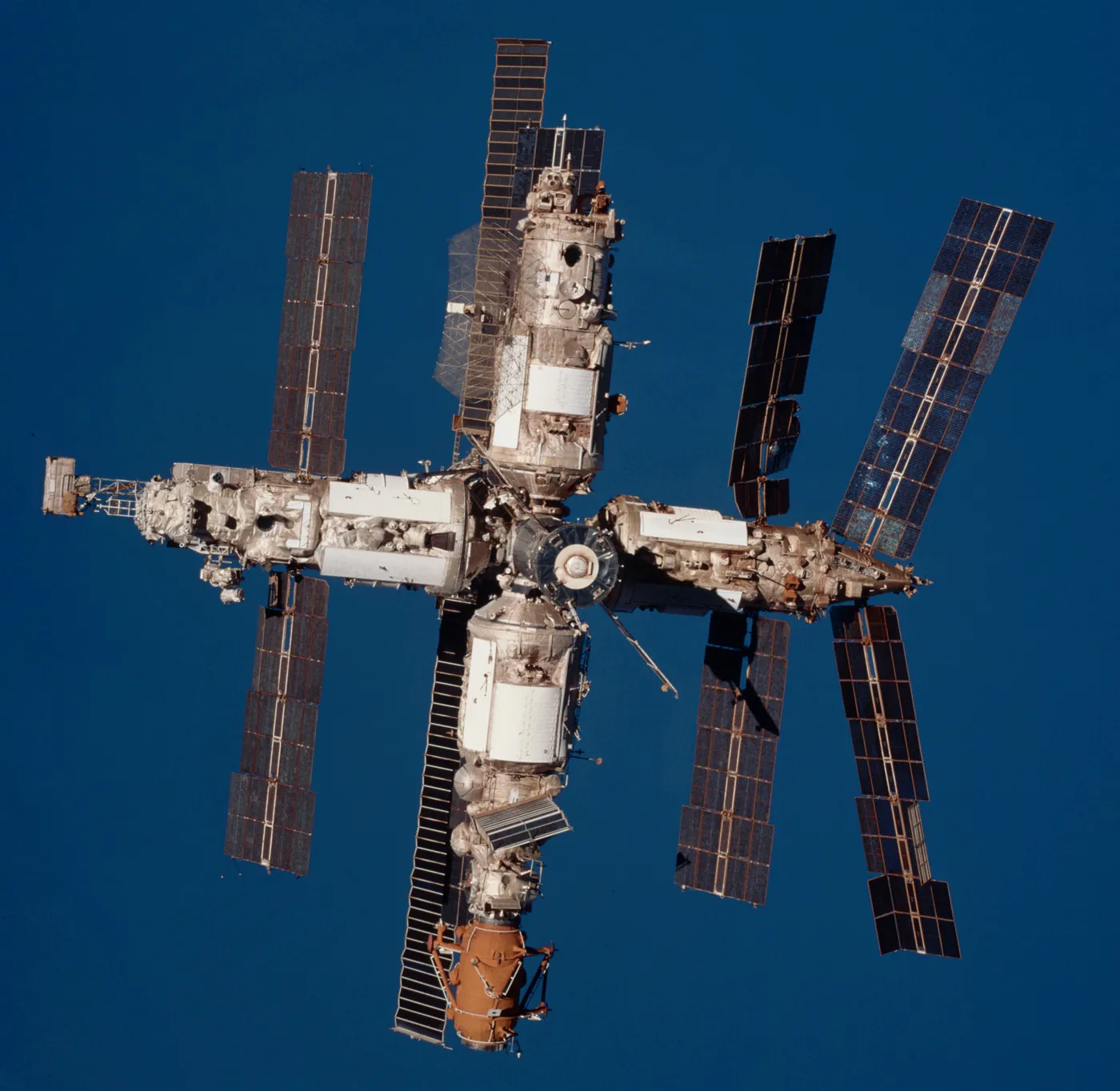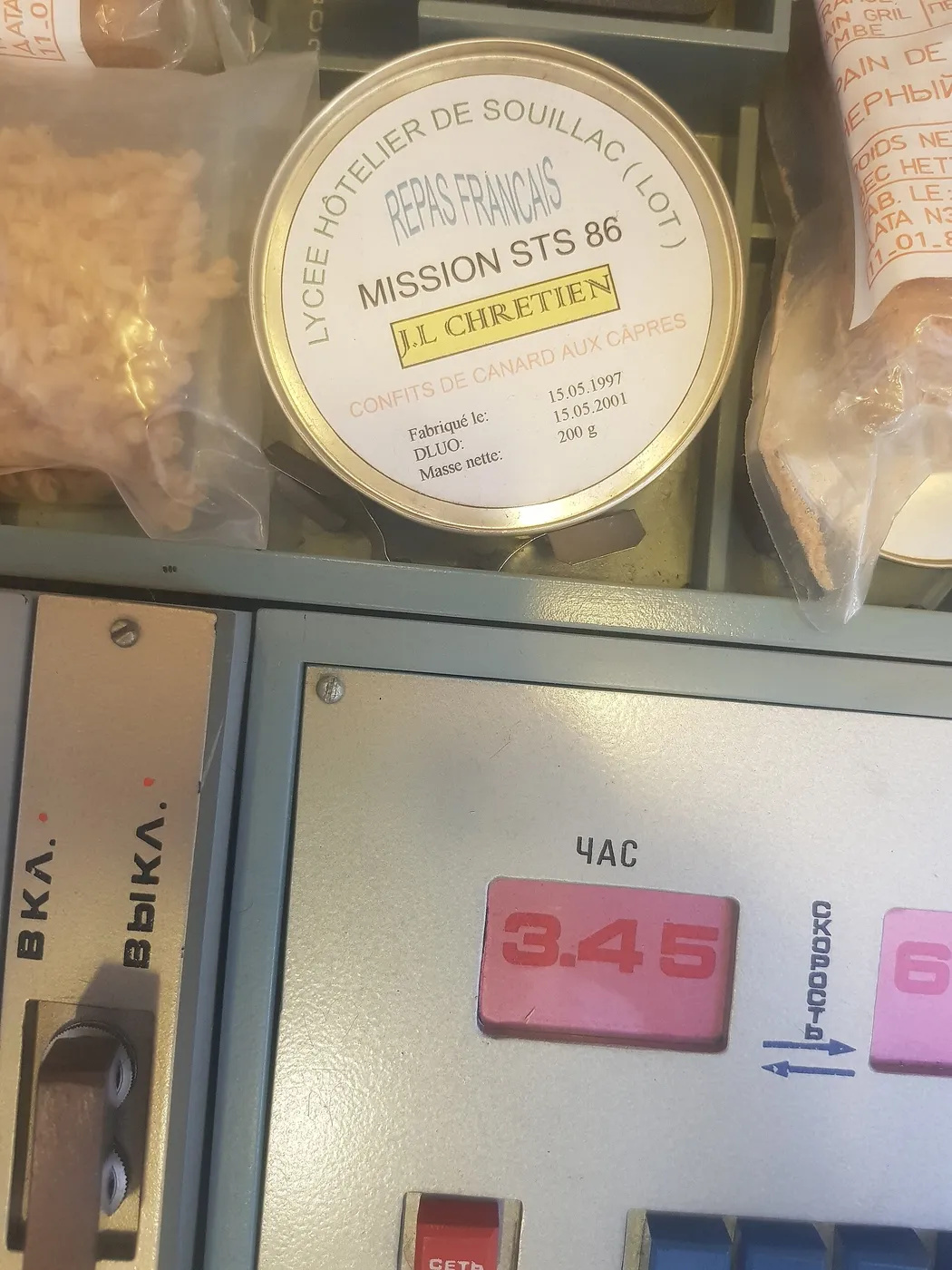
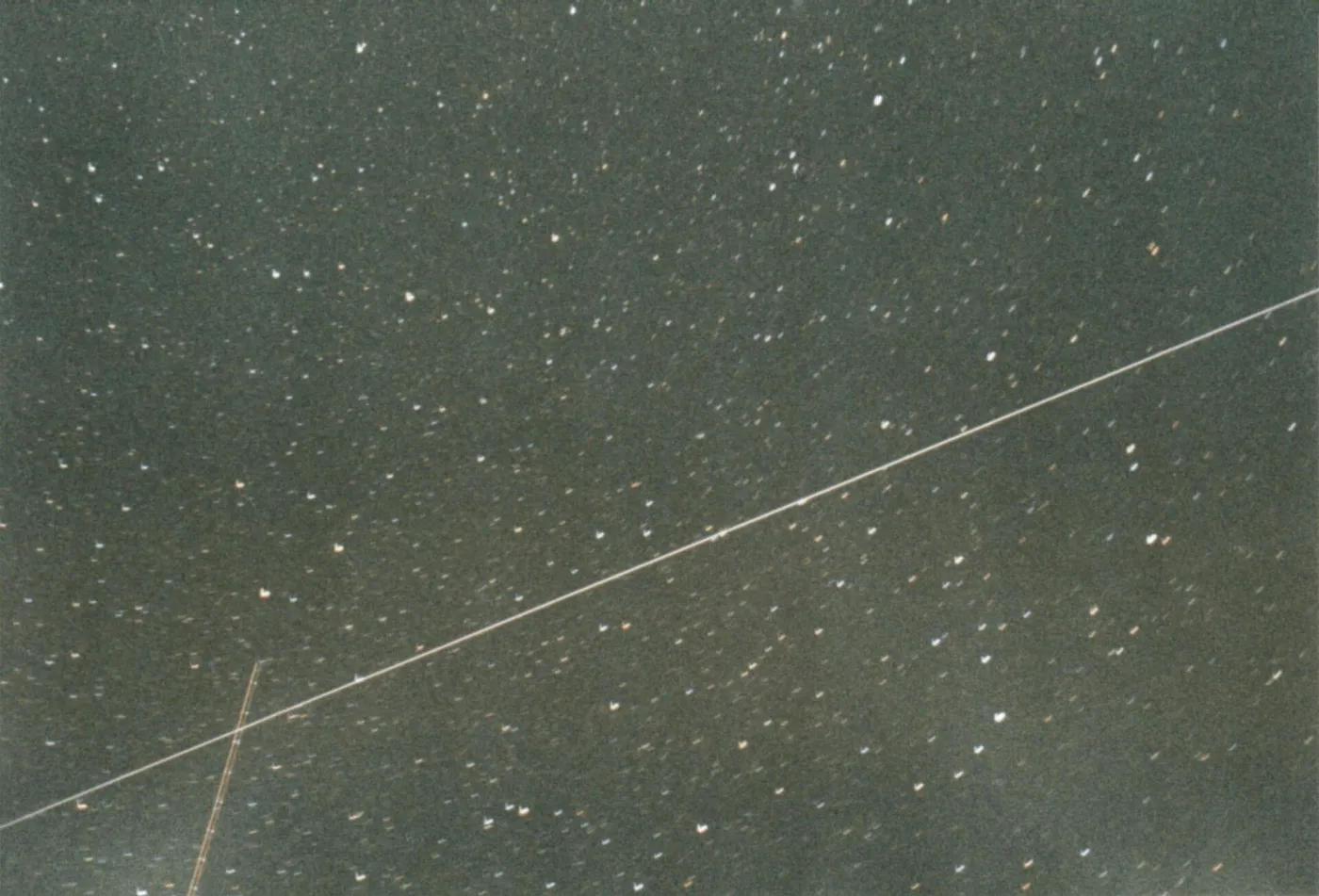

Mir was the first modular space station, assembled in orbit over ten years from a core module launched in 1986 and six others added afterwards, each docked to a hub like spokes on a wheel. It established the architecture — build in pieces, expand over time — that the International Space Station inherited wholesale.
It was also where humanity learned to live in space rather than visit. Valeri Polyakov spent 437 continuous days aboard, a record that still stands, deliberately staying the length of a Mars transit to prove it could be survived; he came back able to walk. The station accumulated more than a decade of continuous human occupation, and the medical data underpins every long-duration mission flown since.
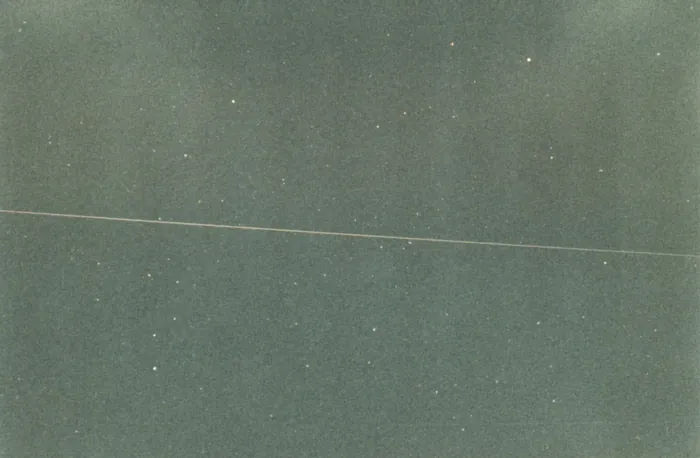
Its final years were harrowing. In February 1997 an oxygen-generating canister caught fire and burned for minutes, cutting off the route to one escape craft; in June a Progress freighter struck the Spektr module during a manual docking test, holing the hull and forcing the crew to cut cables and seal it off while the station tumbled and lost power. Michael Foale worked out its spin by timing stars past a window.
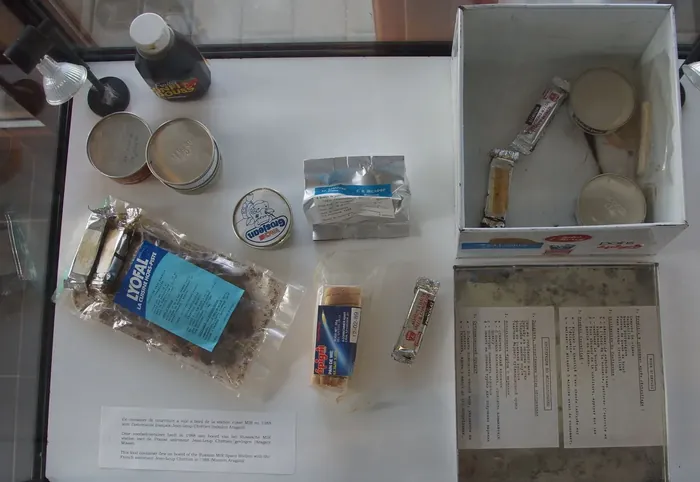
It survived on improvisation and stubbornness, kept running by cosmonauts who repaired equipment that had long outlived its design life with parts they had aboard. That capacity to fix things rather than replace them is the single greatest operational lesson the Russian programme handed to the ISS partnership.
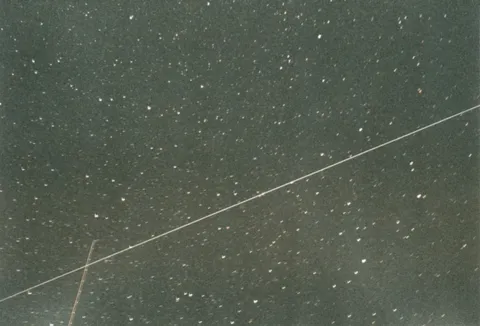
It hosted the Shuttle-Mir programme, seven American residents, and visitors from more than a dozen countries, and it was deliberately deorbited in March 2001, breaking up over the South Pacific after fifteen years — three times its planned life. It remains the longest-serving space station until the ISS overtook it.