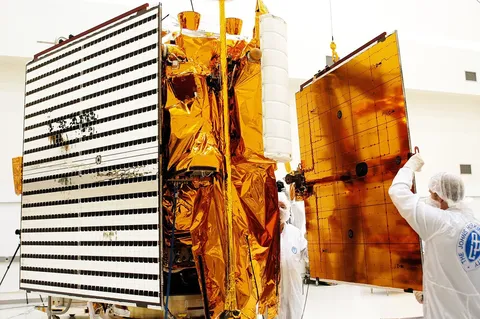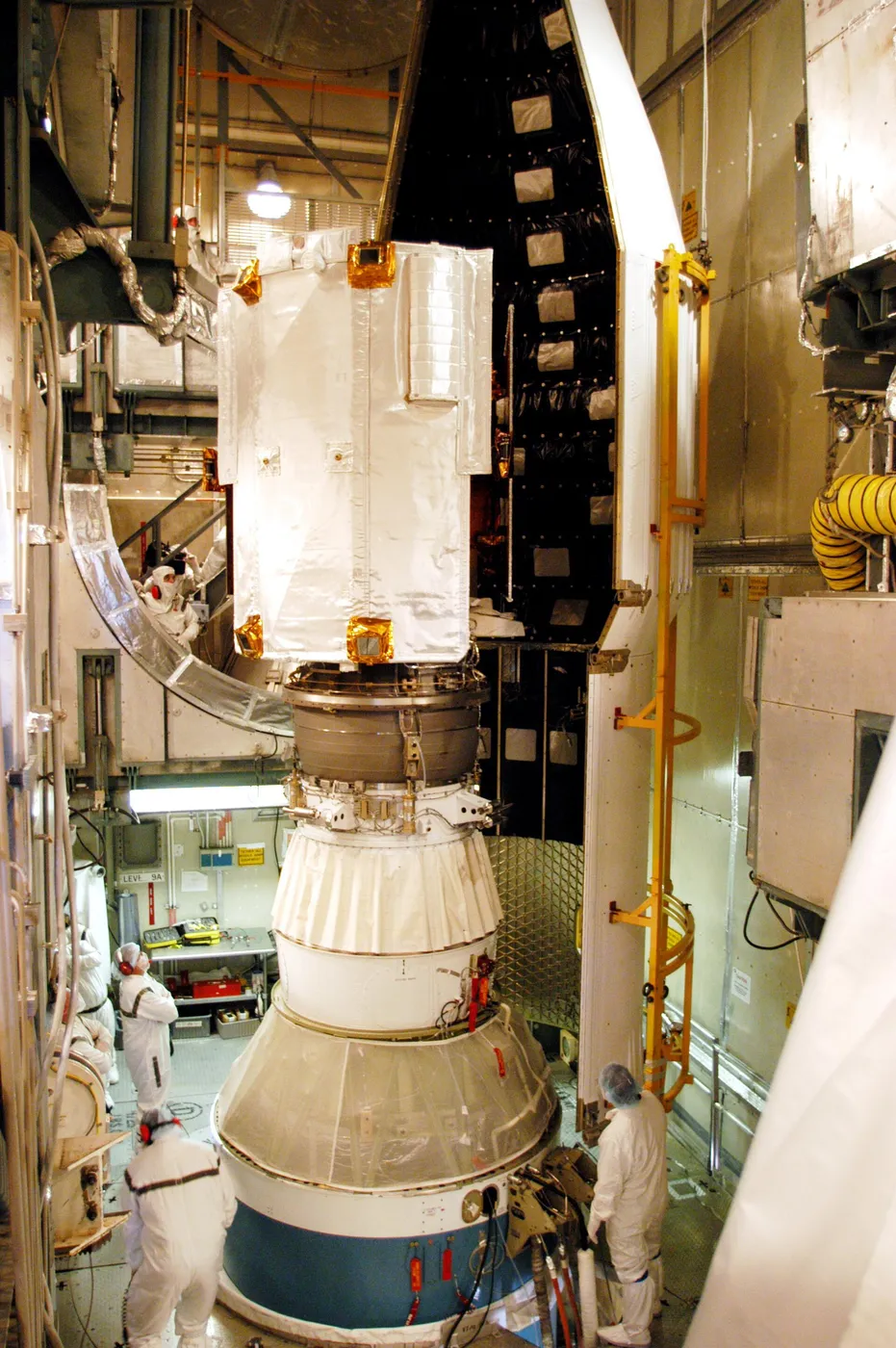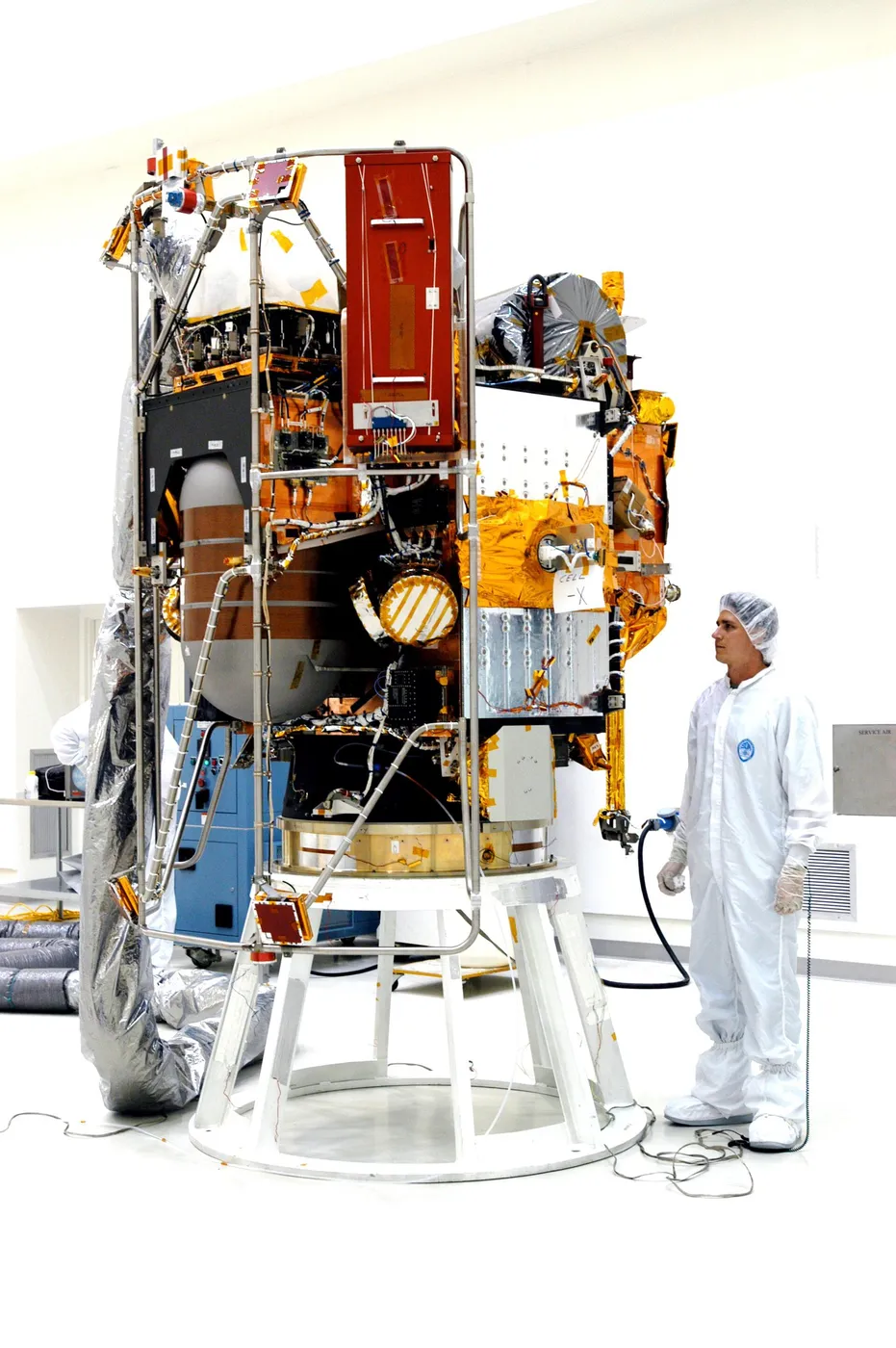

Getting to Mercury is harder than getting to Pluto. Falling towards the Sun means gaining enormous speed, and a spacecraft that simply flies there arrives far too fast to stop. MESSENGER took six and a half years and six planetary flybys — one of Earth, two of Venus and three of Mercury itself — to shed enough energy to be captured in 2011.
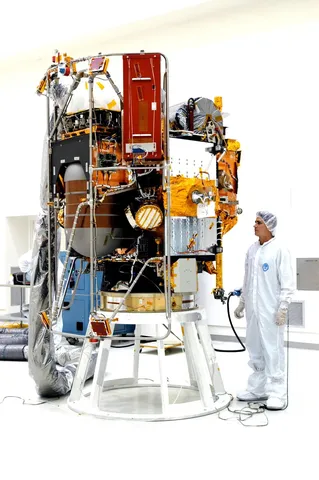
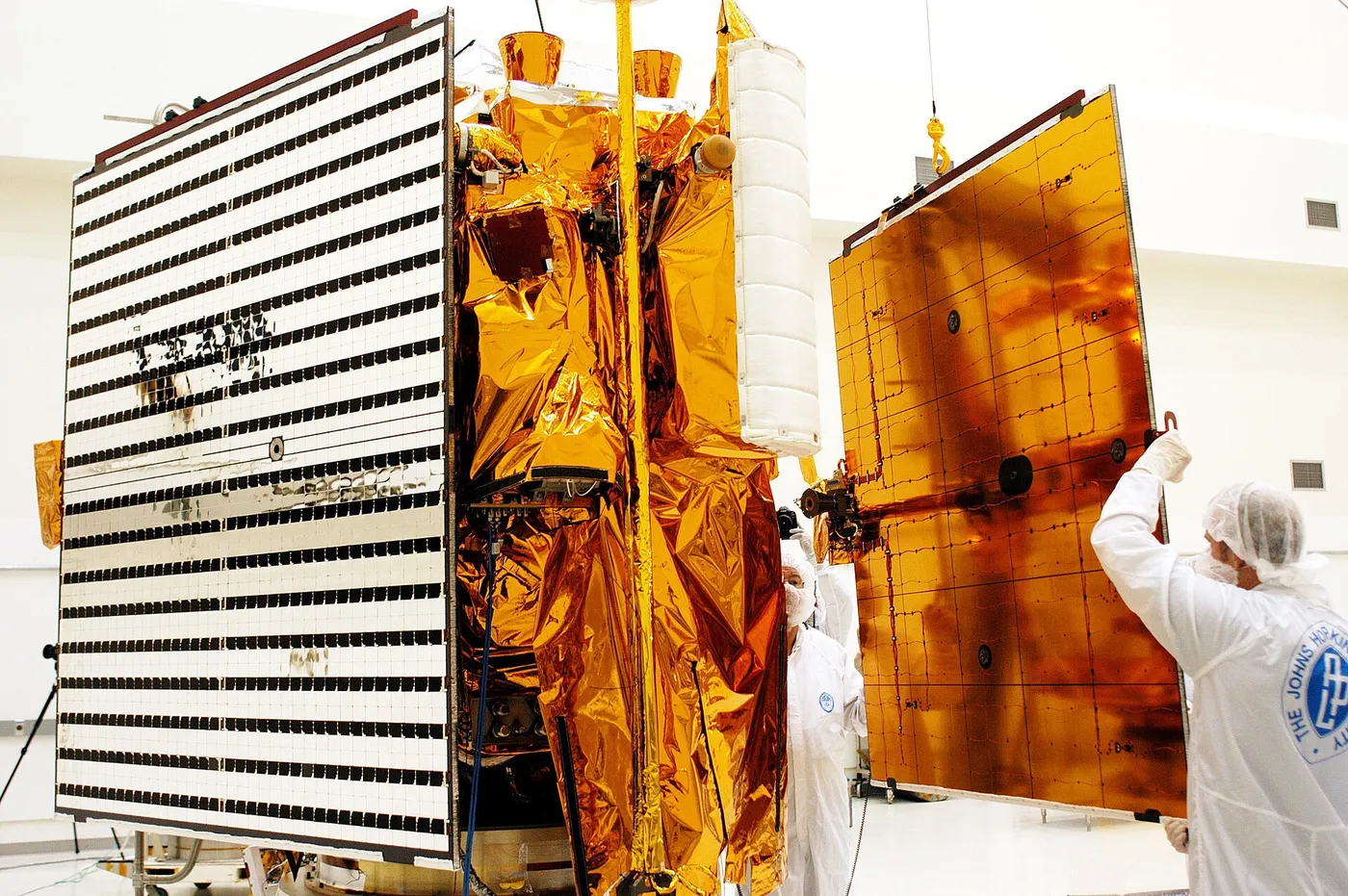
It also had to survive. In Mercury orbit the spacecraft faced sunlight eleven times more intense than at Earth plus the heat radiating from the dayside surface, and it flew behind a ceramic-cloth sunshade that held the instruments near room temperature while its own front face approached 300 degrees Celsius.
The findings unsettled theories of how the planet formed. Mercury turned out to be rich in volatile elements like sulphur and potassium, which it should have lost if it had been baked or stripped by a giant impact as the leading models proposed. It also revealed a landform seen nowhere else — shallow, bright, irregular depressions called hollows, apparently formed as volatile material sublimates away.
Its most satisfying result confirmed a twenty-year-old suspicion. Radar astronomers had seen bright patches at Mercury's poles since the early 1990s and argued they were water ice, which seemed absurd on the planet closest to the Sun. MESSENGER showed that some polar crater floors never see sunlight and sit at around minus 170 degrees, and its neutron spectrometer confirmed billions of tonnes of ice, insulated in places under a dark organic-rich layer.
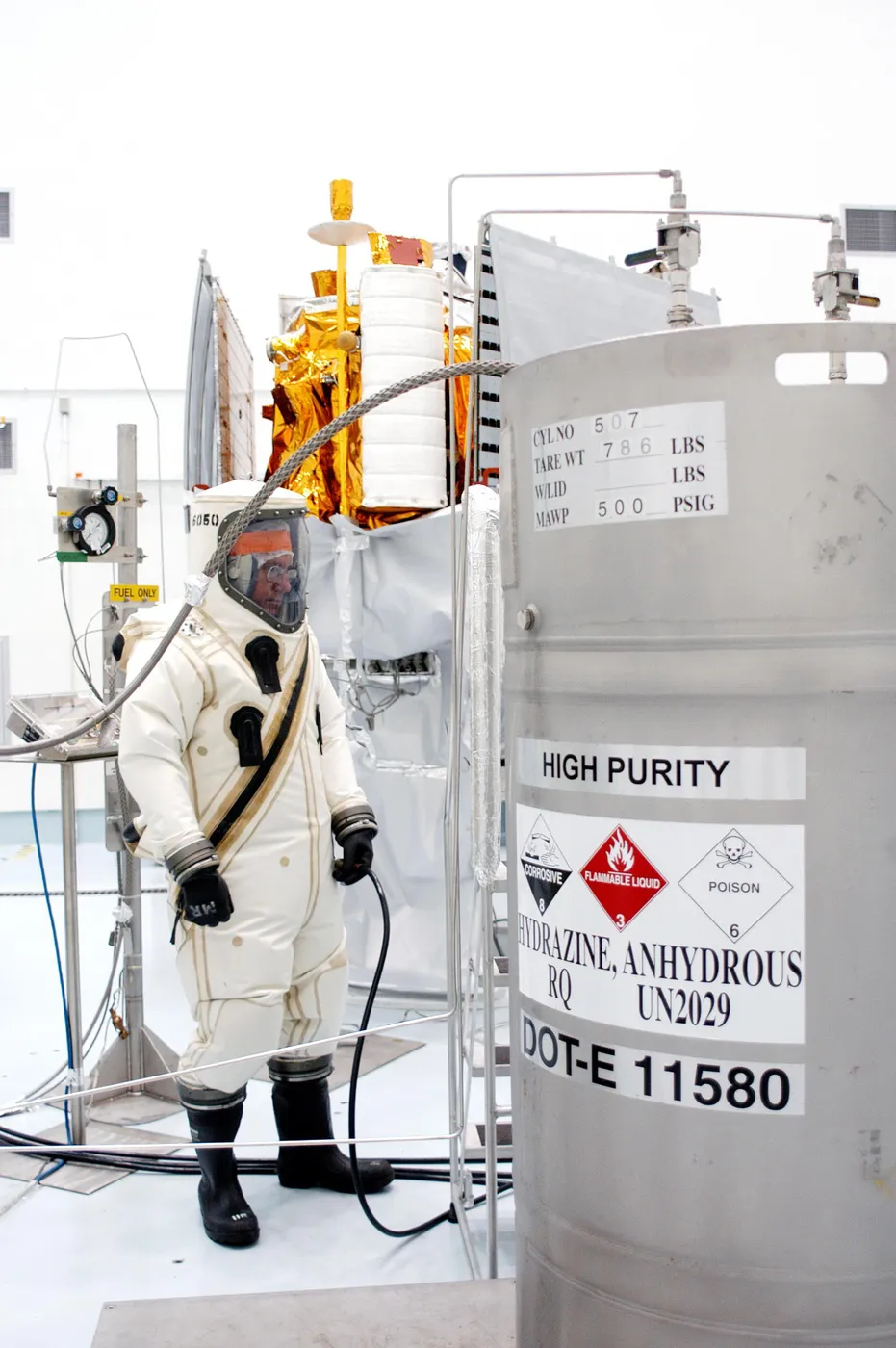
It mapped the entire planet for the first time — Mariner 10 had managed less than half — and ran out of propellant in April 2015, striking the surface at some 14,000 kilometres per hour and adding a fresh crater roughly sixteen metres across to the world it had spent four years describing.